Key Takeaways
- Most maternity care is organized around appointments, not around the arc of a woman’s health from fertility through the postpartum year.
- BirthWise Doula Services, a Charlotte practice founded in 2020, is built around continuity across that full arc rather than around the birth itself.
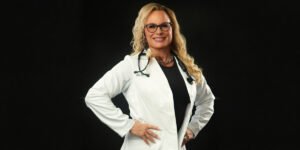
- Founder Toni Curtis has worked in birth support since 1996, and her model is designed to operate alongside obstetric and midwifery care rather than in place of it.
- CDC data shows an estimated 84 percent of pregnancy-related deaths in the United States are preventable, which reframes maternal health as a care design problem rather than an inevitability.
- Doula support is non-clinical. It does not replace obstetric, midwifery, or mental health care, and the strongest models are built to work alongside them.
There is a gap most women only notice once they are standing in it. Prenatal care is scheduled, frequent, and closely monitored. Then the birth happens, and within six weeks the appointments stop, at exactly the point when recovery, feeding, sleep, and mood are all being renegotiated at once.
That structural gap is the problem BirthWise Doula Services was designed around. The Charlotte, North Carolina practice, founded in 2020 by Toni Curtis, organizes its work as one continuous arc rather than a set of separate episodes, covering fertility and family planning, pregnancy, labor and delivery, and postpartum recovery.
“We treat you as a whole person,” the practice states in its own description of its approach, a phrase that in this case describes a service structure rather than a sentiment.
The Argument That The Body’s Needs Should Shape Care
Curtis’s framework, The Lifespan Birth Method™, organizes around four areas, which are clinical care, body and breath work, nutrition and fertility, and policy and advocacy. Its underlying claim is that the body’s physiological needs during labor, which include movement, rest, nourishment, privacy, and time, do not change according to setting or risk level.
That claim has a specific and often misread implication. It is not an argument against hospitals, epidurals, inductions, or cesarean births. Curtis describes birth as a natural process that is medically observed, and her model is designed to operate inside medical settings, including surgical ones. The position is that physiological needs and medical intervention are not in competition, and that care which attends to both produces better experiences than care which attends to one.
She has been explicit that the argument holds at every level of risk rather than applying only to straightforward births. If anything, her framing is that the needs of the body matter more as risk rises, not less.
What Continuity Looks Like In Practice
The services BirthWise lists cover prenatal education and preparation, labor and delivery support, postpartum care and recovery guidance, birth planning and informed consent education, communication coaching for conversations with providers, infertility and family planning support, childbirth education, nutrition advisory support, body awareness work and lactation counseling.
Read as a list, that is a lot of separate offerings. Read as a structure, it is one relationship that does not restart every time the clinical setting changes.
The communication coaching element is the one clients tend to underestimate. Curtis’s stated purpose is not to make decisions on a client’s behalf but to equip her to make her own, informed. “A good doula knows how to help you ask the questions you didn’t even know to ask,” she says.
Fear, And What To Do With It Instead
The practice’s founding observation is about fear, and Curtis is direct about the physiology involved.
“So many women enter into their birthing experience thinking ‘it’s going to hurt’, and they’re afraid,” she has written. “As a childbirth educator and practicing doula, I can tell you that fear stops the positive, compelling momentum of childbirth. Fear hinders the release of helpful hormones, and as a result, contributes to women having bad birthing experiences. Don’t be afraid; be prepared, equipped, and encouraged by a doula’s support.”
It is a useful reframe for anyone approaching a first birth, and it is notably not a promise. The offer is preparation, not a guaranteed outcome.
The Postpartum Gap
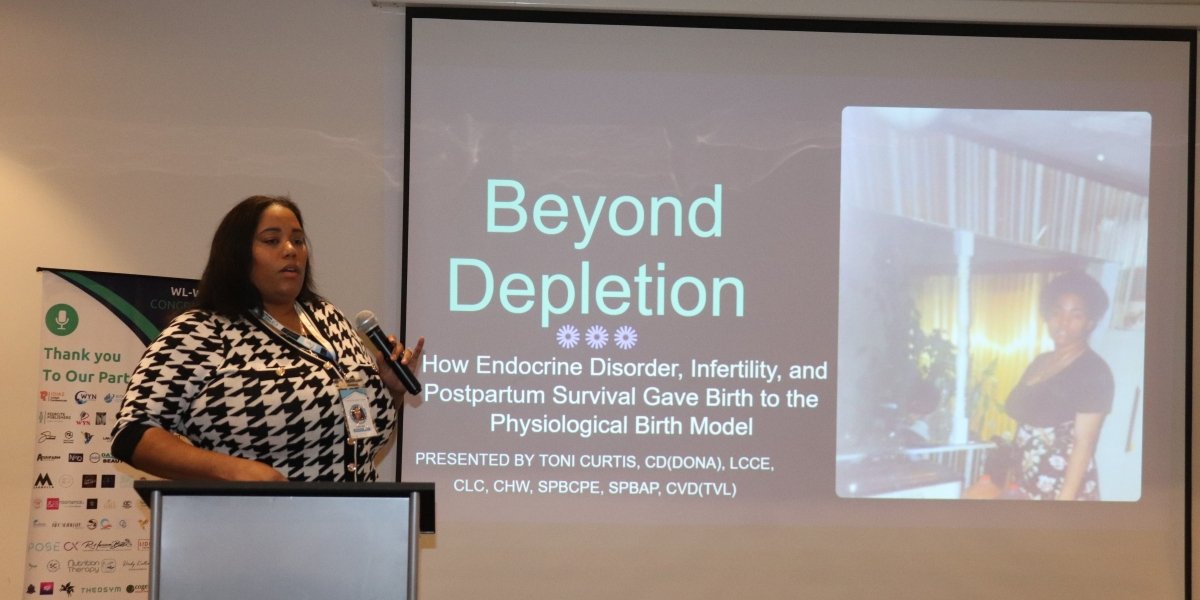
Curtis’s 2026 book, Beyond Depletion: A Nutritional Therapist’s Guide to Postpartum Healing, addresses the part of the arc that receives the least structured attention. It covers postpartum nutritional depletion, hormonal recovery, and practical support strategies, written for practitioners including nutritional therapists, naturopaths, health coaches, midwives, and doulas, and for mothers wanting to understand their own recovery.
It is a practitioner and consumer education resource rather than a clinical or diagnostic text, and the symptoms it addresses, including persistent exhaustion, disrupted sleep, and mood changes, are ones that warrant a conversation with a qualified clinician rather than self-management alone.
Recognition, And What It Does And Does Not Mean
Curtis was awarded an honorary doctorate in 2026, conferred at a ceremony in Arlington, Virginia, on August 9. She also serves as Director of Advocacy for DONA International and as a United Nations Representative through the Africana Women Working Group, a consultative body to the UN Economic and Social Council, and in July 2026 was appointed to the global advisory board of the Forttuna Health and Wellness Council.
The doctorate is honorary rather than an earned clinical degree, and it does not alter the scope of the work. Doula care is non-clinical support, and Curtis has been consistent that her model operates alongside obstetric and midwifery care rather than in place of it.
Why The Numbers Matter Here
The national context gives the continuity argument its weight. The National Center for Health Statistics reported a United States maternal mortality rate of 18.6 deaths per 100,000 live births for 2023. The rate for non-Hispanic Black women was 50.3 per 100,000 against 14.5 for non-Hispanic white women, a difference that holds across income and education levels. Maternal mortality review committee data covering 2017 to 2019 across 36 states found an estimated 84 percent of pregnancy-related deaths were preventable.
Preventable is the operative word. It moves the conversation from tragedy to design.
Research on doula support specifically has been accumulating. A scoping review published in npj Women’s Health in November 2025, drawing on 23 peer-reviewed studies, reported associations between doula support and reduced cesarean rates, shorter labor duration, lower reported maternal anxiety, and improved breastfeeding initiation, with variation across study designs.
BirthWise sits alongside that literature rather than standing in for it. Curtis began supporting birthing families in 1996, as a high school peer educator working with teen mothers, and has spent nearly three decades since in prenatal, labor, and postpartum practice. What the continuity model offers is a single relationship that holds across the full arc of a woman’s reproductive health, from the first fertility conversation through the fourth trimester.
Frequently Asked Questions
What Does A Doula Actually Do?
A doula provides non-clinical support before, during, and after birth, including education, physical comfort measures, emotional support, and help preparing questions for clinicians. A doula does not diagnose, treat, or deliver babies, and does not replace an obstetrician, midwife, or mental health professional.
Does Doula Support Work In A Hospital Birth Or A Cesarean?
Yes. Support models like the one BirthWise uses are designed to operate within medical settings, including inductions and surgical births, alongside the clinical team rather than in place of it.
When Should Someone Start Looking For Support?
The continuity model starts earlier than most people expect. The BirthWise arc begins at fertility and family planning and continues through the postpartum period, so support can be engaged well before a third-trimester scramble.
Is Doula Care Covered By Insurance?
Coverage varies by state and by plan. In North Carolina, BirthWise completed a two-year partnership with AmeriHealth Caritas North Carolina, a Medicaid managed care organization, and that program is expanding statewide. Anyone should check their own plan directly.
What Is The Fourth Trimester?
It refers to the roughly twelve weeks after birth, a period of significant physical and hormonal recovery that receives far less structured clinical attention than pregnancy does.
BirthWise Doula Services is based in Charlotte, North Carolina. More information is available through the BirthWise Doula Services website.
Disclaimer: This article is for informational and educational purposes only and is not intended to provide medical advice, diagnosis, or treatment. Readers should consult an appropriate healthcare professional regarding individual health concerns, pregnancy, postpartum recovery, fertility, or treatment decisions.