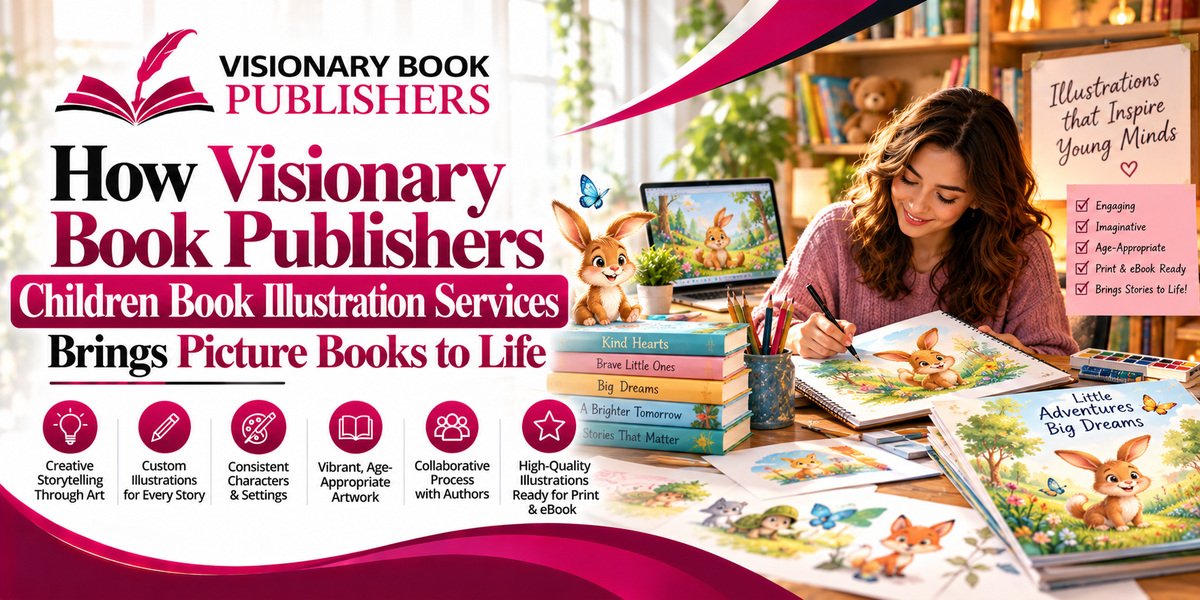
In a picture book, the illustrations are not decoration. They are half of the storytelling. Children often study the pictures long before they can read the words, discovering hidden details, reading emotions on characters’ faces, and following the action from page to page. That is why the art in a children’s book matters so much. Children book illustration services pair your story with artwork that captures its heart, humor, and imagination. At Visionary Book Publishers, we help authors bring their picture books to life through thoughtful illustration planning and collaborative creative development, as part of our book publishing services. This article explains how the process works.
Why Illustration Matters in Children’s Books
Young readers experience books visually. Illustrations help them understand the story, connect with characters, build vocabulary, and develop a love of reading. For adults reading aloud, beautiful art makes the experience more enjoyable and encourages repeat readings.
Strong illustrations also influence how a book is perceived. Parents, teachers and gift-givers often choose children’s books based on the cover and a quick flip through the pages. Professional picture book illustrations signal quality and make your book stand out. Investing in children book illustration services is therefore one of the most important decisions a picture book author makes.
What Children Book Illustration Services Include
Every illustration project is tailored to the book, but a typical process may include:
- Manuscript review: understanding the story, characters, setting, and tone.
- Page planning: dividing the text across pages and spreads.
- Character development: creating sketches of the main characters for your approval.
- Style selection: choosing an art style that suits the story and audience.
- Rough sketches: drafting each page layout to show composition and action.
- Final artwork: completing illustrations in full color or the agreed style.
- Cover illustration: creating artwork that introduces the book and works for both print and digital formats.
The number of illustrations, revision rounds, and deliverables is defined in a written proposal before work begins.
Working with a Children’s Book Illustrator
A skilled children’s book illustrator brings more than artistic talent. They understand how to pace a story visually, how to create expressive characters and how to leave space for text. They also know how to add visual details that reward repeat readings, such as a small pet appearing on every page or a background story that unfolds alongside the main plot.
Collaboration is key. Your children’s book illustrator will ask about your vision, your characters, and any references you have. At the same time, they bring their own creative perspective, often suggesting visual ideas that enhance the story in ways the text alone cannot.
Developing Characters
Characters are the heart of most children’s books. Before illustrating the full book, we develop character sketches that define each character’s appearance, personality, and expressions. You review these early sketches and provide feedback, ensuring the characters match your vision before the illustrator moves on to complete pages.
Consistency is important. Characters must look the same throughout the book, with recognizable features, clothing, and proportions, even as they move, change expressions, and appear in different settings.
Planning Page Layouts
Most picture books follow standard page counts, often 32 pages, which include front matter and the story itself. Illustrators plan how the text and art will flow across these pages, deciding which moments deserve a full spread, which pages need multiple smaller images and where page turns can create surprise or suspense.
Thoughtful layout planning ensures the story’s pacing works visually, keeping young readers engaged from beginning to end.
Choosing an Art Style
Children’s book illustration styles vary widely, from soft watercolor and bold digital art to whimsical cartoons and realistic painting. The right style depends on your story’s tone, your target age group, and your personal preferences. A gentle bedtime story may suit soft, dreamy colors, while an adventurous tale might call for bold, energetic artwork.
We help you explore styles and choose one that best supports your story.
Text and Image Working Together
In the best picture books, words and pictures complement each other without repeating the same information. The text might say a character is ready for school, while the illustration shows that their shoes are on the wrong feet. This interplay adds humor and depth.
As illustrations develop, we may suggest small text adjustments to avoid redundancy and let the art carry more of the storytelling, always with your approval.
Preparing Illustrations for Publishing
Once the illustrations are complete, they must be prepared for layout and printing. This includes setting the correct resolution, color profiles, trim size, and bleed so the artwork prints accurately. Our team integrates the illustrations with your text in a professional layout, creating print-ready files and digital editions where appropriate.
Timelines and Planning
Illustration is usually the longest stage of producing a picture book, because each spread requires sketching, feedback, refinement, and final rendering. Planning ahead gives everyone room to do their best work. We agree on milestones at the start, such as character approval, rough sketches, and final art, so you know when to expect each stage and when your feedback is needed. Clear timelines are one of the quiet strengths of professional children book illustration services, helping your project reach completion without rushed decisions or last-minute surprises.
Ownership and Usage
Before starting, it is important to clarify how the illustrations can be used, such as in your book, marketing materials, merchandise, or future editions. These terms should be set out clearly in your written proposal, so you understand your rights from the beginning.
Bring Your Picture Book to Life
Your story deserves illustrations that delight young readers and the adults who share books with them. Our children book illustration services connect your manuscript with a talented children’s book illustrator to create picture book illustrations that capture your vision. If your story still needs polishing, our ghostwriting services can help, or you can contact Visionary Book Publishers to discuss your illustration project and request a written proposal.