By: Marcus Vale
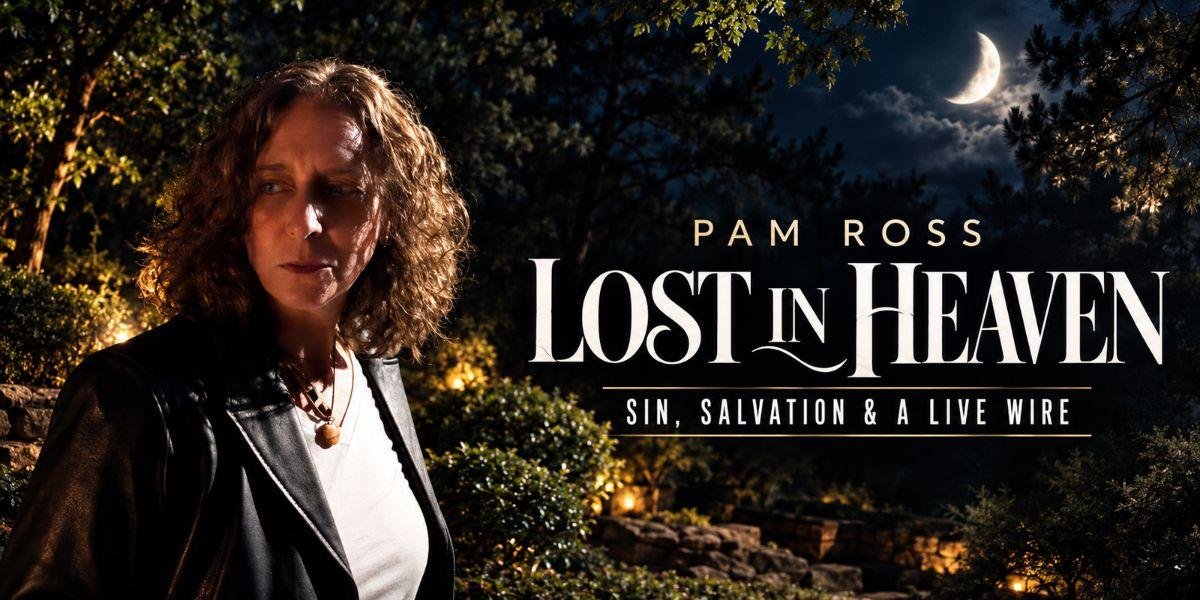
There is a moment in every great night when caution leaves the building. The music gets louder, the temperature rises, and whatever respectable intentions you carried through the door disappear beneath the nearest table. Pam Ross lives inside that moment on “Lost in Heaven,” her September 11 single, a hot-blooded collision of country, Americana and Southern rock that treats desire as both temptation and deliverance.
Ross wastes no time setting the controls. “Singing loud, turning up the volume,” she begins, before admitting that her companion gets her “hotter than a day in late June.” It is hardly coded language, and thank God for that. Too many modern country songs approach attraction like a marketing exercise, assembling pickup trucks, denim and moonlight into something technically romantic but emotionally embalmed. Ross uses some of those familiar props, yet she makes them feel inhabited. The faded jeans belong to someone who can actually turn her head. The heat has consequences. The night is not decorative scenery; it is an accomplice.
That distinction matters. “Lost in Heaven” is not about a songwriter dutifully checking the boxes of a country love song. It is about surrender, the second when wanting someone becomes more persuasive than every reason not to.
The setting is appropriately removed from polite society. Hidden by the pines, the lovers find themselves inside a night that feels “open wide.” Nobody is watching, except perhaps the stars and a full moon sworn to secrecy. Ross understands the old power of this landscape. The woods have always represented the place beyond rules, from fairy tales to blues mythology to the darkest corners of rock ’n’ roll. Step past the tree line and civilization’s promises become negotiable.
Then the chorus arrives, lifting the encounter out of the dirt and toward the divine: “Lost in heaven with you / The prayer that’s coming true.” Here lies the song’s central spark. Ross refuses to choose between the sacred and the carnal. The kiss is temptation, but it is also an answered prayer. Angels sing on cue, only to blush at what they witness. Heaven, in other words, is not presented as the reward for resisting earthly desire. Heaven is the desire itself.
That could easily become ridiculous. Rock and country history are littered with songs that mistake overheated imagery for passion. Ross avoids the trap through conviction. She does not sound embarrassed by the size of the metaphor, nor does she hide behind irony. She sings as if pleasure really can be a form of revelation, and for the duration of the chorus, you believe her.
The music’s implied blend of country storytelling and rock muscle suits that argument. “Lost in Heaven” wants volume. Its language is physical: singing, dancing, moving, touching, staying awake until morning. Yet the song never becomes merely swaggering. Ross brings an adult awareness to the fantasy. “Take my hand and we’ll take it slow,” she sings, a line that changes the emotional temperature without cooling it. The invitation is mutual. The intimacy is chosen. This is not some adolescent conquest anthem dressed in cowboy boots; it is a grown woman articulating exactly what she wants.
That perspective gives the record an edge sharper than its easy imagery initially suggests. Country music has traditionally granted men endless room to roam, drink, desire and misbehave, while women are often asked to wait, forgive or serve as moral instruction. Ross has no interest in accepting that arrangement. Her narrator is neither victim nor distant object of admiration. She initiates, responds, fantasizes and decides. When her inhibitions disappear, the song treats the change not as a fall from grace but as an entrance into freedom.
The smartest turn comes with Sunday morning. The secret midnight world does not evaporate at dawn. Instead, Ross imagines waking to find the lover still there, lying beside her. This small detail gives the song a tenderness its more feverish lines only hint at. Saturday night supplies the combustion; Sunday morning reveals whether anything remains after the smoke clears. For Ross, the answer appears to be yes.
“Lost in Heaven” succeeds because it knows pleasure is rarely one clean emotion. It can feel reckless and reassuring, sinful and sacred, fleeting and strangely permanent. Ross holds those contradictions together without trying to solve them. Her heaven has sweat on its collar, pine needles on the ground and the volume turned high enough to annoy the neighbors.
The result is not a revolution in songwriting, nor does it pretend to be. It is something more useful: a familiar kind of song delivered with enough personality to make the familiar burn again. Ross takes moonlight, faded denim, angels and forbidden kisses, the battered furniture of a thousand country records, and rearranges them into a room that feels like her own.
By the final chorus, “Lost in Heaven” no longer sounds like an escape from reality. It sounds like a demand for a reality worth getting lost in.