
A Baylor College of Medicine advisory puts skin irritation at the center of Halloween preparation. Halloween makeup tips from medical experts focus on face paint, costume fabrics, eye products and removal. The guidance explains when women may need to test cosmetics early or avoid potentially irritating materials.
Key Takeaways
- Baylor College of Medicine published new Halloween skin-safety guidance on October 26, 2026, addressing costume fabrics, masks and face paint.
- The FDA recommends testing unfamiliar Halloween makeup at least 24 to 48 hours before use.
- Johns Hopkins Medicine cautions that glitter and false eyelashes may cause eye irritation or injury.
- The American Academy of Dermatology recommends testing new skincare products for seven to 10 days when possible.
- Cosmetic labels, proper removal and attention to existing skin conditions are important considerations when preparing Halloween makeup.
Halloween costume makeup may create more than a temporary change in appearance, according to guidance Baylor College of Medicine published on October 26, 2026. Dermatology physician assistant Hannah Felton warned that certain face paints, masks and costume materials may aggravate existing skin conditions or cause irritation, particularly when worn for an extended period.
The concern is not limited to dramatic makeup. The U.S. Food and Drug Administration advises checking where cosmetic color additives are permitted, while Johns Hopkins Medicine has warned about glitter and other products applied close to the eyes. Felton recommended makeup that the wearer has used before and products labeled noncomedogenic for acne-prone skin. That label describes a formulation intended not to clog pores, but it cannot establish that every wearer will tolerate every ingredient.
Halloween Makeup Tips Start With Labels and Skin Testing
Face paint sold for Halloween is regulated as a cosmetic. The FDA says color additives must be authorized for the particular way they are used. Approval for use on skin or fingernails does not necessarily extend to the eyelids or the area close to the eyes.
The agency advises consumers to read product labels and follow placement restrictions even when packaging pictures suggest otherwise. Craft paints and other materials not intended for cosmetic use should not be applied to the face. An unusually unpleasant odor from face paint may also be a reason to discard it, according to the FDA.
Advance testing is another precaution. Federal Halloween guidance recommends applying a small amount of the planned makeup to an arm at least 24 to 48 hours before use. Redness, swelling, itching or a rash at the test site may indicate a reaction.
That recommendation should not be confused with a comprehensive allergy check. The American Academy of Dermatology advises testing newly introduced skincare products on a small area twice daily for seven to 10 days when possible. Some reactions take longer to appear, meaning a short Halloween test cannot rule out every sensitivity.
In separate Baylor guidance published in 2024, dermatologist Oyetewa Oyerinde suggested water-based face paints for people concerned about acne or sensitive skin, noting that heavier grease-based formulas can be harder to remove. A water-based label does not, by itself, make a product suitable for every skin type.
Skin tolerance can also change with age and hormonal shifts. Women experiencing skin changes during menopause may notice increased dryness or sensitivity, providing another reason to review unfamiliar formulas before using them over a large area.
Glitter, False Lashes and Costume Masks Add Eye Risks
Johns Hopkins Medicine updated its Halloween eye-safety guidance on October 6, 2026, with specific cautions about glitter, false eyelashes and makeup placed near the lash line. Optometrist Meng Meng Xu of the Wilmer Eye Institute said, “The eyelids and eye surface are more prone to irritation than skin elsewhere on the body.”
The medical center cautions that even cosmetic glitter can migrate into an eye and scratch its surface. Craft glitter may contain materials that are not appropriate for cosmetic application and should not be used as a substitute. Products applied inside the lash line can increase irritation and dryness.
False eyelashes carry separate concerns involving adhesive, placement and removal. Xu said clinicians sometimes see allergic reactions, eyelid infections and corneal scratches after people use false lashes or glitter-based costume makeup. The examples describe complications that can occur, not an estimate of how often they happen.
Decorative contact lenses are another distinction. The FDA classifies them as medical devices and requires a prescription, including for lenses used only to change eye color or create a Halloween effect. An eye-care professional must determine the proper fit. Selling them without a prescription is illegal in the United States, according to the agency.
Face masks and costumes can create irritation without cosmetics. Felton noted that full-face masks may trap heat and sweat, worsening acne or eczema for some wearers. Latex can also cause contact dermatitis in people who are sensitive to it.
Baylor’s guidance favors breathable designs and warns that rough materials, including sequins, tulle and stiff lace, may rub against skin. A soft cotton layer beneath an irritating costume may reduce direct contact. Felton also advised washing suitable costumes with fragrance-free detergent before wearing them.
Gentle Removal Matters After Halloween Makeup
Removing Halloween makeup requires the same attention to product instructions as applying it. The FDA advises following the directions on the label rather than assuming one cleanser will remove every formula. That includes reading separate directions for adhesives used with costume accessories.
Oyerinde, the Baylor dermatologist, recommended fragrance-free makeup remover or micellar water and cautioned against forceful rubbing. Heavier oil-based or grease formulas may require an oil-based remover, followed by gentle cleansing to clear remaining residue. Repeated scrubbing, particularly near the eyes, may make irritated skin more uncomfortable.
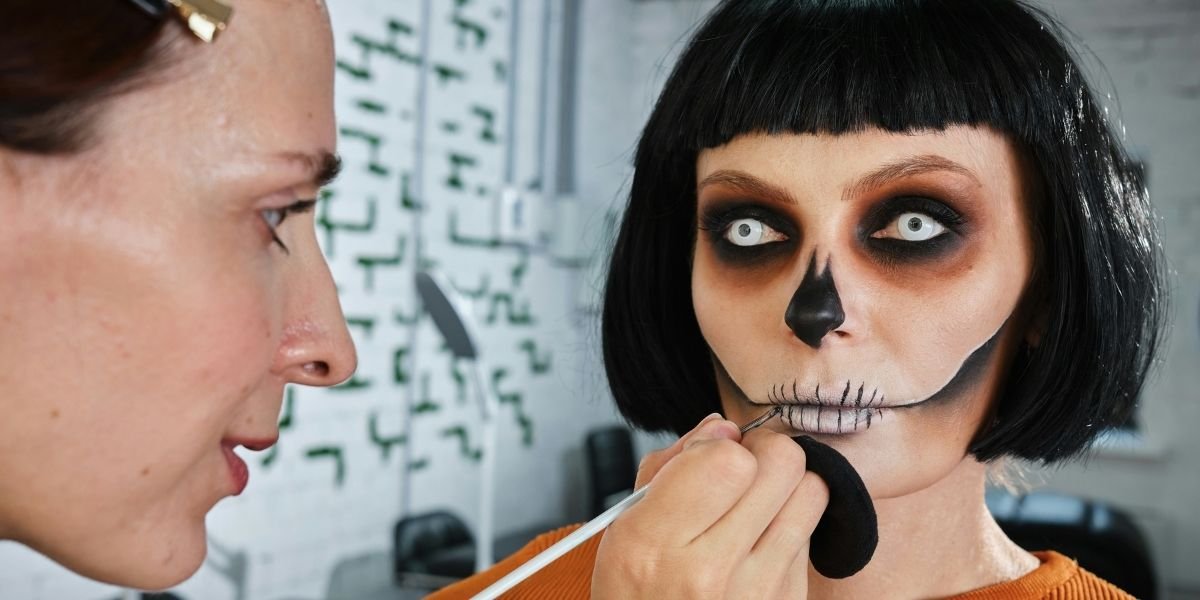
Photo Credit: Unsplash.com
Those recommendations align with gentle daily skincare habits that emphasize cleansing and moisturizing without unnecessary friction. Removing makeup before sleep also reduces the amount of time residue remains against the skin.
A rash after Halloween does not establish which product caused it. Face paint, adhesive, fragrance, fabric and sweat are among the possible contributors, and the location and timing of symptoms may help a clinician evaluate the problem.
The American Academy of Dermatology advises washing off a product that causes a reaction and stopping its use. A cool compress or petroleum jelly may ease some mild reactions, but persistent or severe symptoms may require a dermatologist. The FDA advises prompt care for contact lens wearers who experience ongoing eye pain, redness or reduced vision.
Frequently Asked Questions
How far in advance should Halloween makeup be tested?
Halloween makeup tips from the FDA recommend testing a small amount on the arm at least 24 to 48 hours before use. The American Academy of Dermatology recommends a seven-to-10-day test for newly introduced skincare products when possible.
Is water-based face paint safer for sensitive skin?
Baylor dermatologist Oyetewa Oyerinde identified water-based face paint as an option that may be easier to remove and less likely to clog pores. Individual reactions remain possible, so ingredients and prior sensitivities still matter.
Should glitter be used near the eyes?
Johns Hopkins Medicine advises avoiding glitter near the eyes because particles may scratch the eye surface. Craft glitter should not be used as a cosmetic substitute.
When should a reaction receive medical attention?
Persistent or severe skin irritation may need a dermatologist’s assessment. Contact lens wearers with ongoing redness, pain or reduced vision should seek prompt care from an eye professional.
Disclaimer
This article is intended for general informational purposes only and does not constitute professional medical advice, diagnosis, or treatment. Skin sensitivity and reactions to cosmetics may vary depending on individual health conditions, allergies, and product ingredients. Readers experiencing irritation, allergic reactions, eye pain, or vision changes should seek advice from a qualified healthcare professional. Product safety instructions and medical guidance should always be followed when applying or removing Halloween makeup.