Women's Journal

Different Roads, Shared Hearts as Eleyet McConnell and Alex Krawczyk Are Bringing Humanity Back to Independent Music


By: James Mitchell

From Ohio’s soulful rock traditions to Toronto’s intimate folk storytelling, two acclaimed musical acts are proving that honesty, resilience, and emotional connection still matter

In an industry increasingly driven by algorithms, fleeting trends, and manufactured personalities, something quietly extraordinary is happening in independent music. Artists are rediscovering the power of telling the truth. Not the polished, commercially convenient version, but the messy, complicated, sometimes painful reality of being human.

Two compelling examples are Ohio-based husband-and-wife duo Eleyet McConnell and Canadian folk singer-songwriter Alex Krawczyk. Though separated by geography and musical approach, their respective careers reveal a striking common philosophy: music means more when it comes from somewhere real.

For Angie and Chris McConnell, that authenticity arrives wrapped in muscular rock arrangements, blues-soaked melodies, and vocals that refuse to hide their emotional scars. For Krawczyk, it emerges through gentle acoustic textures, thoughtful lyrics, and an almost meditative exploration of grief, healing, and renewal.

The approaches differ, but the destination is remarkably similar.

Two Albums, One Universal Conversation

Both artists entered 2026 with significant creative statements.

Eleyet McConnell released their sophomore album, The Journey, on March 6th, building upon the foundation established by their 2023 debut, Crazy World. Produced by Patrick Himes at Reel Love Recording Company, the project captures the duo’s evolving relationship with love, survival, accountability, and personal transformation.

Meanwhile, Krawczyk released her second album, Wonders Await, on January 25. The 13-track collection, created with longtime collaborator and producer Robbie Roth, expands her contemporary folk sound while examining resilience, gratitude, and the possibility of finding beauty after profound loss.

Where Eleyet McConnell confronts life’s turbulence head-on, Krawczyk often approaches similar emotional territory with a reassuring hand.

Consider Eleyet McConnell’s “The Ledge,” a powerful examination of reaching the breaking point in a destructive relationship. Driven by Angie’s commanding vocals and the band’s dynamic instrumentation, the song explores the courage required to reclaim personal freedom.

Contrast that with Krawczyk’s broader musical philosophy, which emphasizes acceptance, reflection, and finding the strength to embrace another day.

One demands change. The other nurtures recovery.

Together, they offer complementary perspectives on the complicated process of healing.

When Life Becomes the Song

Neither act approaches songwriting as an exercise in manufactured drama.

For the McConnells, music grows naturally from their shared experiences. Their marriage, creative partnership, and individual histories provide a reservoir of stories that cannot easily be replicated.

Angie’s powerful vocal delivery brings an unmistakable urgency to songs such as “The Horizon,” while Chris provides musical grounding and an intuitive understanding of how to support the emotion behind each composition.

Their connection is not merely musical chemistry. It is the accumulated understanding of two people who have navigated life’s uncertainties together.

Krawczyk’s artistic journey carries its own profound emotional weight.

Following the traumatic loss of her parents, she turned toward songwriting as a means of processing grief and rediscovering purpose. Her 2022 debut album, Le Olam, introduced listeners to an artist whose creative identity was deeply connected to compassion, spirituality, and personal reflection.

Rather than allowing tragedy to define her entire narrative, Krawczyk has increasingly focused on the possibilities that emerge beyond it.

That distinction matters.

Both artists understand that resilience is not the absence of suffering. It is the decision to continue despite it.

Recognition Without Compromise

Their commitment to emotional authenticity has also attracted industry attention.

Eleyet McConnell has earned recognition from the Josie Music Awards, International Singer Songwriters Association, Independent Music Network, and international film festivals. Their music has also achieved notable placements on the UK iTunes charts.

Krawczyk has similarly gained recognition within independent folk circles, including nominations from the Canadian Folk Music Awards and the Josie Music Awards.

Yet neither act seems particularly interested in sacrificing artistic individuality for wider commercial acceptance.

Instead, their music occupies that increasingly valuable space where creative freedom intersects with genuine audience connection.

A Shared Vision for Independent Music

Perhaps the most fascinating connection between Eleyet McConnell and Alex Krawczyk is not stylistic at all.

It is philosophical.

Both recognize music as something larger than entertainment: a means of understanding ourselves and one another.

The McConnells turn vulnerability into strength, using rock’s emotional force to confront relationships, uncertainty, and redemption. Krawczyk transforms introspection into reassurance, offering listeners permission to grieve, recover, and hope again.

Their records make compelling companions precisely because they sound so different.

Play The Journey when life demands courage. Turn to Wonders Await when the heart needs reassurance.

Neither promises easy answers. Both recognize that meaningful change takes time.

And in an era when independent musicians face unprecedented pressure to chase attention rather than substance, that shared commitment to sincerity feels increasingly important.

Eleyet McConnell and Alex Krawczyk may travel different musical roads, but their destination intersect somewhere deeply human.

Both remind us that the greatest songs do more than entertain us.

They help us recognize ourselves.

Halloween Makeup Tips: Experts Flag Skin and Eye Risks

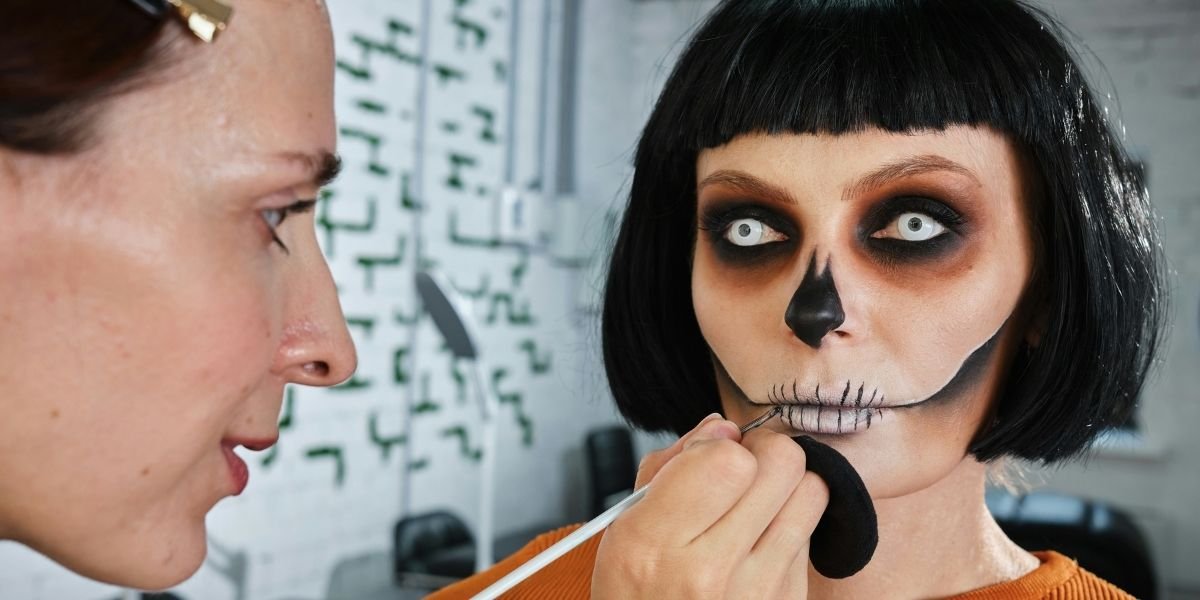
A Baylor College of Medicine advisory puts skin irritation at the center of Halloween preparation. Halloween makeup tips from medical experts focus on face paint, costume fabrics, eye products and removal. The guidance explains when women may need to test cosmetics early or avoid potentially irritating materials.

Key Takeaways

  • Baylor College of Medicine published new Halloween skin-safety guidance on October 26, 2026, addressing costume fabrics, masks and face paint.
  • The FDA recommends testing unfamiliar Halloween makeup at least 24 to 48 hours before use.
  • Johns Hopkins Medicine cautions that glitter and false eyelashes may cause eye irritation or injury.
  • The American Academy of Dermatology recommends testing new skincare products for seven to 10 days when possible.
  • Cosmetic labels, proper removal and attention to existing skin conditions are important considerations when preparing Halloween makeup.

Halloween costume makeup may create more than a temporary change in appearance, according to guidance Baylor College of Medicine published on October 26, 2026. Dermatology physician assistant Hannah Felton warned that certain face paints, masks and costume materials may aggravate existing skin conditions or cause irritation, particularly when worn for an extended period.

The concern is not limited to dramatic makeup. The U.S. Food and Drug Administration advises checking where cosmetic color additives are permitted, while Johns Hopkins Medicine has warned about glitter and other products applied close to the eyes. Felton recommended makeup that the wearer has used before and products labeled noncomedogenic for acne-prone skin. That label describes a formulation intended not to clog pores, but it cannot establish that every wearer will tolerate every ingredient.

Halloween Makeup Tips Start With Labels and Skin Testing

Face paint sold for Halloween is regulated as a cosmetic. The FDA says color additives must be authorized for the particular way they are used. Approval for use on skin or fingernails does not necessarily extend to the eyelids or the area close to the eyes.

The agency advises consumers to read product labels and follow placement restrictions even when packaging pictures suggest otherwise. Craft paints and other materials not intended for cosmetic use should not be applied to the face. An unusually unpleasant odor from face paint may also be a reason to discard it, according to the FDA.

Advance testing is another precaution. Federal Halloween guidance recommends applying a small amount of the planned makeup to an arm at least 24 to 48 hours before use. Redness, swelling, itching or a rash at the test site may indicate a reaction.

That recommendation should not be confused with a comprehensive allergy check. The American Academy of Dermatology advises testing newly introduced skincare products on a small area twice daily for seven to 10 days when possible. Some reactions take longer to appear, meaning a short Halloween test cannot rule out every sensitivity.

In separate Baylor guidance published in 2024, dermatologist Oyetewa Oyerinde suggested water-based face paints for people concerned about acne or sensitive skin, noting that heavier grease-based formulas can be harder to remove. A water-based label does not, by itself, make a product suitable for every skin type.

Skin tolerance can also change with age and hormonal shifts. Women experiencing skin changes during menopause may notice increased dryness or sensitivity, providing another reason to review unfamiliar formulas before using them over a large area.

Glitter, False Lashes and Costume Masks Add Eye Risks

Johns Hopkins Medicine updated its Halloween eye-safety guidance on October 6, 2026, with specific cautions about glitter, false eyelashes and makeup placed near the lash line. Optometrist Meng Meng Xu of the Wilmer Eye Institute said, “The eyelids and eye surface are more prone to irritation than skin elsewhere on the body.”

The medical center cautions that even cosmetic glitter can migrate into an eye and scratch its surface. Craft glitter may contain materials that are not appropriate for cosmetic application and should not be used as a substitute. Products applied inside the lash line can increase irritation and dryness.

False eyelashes carry separate concerns involving adhesive, placement and removal. Xu said clinicians sometimes see allergic reactions, eyelid infections and corneal scratches after people use false lashes or glitter-based costume makeup. The examples describe complications that can occur, not an estimate of how often they happen.

Decorative contact lenses are another distinction. The FDA classifies them as medical devices and requires a prescription, including for lenses used only to change eye color or create a Halloween effect. An eye-care professional must determine the proper fit. Selling them without a prescription is illegal in the United States, according to the agency.

Face masks and costumes can create irritation without cosmetics. Felton noted that full-face masks may trap heat and sweat, worsening acne or eczema for some wearers. Latex can also cause contact dermatitis in people who are sensitive to it.

Baylor’s guidance favors breathable designs and warns that rough materials, including sequins, tulle and stiff lace, may rub against skin. A soft cotton layer beneath an irritating costume may reduce direct contact. Felton also advised washing suitable costumes with fragrance-free detergent before wearing them.

Gentle Removal Matters After Halloween Makeup

Removing Halloween makeup requires the same attention to product instructions as applying it. The FDA advises following the directions on the label rather than assuming one cleanser will remove every formula. That includes reading separate directions for adhesives used with costume accessories.

Oyerinde, the Baylor dermatologist, recommended fragrance-free makeup remover or micellar water and cautioned against forceful rubbing. Heavier oil-based or grease formulas may require an oil-based remover, followed by gentle cleansing to clear remaining residue. Repeated scrubbing, particularly near the eyes, may make irritated skin more uncomfortable.

Halloween Makeup Tips Experts Flag Skin and Eye Risks

Photo Credit: Unsplash.com

Those recommendations align with gentle daily skincare habits that emphasize cleansing and moisturizing without unnecessary friction. Removing makeup before sleep also reduces the amount of time residue remains against the skin.

A rash after Halloween does not establish which product caused it. Face paint, adhesive, fragrance, fabric and sweat are among the possible contributors, and the location and timing of symptoms may help a clinician evaluate the problem.

The American Academy of Dermatology advises washing off a product that causes a reaction and stopping its use. A cool compress or petroleum jelly may ease some mild reactions, but persistent or severe symptoms may require a dermatologist. The FDA advises prompt care for contact lens wearers who experience ongoing eye pain, redness or reduced vision.

Frequently Asked Questions

How far in advance should Halloween makeup be tested?

Halloween makeup tips from the FDA recommend testing a small amount on the arm at least 24 to 48 hours before use. The American Academy of Dermatology recommends a seven-to-10-day test for newly introduced skincare products when possible.

Is water-based face paint safer for sensitive skin?

Baylor dermatologist Oyetewa Oyerinde identified water-based face paint as an option that may be easier to remove and less likely to clog pores. Individual reactions remain possible, so ingredients and prior sensitivities still matter.

Should glitter be used near the eyes?

Johns Hopkins Medicine advises avoiding glitter near the eyes because particles may scratch the eye surface. Craft glitter should not be used as a cosmetic substitute.

When should a reaction receive medical attention?

Persistent or severe skin irritation may need a dermatologist’s assessment. Contact lens wearers with ongoing redness, pain or reduced vision should seek prompt care from an eye professional.

Disclaimer

This article is intended for general informational purposes only and does not constitute professional medical advice, diagnosis, or treatment. Skin sensitivity and reactions to cosmetics may vary depending on individual health conditions, allergies, and product ingredients. Readers experiencing irritation, allergic reactions, eye pain, or vision changes should seek advice from a qualified healthcare professional. Product safety instructions and medical guidance should always be followed when applying or removing Halloween makeup.