By: Sara Wolfe
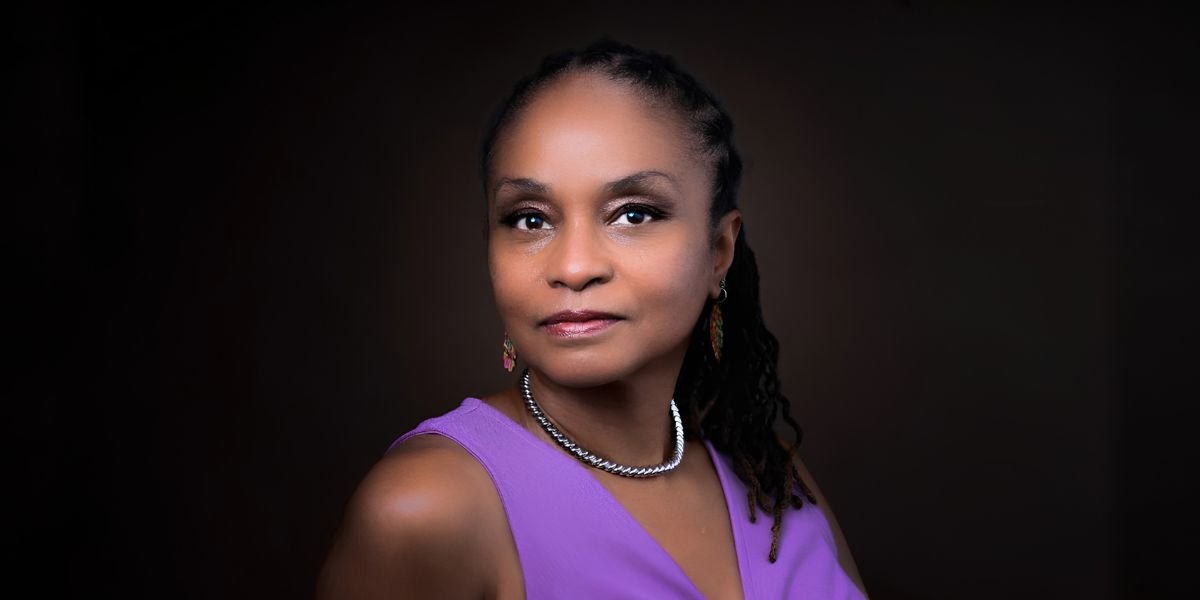
Carol Mitchell has spent her career moving between forms and audiences. She is the author of the short story collection A Good Haunting: Stories, the novel What Start Bad a Mornin’, and nineteen books for children. Her short fiction and book reviews have appeared in numerous journals, and she holds an MFA as well as fellowships from the Virginia Center for the Creative Arts and other arts institutions. By day, Mitchell teaches writing. At night, she turns to her own work, including a new novel.
With A Good Haunting, Mitchell brings together nine speculative stories that move across the Caribbean, Europe, Africa and the United States while keeping Caribbean identity and heritage at their center. The collection blends myth, magic and realism to examine motherhood, grief, death, love, betrayal and home. Rather than treating those themes as separate concerns, Mitchell lets them overlap, often forcing characters to make difficult choices when the lives and relationships they value most are threatened.
“A Good Haunting is a collection of nine speculative short stories centered around motherhood, grief, and death,” Mitchell said. “Although the settings vary from the Caribbean to Europe to Africa to the United States, the characters are all connected to the Caribbean, and several feature myths and traditions that are rooted in an Afro-Caribbean heritage.”
The range of the collection is visible in its central situations. One story follows a woman trying to move beyond traditional expectations of wife and mother. Elsewhere, an eighteenth-century African queen is made immortal, sold into slavery and forced to confront impossible choices, while another story imagines a dwindling final community trying to maintain hope as people disappear around them. The premises are expansive, but the emotional stakes remain intimate. The title story centers on a widower using humor during an unusual death ritual as he confronts grief, guilt and troubling information about his spouse’s death. Another story, “Day Three,” follows an archaeologist who unintentionally revives the spirit of an ancestor who died centuries earlier.
Death appears repeatedly, but Mitchell says that pattern was not part of an original plan. She recognized it while examining the stories together during a workshop.
“That throughline of death was unplanned, and something I didn’t realize myself until I was in a short story collection workshop and I was tasked with finding the ideas and themes that connected the stories,” she said.
The discovery pushed Mitchell to consider the personal experiences beneath the fiction. She realized that deaths affecting people close to her had often been sudden, complicated and tragic. The stories became a way of exploring what remains after a person has outwardly moved forward.
“Grief is an integral part of the human experience that goes beyond lost loved ones to grieving lost opportunities and lost ways of life,” Mitchell said, “and I seem to be constantly exploring the different ways in which we, as humans, respond, change, and sometimes thrive through these times.”
That expansive view of grief helps explain why the collection is not simply about mortality. Its characters are also dealing with expectations, identity and transformation. Motherhood is particularly important. Mitchell describes being a mother and a daughter as two of the most significant relationships in her life, but she resists the idea that literature should reduce motherhood to one predetermined experience.
“I hope that my work contributes to the portrayals of motherhood that leave space for it to be wonderful, complex, and challenging, sometimes simultaneously, and also as a life experience that not every woman desires,” she said.
Mitchell’s use of Caribbean myths provides another layer. For her, myth is more than inherited folklore; it is a way communities explain themselves, carry warnings forward and shape social expectations. That also means myths can be questioned when they reinforce harmful ideas.
“Myths, in my mind, are the background stories of our lives,” Mitchell said. “They are fictitious, of course, but at the heart, there is always an inkling of how we came to be where we are and to value the things that we do.”
The collection uses those background stories while also asking what newer myths might be needed. Across nine stories, Mitchell’s characters confront loss and fear, but they also search for connection. Some succeed, some do not, and none leave their experiences unchanged. The result is speculative fiction grounded not in escape from ordinary life, but in a closer examination of the pressures, histories and relationships that make ordinary life matter. The supernatural gives those familiar human pressures a new shape and greater urgency.
A Good Haunting is available for preorder on Amazon.