Women's Journal

AI Breast Cancer Risk Tool Offers Women New Screening Insight


Clairity Breast uses artificial intelligence to estimate a woman’s five-year breast cancer risk from an existing screening mammogram. Developed by Clairity and led by founder and CEO Dr. Connie Lehman, the FDA-authorized technology is designed to provide risk information rather than diagnose breast cancer.

Key Takeaways

  • Clairity Breast uses AI to estimate five-year breast cancer risk from a screening mammogram
  • The technology was developed by Clairity, founded and led by Dr. Connie Lehman
  • The platform is FDA-authorized for breast cancer risk prediction
  • The tool does not diagnose breast cancer or replace radiologists
  • AI-generated risk information is intended to complement clinical decision-making

Clairity Breast Introduces AI-Based Breast Cancer Risk Assessment

Clairity Breast provides an AI-based assessment using an existing screening mammogram to estimate a woman’s likelihood of developing breast cancer over a five-year period.

The technology focuses on risk prediction rather than identifying an existing cancer diagnosis. A risk assessment estimates the likelihood of a future condition, while a diagnostic assessment determines whether a disease is currently present.

The distinction also reflects the broader role of breast cancer screening education, which can help women understand the purpose of screening, preventive care and informed healthcare decisions.

Clairity Breast adds another type of information to the screening process by analyzing mammographic data for patterns associated with future risk. The resulting estimate is intended to be considered alongside clinical care rather than treated as a diagnosis.

The technology is FDA-authorized for breast cancer risk prediction. Its authorization applies to that defined risk-assessment function and does not make the system a replacement for clinical evaluation.

AI Analysis Uses Existing Screening Mammograms

Clairity Breast analyzes information from an existing screening mammogram to estimate five-year breast cancer risk. The approach uses imaging already collected as part of breast cancer screening rather than requiring a separate type of imaging examination for the risk assessment.

The mammogram provides the information analyzed by the AI system, which then generates an estimate of future breast cancer risk.

This function differs from identifying an abnormality that may indicate an existing cancer. Cancer detection addresses whether disease may currently be present, while risk prediction estimates the likelihood of developing cancer during a defined period.

Clairity Breast is designed around the second function. Its five-year timeframe gives patients and healthcare professionals a defined period for interpreting the risk estimate.

The output therefore serves as an additional source of risk information derived from screening imaging rather than a cancer diagnosis.

Risk Prediction Is Not a Cancer Diagnosis

Clairity Breast does not diagnose breast cancer. The platform estimates five-year risk, which is different from determining whether cancer is currently present.

That distinction is important when interpreting an AI-generated assessment. A higher or lower risk estimate does not establish whether an individual woman has breast cancer.

The platform’s stated function is limited to risk prediction, and medical decisions continue to require appropriate clinical evaluation and professional judgment.

Five-Year Risk Estimates Add Information Beyond Cancer Detection

The five-year period used by Clairity Breast gives its assessment a specific timeframe. Rather than evaluating an image solely for signs of an existing cancer, the platform estimates the likelihood that breast cancer could develop within the following five years.

That creates a different type of information from the immediate interpretation of a screening mammogram. The screening image remains part of breast cancer detection, while the AI system uses information from that image to generate a separate risk estimate.

A five-year estimate should also be understood as a probability rather than a definitive prediction of an individual woman’s future health. It does not guarantee that breast cancer will or will not develop.

The information generated by the platform is intended to complement clinical decision-making. Healthcare professionals can consider the risk assessment alongside other relevant information when discussing care with patients.

For women undergoing screening, the distinction between detection and risk assessment provides the central context for understanding the technology. Clairity Breast is designed to add information about future risk while remaining separate from cancer diagnosis.

FDA-Authorized Technology Separates Risk Prediction From Diagnosis

Clairity Breast is FDA-authorized for breast cancer risk prediction. Its regulatory status defines the platform around the specific purpose of estimating breast cancer risk from screening mammograms.

Authorization for risk prediction does not change the distinction between prediction and diagnosis. The system remains a risk-assessment tool rather than a method for independently determining whether cancer is present.

Similar boundaries apply to other AI tools in women’s healthcare, where regulated technologies can assist with defined clinical tasks while healthcare professionals remain responsible for broader evaluation and decision-making.

The intended use of an AI medical system is important when interpreting its output. An algorithm developed for risk assessment should be considered within that defined role rather than treated as capable of performing functions outside its authorized purpose.

For Clairity Breast, that means the resulting estimate provides information about future breast cancer risk but does not establish a diagnosis or determine an individual patient’s medical outcome.

Clinical Decisions Remain With Patients and Healthcare Professionals

AI-generated risk information from Clairity Breast is intended to complement clinical decision-making rather than replace it. The platform does not take the place of radiologists or independently diagnose breast cancer.

Radiologists and other healthcare professionals remain responsible for clinical assessment and interpretation. Clairity Breast contributes an estimate of five-year risk based on information contained in the screening mammogram.

The technology should therefore be viewed as an additional source of information rather than an independent medical decision-maker. Its output can contribute to discussions between patients and healthcare professionals while remaining separate from diagnosis and treatment decisions.

For women, the practical distinction is between receiving additional information about future risk and receiving a cancer diagnosis. Clairity Breast is designed to provide the former.

Its use of artificial intelligence does not change that boundary. The system analyzes a screening mammogram and generates a risk estimate, while diagnosis and medical decisions remain clinical functions.

Frequently Asked Questions

What is the AI breast cancer risk tool from Clairity?

Clairity Breast is an AI-powered platform developed by Clairity that estimates a woman’s five-year breast cancer risk from an existing screening mammogram. It is designed for risk prediction rather than cancer diagnosis.

Can AI predict breast cancer risk from a mammogram?

Clairity Breast is designed to analyze information from a screening mammogram and estimate five-year breast cancer risk. The resulting assessment is a risk estimate rather than a determination that cancer is present.

Does Clairity Breast diagnose breast cancer?

No. Clairity Breast estimates breast cancer risk and does not diagnose breast cancer. Determining whether cancer is currently present remains a separate clinical function.

Is Clairity Breast FDA-authorized?

Yes. The platform is described as FDA-authorized for breast cancer risk prediction. Its authorization applies to its risk-assessment function rather than replacing clinical diagnosis.

How does AI-based breast cancer risk assessment differ from cancer detection?

Risk assessment estimates the likelihood of developing breast cancer over a defined period, while cancer detection focuses on identifying disease that may already be present. Clairity Breast is designed for the risk-assessment function.

Disclaimer: This article is for informational purposes only and does not constitute medical advice, diagnosis, or treatment. Readers should consult a qualified healthcare professional regarding breast cancer screening, individual risk factors, and medical decisions.

Carol Mitchell’s A Good Haunting Explores Motherhood, Grief and Caribbean Myth

By: Sara Wolfe

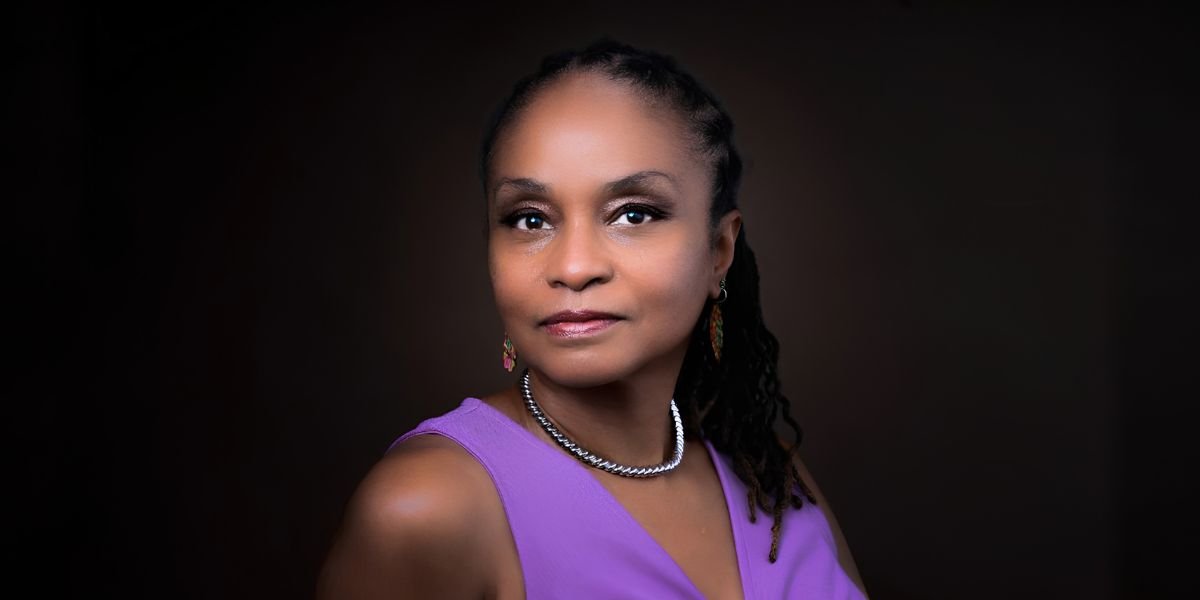
Carol Mitchell has spent her career moving between forms and audiences. She is the author of the short story collection A Good Haunting: Stories, the novel What Start Bad a Mornin’, and nineteen books for children. Her short fiction and book reviews have appeared in numerous journals, and she holds an MFA as well as fellowships from the Virginia Center for the Creative Arts and other arts institutions. By day, Mitchell teaches writing. At night, she turns to her own work, including a new novel.

With A Good Haunting, Mitchell brings together nine speculative stories that move across the Caribbean, Europe, Africa and the United States while keeping Caribbean identity and heritage at their center. The collection blends myth, magic and realism to examine motherhood, grief, death, love, betrayal and home. Rather than treating those themes as separate concerns, Mitchell lets them overlap, often forcing characters to make difficult choices when the lives and relationships they value most are threatened.

“A Good Haunting is a collection of nine speculative short stories centered around motherhood, grief, and death,” Mitchell said. “Although the settings vary from the Caribbean to Europe to Africa to the United States, the characters are all connected to the Caribbean, and several feature myths and traditions that are rooted in an Afro-Caribbean heritage.”

The range of the collection is visible in its central situations. One story follows a woman trying to move beyond traditional expectations of wife and mother. Elsewhere, an eighteenth-century African queen is made immortal, sold into slavery and forced to confront impossible choices, while another story imagines a dwindling final community trying to maintain hope as people disappear around them. The premises are expansive, but the emotional stakes remain intimate. The title story centers on a widower using humor during an unusual death ritual as he confronts grief, guilt and troubling information about his spouse’s death. Another story, “Day Three,” follows an archaeologist who unintentionally revives the spirit of an ancestor who died centuries earlier.

Death appears repeatedly, but Mitchell says that pattern was not part of an original plan. She recognized it while examining the stories together during a workshop.

“That throughline of death was unplanned, and something I didn’t realize myself until I was in a short story collection workshop and I was tasked with finding the ideas and themes that connected the stories,” she said.

The discovery pushed Mitchell to consider the personal experiences beneath the fiction. She realized that deaths affecting people close to her had often been sudden, complicated and tragic. The stories became a way of exploring what remains after a person has outwardly moved forward.

“Grief is an integral part of the human experience that goes beyond lost loved ones to grieving lost opportunities and lost ways of life,” Mitchell said, “and I seem to be constantly exploring the different ways in which we, as humans, respond, change, and sometimes thrive through these times.”

That expansive view of grief helps explain why the collection is not simply about mortality. Its characters are also dealing with expectations, identity and transformation. Motherhood is particularly important. Mitchell describes being a mother and a daughter as two of the most significant relationships in her life, but she resists the idea that literature should reduce motherhood to one predetermined experience.

“I hope that my work contributes to the portrayals of motherhood that leave space for it to be wonderful, complex, and challenging, sometimes simultaneously, and also as a life experience that not every woman desires,” she said.

Mitchell’s use of Caribbean myths provides another layer. For her, myth is more than inherited folklore; it is a way communities explain themselves, carry warnings forward and shape social expectations. That also means myths can be questioned when they reinforce harmful ideas.

“Myths, in my mind, are the background stories of our lives,” Mitchell said. “They are fictitious, of course, but at the heart, there is always an inkling of how we came to be where we are and to value the things that we do.”

The collection uses those background stories while also asking what newer myths might be needed. Across nine stories, Mitchell’s characters confront loss and fear, but they also search for connection. Some succeed, some do not, and none leave their experiences unchanged. The result is speculative fiction grounded not in escape from ordinary life, but in a closer examination of the pressures, histories and relationships that make ordinary life matter. The supernatural gives those familiar human pressures a new shape and greater urgency.

A Good Haunting is available for preorder on Amazon.

Fierce & Fearless Entrepreneur Magazine and SwagHer Magazine Launch 2026 Holiday Gift Guide and Business Spotlight Special

Holiday visibility packages start at $79.99, with submissions open through October 31

October 1, 2026. Fierce & Fearless Entrepreneur Magazine and SwagHer Magazine announce their collaborative 2026 Holiday Gift Guide and Business Spotlight Special, giving entrepreneurs an affordable opportunity to showcase their products, services, and brand stories during the holiday shopping season.

Built around the message “‘Tis the season for visibility,” the collaboration connects participating businesses with the publications’ combined audiences of Black women entrepreneurs, professionals, and intentional shoppers across the Washington, D.C., Maryland, and Virginia region and beyond. The guide invites readers to discover meaningful gifts while supporting the women and businesses behind them.

For entrepreneurs preparing for the holidays, visibility can help introduce a brand to shoppers seeking something personal, purposeful, and memorable. This joint initiative brings two magazine communities together to create a dedicated space for discovery, storytelling, and seasonal shopping inspiration.

The Holiday Gift Guide welcomes businesses offering beauty products, wellness essentials, home goods, accessories, books, food, gifts, and services suitable for holiday giving. Participating brands can share what makes their offerings distinctive and help readers understand the story, purpose, and people behind their businesses.

Two packages are available, starting at $79.99.

The Standard package, priced at $79.99, includes a dedicated feature showcasing a product or service through an image and short brand story. Each feature receives printed placement in the SwagHer x Fierce & Fearless Holiday Gift Guide and is shared with both publications’ audiences and readership.

Features will be designed with an editorial presentation that highlights each participating business clearly and professionally. These paid promotional placements give entrepreneurs an accessible way to introduce their offerings within a curated holiday guide.

The Upgraded package, priced at $150, includes everything in the Standard package, plus weekly collaborative social media posts featuring the participating product or service for one month. Promotion spans both publications’ Facebook and Instagram platforms, creating visibility across four social media accounts.

For businesses purchasing the Upgraded package in October, promotional posts continue into November, extending exposure as readers prepare for holiday purchases. This additional promotion gives brands multiple opportunities to share their offerings and remain visible beyond their printed feature.

Participation follows three straightforward steps: submit, get featured, and get seen. Businesses provide a high-resolution product or service image and a short paragraph describing their brand. The publications then shape the submitted information into a feature-ready story and design the placement for inclusion in the guide.

The Holiday Gift Guide will be printed and shared during the 2026 holiday season. Spaces are limited, and the promotional offer ends October 31, 2026. Interested entrepreneurs are encouraged to submit their materials before the deadline while placements remain available.

Through this collaboration, Fierce & Fearless Entrepreneur Magazine and SwagHer Magazine are creating opportunities for business owners to be published, tell their stories, and connect with readers who value supporting Black women-owned brands.

Entrepreneurs interested in participation, package details, or submission instructions can contact Admin@fierceandfearlessentrepreneur.com or fancy@swagher.net. Readers and prospective participants can also learn more about the collaborating publications by visiting their websites.

Fierce & Fearless Entrepreneur Magazine: https://fierceandfearlessentrepreneur.com

SwagHer Magazine: https://swagheronline.com

About Fierce & Fearless Entrepreneur Magazine

Founded by Ciara Lewis, Fierce & Fearless Entrepreneur Magazine celebrates women’s stories, entrepreneurship, resilience, and leadership, creating opportunities for authentic visibility and collaboration.

About SwagHer Magazine

SwagHer Magazine serves a community of Black women, entrepreneurs, professionals, and readers, providing a platform for stories, business visibility, and connection.

Ciara Lewis, Media Contact

Fierce & Fearless Entrepreneur Magazine

Admin@fierceandfearlessentrepreneur.com

BB Management, Houston’s Premier Media Press Run and Talent Management Network

H.O.W. Strong, Inaugural 5K Run/Walk Brings Community Together in West Palm Beach

By: Josh Hart

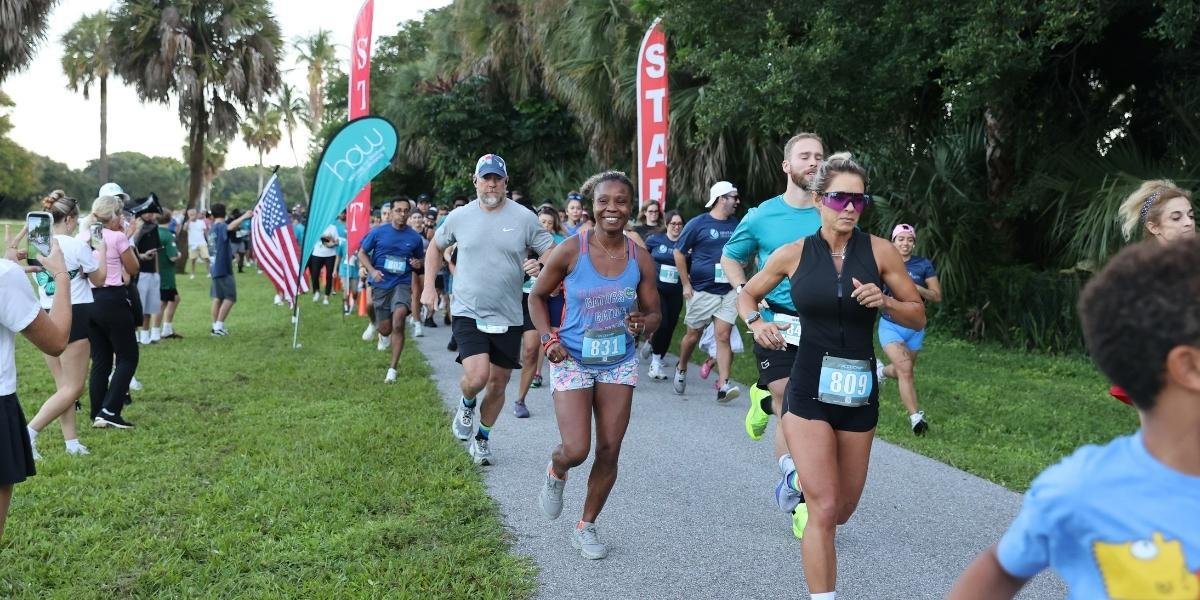
Hearing the Ovarian Cancer Whisper, Inc. (H.O.W.) hosted its inaugural H.O.W. Strong 5K Run/Walk on Saturday, September 26, at Dreher Park in West Palm Beach, bringing together more than 400 participants for a morning of community, awareness and support for women facing ovarian cancer.

Runners, walkers, ovarian cancer survivors, families, local businesses and community members came together for the 5K Run/Walk, Kids Dash and virtual race. According to H.O.W., the inaugural event raised $33,500 in donations and secured $48,500 in corporate sponsorships to further H.O.W.’s mission and support the women it serves.

The event was made possible through the support of 25 sponsors and 10 community tent vendors, who helped create a lively Vendor Village and welcoming atmosphere throughout the park. Participants and families also enjoyed the Kids Dash and a 360 Live Photo Booth, while Schumacher joined the event with two Subaru vehicles on-site.

One of the most meaningful moments came after the race, when three ovarian cancer survivors took the stage to share their personal experiences. Jennifer Hubbell spoke about the impact H.O.W. and its Glenda M. Wright Angel Fund had on her life during an extremely difficult time. Jennifer Flanagan-Brown focused on recognizing the signs and symptoms of ovarian cancer and the importance of knowing one’s body. Louise Altese-Isidori brought humor to the moment, joking that no one would be here without ovaries. Hubbell also participated in the 5K, making her presence and message especially meaningful.

The event also included an awards ceremony recognizing race winners and celebrating participants across a variety of age groups.

“What an incredible first year for the H.O.W. Strong 5K. What meant the most to me was seeing so many different parts of our community come together for the women we serve. There was such an amazing energy throughout the morning, but there was also a real sense of why everyone was there. We wanted to create an event that brought people together, honored the women we’ve lost, celebrated our survivors and helped more people understand the impact of ovarian cancer. Seeing that come to life in our very first year was incredibly special, and I’m so proud of what we created together,” said Amy Mattessich, Special Events Coordinator for H.O.W.

About H.O.W.

H.O.W. (Hearing the Ovarian Cancer Whisper) is dedicated to supporting women with ovarian cancer and advancing efforts to improve outcomes for the disease. Through the Glenda M. Wright Angel Fund, H.O.W. provides financial assistance to women with ovarian cancer experiencing financial hardship. H.O.W. also supports ovarian cancer research through the Dr. Robert C. Knapp Research Fellowship, provides scholarships to medical students interested in gynecologic oncology, promotes ovarian cancer awareness and education, and supports genetic screening for underserved and uninsured women who may be at increased risk for ovarian cancer. For more information about H.O.W. and the H.O.W. Strong 5K Run/Walk, visit the H.O.W. website.