By: Jeremy Murphy
Parents today have more information about raising children than ever before. They can watch parenting videos, scroll through social media advice, listen to podcasts, and download countless apps promising happier, healthier kids. Dr. Vanessa Lapointe believes all of that information has created a surprising problem.
“We’ve become very reductionistic in the way that we view ourselves and our children,” says Lapointe, a parenting educator, former psychologist, bestselling author, and international speaker. “We’ve forgotten that we are human beings. Instead, we tend to think about ourselves as human doings.”
Lapointe has dedicated her career to helping families better understand emotional regulation and healthy attachment in their children. After nearly 20 years as a clinical psychologist specializing in child development, she shifted her focus almost entirely to educating parents. The founder of The North Star Developmental Clinic and the author of Discipline Without Damage and Parenting Right From the Start, she now speaks and writes widely on raising resilient, emotionally healthy children.
Changing the Conversation
Lapointe did not always practice the way she teaches today. She began her career working primarily with children. Over time, she realized this traditional approach often addressed symptoms without creating lasting change. So she turned to focus on parents, who face new, unprecedented challenges every day.
Humanity Before Technology
If there is one challenge Lapointe believes defines modern parenting, it is technology. Children today are growing up surrounded by it in ways previous generations never experienced. “I have this really wise colleague who says, ‘We attach to technology, we detach from humanity,’” Lapointe says. She believes excessive screen use changes how children experience relationships and even how developing brains are wired. The answer is not to eliminate technology but to teach children to use it wisely and introduce it only when they are developmentally ready.
More Green Time, Less Screen Time
Lapointe encourages families to balance technology use with time outdoors. “I sometimes talk with parents about green time for screen time,” she says. “For every 30 minutes you’re on a screen, you should spend 30 minutes out in nature.”
The idea reflects her broader philosophy that children need real experiences more than virtual ones. Time outdoors, face-to-face conversations, imaginative play, and meaningful family interaction reconnect children with what she calls the essence of being human. She also believes parents should be comfortable setting limits. “We’re not gifting our nine-year-old a cellphone,” she says. “We’re wise enough to know that’s going to take a little more time, a little more maturity, and it needs to be introduced in a supervised way.”
The Hidden Cost of Digital Connection
The digital world creates the illusion of meaningful relationships, Lapointe says. “If you’ve been snacking on brownies, potato chips, chocolate bars, and lollipops all day, when your parents prepare a healthy meal, you’re not interested,” she notes. “It’s the same thing with gaming communities and social media.” After spending hours online, many children struggle to reconnect with family because they are emotionally “full up” on superficial interactions.
Model Behavior
Lapointe is quick to point out that children are not the only ones struggling with technology. Adults often model the very behaviors they hope their children will avoid. In infant mental health, professionals have even coined the term “brexting” for the phenomenon of breastfeeding parents becoming absorbed in their phones instead of engaging with their babies. “Instead of getting our eyes, they’re getting our earlobe because we’ve got our phone in the other hand,” Lapointe says.
“I’m Right Here”
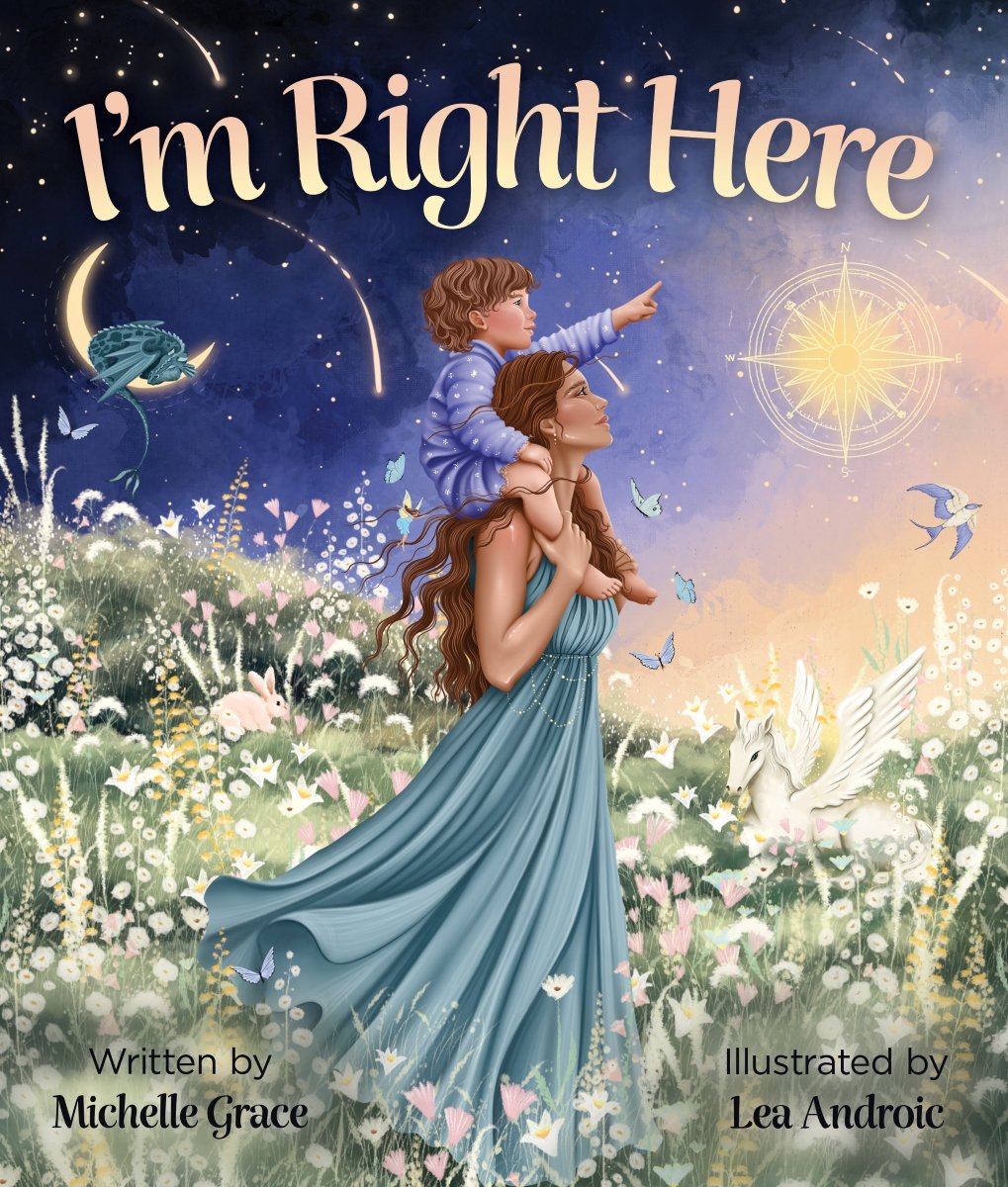
For Lapointe, parenting has never been about creating perfect children. Her message is simple: children do not need perfect parents. They need present ones. That’s what she finds so intriguing in Michelle Grace’s debut children’s book, I’m Right Here, a picture book that follows two stars finding each other across the universe as a way of describing the bond between a mother and her child.
“I think there’s a big piece that’s been missing,” Lapointe says. “A lot of children’s stories are about managing behavior or learning to label emotions. What Michelle has offered is a resource that captures the essence of being human and the experience of a parent child relationship that’s really working well.”
Lapointe says the book’s greatest strength is its focus on the enduring bond between parent and child, something she rarely encounters in children’s publishing. In a culture that often treats parenthood as logistics, Grace writes from the place beneath all that: the floor, the toys, the voices, the wonder and the awe. For Lapointe, the story reflects the kind of presence she hopes parents will bring to everyday moments with their children.