Women's Journal

Dr. Vanessa Lapointe’s Call For Connection in a Distracted World

By: Jeremy Murphy

Parents today have more information about raising children than ever before. They can watch parenting videos, scroll through social media advice, listen to podcasts, and download countless apps promising happier, healthier kids. Dr. Vanessa Lapointe believes all of that information has created a surprising problem.

“We’ve become very reductionistic in the way that we view ourselves and our children,” says Lapointe, a parenting educator, former psychologist, bestselling author, and international speaker. “We’ve forgotten that we are human beings. Instead, we tend to think about ourselves as human doings.”

Lapointe has dedicated her career to helping families better understand emotional regulation and healthy attachment in their children. After nearly 20 years as a clinical psychologist specializing in child development, she shifted her focus almost entirely to educating parents. The founder of The North Star Developmental Clinic and the author of Discipline Without Damage and Parenting Right From the Start, she now speaks and writes widely on raising resilient, emotionally healthy children.

Changing the Conversation

Lapointe did not always practice the way she teaches today. She began her career working primarily with children. Over time, she realized this traditional approach often addressed symptoms without creating lasting change. So she turned to focus on parents, who face new, unprecedented challenges every day.

Humanity Before Technology

If there is one challenge Lapointe believes defines modern parenting, it is technology. Children today are growing up surrounded by it in ways previous generations never experienced. “I have this really wise colleague who says, ‘We attach to technology, we detach from humanity,’” Lapointe says. She believes excessive screen use changes how children experience relationships and even how developing brains are wired. The answer is not to eliminate technology but to teach children to use it wisely and introduce it only when they are developmentally ready.

More Green Time, Less Screen Time

Lapointe encourages families to balance technology use with time outdoors. “I sometimes talk with parents about green time for screen time,” she says. “For every 30 minutes you’re on a screen, you should spend 30 minutes out in nature.”

The idea reflects her broader philosophy that children need real experiences more than virtual ones. Time outdoors, face-to-face conversations, imaginative play, and meaningful family interaction reconnect children with what she calls the essence of being human. She also believes parents should be comfortable setting limits. “We’re not gifting our nine-year-old a cellphone,” she says. “We’re wise enough to know that’s going to take a little more time, a little more maturity, and it needs to be introduced in a supervised way.”

The Hidden Cost of Digital Connection

The digital world creates the illusion of meaningful relationships, Lapointe says. “If you’ve been snacking on brownies, potato chips, chocolate bars, and lollipops all day, when your parents prepare a healthy meal, you’re not interested,” she notes. “It’s the same thing with gaming communities and social media.” After spending hours online, many children struggle to reconnect with family because they are emotionally “full up” on superficial interactions.

Model Behavior

Lapointe is quick to point out that children are not the only ones struggling with technology. Adults often model the very behaviors they hope their children will avoid. In infant mental health, professionals have even coined the term “brexting” for the phenomenon of breastfeeding parents becoming absorbed in their phones instead of engaging with their babies. “Instead of getting our eyes, they’re getting our earlobe because we’ve got our phone in the other hand,” Lapointe says.

“I’m Right Here”

Photo Courtesy: Michelle Grace (Illustrated by Lea Androic)

For Lapointe, parenting has never been about creating perfect children. Her message is simple: children do not need perfect parents. They need present ones. That’s what she finds so intriguing in Michelle Grace’s debut children’s book, I’m Right Here, a picture book that follows two stars finding each other across the universe as a way of describing the bond between a mother and her child.

“I think there’s a big piece that’s been missing,” Lapointe says. “A lot of children’s stories are about managing behavior or learning to label emotions. What Michelle has offered is a resource that captures the essence of being human and the experience of a parent child relationship that’s really working well.”

Lapointe says the book’s greatest strength is its focus on the enduring bond between parent and child, something she rarely encounters in children’s publishing. In a culture that often treats parenthood as logistics, Grace writes from the place beneath all that: the floor, the toys, the voices, the wonder and the awe. For Lapointe, the story reflects the kind of presence she hopes parents will bring to everyday moments with their children.

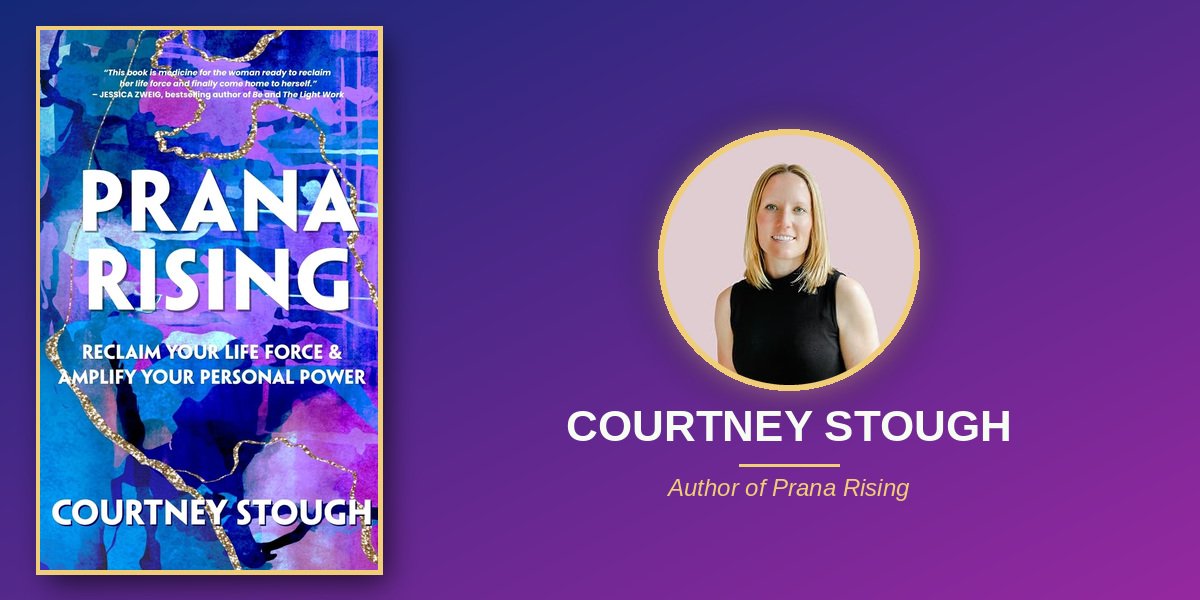
Courtney Stough Combines Personal Experience and Wellness Concepts in Prana Rising

By: Emily Roberts

The wellness genre has a structural problem. Books that lead with personal narrative often struggle to deliver actionable frameworks once the memoir portion concludes. Books that lead with methodology often feel thin on the credibility that only lived experience can supply. Courtney Stough’s Prana Rising: Reclaim Your Life Force & Amplify Your Personal Power is a notable effort at solving exactly this problem, and for the most part it succeeds.

Stough, a former corporate attorney with a Yale undergraduate degree and a Tulane law credential, spent years inside high-performance environments before the cumulative cost of that performance caught up with her. What followed was an unusually wide-ranging personal investigation: ketamine-assisted therapy, psilocybin work, yoga teacher training, somatic coaching, women’s healing containers, energy healing modalities, and ultimately a near-divorce and its slow, intentional repair. Prana Rising synthesizes that investigation into a four-part framework anchored by the Sanskrit concept of prana, defined here as vital life force, the animating energy that moves through and powers every dimension of human experience.

The book’s structure is its clearest strength. Stough organizes her argument across four movements that build on each other with genuine logical progression. Part I establishes the energetic landscape, defining prana, introducing a self-assessment tool across physical, mental, emotional, and spiritual axes, and developing the concept of Energy Vampires. Part II moves into inner work, addressing belief systems, emotional processing, somatic release, and personal responsibility. Part III shifts to the constructive phase, building what Stough calls the Powerhold™, the inner architecture that sustains reclaimed energy through four generators: Embodiment, Mindfulness, Creativity, and Community. Part IV addresses the philosophical dimension of the journey, surrender, nonlinear growth, and the ongoing curriculum of what Stough calls life as a mystery school.

What distinguishes this structure from standard self-help scaffolding is that the personal narrative and the framework stay genuinely integrated throughout. Stough does not front-load her story and then pivot to instruction. The memoir material resurfaces at each conceptual turn, providing what the framework alone could not: evidence that the ideas have been tested under real pressure. The marriage narrative in Part II, in which Stough examines her own role in the cycles of conflict and shutdown that brought her marriage to the edge of dissolution, is particularly well-executed. She does not present herself as a victim of circumstances or as a person who simply chose to wake up. She presents herself as someone who made specific, identifiable contributions to her own suffering and then chose to see them clearly.

The Energy Vampire taxonomy in Chapter 2 is the book’s most analytically interesting passage. Stough divides energy-draining habits into four categories: Digital Drains, Social and Emotional Leaks, Mental and Energetic Patterns, and a fourth category she labels “Good” Energy Vampires. This last group, which includes compulsive supplementation, hyper-productivity, spiritual bypassing, and endless self-help consumption, represents a more sophisticated observation than the wellness genre typically delivers. The insight that healing-adjacent behaviors can function as sophisticated avoidance of the actual work is both accurate and uncomfortable, and Stough handles it without moralizing.

The somatic framework in Part II draws competently from established sources: Bessel van der Kolk’s work on trauma and the body, Dr. John Sarno’s Tension Myositis Syndrome research, Nicole Sachs’ JournalSpeak practice, and Julia Cameron’s Morning Pages methodology. Stough does not present herself as originating these concepts, which is a point in her favor. Instead, she functions as a thoughtful synthesizer, selecting tools that she has personally verified and integrating them into a coherent whole. Her treatment of emotional processing as energy in motion, rather than as a problem to be managed, reflects consistent conceptual thinking.

The Powerhold™ framework in Part III delivers its clearest practical content. The Four Energy Generators offer a workable scaffolding for readers who need structural guidance rather than purely philosophical orientation. Stough’s insistence on “Right for Right Now” as a governing principle, her argument that consistency outweighs duration and that any practice must be adapted rather than rigidly followed, addresses one of the most common failure modes in personal development implementation. Her discussion of the boundary-setting chapter through the lens of ahimsa, the yogic principle of non-harm extended to apply to oneself as well as others, brings conceptual precision to a topic that is routinely oversimplified.

Where the book’s ambition occasionally exceeds its execution is in Part IV, where the philosophical register expands without a corresponding increase in specificity. The surrender and mystery school chapters are beautifully written but somewhat less actionable than what precedes them. This is not a fatal flaw. Many readers will find that the emotional resonance of Part IV does work that a fourth set of tools could not. But readers who came primarily for the methodology may find the final movement more evocative than instructive.

Those qualifications noted, Prana Rising represents a genuinely strong entry in a crowded category. Stough is a credible guide precisely because she is not presenting herself as someone who has finished. She is presenting herself as someone who has learned to keep going with greater awareness, and that posture is, finally, more honest and more useful than the polished arrival narratives the wellness genre so frequently offers.

Find Prana Rising on Amazon or at www.courtneystough.com/book and add one of the most structurally honest wellness frameworks of the year to your shelf.

Disclaimer: This article is for informational purposes only and should not be considered professional medical or health advice. The views and experiences shared are for general awareness and do not guarantee specific results. Readers are encouraged to consult qualified professionals before making decisions related to their health and well-being.

Caitlin Clark and A’ja Wilson Earn 2026 All-WNBA Honors

The WNBA announced its 2026 All-WNBA First and Second Teams, naming five players to each group following the regular season. Caitlin Clark, A’ja Wilson and rookie Olivia Miles earned First Team honors, while Angel Reese and four other players received Second Team recognition for their performances.

Key Takeaways

  • A’ja Wilson earned her sixth All-WNBA First Team selection after winning her third consecutive MVP award.
  • Olivia Miles finished second in MVP voting during her rookie season with the Minnesota Lynx.
  • Caitlin Clark became the first WNBA player to finish in the top three in both scoring and assists in the same season, according to the reported statistics.
  • Kelsey Mitchell set regular-season records for points, three-pointers and games reaching specified scoring thresholds.
  • Angel Reese recorded 521 rebounds and 32 double-doubles for the Atlanta Dream.

WNBA Announces Its 2026 All-WNBA Team Selections

The 2026 All-WNBA First Team includes A’ja Wilson of the Las Vegas Aces, Caitlin Clark and Kelsey Mitchell of the Indiana Fever, Olivia Miles of the Minnesota Lynx and Breanna Stewart of the New York Liberty. The league announced the selections ahead of Game 3 of the WNBA Finals.

The Second Team consists of Paige Bueckers of the Dallas Wings, Jackie Young of the Los Angeles Sparks, Angel Reese and Rhyne Howard of the Atlanta Dream, and Shakira Austin of the Washington Mystics. Each team recognizes five players for their regular-season performances.

The selections include established award winners, returning All-WNBA honorees and players receiving the distinction for the first time. Wilson and Stewart have earned repeated First Team recognition, while Miles joined the group in her first professional season.

Three Second Team players also received their first selections: Reese, Howard and Austin. Their recognition followed seasons that included individual statistical achievements in rebounding, steals, three-point shooting and scoring.

The First and Second Team announcements came as the league’s championship series continued. The selections recognize individual regular-season performance separately from the outcome of the WNBA Finals.

A’ja Wilson Extends Her Record of First Team Recognition

Wilson earned her sixth All-WNBA First Team selection after receiving her third consecutive WNBA Most Valuable Player award. Her latest honor adds to a record of repeated recognition for her performance with the Las Vegas Aces.

Wilson also ranked among the league’s leading players statistically. She averaged 23.4 points and 10.2 rebounds per game, according to the reported 2026 season figures, placing her among the players combining high scoring production with substantial rebounding totals.

Her selection followed another season in which she received the league’s top individual award. The MVP recognition and First Team selection represent separate honors: the former identifies the league’s most valuable player, while the latter recognizes five players across the league’s designated positions.

Wilson’s First Team status also places her alongside Stewart, another veteran who has received the honor multiple times. Stewart earned her seventh First Team selection after recording 20.8 points, 8.3 rebounds and 1.3 blocks per game, according to the reported statistics.

Stewart also ranked among the league’s top 10 players in scoring, rebounding and blocks. She played the fourth-most minutes per game, averaging 33, reflecting her role across the New York Liberty’s regular-season schedule.

The two veterans have also established profiles beyond their on-court statistics, including through WNBA players’ signature sneakers, with Clark, Wilson and Stewart among the players associated with signature footwear.

Caitlin Clark and Kelsey Mitchell Earn Indiana Fever Honors

Clark and Mitchell both earned All-WNBA First Team selections after productive seasons with the Indiana Fever. The recognition marked the second First Team selection for each player.

Clark averaged 22.3 points and 8.3 assists per game. She became the first player in WNBA history to finish among the top three in both scoring and assists in the same season, according to the reported season figures.

Her scoring average placed her among the league’s leading offensive players, while her assist average reflected her role in creating scoring opportunities for teammates. The combination of those rankings distinguished her statistical performance during the regular season.

Mitchell finished third in MVP voting, while Clark placed fourth. Their First Team selections therefore coincided with strong finishes in the league’s individual award voting.

Mitchell also set several WNBA regular-season records. She scored 1,086 points and made 135 three-pointers, while recording 44 games with at least 10 points and 35 games with at least 20 points.

Those totals provide separate measures of her production throughout the season. Her overall point total captures scoring volume, while the three-point figure records her long-range output. The games-played scoring thresholds show how frequently she reached those marks across the schedule.

Clark and several other players named to the All-WNBA teams have also competed together internationally. During the 2026 Women’s Basketball World Cup, the U.S. women’s basketball team won its fifth consecutive title, with Clark, Stewart and Reese among the players on the championship roster.

Both Clark and Mitchell’s selections give Indiana two places on the First Team. Their individual achievements were recognized alongside the performances of players from the Las Vegas Aces, Minnesota Lynx and New York Liberty.

Olivia Miles Joins Breanna Stewart on the First Team

Miles earned her first All-WNBA First Team selection in her rookie season with the Minnesota Lynx. She was also named Rookie of the Year and finished second behind Wilson in MVP voting.

The guard averaged 19.8 points, six assists and 4.7 rebounds per game across 40 games. She also averaged 1.3 steals and 0.6 blocks per game, recording contributions across several statistical categories.

Miles shot 49.2% from the field and 38.8% from three-point range. Those figures provide additional context for her scoring production, measuring her overall field-goal accuracy and success on attempts from beyond the three-point line.

Her First Team selection made her the only first-time honoree in that group during the 2026 season. The recognition came alongside her Rookie of the Year award, placing her among the season’s most recognized first-year players.

Miles joined four other players with different career histories. Wilson and Stewart entered the selection with multiple First Team honors, while Clark and Mitchell received the distinction for the second time.

The mix of career stages was also evident in the Second Team. Bueckers, who had received Rookie of the Year recognition the previous season, earned a Second Team selection after improving her statistical output in her second WNBA season.

Bueckers averaged 20.9 points and 5.9 assists per game for the Dallas Wings and shot 41% from three-point range. She ranked among the league’s top 10 in scoring, assists and three-point percentage, according to the reported season figures.

Angel Reese and Other Standouts Complete the Second Team

Reese, Howard and Austin received their first All-WNBA Second Team selections after individual achievements during the 2026 season. Reese also won Defensive Player of the Year and led the league in rebounding.

The Atlanta Dream forward collected 521 rebounds, becoming the first player to reach at least 500 rebounds in a season, according to the reported league statistics. She also recorded 32 double-doubles, setting the season record for that category.

Reese became the eighth player in WNBA history to average at least 15 points and 10 rebounds per game in a season. Her combination of scoring and rebounding contributed to her individual recognition alongside the Defensive Player of the Year award.

Howard, Reese’s Atlanta Dream teammate, led the league in steals and ranked second in three-pointers. She was also the first player to average at least three three-pointers and two steals per game in a season, according to the reported statistics.

Austin finished among the top 10 players in MVP voting and placed fourth in Defensive Player of the Year voting. She also came within five votes of winning Most Improved Player.

The Washington Mystics center averaged 17 points and 9.5 rebounds per game. Those figures placed her among three players to average at least 17 points and nine rebounds per game, alongside Wilson and Nneka Ogwumike.

Young earned her third All-WNBA Second Team selection after recording career highs for the Los Angeles Sparks. She averaged 18.9 points and 6.8 assists per game, ranking among the league’s top 10 players in assists.

The Second Team therefore included players recognized for different areas of production. Reese’s rebounding and defensive performance, Howard’s steals and three-point shooting, Austin’s scoring and rebounding, and Young’s scoring and playmaking each contributed to their selections.

Frequently Asked Questions

Who made the 2026 All-WNBA First Team?

The First Team consists of A’ja Wilson, Caitlin Clark, Kelsey Mitchell, Breanna Stewart and Olivia Miles. They represent the Las Vegas Aces, Indiana Fever, New York Liberty and Minnesota Lynx.

How many times has A’ja Wilson been named to the All-WNBA First Team?

Wilson received her sixth First Team selection in 2026. She also won her third consecutive WNBA MVP award that season.

Which rookies earned 2026 All-WNBA honors?

Olivia Miles was the only first-time selection on the First Team and also received Rookie of the Year recognition. Paige Bueckers earned a Second Team selection in her second WNBA season after receiving Rookie of the Year honors the previous season.

Who made the 2026 All-WNBA Second Team?

The Second Team consists of Paige Bueckers, Jackie Young, Angel Reese, Rhyne Howard and Shakira Austin. Reese, Howard and Austin received their first Second Team selections.

What records did Angel Reese set during the 2026 WNBA season?

Reese recorded 521 rebounds, becoming the first player to reach at least 500 rebounds in a season. She also set the single-season double-double record with 32 and became the eighth player to average at least 15 points and 10 rebounds per game in a season.