AI prenatal care entered a more defined regulatory phase in 2026 as the FDA cleared Butterfly Network’s gestational-age tool and authorized Ultrasound AI’s delivery date software. The decisions matter because they show how narrowly designed systems may support trained clinicians. This article examines the evidence, access questions, and safeguards shaping adoption.
Key Takeaways
- The FDA cleared Butterfly Network’s Gestational Age Tool on March 27, 2026, for use by qualified, trained health professionals.
- The FDA granted De Novo authorization to Ultrasound AI’s Delivery Date AI on February 11, 2026.
- A 2024 JAMA study found similar gestational-age accuracy between an AI-enabled handheld tool used by novices and conventional biometry performed by credentialed sonographers.
- WHO estimated that about 260,000 women died during or following pregnancy and childbirth in 2023.
- Current systems address defined tasks and do not replace comprehensive prenatal examinations, clinical judgment, or referral networks.
FDA Decisions Move AI Prenatal Care Into Clinical Use
The U.S. Food and Drug Administration cleared Butterfly Network’s Gestational Age Tool on March 27, 2026. Used with compatible handheld probes, it estimates gestational age in presumed singleton pregnancies.
The decision followed the FDA’s February 11, 2026, De Novo authorization of Delivery Date AI. Ultrasound AI’s software predicts a delivery date from obstetric radiological images. It does not identify high-risk pregnancies or specific complications or replace clinician judgment.
Together, the decisions place two narrowly designed pregnancy tools in regulated clinical use. They do not show that artificial intelligence can manage prenatal care independently. They indicate that algorithms can assist with defined tasks within authorized limits.
The decisions arrive as access to maternal care remains uneven. WHO estimated that about 260,000 women died during or following pregnancy and childbirth in 2023. Approximately 92% occurred in low- and lower-middle-income countries. U.S. gaps in rural maternal care have also focused attention on communities with limited obstetric capacity.
WHO recommends at least eight antenatal contacts and one ultrasound before 24 weeks. Gestational age guides screenings, medications, referrals, and delivery decisions. Conventional dating requires trained personnel to capture fetal views and measurements, which smaller facilities may struggle to provide.
A 2024 prospective JAMA study enrolled 400 pregnant participants in Lusaka, Zambia, and Chapel Hill, North Carolina. Novice clinicians collected blind abdominal sweeps with a battery-powered AI device, while credentialed sonographers performed standard biometry.
Between 14 and 27 weeks, mean absolute error was 3.2 days for the AI tool and 3.0 days for conventional biometry. The methods met the prespecified equivalence standard. The study involved singleton pregnancies, excluded known major fetal anomalies, and did not establish performance across every population.
Portable Ultrasound Extends Selected Prenatal Services
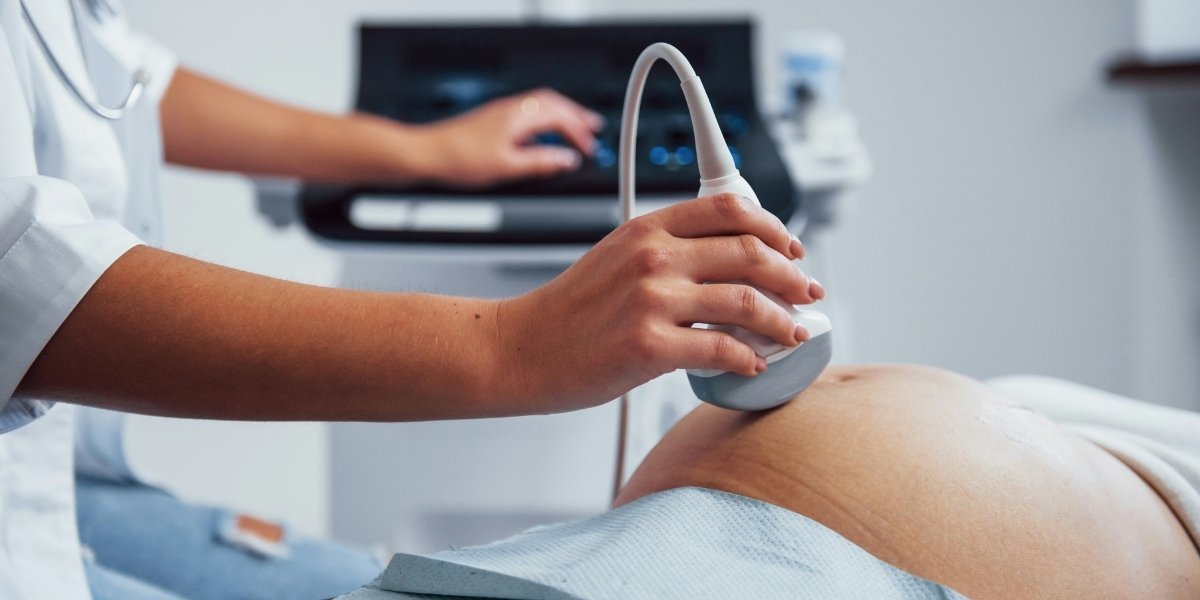
Portable ultrasound changes where imaging can occur. Handheld probes connect to tablets, and software guides trained users. Blind-sweep systems record short videos as an operator moves the probe across the abdomen.
The Butterfly tool is indicated for qualified, trained professionals assessing presumed singleton pregnancies from 16 to 37 weeks. FDA labeling calls its output adjunctive information and excludes prenatal management or delivery planning. A dating estimate cannot evaluate the fetal, placental, and maternal conditions covered by a comprehensive examination.

Photo Credit: Unsplash.com
Other systems address different imaging tasks. In May 2025, the FDA cleared BrightHeart’s View Classifier to detect standard views during second- or third-trimester fetal heart scans. It classifies images and videos but does not independently diagnose a heart condition.
These products sit within wider activity in women’s health technology, including imaging, monitoring, records, and workflow tools. Their value depends on more than software. Clinics need functioning equipment, trained staff, secure data systems, maintenance, electricity, and dependable referrals.
Researchers are evaluating models that analyze records, laboratory results, blood pressure, glucose, and patient histories. Proposed uses include detecting patterns associated with preeclampsia, preterm birth, gestational diabetes, and fetal growth concerns. Retrospective results may not transfer reliably into routine care.
Safeguards Will Determine Clinical Value
Pregnancy algorithms can inherit weaknesses from development data. Systems trained in a few hospitals may perform differently across racial groups, body sizes, gestational stages, machines, or health systems. Representative testing, external validation, stated limits, and continued monitoring remain essential.
Prenatal records may contain ultrasound images, genetic information, location data, and detailed histories. Health systems need clear policies for consent, access, retention, cybersecurity, and vendor data use. Patients need understandable notice when an algorithm contributes to a scan, score, or recommendation.
FDA clearance or authorization applies to a product’s stated use, not every application. Clinicians remain responsible for interpreting outputs with examinations and other findings. Local protocols need escalation steps for contradictory readings, device failures, unavailable specialists, and data outside the validated range.
AI prenatal care may extend selected services when portable tools are paired with trained professionals and referrals. Evidence does not support replacing comprehensive prenatal care. It supports a narrower role in which evaluated software assists specific tasks while human review remains central.
Frequently Asked Questions
What is AI prenatal care?
AI prenatal care refers to pregnancy-related tools that use algorithms to analyze information such as ultrasound images or clinical records. Current authorized products perform defined tasks and are intended to support, not replace, trained professionals.
What does the Butterfly Gestational Age Tool do?
The tool estimates gestational age from sweeps collected with compatible Butterfly probes. It is indicated for presumed singleton pregnancies from 16 to 37 weeks, not prenatal management or delivery planning.
What did the 2024 JAMA study find?
The study found similar gestational-age accuracy between novices using the AI device and credentialed sonographers performing biometry from 14 to 27 weeks. It included 400 participants in Zambia and North Carolina.
Can these tools replace a prenatal ultrasound examination?
No. A dating estimate or image-classification result cannot assess every condition covered by a comprehensive examination. Clinical interpretation, follow-up testing, and referrals remain necessary.