By: Jessica Suarez
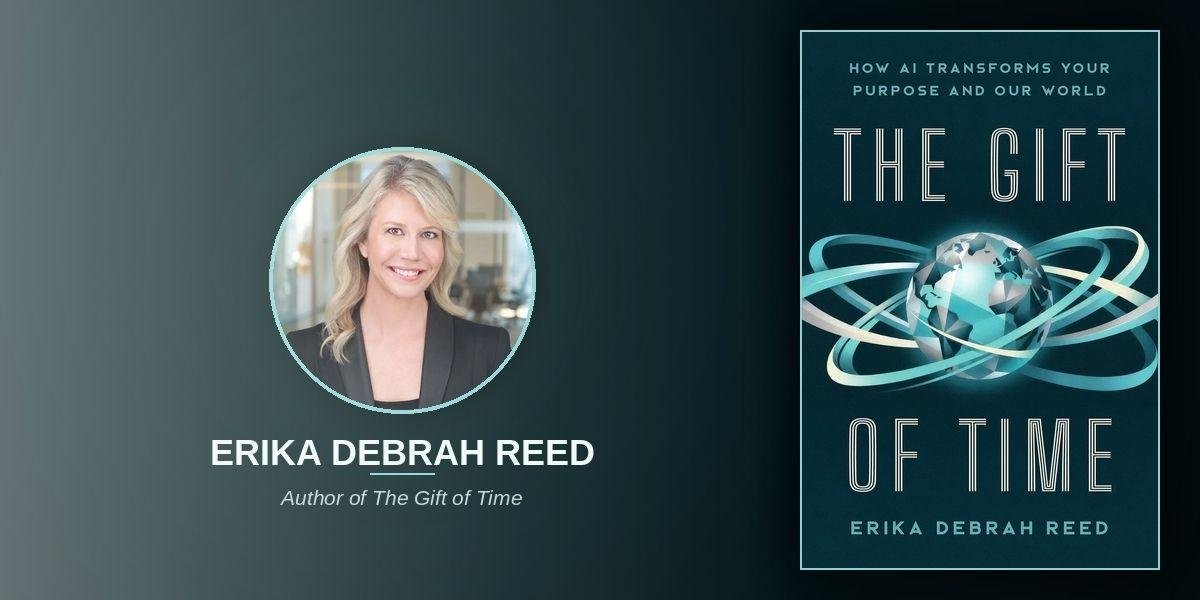
One of the genuinely delightful qualities of The Gift of Time is that it never stays where you expect it to. You settle into a chapter on autonomous aviation and find yourself reading about Coco Chanel’s radical democratization of women’s fashion as an example of what happens when a technology or a design philosophy suddenly makes something previously reserved for the few available to the many. You read about the Wrights’ first flight being recorded in a beekeeping journal because the major newspapers were too sophisticated to take it seriously. You read about Amelia Earhart not as a romantic figure of daring but as a systematic and rigorous professional who approached aviation with the same methodical discipline that Erika Debrah Reed herself brings to commercial strategy. You read about the 1945 elevator operator strike not as a labor story but as a case study in the psychology of automation trust. Each of these is a lens, and each one illuminates something specific and important about the AI transition that a more narrowly technical account would have missed entirely.
Reed is a strategist whose professional life is spent at the intersection of retail, commerce, real estate, and transportation, and her writing reflects the kind of pattern recognition that comes from spending years looking at large systems from multiple angles simultaneously. She is comfortable moving between the philosophical and the empirical, between the historical and the contemporary, between the intimate scale of one person’s daily relationship with time and the civilizational scale of how entire societies organize the hours of their collective life.
The chapter on the shortened work week is one of the book’s most immediately practical contributions, situating the global movement toward the 100-80-100 model, full pay for eighty percent of the time at one hundred percent productivity, within the broader context of what autonomous vehicles and AI-driven automation are already beginning to make possible. The data Reed cites, from the global trials showing workers significantly happier and fifteen percent more likely to refuse returning to a five-day week, is compelling in isolation and becomes more compelling still when you understand it as one part of a systemic shift in humanity’s relationship to labor and time that has been building for a century.
The education renaissance chapter brings the same quality of engaged intelligence to the question of how AI is simultaneously disrupting and enabling human learning, and the chapter on the philosophy of curiosity, which closes the main body of the book before the epilogue, manages to synthesize the book’s full arc into something that feels less like a conclusion than an opening, an invitation to begin engaging with the questions the book has been raising with the seriousness and the openness they deserve.
The Gift of Time is a genuinely original contribution to the AI conversation, and it reads like one.
If you have been waiting for an AI book that brings together philosophy and history and economics and technology and the specific texture of how human beings actually live their days into a single coherent and genuinely inspiring argument, The Gift of Time by Erika Debrah Reed is exactly that book. Pick up your copy on Amazon today.