Women's Journal

AI Prenatal Care Could Transform Wellness for Women Worldwide


AI prenatal care entered a more defined regulatory phase in 2026 as the FDA cleared Butterfly Network’s gestational-age tool and authorized Ultrasound AI’s delivery date software. The decisions matter because they show how narrowly designed systems may support trained clinicians. This article examines the evidence, access questions, and safeguards shaping adoption.

Key Takeaways

  • The FDA cleared Butterfly Network’s Gestational Age Tool on March 27, 2026, for use by qualified, trained health professionals.
  • The FDA granted De Novo authorization to Ultrasound AI’s Delivery Date AI on February 11, 2026.
  • A 2024 JAMA study found similar gestational-age accuracy between an AI-enabled handheld tool used by novices and conventional biometry performed by credentialed sonographers.
  • WHO estimated that about 260,000 women died during or following pregnancy and childbirth in 2023.
  • Current systems address defined tasks and do not replace comprehensive prenatal examinations, clinical judgment, or referral networks.

FDA Decisions Move AI Prenatal Care Into Clinical Use

The U.S. Food and Drug Administration cleared Butterfly Network’s Gestational Age Tool on March 27, 2026. Used with compatible handheld probes, it estimates gestational age in presumed singleton pregnancies.

The decision followed the FDA’s February 11, 2026, De Novo authorization of Delivery Date AI. Ultrasound AI’s software predicts a delivery date from obstetric radiological images. It does not identify high-risk pregnancies or specific complications or replace clinician judgment.

Together, the decisions place two narrowly designed pregnancy tools in regulated clinical use. They do not show that artificial intelligence can manage prenatal care independently. They indicate that algorithms can assist with defined tasks within authorized limits.

The decisions arrive as access to maternal care remains uneven. WHO estimated that about 260,000 women died during or following pregnancy and childbirth in 2023. Approximately 92% occurred in low- and lower-middle-income countries. U.S. gaps in rural maternal care have also focused attention on communities with limited obstetric capacity.

WHO recommends at least eight antenatal contacts and one ultrasound before 24 weeks. Gestational age guides screenings, medications, referrals, and delivery decisions. Conventional dating requires trained personnel to capture fetal views and measurements, which smaller facilities may struggle to provide.

A 2024 prospective JAMA study enrolled 400 pregnant participants in Lusaka, Zambia, and Chapel Hill, North Carolina. Novice clinicians collected blind abdominal sweeps with a battery-powered AI device, while credentialed sonographers performed standard biometry.

Between 14 and 27 weeks, mean absolute error was 3.2 days for the AI tool and 3.0 days for conventional biometry. The methods met the prespecified equivalence standard. The study involved singleton pregnancies, excluded known major fetal anomalies, and did not establish performance across every population.

Portable Ultrasound Extends Selected Prenatal Services

Portable ultrasound changes where imaging can occur. Handheld probes connect to tablets, and software guides trained users. Blind-sweep systems record short videos as an operator moves the probe across the abdomen.

The Butterfly tool is indicated for qualified, trained professionals assessing presumed singleton pregnancies from 16 to 37 weeks. FDA labeling calls its output adjunctive information and excludes prenatal management or delivery planning. A dating estimate cannot evaluate the fetal, placental, and maternal conditions covered by a comprehensive examination.

AI Prenatal Care Could Transform Wellness for Women Worldwide

Photo Credit: Unsplash.com

Other systems address different imaging tasks. In May 2025, the FDA cleared BrightHeart’s View Classifier to detect standard views during second- or third-trimester fetal heart scans. It classifies images and videos but does not independently diagnose a heart condition.

These products sit within wider activity in women’s health technology, including imaging, monitoring, records, and workflow tools. Their value depends on more than software. Clinics need functioning equipment, trained staff, secure data systems, maintenance, electricity, and dependable referrals.

Researchers are evaluating models that analyze records, laboratory results, blood pressure, glucose, and patient histories. Proposed uses include detecting patterns associated with preeclampsia, preterm birth, gestational diabetes, and fetal growth concerns. Retrospective results may not transfer reliably into routine care.

Safeguards Will Determine Clinical Value

Pregnancy algorithms can inherit weaknesses from development data. Systems trained in a few hospitals may perform differently across racial groups, body sizes, gestational stages, machines, or health systems. Representative testing, external validation, stated limits, and continued monitoring remain essential.

Prenatal records may contain ultrasound images, genetic information, location data, and detailed histories. Health systems need clear policies for consent, access, retention, cybersecurity, and vendor data use. Patients need understandable notice when an algorithm contributes to a scan, score, or recommendation.

FDA clearance or authorization applies to a product’s stated use, not every application. Clinicians remain responsible for interpreting outputs with examinations and other findings. Local protocols need escalation steps for contradictory readings, device failures, unavailable specialists, and data outside the validated range.

AI prenatal care may extend selected services when portable tools are paired with trained professionals and referrals. Evidence does not support replacing comprehensive prenatal care. It supports a narrower role in which evaluated software assists specific tasks while human review remains central.

Frequently Asked Questions

What is AI prenatal care?

AI prenatal care refers to pregnancy-related tools that use algorithms to analyze information such as ultrasound images or clinical records. Current authorized products perform defined tasks and are intended to support, not replace, trained professionals.

What does the Butterfly Gestational Age Tool do?

The tool estimates gestational age from sweeps collected with compatible Butterfly probes. It is indicated for presumed singleton pregnancies from 16 to 37 weeks, not prenatal management or delivery planning.

What did the 2024 JAMA study find?

The study found similar gestational-age accuracy between novices using the AI device and credentialed sonographers performing biometry from 14 to 27 weeks. It included 400 participants in Zambia and North Carolina.

Can these tools replace a prenatal ultrasound examination?

No. A dating estimate or image-classification result cannot assess every condition covered by a comprehensive examination. Clinical interpretation, follow-up testing, and referrals remain necessary.


Reinvention After Brain Surgery

Jenny White spent more than three decades as a Registered Nurse in Southwestern Ontario, moving through ICU and trauma units, surgical floors, public health, and long term care before rising to director level roles. Retirement was supposed to be the quiet chapter. Instead, doctors discovered a brain tumor wrapped around the carotid artery in her brain, and the surgery to remove it nearly ended her life. She woke from a coma unable to walk or speak, with much of her memory gone. What Jenny White built after that has become the story she now shares with readers and audiences.

A Nurse’s Career Built on Human Connection

White decided as a child that she wanted to help people. She had witnessed a serious car accident and felt powerless to do anything, and that moment pointed her toward a life of caregiving. Nursing appealed to her because it placed her close to people during frightening and vulnerable moments.

Her career carried her through some of the busiest, highest pressure corners of medicine. She worked the floors of major hospitals, spent years in ICU and trauma care, and later moved into public health and long term care. She finished her nursing career in leadership, serving as a Director of Care over large nursing departments and as a Director of Nursing services responsible for seven long term care homes. She also earned a Bachelor of Science and a Master’s degree in Healthcare Administration.

Early on, she set her sights on ICU and trauma work, which called for additional certification, time, and expense. She pursued it anyway. The effort left her with a conviction that shaped everything after it, that lifelong learning is not optional. That range gave her something few writers of medical fiction can claim. She had seen the system from the bedside and from the administrator’s desk.

The Surgery That Changed Everything

The tumor was life threatening, and the operation to remove it was complex and delicate. White came through it, but she remained comatose for days. When she woke, she was disoriented and restrained, reaching for the equipment keeping her alive without understanding what any of it was.

Her memories were gone. She did not recognize her husband of twenty years at her bedside. She had to relearn how to walk and how to talk, rebuilding skills she had used without thinking for her entire life.

The year that followed tested everything she had. Her old hobbies and interests had faded, and she felt vulnerable and lost. She reached a turning point during that stretch, a moment when she decided to tell her story rather than let the experience reduce her to a patient.

Finding a New Voice Through Writing

The path back to language came from an unexpected place. During speech therapy, her therapist suggested she try writing words on paper to see whether the connection from thought to page was still intact. It was. Writing gave her a way to communicate when speech would not come, and it gave her a way to process what she was feeling.

She started small, with children’s stories that were short and clear. Those early pages did more than fill time. They rebuilt her confidence and gave her recovering brain a new way to work. As she wrote, memories began to resurface, drawn out slowly by the act of shaping words into sentences.

White took self-paced writing courses that fit around her rehabilitation and her fatigue, and she learned the structure of fiction from the beginning. The first full sentence felt like a victory. From there, the writing kept coming.

Medical Thrillers Through the Lens of a Nurse

Photo Courtesy: Jenny White Books Inc.

Once she had the craft, White wrote about what she knew. Her debut novel, The Triggering Scent, draws directly on her life as both a nurse and a patient. The story follows Abbey Roberts, an ICU nurse who returns to work after brain surgery and wrestles with her memory and her confidence. When Abbey discovers that the neurosurgeon who harmed her is now practicing in her own hospital, she faces a wrenching choice about how far to go to protect other patients.

The book reflects a perspective that sets Jenny White apart in her genre. In a field long shaped by male authors and physician protagonists, she writes through the eyes of a nurse. That vantage point shapes the tension, the ethics, and the emotional weight of her stories, and it draws on experiences that can only be understood from inside healthcare and inside recovery.

Her fiction carries a purpose beyond suspense. White threads real concerns through her plots, including staff burnout, short staffing, workplace violence, and the strain of running care as a business. A second novel, Terror at the Manor, moves the story into a long term care setting she knows firsthand, and a third book is underway. She writes to entertain, and she writes to raise questions that decision makers often sidestep.

Alongside the thrillers, White created the Molson and Jenny Adventure Series, a set of children’s books inspired by her own childhood imagination and her Maltese dog, Molson.

Photo Courtesy: Jenny White Books Inc.

Speaking, Serving, and What Comes Next

Reinvention became a message White wanted to pass on. She now works as a keynote speaker on resilience, and her signature talk, I’m Still Standing, uses her recovery to show what remains possible after trauma. Her approach is practical rather than lofty. She talks about taking one small step forward each day and building momentum through consistency.

Service has stayed at the center of her work. As a proud Rotarian, White supports literacy and education in her community, and she has partnered with Rotary to place sponsored boxes of children’s books in local daycares. Her aim is to help young children develop a love of reading through stories and shared time with the adults around them.

Another chapter is taking shape. White is preparing to host an upcoming talk show, Inside the Story: Confidential, in partnership with The McCord List Network, with a launch planned for the fall of 2026. The program will focus on stories and the people who create them, featuring conversations with authors, actors, and publishers about why certain stories stay with us.

Readers can follow her work through her author website, learn more through her keynote speaking page, and connect with her on Facebook and Instagram, where she continues to share her journey.

White’s story is not about returning to who she was before. It is about building someone new from the ground up, one page and one step at a time. Those who know her have called her a force of nature. Her hope is straightforward. She wants anyone who feels lost or defeated to see that a hard chapter does not have to be the last one.

From Addiction to Purpose: Sharon Jackson Is Restoring Women, Rebuilding Families, and Transforming Communities

Through The Rose of Sharon 7, Inc., visionary nonprofit leader Sharon Jackson is helping women overcome addiction, heal from trauma, pursue education, and reclaim their futures.

For a woman recovering from addiction, the journey toward a new life requires more than sobriety. She may also need a safe place to live, support in healing from trauma, help repairing family relationships, an opportunity to continue her education, and someone who still believes in her potential.

Sharon Jackson understands that reality.

As Founder and Chief Executive Officer of The Rose of Sharon 7, Inc., Jackson has devoted her life to helping women affected by addiction, incarceration, trauma, and homelessness move from crisis to stability, and ultimately from survival to purpose.

Her work is grounded in a powerful conviction: every woman possesses inherent dignity, value, and the capacity to transform her life.

Standing in the Gap for Women

Jackson’s commitment to recovery services grew from witnessing the devastating effects of addiction on individuals, families, and communities. She saw women repeatedly moving between incarceration, substance-abuse treatment, homelessness, and unstable living environments without receiving the comprehensive support necessary to build lasting change.

Rather than stand on the sidelines, Jackson chose to stand in the gap.

In 2012, she opened her first sober-living home, creating a safe, structured, and supportive environment where women could begin rebuilding their lives. The home provided more than shelter. It offered stability, accountability, encouragement, and a community committed to recovery.

Jackson soon recognized an even greater need: licensed residential treatment services specifically designed for women.

In 2016, she expanded her mission by opening a six-bed, faith-based, licensed and certified residential drug and alcohol treatment facility. Over time, she established three additional recovery homes.

Today, The Rose of Sharon 7’s recovery residences can collectively accommodate as many as 38 women, including mothers with dependent children. Through this growing network of care, women receive the support needed to pursue long-term recovery, independence, and successful community reintegration.

Recovery That Addresses the Whole Woman

Jackson believes recovery extends far beyond discontinuing the use of drugs or alcohol. Lasting recovery requires women to heal emotionally, transform destructive thinking patterns, strengthen their decision-making abilities, develop practical life skills, and rediscover their identities.

Her approach combines faith-driven service with evidence-based practices.

Jackson facilitates recovery groups that equip women with practical tools for recognizing and confronting addictive behaviors. Participants learn about cognitive restructuring, emotional regulation, behavioral accountability, relapse prevention, and the harmful thinking patterns that can contribute to addiction and criminal behavior.

Faith is also central to the program. Women are introduced to biblical principles that encourage spiritual growth, personal responsibility, hope, and restoration.

At the heart of Jackson’s philosophy is a life-changing message: women must learn to love themselves while learning to hate the disease of addiction.

This distinction helps women separate their identities from their past choices. They are taught that addiction may be part of their history, but it does not have to determine their future.

Education as a Pathway to Independence

Jackson recognizes that housing and treatment alone cannot eliminate the barriers many women face after addiction or incarceration. Education and economic opportunity are essential to breaking cycles of poverty, dependency, and recidivism.

Women who enter the program without a high school diploma are encouraged to return to school and complete their education. Others are motivated to pursue college, professional training, or career credentials.

Jackson wants the women she serves to look beyond securing their next job. She encourages them to pursue sustainable careers that can provide stability, confidence, and a meaningful future for themselves and their children.

Many women who complete the program go on to pursue careers in the recovery field. Some become counselors, mentors, sober coaches, or support professionals. Others return to The Rose of Sharon 7 as staff members, using their lived experiences to guide women who are beginning the same journey.

Their success creates a powerful cycle of empowerment: women who once needed support become leaders capable of supporting others.

Transforming Families and Communities

The impact of Jackson’s work reaches beyond each individual woman.

When a mother achieves stability, her children gain a stronger foundation. When a woman develops healthy coping skills, her family relationships can begin to heal. When a program graduate becomes employed, educated, and self-sufficient, the entire community benefits.

Through this multigenerational approach, The Rose of Sharon 7 helps interrupt cycles of addiction, incarceration, homelessness, and family separation.

Jackson’s influence also extends into civic leadership and regional collaboration. She is an active member of the Hemet/San Jacinto Chamber of Commerce and the Greater San Jacinto Chamber of Commerce, where she works to strengthen relationships between the recovery community and local businesses.

She serves on the HOPE for Hemet committee and participates in the Riverside County Continuum of Care, contributing to coordinated efforts addressing homelessness, housing instability, and access to community resources.

As President of the Riverside County Sober-Living Coalition, Jackson advocates for ethical standards, accountability, and quality care within recovery housing. Her leadership reflects her determination to ensure that vulnerable individuals receive services that protect their dignity and support genuine transformation.

Building a Community of Hope

Jackson’s community service includes partnerships with organizations working to address poverty, homelessness, and family hardship throughout Riverside County.

She collaborates with Girls World and Sheltered Pathways in support of World Homeless Day initiatives, helping bring greater awareness and resources to individuals experiencing housing insecurity.

Jackson also supports the Black Voices of the Valley Thanksgiving Turkey Giveaway and Christmas Toy Giveaway. As a member of its Board of Directors, she helps ensure that families facing financial hardship can experience dignity, generosity, and hope during the holidays and throughout the year.

These partnerships reflect her belief that no single organization can solve complex social challenges alone. Sustainable community change requires nonprofit organizations, businesses, service providers, faith leaders, government agencies, and residents to work together.

A Legacy of Restoration

With multiple certifications, associate and bachelor’s degrees, and two master’s degrees, Jackson brings education, professional preparation, lived understanding, and compassionate leadership to her mission.

Yet her greatest accomplishments cannot be measured only by credentials, titles, or the number of residences she has opened. Her legacy can be seen in the women who have regained their confidence, reunited with their families, returned to school, entered meaningful careers, and discovered that their lives still hold extraordinary purpose.

Through unwavering faith, professional excellence, and servant leadership, Sharon Jackson continues to create pathways from addiction to recovery, from instability to independence, and from brokenness to purpose.

Her work through The Rose of Sharon 7, Inc. is more than a recovery initiative. It is a growing movement of restoration, one woman, one family, and one transformed community at a time.

Coco Chanel, Amelia Earhart, and the Shortened Workweek Through Erika Reed’s Perspective on AI’s Human Potential

By: Jessica Suarez

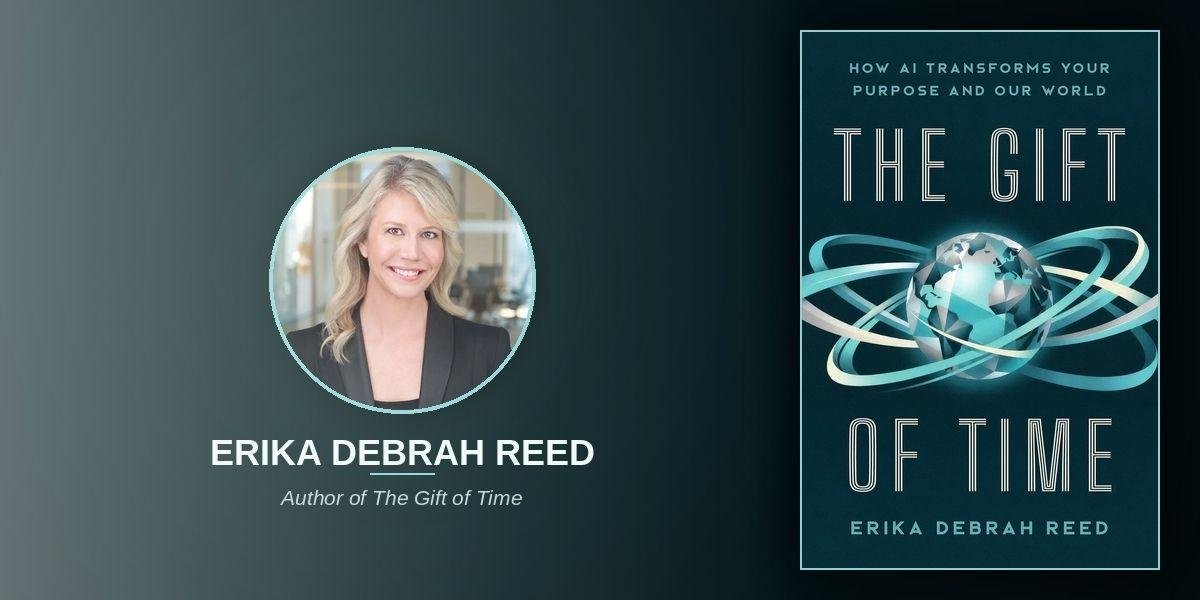
One of the genuinely delightful qualities of The Gift of Time is that it never stays where you expect it to. You settle into a chapter on autonomous aviation and find yourself reading about Coco Chanel’s radical democratization of women’s fashion as an example of what happens when a technology or a design philosophy suddenly makes something previously reserved for the few available to the many. You read about the Wrights’ first flight being recorded in a beekeeping journal because the major newspapers were too sophisticated to take it seriously. You read about Amelia Earhart not as a romantic figure of daring but as a systematic and rigorous professional who approached aviation with the same methodical discipline that Erika Debrah Reed herself brings to commercial strategy. You read about the 1945 elevator operator strike not as a labor story but as a case study in the psychology of automation trust. Each of these is a lens, and each one illuminates something specific and important about the AI transition that a more narrowly technical account would have missed entirely.

Reed is a strategist whose professional life is spent at the intersection of retail, commerce, real estate, and transportation, and her writing reflects the kind of pattern recognition that comes from spending years looking at large systems from multiple angles simultaneously. She is comfortable moving between the philosophical and the empirical, between the historical and the contemporary, between the intimate scale of one person’s daily relationship with time and the civilizational scale of how entire societies organize the hours of their collective life.

The chapter on the shortened work week is one of the book’s most immediately practical contributions, situating the global movement toward the 100-80-100 model, full pay for eighty percent of the time at one hundred percent productivity, within the broader context of what autonomous vehicles and AI-driven automation are already beginning to make possible. The data Reed cites, from the global trials showing workers significantly happier and fifteen percent more likely to refuse returning to a five-day week, is compelling in isolation and becomes more compelling still when you understand it as one part of a systemic shift in humanity’s relationship to labor and time that has been building for a century.

The education renaissance chapter brings the same quality of engaged intelligence to the question of how AI is simultaneously disrupting and enabling human learning, and the chapter on the philosophy of curiosity, which closes the main body of the book before the epilogue, manages to synthesize the book’s full arc into something that feels less like a conclusion than an opening, an invitation to begin engaging with the questions the book has been raising with the seriousness and the openness they deserve.

The Gift of Time is a genuinely original contribution to the AI conversation, and it reads like one.

If you have been waiting for an AI book that brings together philosophy and history and economics and technology and the specific texture of how human beings actually live their days into a single coherent and genuinely inspiring argument, The Gift of Time by Erika Debrah Reed is exactly that book. Pick up your copy on Amazon today.