By: Shawn Mars
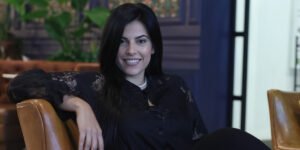
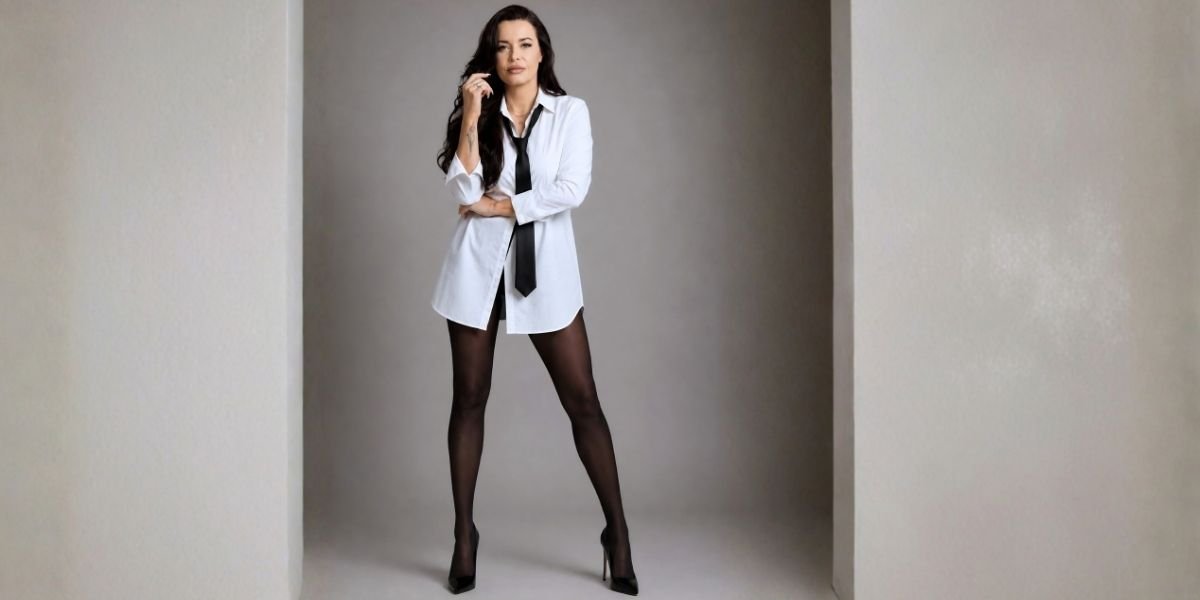
By every traditional measure, Serah D’Laine has lived several lives.
Before she became known for authority psychology, executive positioning, and helping leaders build influence in an AI-driven world, she spent more than a decade in Hollywood as an actress and producer. It was a career many dream of: television sets, film productions, red carpets, auditions, and the constant pursuit of the next opportunity.
Yet she speaks about Hollywood with surprisingly little nostalgia.
“It taught me something invaluable,” she says. “Visibility isn’t the same as significance.”
That realization would quietly reshape the rest of her life.
Today, D’Laine is less interested in helping people become famous than helping them become trusted. Through her work studying psychology, identity, branding, emotional intelligence, and human decision-making, she has become an outspoken voice on something far larger than business strategy.
She believes society has misunderstood modern women.
Not because women have become too ambitious.
Because the conversation itself has become too simplistic.
Spend five minutes online, and it doesn’t take long before someone declares that successful women have become “too masculine.”
Or they work too hard; they must be unhappy. Their boundaries are too high, they are too independent, or they earn too much. They delay marriage to prioritize their goals.
The labels arrive quickly. D’Laine doesn’t argue against these criticisms. She does, however, question the assumptions underneath them.
“You only use “too” when measuring against a smaller state. So I don’t think we’ve become ‘too masculine’,” she explains. “I think we’re no longer asking for permission to embody more parts within – to become more complete, as we naturally evolve. Any disagreement could presuppose simply a lack of evolution”
It’s a subtle distinction, but one that sits at the center of everything she teaches.
For decades, women were encouraged to prove they could compete in spaces historically reserved for men. Leadership often meant adopting characteristics associated with masculine energy – decisiveness, logic, ambition, discipline, resilience.
Then the cultural pendulum swung.
Suddenly, women were told to soften, receive more, rest more.
Lead from feminine energy. Be more “delicate”
According to D’Laine, both conversations miss the point.
“We’re acting like strength and softness are not mutually exclusive,” she says. “They’re complementary forces. And if some say they want women to act more “traditional,” implying the pendulum should swing back to the 50’s?”. “Why stop there, Chad…if you’re only focused on what’s in the past, why not keep swinging back to ancient times with warrior queens. And while we are still trying to tell women where they need to be – let that pendulum swing back to warrior kings that honored and respected dynamic women”
This philosophy wasn’t born in a classroom.
It emerged from her reinvention.
Leaving Hollywood meant leaving behind an identity that had defined her for years. Like many women navigating career transitions, entrepreneurship, and personal growth, she found herself asking a question that had little to do with business.
“For years I adopted different roles in stories, allowing me to meet different parts of myself, but I started asking, ‘Who am I when I’m no longer playing the role everyone expects of me in society?”
The answer wasn’t immediate.
Instead, she immersed herself in psychology, neuroscience, behavioral patterns, branding, leadership, executive coaching, and the science behind why people trust certain individuals over others.
Over time, those disciplines converged into what she now describes as authority psychology, the study of how identity, behavior, perception, and credibility influence human decision-making.
But beneath the frameworks lies something deeply personal.
“I realized after most people get their brand strategy locked in,” she says. “They need permission to stop fragmenting themselves.”
Much of D’Laine’s work centers around a contradiction she believes women quietly live with every day. Be nurturing but don’t be weak. Be delicate but don’t be intimidating.
“We give women rules that contradict themselves – and make sure to follow all the standards we have for you, but your own will be too high,” she says with a laugh. “No wonder women feel exhausted.”
Rather than encouraging women to lean harder into only one side of themselves, D’Laine believes the future belongs to those willing to integrate every part of who they are.
“It’s never been about becoming more masculine OR more feminine; it’s knowing how to use what you need, when you need it,” she says. “The first mastery course I ever authored incorporated a parts-work psychology-based framework showing how men & women have both parts within and when you integrate all of them, you are the happiest. It’s about becoming more fully yourself.”
Ironically, the woman known for helping leaders build powerful public identities spends very little time talking about image.
Instead, she talks about congruence.
“When your internal identity matches your external presence, people trust you without knowing exactly why.”
This is another reason D’Laine’s ideas have begun resonating with executives and entrepreneurs alike.
But ask D’Laine whether she considers herself a feminist, and her answer is characteristically nuanced.
“I believe in expanding what’s possible for women, not replacing one stereotype with another,” she says. “It’s not rejecting masculinity. It’s not romanticizing femininity. It’s not how are women becoming empowered anymore; it’s how are women evolving?”
She speaks often about young girls watching today’s generation of women.
“They’re learning what leadership looks like by watching us.”
If leadership only looks aggressive, they’ll imitate aggression.
If leadership only looks nurturing, they’ll believe nurturing is the only acceptable path.
“But if they see women who can lead a boardroom with conviction and comfort a friend or lover with compassion in the same afternoon…” She smiles. “…then we’ve given them freedom.”
Perhaps that is D’Laine’s most enduring contribution.
Not just another marketing strategy, despite the expertise she shares.
But a reframing of modern womanhood.
One that refuses to reduce women to archetypes.
One that celebrates complexity instead of correcting it.
One that suggests identity isn’t something we inherit.
It’s something we consciously embody.
Near the end of our conversation, I ask her what she hopes people remember decades from now.
She pauses for longer than she has all afternoon.
Then answers quietly…. “I hope they remember to stop apologizing for being multidimensional.”
It is an answer that feels remarkably fitting.
After all, Serah D’Laine has spent much of her own life refusing to stay inside the boxes other people built for her.
Perhaps that’s the lesson.
Not that women should become more masculine.
Or more feminine.
But that the future belongs to those courageous enough to become fully, unapologetically…human.
More of her perspective appears on Serah D’Laine’s personal brand site, while her client work runs through the STAGE IIX strategic visibility agency. She also shares regular leadership commentary on her Instagram and professional updates on her LinkedIn profile.