By: Andrew Carter
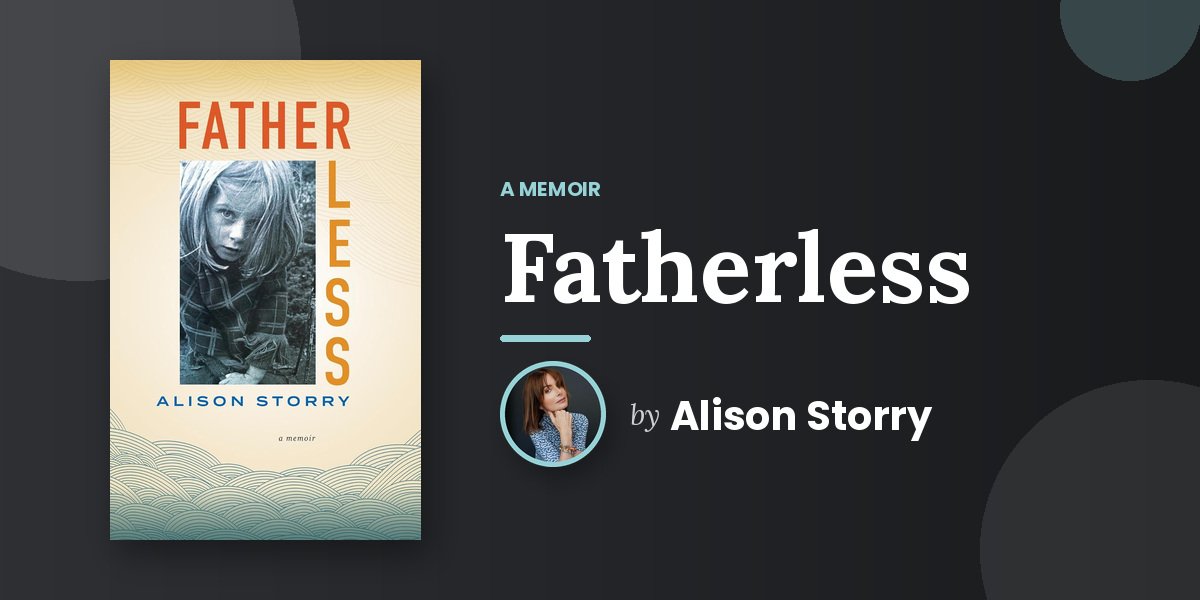
Political violence produces two kinds of casualties: the ones that make the news and the ones that live with what the news reported and carry the weight of it forward into every subsequent relationship and every subsequent decision for the rest of their lives. Alison Storry belongs to the second category, and Fatherless is her debut memoir about what belonging to that category actually cost her and what it finally, after fifty years and a divorce trial that stripped away the last of her protective distance, allowed her to understand. It is a book that could only have been written at this particular moment in a particular life, by someone who had finally run out of distance to put between herself and the truth she had been moving away from since she was seven years old.
She was in a friend’s garden when she learned her father had been murdered by the IRA. It was August, almost her eighth birthday. Within a year she was at boarding school in the British countryside, sent away from the mother and the home and the country that might have given grief somewhere to land, and began the process of constructing the self that would allow her to function without feeling the full weight of what had been taken from her. That constructed self proved remarkably durable. It carried her through a modeling career that took her from England to Japan, through the years in Hong Kong and eventually the settling in the United States, through a marriage and most of the way through a divorce before it finally began to cost more to maintain than it was worth.
What Storry finds when she finally traces all of it back, the grief and the boarding school and the international chapters and the marriage and the choices that deepened the original wound, is the specific understanding of how the survival strategies that protected a seven-year-old from being overwhelmed by her father’s murder became, in her adult life, the mechanisms of a subtler and more prolonged self-harm. That understanding, arrived at with considerable difficulty and described with considerable honesty, is the memoir’s most important and most lasting contribution.
The prose throughout is spare and precise in a way that reflects the cost of the honesty rather than the ease of it. Storry does not reach for emotional amplification or narrative comfort. She offers instead the specific texture of a life examined without armor for the first time, and the specific quality of freedom that that examination eventually, painfully, produces. Fatherless is a debut of considerable courage and considerable craft, and it announces a memoirist worth paying close attention to.
Storry’s memoir suggests that honesty in the form is earned through the difficulty of reaching it, not through a general willingness to share. Readers can find the book through its Amazon listing.