Women's Journal

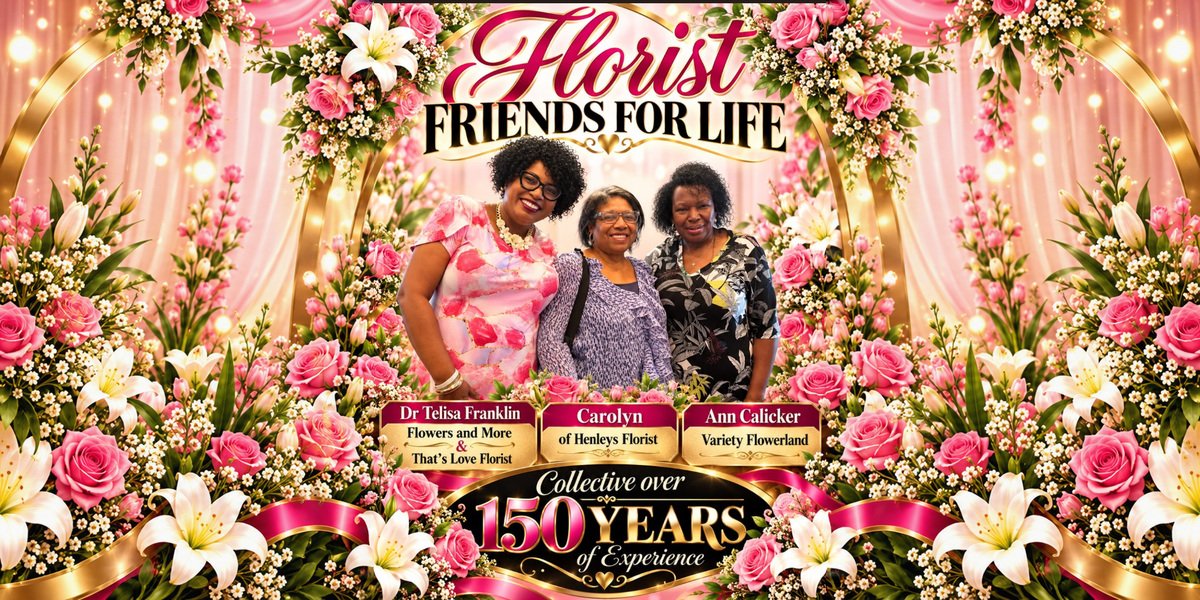
Florist Friends for Life and Three Women Celebrate More Than 150 Years of Experience, Friendship and Flowers

By: Lennard James

Flowers have a remarkable way of becoming part of life’s most meaningful moments. They celebrate birthdays, anniversaries, weddings, graduations and new beginnings. They provide comfort during times of loss, communicate love when words are difficult to find and transform ordinary spaces into beautiful memories. Behind those flowers are professionals whose creativity, compassion and experience help people express some of life’s deepest emotions. For Dr. Telisa Franklin of Flowers and More, Carolyn of Henleys Florist, and Ann Calicker of Variety Flowerland, the floral industry has provided something else equally meaningful, a friendship that has grown alongside their remarkable careers.

Together, these three women represent more than 150 years of collective experience in the floral industry. It is an extraordinary milestone that represents far more than the number of years they have worked. Their combined experience tells a story of entrepreneurship, perseverance, creativity, customer service, community relationships and the ability to remain relevant in an industry that continues to evolve. Most importantly, their journey demonstrates how three women working in the same profession can build individual legacies while maintaining a genuine friendship. They are truly Florist Friends for Life.

Dr. Telisa Franklin of Flowers and More & That’s Love Florist, Carolyn of Henleys Florist, and Ann Calicker of Variety Flowerland have each developed their own identity within the floral industry. Their individual journeys may be different, but they share an understanding of what it means to serve people during some of the most important moments of their lives. Being a florist involves much more than placing flowers into an arrangement. It requires listening to customers, understanding their emotions and using creativity to transform those feelings into something beautiful.

Sometimes customers know exactly what they want. Other times, they enter a florist shop with nothing more than an occasion, a budget and an emotion they are trying to communicate. An experienced florist understands how to ask the right questions and create something that speaks when the customer cannot find the words. A bouquet can say “I love you.” An arrangement can say “Congratulations.” Flowers can communicate appreciation, forgiveness, sympathy, encouragement and remembrance. That personal connection is one reason experienced florists can become trusted members of the communities they serve.

More than 150 combined years in the floral industry also represents an incredible collection of memories. Imagine the number of weddings these women have helped make beautiful, the Valentine’s Day arrangements they have prepared, the Mother’s Day bouquets they have created and the birthdays, anniversaries, graduations, church programs, grand openings and community celebrations they have helped commemorate. Their work has likely appeared in photographs that families will treasure for generations.

Their profession also places them alongside families during difficult moments. Funeral flowers and sympathy arrangements require a special level of compassion because families are often making decisions while experiencing grief. In those situations, the florist is doing more than filling an order. The florist is helping a family create a visual expression of love and remembrance for someone who mattered deeply to them. Decades of experience can provide an understanding of how to serve those families with patience, sensitivity and professionalism.

The friendship shared by Dr. Franklin, Carolyn and Ann makes their story even more special. These women demonstrate that professional success and genuine friendship do not have to be opposites. People can build their own businesses, develop their own customer bases and maintain their individual identities while still respecting and celebrating one another.

The words “Friends for Life” carry even greater meaning when considered alongside their profession. Flowers must be nurtured to flourish, and meaningful friendships require the same attention. Relationships grow through time, shared experiences, encouragement, understanding and respect. These women have built careers around creating beautiful things for others while cultivating a friendship of their own.

Their longevity also offers an important lesson for the next generation of entrepreneurs. Building a lasting business requires more than attracting customers once. It requires developing relationships that encourage people to return year after year. A florist might create flowers for someone’s high school prom and later provide arrangements for that person’s wedding. Years later, the same customer may return for an anniversary, the birth of a child, a parent’s birthday or eventually a family memorial. Over time, the florist becomes connected to generations of family milestones.

That is the power of a community-based business. Success cannot always be measured simply by sales figures. Sometimes success is measured by the number of people who remember how the florist treated them, the families that continue returning and the relationships developed over decades of service.

For Dr. Telisa Franklin, Carolyn and Ann Calicker, their more than 150 years of collective experience represent thousands of arrangements, countless customers and generations of memories. Somewhere, a bride remembers the flowers she carried down the aisle. Somewhere, a mother remembers the bouquet that arrived unexpectedly. Somewhere, a family remembers the floral tribute that beautifully honored someone they loved. Behind those memories are florists who understood that they were providing something much more meaningful than a product.

Today, Flowers and More & That’s Love Florist, Henleys Florist and Variety Flowerland represent three individual businesses connected through experience, friendship and a shared passion for flowers. More than 150 years of collective experience deserves recognition because of everything those years represent, including hard work, resilience, creativity, entrepreneurship, community service and relationships.

Their careers have been built around flowers. Their businesses have been built around people. Their friendship has continued to bloom through the years.

Dr. Telisa Franklin, Carolyn and Ann Calicker are more than accomplished floral professionals. They are Florist Friends for Life, three women whose friendship and more than 150 years of collective experience prove that some of life’s most beautiful relationships, just like flowers, become even more meaningful with time.
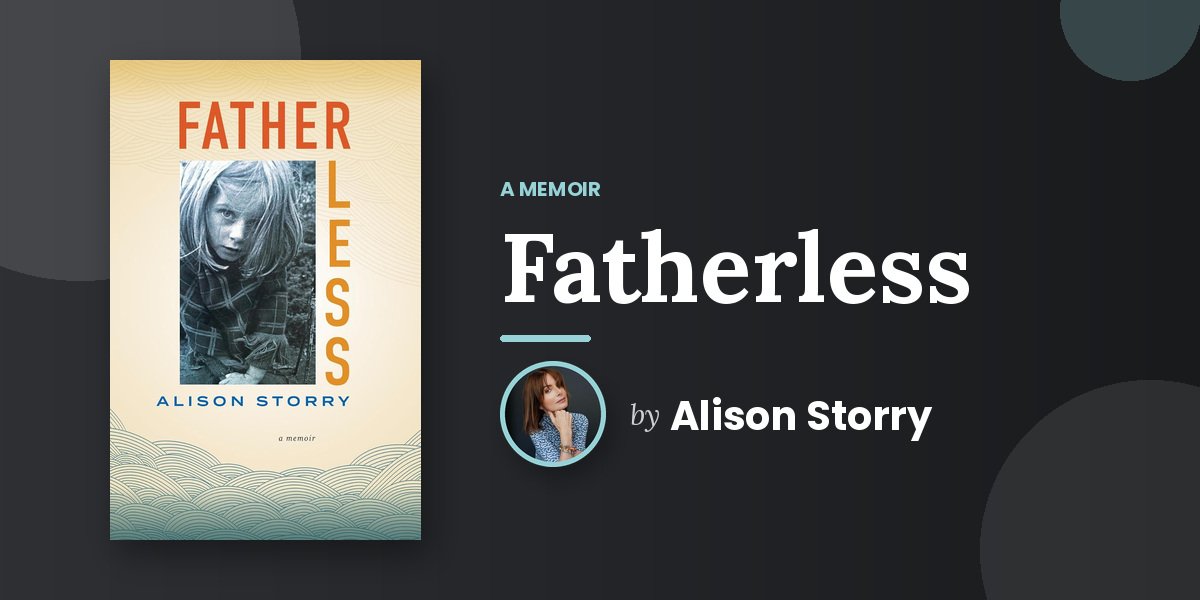
The Troubles in Northern Ireland Claimed Alison Storry’s Father and Fifty Years Later She Wrote an Honest Account of What That Actually Did to a Life

By: Andrew Carter

Political violence produces two kinds of casualties: the ones that make the news and the ones that live with what the news reported and carry the weight of it forward into every subsequent relationship and every subsequent decision for the rest of their lives. Alison Storry belongs to the second category, and Fatherless is her debut memoir about what belonging to that category actually cost her and what it finally, after fifty years and a divorce trial that stripped away the last of her protective distance, allowed her to understand. It is a book that could only have been written at this particular moment in a particular life, by someone who had finally run out of distance to put between herself and the truth she had been moving away from since she was seven years old.

She was in a friend’s garden when she learned her father had been murdered by the IRA. It was August, almost her eighth birthday. Within a year she was at boarding school in the British countryside, sent away from the mother and the home and the country that might have given grief somewhere to land, and began the process of constructing the self that would allow her to function without feeling the full weight of what had been taken from her. That constructed self proved remarkably durable. It carried her through a modeling career that took her from England to Japan, through the years in Hong Kong and eventually the settling in the United States, through a marriage and most of the way through a divorce before it finally began to cost more to maintain than it was worth.

What Storry finds when she finally traces all of it back, the grief and the boarding school and the international chapters and the marriage and the choices that deepened the original wound, is the specific understanding of how the survival strategies that protected a seven-year-old from being overwhelmed by her father’s murder became, in her adult life, the mechanisms of a subtler and more prolonged self-harm. That understanding, arrived at with considerable difficulty and described with considerable honesty, is the memoir’s most important and most lasting contribution.

The prose throughout is spare and precise in a way that reflects the cost of the honesty rather than the ease of it. Storry does not reach for emotional amplification or narrative comfort. She offers instead the specific texture of a life examined without armor for the first time, and the specific quality of freedom that that examination eventually, painfully, produces. Fatherless is a debut of considerable courage and considerable craft, and it announces a memoirist worth paying close attention to.

Storry’s memoir suggests that honesty in the form is earned through the difficulty of reaching it, not through a general willingness to share. Readers can find the book through its Amazon listing.

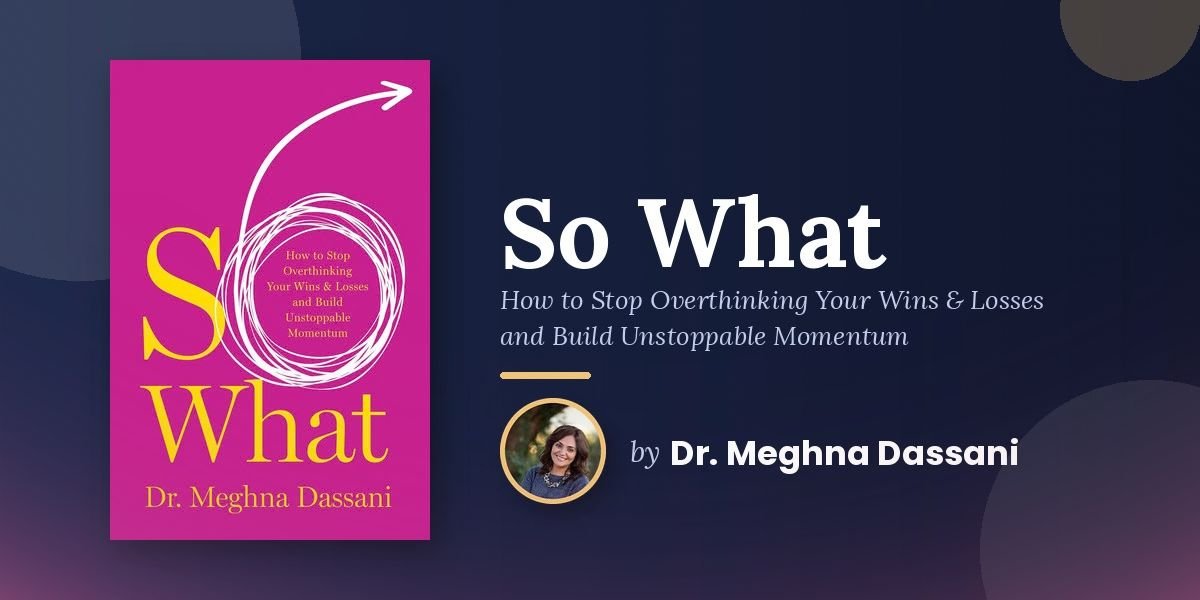
The Dentist Who Built a Thriving Practice While Watching Her Highest-Performing Peers Stay Frozen Finally Wrote the Book That Explains What She Did Differently

By: Andrew Vespa

There is a particular kind of professional frustration that Dr. Meghna Dassani describes with uncomfortable accuracy: watching highly talented, highly motivated people stay frozen by overthinking while their potential quietly slips past. She built a thriving dental practice and a career that has produced multiple books on sleep health and airway science while observing exactly this pattern in the peers around her, the ones who had every capability required for success and kept stopping to analyze what the last win or loss meant before allowing themselves to move to the next thing. So What is the book that finally names what she observed and offers the specific framework she developed for avoiding the trap herself.

The central insight is both simple and genuinely liberating: you cannot think your way into momentum. Momentum is built through movement, through the accumulated weight of forward decisions made without the pause that over-analysis creates, through the specific practice of asking so what’s next rather than what does this mean. The So What Sequence that Dassani introduces as the book’s practical core is organized around exactly that practice, giving readers a concrete and repeatable method for acknowledging what happened, releasing the need to fully understand it before moving forward, and redirecting energy toward the next action rather than the previous result.

What distinguishes So What from the crowded field of anti-overthinking literature is the specificity of Dassani’s focus on momentum as the actual target. Most books about overthinking are organized around the problem of excessive thinking itself, treating the thought loops as the primary issue to be addressed. Dassani is more interested in what the thought loops cost in terms of forward motion, and she frames the solution accordingly: not the elimination of analysis but the discipline of not allowing analysis to become the pause that kills momentum. That reframe is practically significant because it changes what success looks like from having fewer thoughts to moving forward regardless of the thoughts, which turns out to be considerably more achievable.

The book applies the So What Sequence across an unusually broad range of contexts, from relationships and parenting through health and leadership and career and personal growth, reflecting Dassani’s understanding that the momentum problem is not domain-specific but a pattern of mind that shows up wherever we allow the weight of what just happened to delay our engagement with what comes next. That breadth of application, paired with the 30-Day So What Challenge that accompanies the launch, gives readers both the framework and the structured practice required to actually build the habit the book is advocating.

So What is explicitly positioned as the opposite of manifestation culture, and that positioning reflects something important about its tone and its underlying values. It is not asking readers to believe their way to results or to align their energy with their desires. It is asking them to move, specifically and repeatedly and without waiting for the previous result to be fully processed, which is both less romantic and considerably more effective.

If you have been watching momentum slip through the pause that over-analysis creates and are ready for a concrete, practical framework for building the habit of forward movement regardless of what just happened, So What by Dr. Meghna Dassani is exactly the book you need. Grab your copy on Amazon today and discover that momentum is not something you think your way into but something you move your way toward.

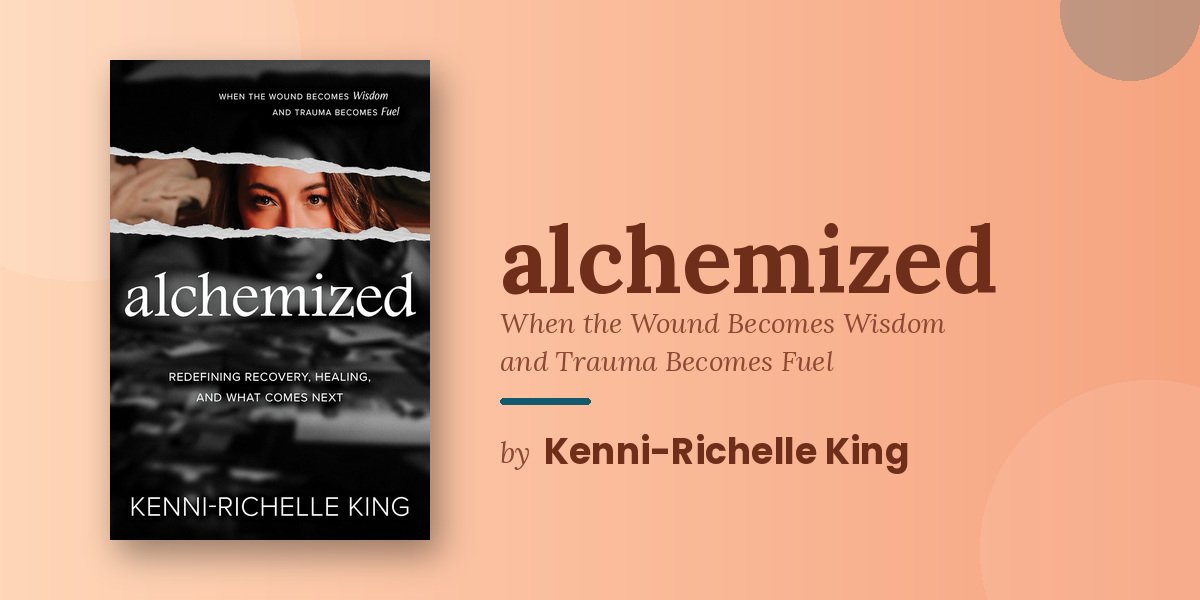
Kenni-Richelle King Went to Therapy and Did the Healing Work and Kept Becoming and Then Wrote the Book That Makes All of That Available to Anyone Who Is Ready

By: Vivien Scott

There is a particular quality of credibility that only arrives in personal development writing when the author has genuinely been inside the experience they are describing, when the framework they offer is the product of their own sustained engagement with the difficulty it addresses rather than the intellectual construction of someone who has studied that difficulty from the outside. Kenni-Richelle King has that credibility in abundance, and Alchemized carries it in every page. She did not write this book from a place of comfortable expertise. She wrote it from the specific authority of someone who fought for herself, who went to therapy and earned certifications and did the healing work and kept becoming through all of it, and who made that fight the professional practice through which she now helps others begin their own versions of the same process.

The title is the argument in its most concentrated form. Alchemized: when the wound becomes wisdom and trauma becomes fuel. Each element of that subtitle is specific and important. Not when the wound is healed, which implies a completion that King is too honest a writer to promise, but when it becomes wisdom, when the understanding of what it cost and what it generated and how it shaped subsequent choices becomes something that can be consciously worked with rather than unconsciously repeated. Not when trauma is overcome, which again implies a finality that most people who have experienced significant trauma recognize as a fantasy, but when it becomes fuel, when the energy that was organized around surviving what happened can be redirected toward building what comes next.

King writes about that redirection with the practical specificity of a certified coach who has watched it happen in the lives of real clients and who has navigated it in her own life. The book is not a philosophical treatise on the nature of trauma and healing. It is a framework for doing the specific work, organized around the understanding of what you are carrying, the compassion for the parts of you that learned to survive, and the recognition that you still have agency over what comes next. That three-part structure is simple to name and considerably more complex to inhabit, and King accompanies the reader through its genuine difficulty rather than minimizing it.

The publication of Alchemized represents the expansion of King’s work beyond her coaching practice into a form that can reach people who might not otherwise have access to the specific framework she has developed through years of personal experience and professional practice. For anyone who has been surviving rather than living and has started to sense that the difference between those two things is worth doing something about, this book is the most practically grounded and most genuinely encouraging resource currently available.

If you are ready to stop organizing your life around what happened to you and start building it around what you want to happen next, Alchemized by Kenni-Richelle King is the framework that makes that shift both intellectually clear and personally achievable. Head over to Amazon and get your copy today and discover what the wound has always had the potential to become.

Women Directors Face Limited Representation in Hollywood

Filmmakers Ava DuVernay, Gina Prince-Bythewood and Beth de Araújo discussed their experiences behind the camera in an October 8, 2026, ELLE feature examining women’s representation in Hollywood. Their interviews highlighted different paths through filmmaking alongside research showing that women have held approximately 7% of directing positions across major films released since 2007.

The discussion comes as industry research continues to document differences between women’s participation in filmmaking and their representation among directors of top-grossing releases.

Key Takeaways

  • Ava DuVernay, Gina Prince-Bythewood and Beth de Araújo discussed their directing careers in an October 2026 feature
  • USC Annenberg Inclusion Initiative research found that women accounted for 6.6% of directors across 1,900 top-grossing films from 2007 through 2025
  • Women represented 8.1% of directors in the study’s 2025 sample, compared with 13.4% in 2024
  • The featured filmmakers have worked across documentaries, narrative features, literary adaptations and festival productions
  • The findings highlight differences between individual filmmaking achievements and broader access to major directing assignments

Women Filmmakers Discuss Their Work Behind the Camera

The October 8 feature brought together three filmmakers whose careers reflect different aspects of film directing. DuVernay, Prince-Bythewood and de Araújo discussed their creative work and experiences navigating an industry where women remain underrepresented in major directing positions.

Their perspectives addressed the opportunities available to women filmmakers, the challenges associated with developing projects and the importance of maintaining creative involvement throughout production.

The discussion also considered how gender and race can intersect with professional opportunities. DuVernay described the difficulties filmmakers face when industry support becomes less accessible, while Prince-Bythewood emphasized the need for greater access to directing assignments.

These experiences provide context for understanding why representation involves more than the number of women working on individual productions. Directing opportunities also determine who can influence storytelling, guide production decisions and establish a sustained filmmaking career.

Ava DuVernay, Gina Prince-Bythewood and Beth de Araújo Represent Different Creative Paths

The three filmmakers have developed careers across different genres and production environments, illustrating the range of work undertaken by women directors.

Ava DuVernay has directed documentary and narrative projects, including Selma and 13th. Her latest documentary, 14th, examines the Fourteenth Amendment and its historical and contemporary significance. Her career demonstrates how filmmakers can move between scripted storytelling and documentary production.

Gina Prince-Bythewood has directed narrative films including Love & Basketball, The Old Guard and The Woman King. She is also directing the adaptation of Tomi Adeyemi’s novel Children of Blood and Bone, extending her work into large-scale fantasy filmmaking.

Beth de Araújo directed Josephine, which screened at the Sundance Film Festival in January 2026. The film draws on personal experiences and reflects an approach to storytelling centered on emotionally complex subject matter.

Outside major studio productions, filmmakers have also developed their work through independent projects and festival screenings. Nishita Chand’s work in psychological and surreal cinema provides another example of a director building a portfolio through short films and distinct creative themes.

These professional paths illustrate the range of filmmaking opportunities available across different production settings. They also demonstrate why individual achievements should be considered alongside research measuring access to major theatrical releases.

Research Documents Women’s Representation in Film Directing

Research from the USC Annenberg Inclusion Initiative provides a broader measure of women’s participation in directing.

Its analysis of 1,900 top-grossing films released from 2007 through 2025 found that women accounted for 6.6% of credited directors across the 19-year period. The figure is frequently rounded to 7% when describing women’s representation among major film directors.

The study also identified differences between individual years. Women represented 8.1% of directors associated with the 100 top-grossing films of 2025, compared with 13.4% in 2024.

These findings demonstrate that representation can fluctuate annually while remaining limited across the longer measurement period.

The research focuses on a defined group of commercially successful theatrical films. Its findings therefore should not be interpreted as representing every directing opportunity in documentary filmmaking, independent cinema, television or streaming-only productions.

That distinction matters when comparing established directors with emerging filmmakers whose projects may circulate through festivals or smaller distribution channels.

Directing Opportunities Remain Central to Industry Representation

The proportion of women directing major films offers one measure of access to influential creative positions. However, directing credits alone provide limited information about the resources, professional relationships and production opportunities available throughout a filmmaker’s career.

A director’s responsibilities typically include interpreting scripts, guiding performances and coordinating creative decisions with production departments. Opportunities to take on these responsibilities can influence both the scale of individual projects and subsequent career development.

Prince-Bythewood’s discussion of professional advancement emphasized the importance of supporting emerging filmmakers through funding, project development and connections with established producers.

Access to these resources can help filmmakers develop work that demonstrates their directing capabilities. The availability of such opportunities remains an important consideration when evaluating career progression across the industry.

Research into representation in film therefore benefits from examining both the number of directing assignments and the professional conditions surrounding those assignments.

Women’s Contributions Extend Across Film Production

Women’s participation in filmmaking encompasses more than directing. Film productions also involve writers, producers, cinematographers, editors and other creative professionals whose work contributes to the finished project.

The distinction between these positions matters when interpreting representation statistics. A production may include women across several departments while employing a man as its director, or it may have a woman director working with a differently composed production team.

Examples of women-led film production teams illustrate how women’s involvement can extend across directing, writing, producing and technical roles within an individual film.

Measuring these occupations separately can provide a more complete understanding of women’s employment and creative participation across the industry.

The careers of DuVernay, Prince-Bythewood and de Araújo demonstrate women’s work across different filmmaking formats. USC’s research addresses a complementary question: how frequently women receive directing credits within the highest-grossing theatrical releases.

Together, these perspectives provide a clearer understanding of women’s professional participation and the continuing importance of examining access to directing opportunities.

Frequently Asked Questions

Which Women Filmmakers Were Featured in the October 2026 Report?

The October 8 feature examined the directing careers and experiences of Ava DuVernay, Gina Prince-Bythewood and Beth de Araújo. Their work spans documentary filmmaking, narrative features and film festival productions.

What Percentage of Major Films Were Directed by Women?

The USC Annenberg Inclusion Initiative found that women accounted for 6.6% of credited directors across 1,900 top-grossing films released between 2007 and 2025. The figure is commonly rounded to approximately 7%.

What Films Have Ava DuVernay and Gina Prince-Bythewood Directed?

DuVernay has directed projects including Selma and 13th, while Prince-Bythewood’s directing credits include Love & Basketball, The Old Guard and The Woman King. Their recent work also includes DuVernay’s documentary 14th and Prince-Bythewood’s adaptation of Children of Blood and Bone.

Why Is Women’s Representation in Film Directing Important?

Directors guide major creative decisions throughout film production. Measuring women’s participation in these roles helps researchers evaluate access to directing assignments and identify changes in representation over time.

How Do Researchers Measure Women’s Access to Directing Roles?

Researchers examine credited directors within defined film samples and measurement periods. Additional assessments can consider production budgets, distribution categories, directing opportunities and differences between theatrical, independent and other filmmaking environments.