By: Laura Zeller
There’s a moment in midlife that doesn’t get talked about enough. Not a breakdown. Not a breakthrough. Something harder to name.
You wake up, and things feel… different. Your body, your schedule, your relationships, even your sense of identity, feel slightly out of place, like someone rearranged the furniture in your life and didn’t tell you.
That’s the moment Kate leans into, not away from. Because in her world, that feeling isn’t a sign that something went wrong. It’s the start of something more honest.
The Real Enemy Isn’t Age, It’s Fear
Kate doesn’t sugarcoat what holds people back. She’s clear about it: it’s fear.
Not in a big, obvious way, but in smaller, more familiar forms that slip under the radar, fear of effort, fear of the process, fear of judgment.
And underneath that, something even deeper: if I change, will I still belong?
That’s the one that keeps people playing small without realizing it.
Kate doesn’t frame this as a weakness. She calls it what it is, human. But she also doesn’t let it run the show. Because once you name those fears, they lose some of their grip. They stop operating in the background.
That’s where courage starts to show up, not when fear disappears, but when you stop letting it make your decisions.
When Identity Starts to Shift
Midlife has a way of shaking things loose. For years, life has been structured around roles, raising kids, building a career, managing everything and everyone.
Then slowly, things shift. There’s more space. And that space can feel unsettling.
That’s where a lot of people start asking questions they’ve avoided for years: Who am I now?
Kate doesn’t rush past that question. She sits with it. Maybe nothing is broken. Maybe this is just a new landscape.
Instead of trying to recreate the past, she leans toward curiosity: what actually fits now, what still matters, and what needs to change.
It’s not always comfortable. Some relationships don’t evolve the same way. Some patterns don’t belong anymore. But pretending nothing changed doesn’t bring clarity; honesty does.
Confidence Isn’t Found, It’s Built
There’s a misconception that confidence comes back once things feel stable again. Kate doesn’t buy that.
For her, confidence is built the same way strength is, through repetition, through showing up when it’s inconvenient, when it’s messy, when motivation is nowhere to be found.
This is where her connection to strength training runs deeper than fitness. It’s not about appearance. It’s about what her body can do.
You show up. You do something hard. You prove to yourself you can handle it. Then you do it again.
Over time, something shifts. You start to trust your own capacity. And that trust doesn’t stay in the gym; it follows you into decisions, conversations, and boundaries.
That’s where real confidence comes from. Not from thinking differently, but from doing differently long enough that your brain has no choice but to believe it.
The Quiet Power of Self-Trust
If there’s one idea Kate keeps coming back to, it’s this: self-trust changes everything.
Without it, life feels reactive, like you’re constantly adjusting, trying to keep up with whatever comes next. With it, there’s something steady underneath all the noise.
But self-trust doesn’t come from getting everything right. It comes from knowing who you are and returning to that again and again, even when things fall apart, even when grief shows up.
She talks openly about losing her son, and about what comes next: conversations that stay unresolved, unpolished, real.
That experience didn’t make life easier. It made her clearer. Clear about what matters. Clear about what she’s no longer willing to compromise.
That clarity shapes everything. Decisions feel different. Boundaries feel different. Not easier, but more grounded. And that’s the foundation for any kind of reinvention.
Why the Body Becomes the Anchor
It would be easy to separate physical transformation from emotional growth. Kate doesn’t.
For her, the body is where the work becomes tangible. You show up, you train, you struggle, you improve. There’s no shortcut. No pretending.
That honesty builds something deeper than muscle. It builds resilience.
Especially in midlife, when it’s easy to feel disconnected from your body, that’s usually the moment people pull back.
She does the opposite: lean in, reconnect, respect what your body can do, not just how it looks.
Because every time you show up, you’re reinforcing something important: I’m still capable. I’m still strong.
That message starts physically, but it doesn’t stay there. It reshapes how you move through everything else.
Letting Go of Who You Used to Be
There’s a subtle shift in how Kate talks about reinvention. It’s not about becoming someone completely new. It’s about letting go of who no longer fits.
That’s harder than it sounds. Old identities feel familiar, even when they don’t serve you anymore.
But midlife doesn’t leave much room for pretending. Things either align, or they don’t.
So instead of forcing yourself back into an old version, she suggests something simpler: build forward, piece by piece, with more awareness, more honesty, and more intention.
And yes, sometimes that process looks messy. That doesn’t mean it’s wrong. It means it’s real.
Strength That Carries Beyond the Moment
At the center of all of this is a quiet shift, from reacting to life to choosing how to meet it.
Kate doesn’t promise an easier path. She points toward a stronger one, one where fear still shows up but doesn’t decide, where confidence isn’t assumed but built, where identity isn’t fixed but evolving.
And where strength, real strength, becomes something you can rely on. Not because life settles down, but because you know you can handle it when it doesn’t.
That’s the version of midlife she’s pointing to. Not an ending, but a return to yourself, with a little more grit, a little more clarity, and a lot less waiting.
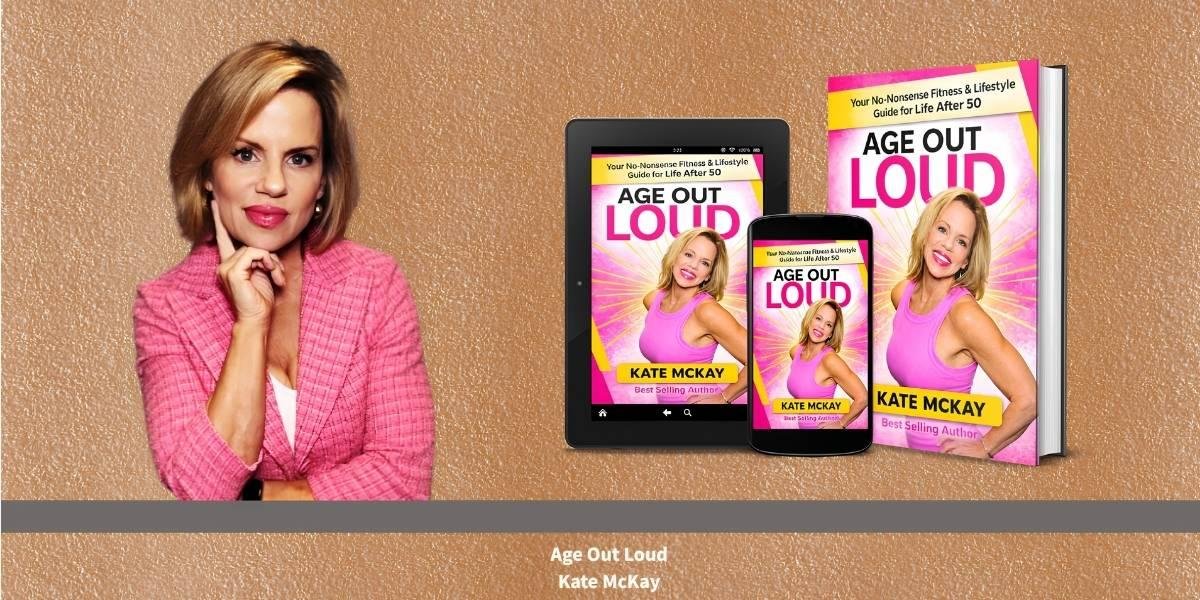
Kate McKay explores these ideas in greater depth in her book, Age Out Loud.