Women's Journal

Female Rower Makes History With California to Hawaii Journey

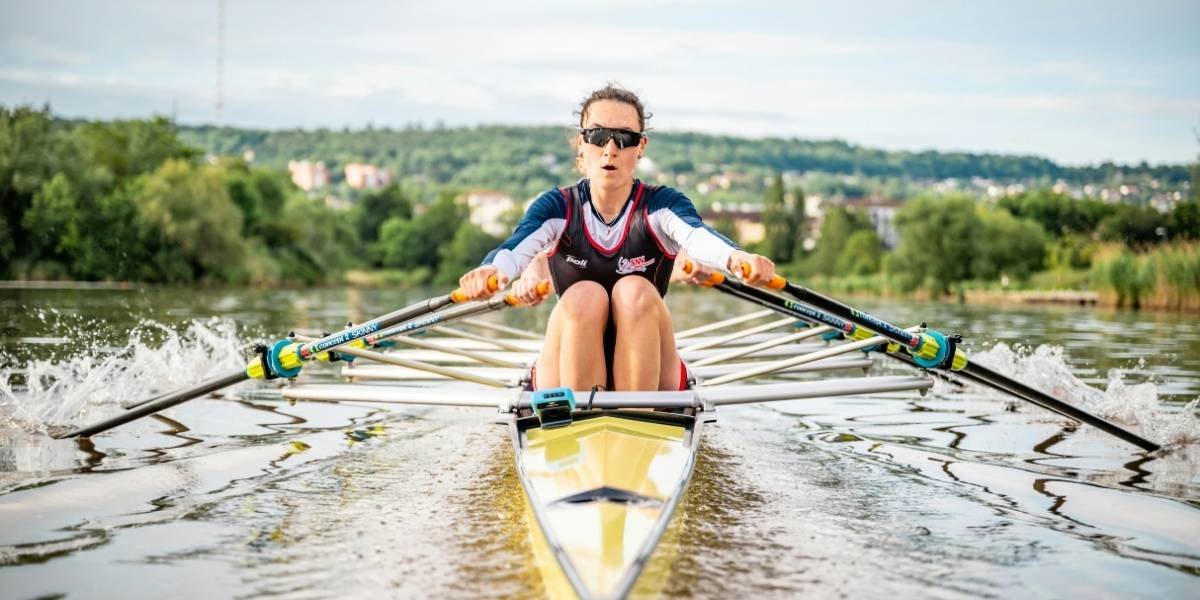
Female Rower Kelsey Pfendler reached Honolulu after rowing solo from Monterey, California, to Oahu, completing a Pacific crossing of more than 2,400 miles. Her arrival at Ala Wai Boat Harbor ended 43 days at sea and drew public attention to a route that few people have completed alone.

Key Takeaways

  • Kelsey Pfendler began the crossing on May 21 in Monterey, California, and arrived in Honolulu on July 3, 2026.
  • The route covered more than 2,400 miles from California to the Hawaiian island of Oahu.
  • Public reports said she became the first American woman, youngest woman, and fastest woman to row solo across the mid-Pacific route.
  • Hawaii News Now reported that she arrived shortly before 9 p.m. aboard Lily, her 21-foot ocean rowing boat.
  • The Associated Press reported that Ocean Rowing Society International records showed her time was faster than the previous women’s and men’s speed marks listed for the route.

Kelsey Pfendler completed the solo row from California to Hawaii after departing Monterey on May 21 and reaching Honolulu on July 3, according to public reports. Hawaii News Now reported that hundreds gathered near Magic Island and Ala Wai Boat Harbor as she finished the crossing shortly before 9 p.m.

Her boat, Lily, was identified by Hawaii News Now as a 21-foot ocean rowing boat. The Associated Press also reported that Pfendler arrived in a 21-foot rowboat after nearly a month and a half at sea.

The journey was not a short-distance endurance event. Pfendler’s official journey page described the route as a solo, unsupported row of more than 2,400 miles from Monterey, California, to Oahu. The same page stated that she set out to become the first American woman, youngest woman, and fastest woman to complete the crossing solo.

A Harbor Finish After Weeks Offshore

The final approach gave the crossing a visible public ending. Hawaii News Now reported that spectators gathered as she was spotted off Diamond Head and rowed the final miles toward shore.

That scene followed weeks of isolation on the Pacific. In public posts referenced by AP, Pfendler documented the daily realities of the crossing, including blistered hands, stiff winds, difficult sleep, currents, sun protection, clothing care, cooking, and making fresh water.

The arrival placed the Female Rower story within a wider women in sports conversation, especially because the route combines endurance, navigation, safety planning, and public tracking over several weeks.

What Made Kelsey Pfendler’s Solo Route So Closely Watched?

Kelsey Pfendler’s crossing drew attention because of the route and the record categories attached to it. The California to Hawaii row is a mid-Pacific passage that has been attempted by a small group of ocean rowers. San Francisco Chronicle reporting before her departure said only nine people were known to have completed the 2,400-mile solo voyage at that time.

The solo format also shaped public interest. Unlike team rowing, one person handles the movement of the boat, equipment checks, communication routines, rest periods, and daily decisions. The AP reported that Pfendler shared parts of that process on social media, where hundreds of thousands followed the trip.

Prior Pacific Experience

Pfendler’s official page stated that she rowed to Hawaii in 2024 with three other women as skipper of Hericane Rowing. The team arrived in Kauai after 40 days, 22 hours, and 14 minutes, according to the same page.

That earlier crossing gave public context to the solo attempt. Hawaii News Now also reported that Pfendler had previously crossed the Pacific and was the skipper of Hericane Rowing in 2024. The outlet said that trip involved large waves, capsizing, equipment failures, and adverse currents.

Pfendler’s work background added another layer to the story. AP reported that her website says she has been a professional raft guide since age 18 and has spent the last eight years leading Colorado River trips in the Grand Canyon. In the broader context of endurance sports, the route also connects with ongoing female athlete care discussions because long crossings can place heavy physical demands on athletes before, during, and after completion.

What Do Public Records Say About the Female Rower’s Time?

Kelsey Pfendler’s finish was widely reported as record-setting, though formal record language can depend on verification by recordkeeping bodies. AP reported that she appears to have broken both the previous women’s speed record and the men’s speed record, citing records maintained by Ocean Rowing Society International.

Hawaii News Now reported her time as 43 days and said the previous women’s record was 86 days, 10 hours, and 5 minutes, held by Lia Ditton. AP also reported that the rowing society’s online records showed Pfendler finished in just under 44 days, faster than the comparable women’s mark of 86 days and the men’s mark of 52 days as recorded by the rowing society and Guinness World Records.

Why the Numbers Matter

The time matters because it places the crossing in measurable terms. Ocean rowing stories often involve personal endurance, but the record discussion depends on route, category, distance, timing, and whether the row was solo and unsupported.

Pfendler’s official page listed the goal as a solo, unsupported crossing from Monterey to Oahu. Public reports after the arrival described the completed row in those terms, with Honolulu as the endpoint.

The Female Rower milestone also gained attention because of its American record context. AP reported that Pfendler became the first American woman, youngest woman, and fastest woman to row solo across the mid-Pacific route. Those categories were also stated as goals on her official page before the finish.

What Questions Are Readers Asking About Kelsey Pfendler?

Who is Kelsey Pfendler?

Kelsey Pfendler is a Grand Canyon river guide and ocean rower. AP reported that her website says she has guided professionally since she was 18 and has spent eight years leading trips on the Colorado River in the Grand Canyon.

When did the Female Rower start and finish the journey?

Pfendler began the crossing on May 21, 2026, in Monterey, California. Hawaii News Now reported that she arrived at Ala Wai Boat Harbor in Honolulu on July 3, 2026.

How far was the California to Hawaii row?

Her official journey page described the route as more than 2,400 miles from Monterey, California, to Oahu. Hawaii News Now also reported the route as more than 2,400 miles.

What boat did she use?

Hawaii News Now reported that Pfendler arrived aboard Lily, a 21-foot ocean rowing boat. AP also described the boat as a 21-foot rowboat.

What record did Kelsey Pfendler set?

Public reports said Pfendler became the first American woman, youngest woman, and fastest woman to complete the California to Hawaii solo row. AP reported that Ocean Rowing Society International records showed her time also appeared faster than the listed men’s record for the route.

Donna Wyland, Who Has Walked Through Countless Losses Finally Wrote the Book That Teaches the Rest of Us How to Live

By: Fabiana Simmons

There is a specific kind of wisdom that cannot be taught in a classroom or distilled from research or borrowed from someone else’s carefully curated experience. It is the wisdom that can accumulate through loss, through the specific and irreversible education of grief and unexpected change, and the slow discovery that life keeps moving forward even when you are not sure you want it to. Donna Wyland has gained that wisdom through decades of genuine hardship, and Last Best Year is a personal offering of what she found on the other side of it. This is not only a book about surviving difficulty. It is also a book about what may become possible when you stop merely surviving it and start looking, with intention and openness, for meaning inside difficult circumstances.

Reading this book produces a quality of quiet that is less common in the literature of personal growth, which so often arrives with an urgency that mimics the very anxiety it is trying to address. Wyland writes differently. She writes with the unhurried warmth of someone who has been sitting with these ideas long enough to trust them, and that trust communicates itself to the reader in a way that can make the experience feel like being invited to slow down rather than being instructed to improve. The prompts she offers, bless the ones you love, give what you can, embrace a new hobby, forget competition, drink the milkshake first, are not productivity hacks dressed in spiritual clothing. They are invitations to a different relationship with the time you have and the people who fill it.

The themes the book explores are ones that many people carry quietly and rarely find language for. How do you create a life that feels genuinely grateful rather than just occasionally appreciative? How do you leave something meaningful behind for the people you love without making that project feel like another obligation? And underneath both of those questions, the one that gives the book its particular emotional weight: how do you live fully inside the time you actually have rather than the time you imagine you will have later? Wyland addresses all of these with the perspective of someone who has had to answer them under real pressure rather than in the comfortable abstract, and the answers she offers carry the weight of lived experience.

Her writing style reflects her creative background as a poet, essayist, novelist, and children’s author, and that range gives the book a texture that instructional treatments of gratitude may not always achieve. She moves between the lyrical and the practical, between the personal and the universal without losing either quality, and the result is a reading experience that feels like a conversation, a poem, and a gentle challenge all at once. The Golden Scroll Award the book earned at the 2025 AWSA Christian Product Expo reflects a quality of writing that is evident in the book.

Last Best Year is the kind of book you may press into the hands of someone you love at the right moment, and the kind you may return to yourself when you need reminding of what deserves your attention. Wyland has written something that is small in size and meaningful in what it offers, and that combination can be valuable.

If you have been moving through your days so quickly that the people and moments worth savoring have started to blur at the edges, Last Best Year by Donna Wyland may gently help bring them back into focus. Grab your copy on Amazon today and start exploring a grateful, intentional life that may leave something meaningful for the people you love.

How Kate McKay Encourages Women in Midlife to Build Confidence

By: Laura Zeller

There’s a moment in midlife that doesn’t get talked about enough. Not a breakdown. Not a breakthrough. Something harder to name.

You wake up, and things feel… different. Your body, your schedule, your relationships, even your sense of identity, feel slightly out of place, like someone rearranged the furniture in your life and didn’t tell you.

That’s the moment Kate leans into, not away from. Because in her world, that feeling isn’t a sign that something went wrong. It’s the start of something more honest.

The Real Enemy Isn’t Age, It’s Fear

Kate doesn’t sugarcoat what holds people back. She’s clear about it: it’s fear.

Not in a big, obvious way, but in smaller, more familiar forms that slip under the radar, fear of effort, fear of the process, fear of judgment.

And underneath that, something even deeper: if I change, will I still belong?

That’s the one that keeps people playing small without realizing it.

Kate doesn’t frame this as a weakness. She calls it what it is, human. But she also doesn’t let it run the show. Because once you name those fears, they lose some of their grip. They stop operating in the background.

That’s where courage starts to show up, not when fear disappears, but when you stop letting it make your decisions.

When Identity Starts to Shift

Midlife has a way of shaking things loose. For years, life has been structured around roles, raising kids, building a career, managing everything and everyone.

Then slowly, things shift. There’s more space. And that space can feel unsettling.

That’s where a lot of people start asking questions they’ve avoided for years: Who am I now?

Kate doesn’t rush past that question. She sits with it. Maybe nothing is broken. Maybe this is just a new landscape.

Instead of trying to recreate the past, she leans toward curiosity: what actually fits now, what still matters, and what needs to change.

It’s not always comfortable. Some relationships don’t evolve the same way. Some patterns don’t belong anymore. But pretending nothing changed doesn’t bring clarity; honesty does.

Confidence Isn’t Found, It’s Built

There’s a misconception that confidence comes back once things feel stable again. Kate doesn’t buy that.

For her, confidence is built the same way strength is, through repetition, through showing up when it’s inconvenient, when it’s messy, when motivation is nowhere to be found.

This is where her connection to strength training runs deeper than fitness. It’s not about appearance. It’s about what her body can do.

You show up. You do something hard. You prove to yourself you can handle it. Then you do it again.

Over time, something shifts. You start to trust your own capacity. And that trust doesn’t stay in the gym; it follows you into decisions, conversations, and boundaries.

That’s where real confidence comes from. Not from thinking differently, but from doing differently long enough that your brain has no choice but to believe it.

The Quiet Power of Self-Trust

If there’s one idea Kate keeps coming back to, it’s this: self-trust changes everything.

Without it, life feels reactive, like you’re constantly adjusting, trying to keep up with whatever comes next. With it, there’s something steady underneath all the noise.

But self-trust doesn’t come from getting everything right. It comes from knowing who you are and returning to that again and again, even when things fall apart, even when grief shows up.

She talks openly about losing her son, and about what comes next: conversations that stay unresolved, unpolished, real.

That experience didn’t make life easier. It made her clearer. Clear about what matters. Clear about what she’s no longer willing to compromise.

That clarity shapes everything. Decisions feel different. Boundaries feel different. Not easier, but more grounded. And that’s the foundation for any kind of reinvention.

Why the Body Becomes the Anchor

It would be easy to separate physical transformation from emotional growth. Kate doesn’t.

For her, the body is where the work becomes tangible. You show up, you train, you struggle, you improve. There’s no shortcut. No pretending.

That honesty builds something deeper than muscle. It builds resilience.

Especially in midlife, when it’s easy to feel disconnected from your body, that’s usually the moment people pull back.

She does the opposite: lean in, reconnect, respect what your body can do, not just how it looks.

Because every time you show up, you’re reinforcing something important: I’m still capable. I’m still strong.

That message starts physically, but it doesn’t stay there. It reshapes how you move through everything else.

Letting Go of Who You Used to Be

There’s a subtle shift in how Kate talks about reinvention. It’s not about becoming someone completely new. It’s about letting go of who no longer fits.

That’s harder than it sounds. Old identities feel familiar, even when they don’t serve you anymore.

But midlife doesn’t leave much room for pretending. Things either align, or they don’t.

So instead of forcing yourself back into an old version, she suggests something simpler: build forward, piece by piece, with more awareness, more honesty, and more intention.

And yes, sometimes that process looks messy. That doesn’t mean it’s wrong. It means it’s real.

Strength That Carries Beyond the Moment

At the center of all of this is a quiet shift, from reacting to life to choosing how to meet it.

Kate doesn’t promise an easier path. She points toward a stronger one, one where fear still shows up but doesn’t decide, where confidence isn’t assumed but built, where identity isn’t fixed but evolving.

And where strength, real strength, becomes something you can rely on. Not because life settles down, but because you know you can handle it when it doesn’t.

That’s the version of midlife she’s pointing to. Not an ending, but a return to yourself, with a little more grit, a little more clarity, and a lot less waiting.

Kate McKay explores these ideas in greater depth in her book, Age Out Loud.

Domi Perek on Building a Creative Community and the Future of Independent Media

When Domi Perek talks about what she is most proud of, she does not point first to the

prominent credits or the industry recognition. She points to the community. The fashion entrepreneur and Forbes 30 Under 30 honoree, who built MESS Magazine from an idea she had at 18, describes the network of creatives she has gathered as something closer to a family, and that emphasis on community sits at the center of how she has built her career and what she hopes to leave behind.

From the beginning, Perek conceived of MESS not merely as a publication but as a place where creativity can be expressed and creative people can come together. Over the years, that vision has drawn in a vast number of contributors. Her platform has featured thousands of creatives, including photographers, writers, artists, stylists, and models from around the world, and she has spoken about the many people who have helped build the business. For Perek, this community is not a byproduct of the work. It is the work’s truest achievement.

A particular thread in Perek’s approach is her commitment to emerging talent. She has described being inspired by artists and creatives who had not yet been discovered, and she built MESS in part to give such people a platform. By mixing established names with emerging ones, she created opportunities for lesser known creatives to be seen alongside recognized figures, helping to launch and amplify talent that might otherwise have gone unnoticed. This championing of the undiscovered reflects a generosity that has shaped the community she leads.

Perek’s sense of mission extends beyond the magazine itself. She has spoken about the importance of training and educating young women to become leaders within their industries, and she has shared her experience through fashion panels and training, including work in the Middle East. Her view is that leadership creates positive impact and opens opportunities for others, and that supporting leaders, particularly women, has a multiplying effect on society. This belief in lifting others is consistent with the community minded way she has built her business.

That community model also shapes how Perek sees the future of media. Having produced and art directed for established titles, including Vogue editions across several countries, while building an independent, digital first platform of her own, she sits between the legacy fashion press and the emerging creator driven model. In her view, the future of publishing belongs to those who can combine the standards of traditional media with the openness of independent platforms, giving a wider range of voices access to audiences that the old gatekeepers once controlled. The community she has built is, in a sense, her argument for what that future can look like.

The philosophy underlying all of this is rooted in relationships. Perek has emphasized building genuine bonds with the people she works with, so that collaboration does not end when a project does. She encourages treating colleagues as a kind of family, maintaining friendly relationships that often lead to working together again. In an industry that can be transactional, this relationship first approach has helped her build a loyal and enduring creative network rather than a series of one off collaborations. Her platform continues at messmag.com.

This community building has practical wisdom behind it as well. Perek has noted how valuable networking can be, recounting how unexpected encounters have led to significant opportunities. By cultivating a wide and genuine network, she has created a web of relationships that benefits everyone in it, generating projects, collaborations, and opportunities that would not exist without the community she has nurtured. The family she describes is not only meaningful but also a source of real creative and professional strength.

Perek’s values also reflect a thoughtful view of where the fashion industry should head. She has been an advocate for more responsible and balanced practices in fashion, calling for the industry to treat people with greater respect and to consider its broader impact. This concern for the well-being of the people within the industry aligns with her community oriented leadership, extending her care for her own creative family to a wider hope for how the fashion world treats everyone in it.

For Domi Perek, building a creative community has been both a strategy and a genuine source of pride. By championing emerging talent, supporting aspiring leaders, and treating her collaborators as family, she has created something that endures beyond any single magazine issue or project. Her career demonstrates that in a creative industry, the strongest foundation is often the community a person builds around them. That, more than any individual credit, is what Perek points to as her proudest achievement, and it is the legacy she continues to build through the community she leads.

Richard Fallquist Invites Readers to Rediscover Classic Works That Continue to Resonate

By: Christian Cooper

After spending fifty years as a consulting actuary, Richard Fallquist did not expect his next chapter to involve exploring ancient stories, classical music, masterpieces of art, and some of the most influential works ever created. But retirement gave him something he had rarely experienced during his professional life: the freedom to slow down and follow his curiosity.

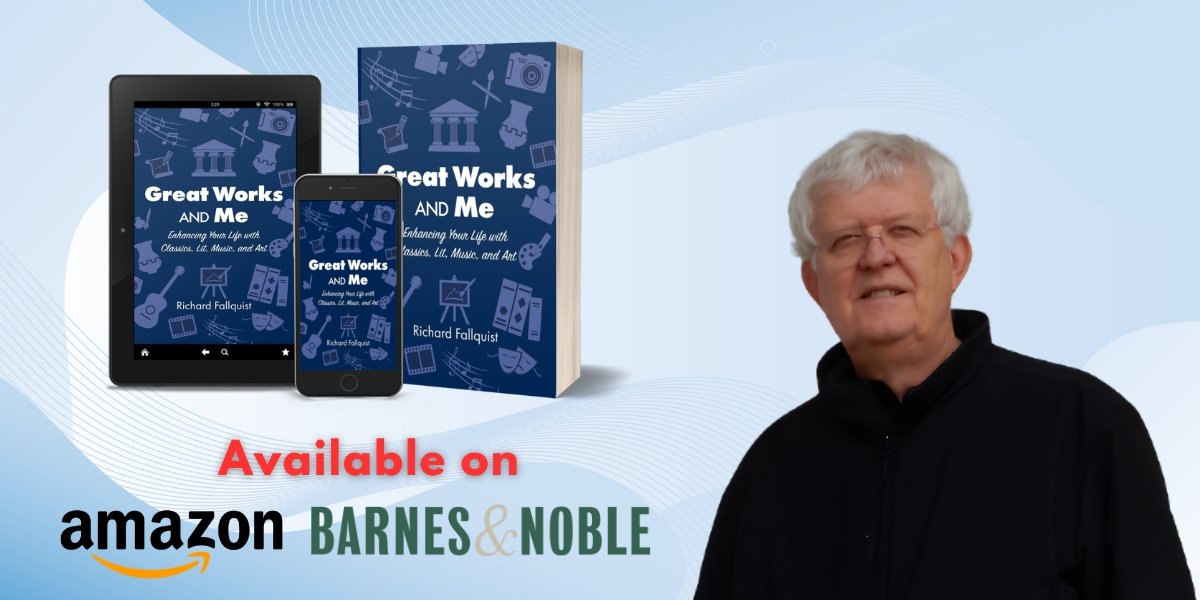
That curiosity became the foundation for Great Works and Me: Enhancing Your Life with Classics, Lit, Music, and Art, a book built around a simple idea. The great works of human creativity are not reserved for scholars or experts. They are available to anyone willing to explore them.

For Richard, discovering these works was not about completing a checklist or proving knowledge. It was about adding a new dimension to life, one filled with reflection, discovery, and a deeper connection to ideas that have lasted for generations.

“I want readers to add this extraordinary dimension to their lives but at their own pace,” Richard explains.

A Second Chapter Built Around Discovery

During his career as an actuary, Richard spent much of his time working with numbers, analysis, and structured decision-making. There was little room for the long periods of reading and exploration required to dive deeply into classic literature and art.

Retirement changed that.

Richard began by exploring recommendations, reading lists, and educational resources that helped him navigate the overwhelming number of important works available. Instead of approaching the classics as something intimidating, he created a process that allowed him to enjoy them naturally.

That personal method eventually became something he wanted to share with others.

Many people are curious about classic literature, music, and art but hesitate because they do not know where to begin. Richard’s goal with Great Works and Me is to remove that hesitation and replace it with curiosity.

His message is straightforward: there is no perfect starting point. The journey itself is what matters.

The Classics Are Not Frozen in Time

One of Richard’s strongest beliefs is that great works remain meaningful because they continue to speak to the human experience.

Although many of these works were created centuries ago, they explore questions that people still wrestle with today. Love, ambition, loss, identity, purpose, and belonging are not limited by time.

Richard believes that the classics help people recognize the similarities that connect generations.

“The more we read, listen, and study, we realize that despite our differences, we all have common affections, sympathies, and desires to know and belong,” he says.

In a world shaped by constant notifications, fast communication, and endless distractions, Richard sees value in returning to experiences that encourage patience and reflection.

The examined life, an idea that has influenced thinkers for centuries, requires people to pause and consider who they are, what they value, and how they understand the world around them.

For Richard, engaging with great works is not about escaping modern life. It is about understanding it better.

Making the Great Works Feel Accessible

A major motivation behind Richard’s book was helping people overcome the intimidation that often surrounds classics.

The names alone can feel overwhelming. Shakespeare, Homer, Joyce, Bach, Picasso, and countless others are often treated as if they belong to a separate world reserved for experts.

Richard believes that mindset misses the point.

The great works were created by people trying to understand life, emotion, conflict, beauty, and human nature. Those themes belong to everyone.

His advice for anyone interested in exploring these works is simple: start with what catches your attention.

“Have no fear. Explore whatever captures your attention,” Richard says.

There is no required order. No deadline. No expectation that every work must be understood at the same depth.

A person might begin with a novel, a painting, an opera, or a piece of music. The important part is the beginning.

From Lists to Lifelong Learning

Richard’s background as an actuary influenced the structure of Great Works and Me. His professional experience taught him the importance of organization, but his lifelong enjoyment of lists helped shape the approachable format of the book.

Each chapter provides context, recommendations, and resources that allow readers to continue exploring beyond the pages.

The structure reflects Richard’s own learning process. He did not approach these works from a place of expertise. He approached them as a curious person looking to discover something meaningful.

That perspective makes the journey feel personal rather than academic.

Finding Personal Meaning in Timeless Creations

Throughout his exploration, Richard discovered works that stayed with him long after experiencing them.

He found inspiration in stories such as Homer’s Odyssey, Virgil’s Aeneid, Shakespeare’s Richard III, James Joyce’s Ulysses, William Faulkner’s Absalom, Absalom!, and Ernest Hemingway’s The Old Man and the Sea.

His interests expanded into visual art and music, including creators such as Picasso, Raphael, Bach, and Chopin.

What connects these works is not simply their historical importance. It is their ability to create personal reactions.

A great work does not just tell you something about the past. It often reveals something about yourself.

That is the experience Richard hopes readers discover.

A Journey That Does Not Need an Ending

The biggest takeaway Richard wants readers to gain from Great Works, and Me is not a list of completed works or a collection of facts. It is a sense of growth, accomplishment, and self-discovery.

He hopes people will see how these works connect across centuries and recognize their continued relevance in their own lives.

If someone finishes his book and explores just one great work, Richard hopes that experience creates a desire to continue.

One discovery leads to another.

That is how a lifelong relationship with literature, music, and art begins.

For Richard Fallquist, the great works are not distant achievements from another era. They are conversations waiting to happen, offering new perspectives every time someone chooses to listen.

Great Works and Me by Richard Fallquist offers an approachable path into the literature, art, and music that have shaped generations. The book is available on Amazon for readers who want to begin exploring the classics at their own pace.

From Self-Worth to the World Stage: DeAngela Burns-Wallace Shows What It Really Looks Like to Lead With Your Whole Self

By: Robert Anderson

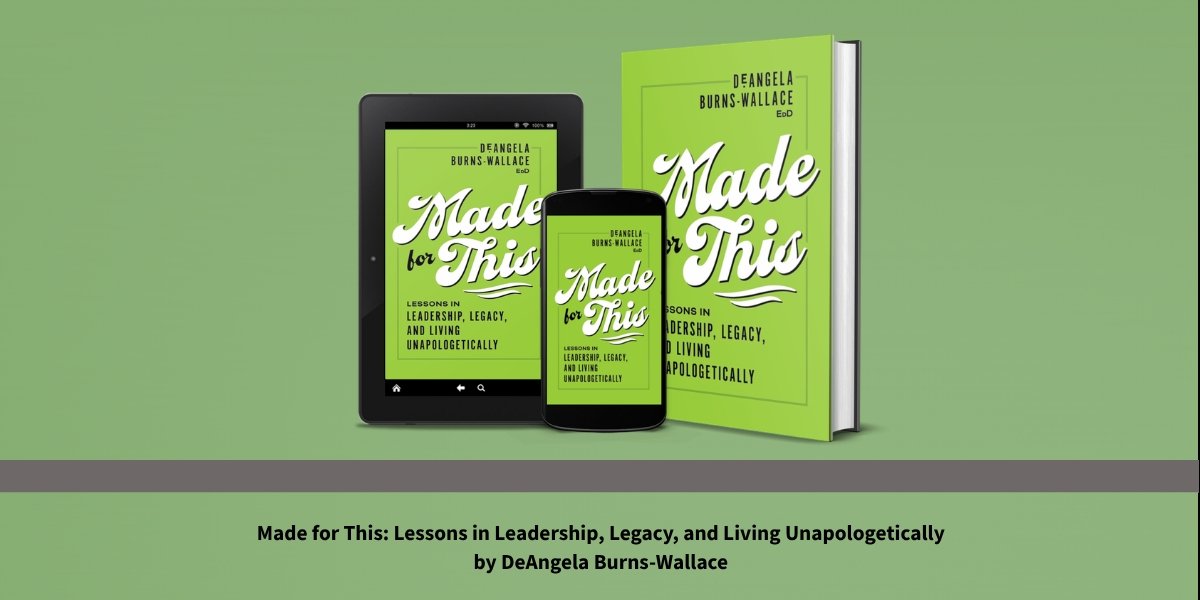
Some books tell you what leadership should look like. Made for This shows you what it actually costs and what it actually gives back, traced across a career that moved from early lessons in service to the global stage of diplomacy and the highest levels of public administration. DeAngela Burns-Wallace writes with the clarity of someone who has genuinely examined her own path rather than simply succeeded along it, and that examination is what makes this memoir feel less like a victory lap and more like a generous handoff of hard-won wisdom to anyone willing to receive it.

What stands out immediately is how seriously Burns-Wallace takes the idea that legacy and authenticity are inseparable. She does not treat her impressive list of roles, from cabinet secretary to U.S. diplomat to foundation CEO, as the point of the story. She treats them as the proving ground for a deeper question about what it means to lead without needing anyone’s permission to be fully herself. That question, asked and answered across very different institutional settings, gives the book a coherence that carries you all the way through, even as the specific challenges she describes shift dramatically from chapter to chapter and from one professional world to the next.

Her account of moving through uncertainty with discipline and courage is especially resonant, not because it offers easy formulas but because she is candid about how much intention it actually takes to keep choosing your values when the path forward is unclear. Readers at every stage of their own leadership journey, whether they are just starting out or already carrying significant responsibility, will find genuine encouragement here, the kind built on specific lived experience rather than borrowed inspiration. She does not ask you to simply believe in yourself. She shows you what believing in yourself actually required of her, day after day, decision after decision, across years that tested her in ways no single chapter could fully capture.

Burns-Wallace also writes movingly about empowering others as leadership’s highest expression, and that conviction shows up not as a tagline but as a thread running through her entire story, visible in how she describes mentors who shaped her and how she now thinks about shaping others in turn. The book’s structure, moving steadily from foundational lessons toward ever larger spheres of influence, mirrors the very growth it describes, giving the reading experience a satisfying sense of momentum that builds naturally from one chapter to the next.

By the end, you understand that the book’s title is not a boast. It is an invitation, extended to every reader wondering whether they, too, were made for more than they have currently allowed themselves to claim, and offered with enough warmth and enough specificity that the invitation feels entirely within reach rather than aspirational.

If you are ready for a leadership story that shows you the real cost and the real reward of leading with intention, Made for This by DeAngela Burns-Wallace is waiting for you on Amazon. Pick up your copy and let her hard-won wisdom meet you exactly where you are in your own journey.

Why Some Women Are Told They’re Fine When They Know Something Is Wrong

By: Rachel Carter

Ally Kayton, neonatal nurse practitioner turned mental health counselor, explains why listening may be the most overlooked part of women’s health care.

For more than 25 years, Kayton has cared for women and families during some of life’s most vulnerable moments. As a board-certified neonatal nurse practitioner, she supported parents facing high-risk pregnancies, premature births, lengthy NICU stays, and unimaginable loss.

Over time, she began noticing a pattern that extended far beyond the hospital walls. Many women were being told they were fine when they clearly did not feel fine.

Whether they were struggling with anxiety, exhaustion, hormonal changes, or the lingering effects of trauma, many felt unheard or left to navigate their symptoms alone.

Today, as the founder of Sage & Stone Holistic Counseling & Integrative Health, Kayton has built her practice around a simple but powerful belief: healing begins when women feel heard.

When “Normal” Doesn’t Feel Normal

Many women arrive at appointments hoping for answers. Instead, they often leave with reassurance that everything looks normal.

Their lab work may be within range. Their symptoms may not fit neatly into a diagnosis. Yet they still feel unlike themselves.

They are exhausted despite getting enough sleep. They struggle with anxiety that seems to appear out of nowhere. Deep down, they know something feels off, even when they cannot put it into words.

The challenge is that many women spend years questioning themselves before someone finally takes the time to listen.

Kayton said, “One of the most common things I hear from women is that they’ve been told everything looks normal, yet they still don’t feel like themselves. When a woman is struggling, I believe it’s important to listen to her experience, not just her lab work.”

For many women, these symptoms are dismissed as stress, aging, motherhood, or simply having too much on their plate. While those factors certainly matter, Kayton believes symptoms often deserve a deeper conversation.

Rather than viewing symptoms as inconveniences to be managed, she encourages women to see them as messages that may point to underlying imbalances involving hormones, chronic stress, nutrition, nervous system dysregulation, or emotional well-being.

What 25 Years In Health Care Taught Me About Women’s Health

For more than 25 years, Ally Kayton has worked at the intersection of maternal and neonatal health, supporting women through some of life’s most challenging and transformative experiences. As a board-certified neonatal nurse practitioner, she cared for patients navigating high-risk pregnancies, premature birth, postpartum complications, grief, and loss.

Throughout her career, Kayton witnessed something that would eventually shape the future of her work. Many women continued to struggle long after a medical event had passed. They were managing anxiety, exhaustion, chronic stress, and emotional overwhelm, yet many felt their concerns were minimized or overlooked.

Kayton said, “My years in neonatal medicine taught me that healing is never just physical. What people experience emotionally can influence every aspect of their wellbeing long after the immediate crisis is over.”

The more she listened, the more she realized that symptoms rarely exist in isolation. Mental health, hormones, stress, lifestyle, and nervous system regulation are deeply interconnected, yet traditional health care often addresses them separately.

Those observations inspired Kayton to expand her expertise beyond neonatal medicine. She earned a Doctor of Nursing Practice and a Master’s degree in Clinical Mental Health Counseling and later became credentialed as an Integrative Health Practitioner Level 1 and Level 2. The additional training allows her to identify root causes and mind-body patterns that are often missed when symptoms are treated individually rather than collectively.

In 2026, Kayton expanded Sage & Stone Holistic Counseling & Integrative Health to address what she saw as a significant gap in women’s care: the need for a more comprehensive approach that brings emotional wellness, nervous system regulation, and integrative health support together under one roof.

Why Listening Is One Of The Most Powerful Forms Of Care

After more than 25 years in health care, Kayton has come to believe that one of the most important aspects of healing is also one of the most overlooked: listening.

Many women spend years searching for answers while feeling dismissed, misunderstood, or told their symptoms are simply part of life.

Kayton explained, “Healing happens when women feel heard. When someone feels safe enough to share their story without judgment, that’s often where meaningful change begins.”

Moving Beyond Symptoms And Toward Whole-Person Healing

Those experiences ultimately inspired Kayton to create Sage & Stone Holistic Counseling & Integrative Health.

Rather than focusing on a single symptom or diagnosis, her approach recognizes the connection between emotional well-being, hormones, chronic stress, lifestyle, and nervous system health.

Kayton said, “Symptoms are messages, not inconveniences. Instead of asking how we can silence a symptom, I believe we should ask what the body may be trying to tell us.”

For women who have spent years caring for everyone around them, that shift can be powerful. It moves the focus away from simply getting through the day and toward understanding what is needed to truly heal.

Kayton shared, “We spend so much of our lives caring for others. My hope is that women realize they deserve that same level of care, compassion, and attention for themselves.”

To learn more about Ally Kayton and Sage & Stone Holistic Counseling & Integrative Health, visit the Sage & Stone Holistic Counseling website. Readers can also explore the Sage & Stone blog for insights on women’s wellness, emotional healing, and whole-person care.

Disclaimer: This article is for informational and educational purposes only and does not provide medical, mental health, or professional healthcare advice. The information shared should not be used as a substitute for diagnosis, treatment, therapy, or guidance from a licensed medical or mental health professional. Readers experiencing physical, emotional, or mental health concerns should consult a qualified healthcare provider. Any references to holistic counseling, integrative health, or wellness practices are not intended to guarantee specific results or outcomes.