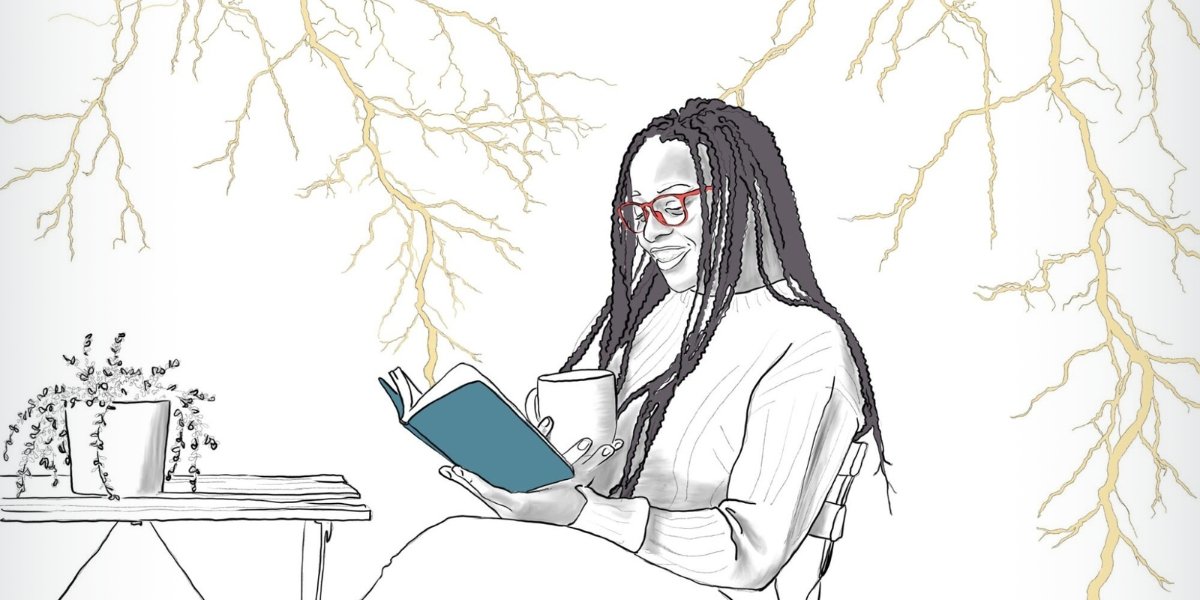
For Cicero founder Paul Bennett, education works best when it is designed around the learner, not the system.
For generations, most schools have operated on a simple premise: gather students of roughly the same age, deliver the same material, and move everyone forward at a similar pace.
The model has educated millions of children, but it also raises an important question. What happens when a learner does not fit the average?
Some students move through the curriculum faster than it allows. Others need additional support. Many are capable of excelling but struggle to connect with material that feels disconnected from their interests or goals. In a system built around standardization, individuality can be difficult to accommodate.
That challenge has led to Cicero, a personalized education platform founded by entrepreneur and former journalist Paul Bennett. Rather than starting with a curriculum and fitting students into it, Cicero begins with the learner and builds outward from there.
From a Family Experiment to an Education Company
The idea emerged from Bennett’s own life.
A former journalist whose work appeared in National Geographic, Wired, and other publications, Bennett spent years building businesses while pursuing a highly unconventional family adventure. Along with his family, he spent a decade sailing around the world.
The experience offered extraordinary learning opportunities, but it also exposed a practical challenge faced by many mobile families. How do you provide a rigorous education when traditional schooling no longer fits your lifestyle?
The question is familiar to many families involved in homeschooling and alternative education. It is particularly relevant to those pursuing worldschooling, in which travel and real-world experiences become part of the educational process.
Bennett’s search for an answer eventually led to Cicero, a platform that connects middle-school and high-school learners with expert teachers who create individualized learning experiences through remote instruction.
There Is No Such Thing as an Average Student
At the heart of Cicero’s philosophy is a belief that education becomes more effective when it reflects the learner’s unique circumstances.
A student interested in marine biology may engage differently from a student fascinated by history, entrepreneurship, literature, or mathematics. Their motivations, strengths, and learning styles are unlikely to be identical.
Yet many traditional educational models are designed around what an average student might need.
Cicero takes a different approach. Through one-to-one learning, teachers can build courses around the individual rather than adapting a preexisting curriculum to fit everyone.
That flexibility extends beyond academic level. Teachers can incorporate learners’ interests, adjust instructional methods, and design projects that feel relevant to students’ lives and goals.
The result is an educational experience that feels less like following a prescribed path and more like participating in a collaborative process.
When Students See Themselves in the Material
Personalization is often discussed in terms of pacing or subject selection. Bennett believes it goes much deeper.
When learners recognize their interests and experiences within a course, they often become more invested in the work itself. Questions become more meaningful. Discussions become more engaging. Learning begins to feel connected to who they are rather than something happening around them.
That connection can be especially important for families who feel constrained by standardized systems.
Many parents are not simply looking for academic instruction. They want their children to develop confidence, curiosity, and a stronger sense of ownership over their education.
A personalized course can create space for that growth because the learner is no longer expected to adapt to a rigid framework.
Instead, the framework adapts to the learner.
Building Education Around Real Lives
As remote learning becomes increasingly common, families have more choices than ever before. Yet flexibility alone does not solve the challenge of creating meaningful educational experiences.
For Bennett, the goal has always been larger than offering online classes.
Cicero was built around the idea that education should reflect the complexity of real people and real lives. Through individualized instruction, learners can explore subjects in ways that align with their interests, ambitions, and circumstances.
For families seeking alternatives to standardized educational models, this philosophy offers a different vision of learning. Rather than asking students to fit a predefined program, it starts with a simple question:
What could education look like if it were built specifically for the learner?