By: Shawn Mars
For many women who relocate to the United States with years of beauty expertise behind them, the first challenge isn’t finding clients. It’s finding their footing.
The American beauty industry is one of the country’s more heavily regulated professional environments. Every state runs its own licensing board, with its own documentation requirements and examination standards. For a skilled cosmetologist or esthetician who built her career in another country, this system can feel less like a professional pathway and more like a wall: invisible, unmarked, and difficult to navigate alone.
That’s the reality Kateryna Blazhko, founder of License Solution Consulting in Sacramento, California, set out to address. It’s also the reason she organized a professional beauty event in Sacramento, bringing together nearly 20 specialists who either already work in the U.S. beauty industry or are building toward that goal.
More Than an Event: A Space to Be Seen
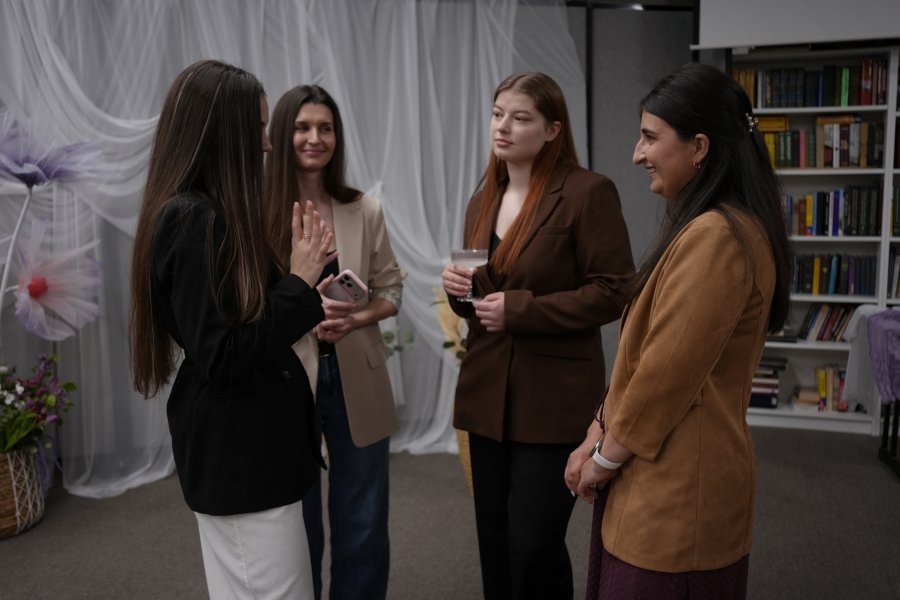
The gathering was designed around a clear premise: immigrant beauty professionals don’t just need information. They need a room where their experience is understood, their questions are taken seriously, and their professional future feels reachable.
“There’s a moment when a woman realizes she isn’t starting over. She’s starting from a place of real strength,” Blazhko says. “But that moment doesn’t happen in isolation. It happens in community.”
The event brought together practitioners at different stages of their American journey. Some were already licensed, some were in the middle of the process, and some were still weighing their options. What united them was the goal of building something lasting in their new country, on their own terms.
Four Areas of Professional Growth
The program centered on four areas that shape how a beauty professional builds a sustainable career in the United States.
The first was personal brand and professional positioning. In the American market, expertise alone does not build a client base. Visibility builds it. Participants explored how trust forms with U.S. clients, how to communicate their value in a new cultural context, and how to maintain a consistent professional presence that reflects who they are.
The second focused on working through fear and internal barriers. Moving to a new country, navigating a foreign licensing system, and practicing in a new language all carry a psychological weight that often goes unaddressed in professional settings. The event created space to name those barriers openly: the fear of failing an exam, the uncertainty of a new market, the question of whether one truly belongs. Naming them is often the first step to moving past them.
The third area addressed the practical structure of building beauty work legally in the U.S.: choosing the right professional format, understanding the stages of licensing and business launch, and developing a clear personal roadmap. For many participants, this turned abstract plans into concrete steps.
The fourth area explored American beauty marketing. Client relationships work differently in the U.S. than in other markets. Reputation functions as a long-term business asset, and consistent professional presence shapes outcomes over time. Marketing, in this context, is not about self-promotion. It is about showing up reliably and authentically in a way that builds trust.
The Role of Professional Community for Women
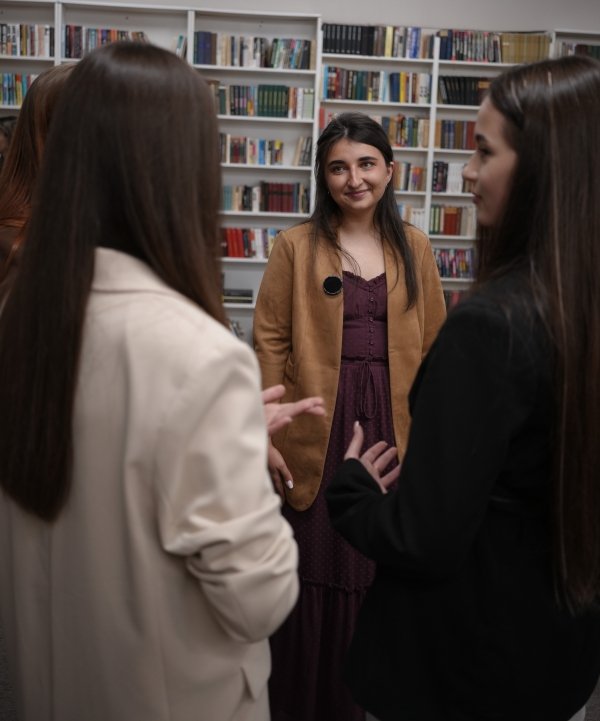
What makes events like this useful for immigrant women is not only the information exchanged. It is the experience of being in a room where no one has to explain why the process is hard.
Women who have built careers across different countries carry a form of resilience that the systems they enter often do not see. Professional community gives that resilience a place to be acknowledged, and put to use.
When women in beauty gather with intention, something shifts. The woman who struggled alone with her licensing application for six months learns that her experience was not a personal failure but a systemic gap, and that others have navigated it successfully. The woman afraid to charge what her work is worth hears from someone already working in the premium market. The woman who has been putting off starting her own studio sees, for the first time, someone who looks like her doing exactly that.
From Information to Transformation
Knowledge transfer matters, but professional community produces something else as well: a shift in how a woman sees her own possibilities.
Blazhko designed the event around her own practical guide for beauty professionals in the U.S., a multilingual resource built from years of working directly with specialists navigating the licensing system. The event brought those pages to life with speakers, shared experiences, and questions answered in real time.
“I wanted every woman who walked in to leave with more clarity than she arrived with,” she says. “Not just about the licensing process, but about herself as a professional in this country.”
That clarity, the sense that the path forward is real and reachable, is what professional community makes possible. And for immigrant women in beauty, it can be a defining resource.