Women's Journal

When Women in Beauty Come Together: How Professional Community Matters for Immigrant Specialists in the U.S.

By: Shawn Mars

For many women who relocate to the United States with years of beauty expertise behind them, the first challenge isn’t finding clients. It’s finding their footing.

The American beauty industry is one of the country’s more heavily regulated professional environments. Every state runs its own licensing board, with its own documentation requirements and examination standards. For a skilled cosmetologist or esthetician who built her career in another country, this system can feel less like a professional pathway and more like a wall: invisible, unmarked, and difficult to navigate alone.

That’s the reality Kateryna Blazhko, founder of License Solution Consulting in Sacramento, California, set out to address. It’s also the reason she organized a professional beauty event in Sacramento, bringing together nearly 20 specialists who either already work in the U.S. beauty industry or are building toward that goal.

More Than an Event: A Space to Be Seen
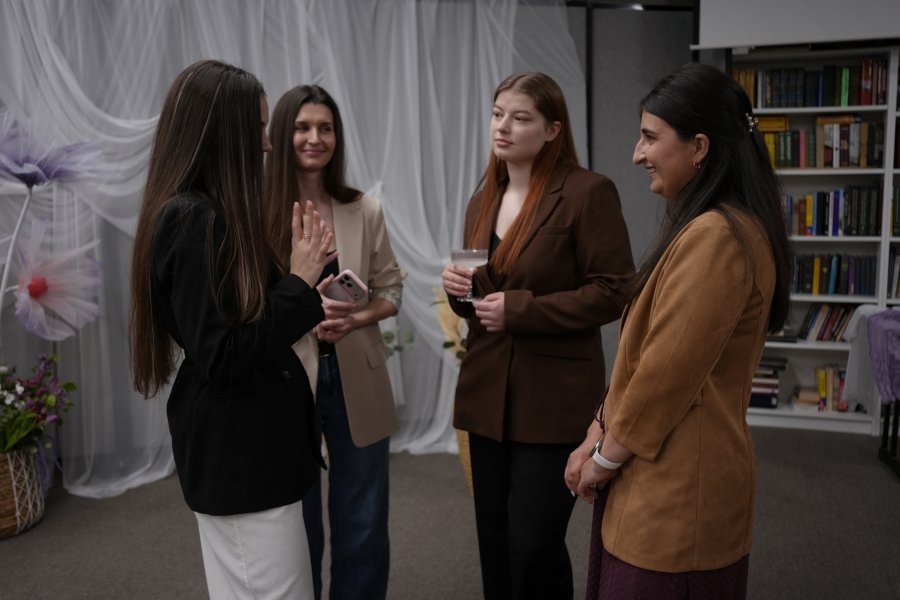
Photo Courtesy: Liudmila Medvedeva

The gathering was designed around a clear premise: immigrant beauty professionals don’t just need information. They need a room where their experience is understood, their questions are taken seriously, and their professional future feels reachable.

“There’s a moment when a woman realizes she isn’t starting over. She’s starting from a place of real strength,” Blazhko says. “But that moment doesn’t happen in isolation. It happens in community.”

The event brought together practitioners at different stages of their American journey. Some were already licensed, some were in the middle of the process, and some were still weighing their options. What united them was the goal of building something lasting in their new country, on their own terms.

Four Areas of Professional Growth

The program centered on four areas that shape how a beauty professional builds a sustainable career in the United States.

The first was personal brand and professional positioning. In the American market, expertise alone does not build a client base. Visibility builds it. Participants explored how trust forms with U.S. clients, how to communicate their value in a new cultural context, and how to maintain a consistent professional presence that reflects who they are.

The second focused on working through fear and internal barriers. Moving to a new country, navigating a foreign licensing system, and practicing in a new language all carry a psychological weight that often goes unaddressed in professional settings. The event created space to name those barriers openly: the fear of failing an exam, the uncertainty of a new market, the question of whether one truly belongs. Naming them is often the first step to moving past them.

The third area addressed the practical structure of building beauty work legally in the U.S.: choosing the right professional format, understanding the stages of licensing and business launch, and developing a clear personal roadmap. For many participants, this turned abstract plans into concrete steps.

The fourth area explored American beauty marketing. Client relationships work differently in the U.S. than in other markets. Reputation functions as a long-term business asset, and consistent professional presence shapes outcomes over time. Marketing, in this context, is not about self-promotion. It is about showing up reliably and authentically in a way that builds trust.

The Role of Professional Community for Women
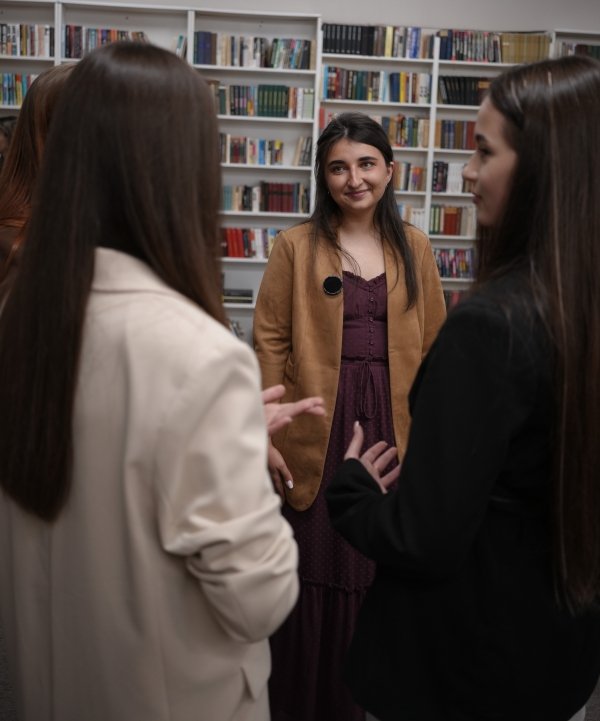
Photo Courtesy: Liudmila Medvedeva

What makes events like this useful for immigrant women is not only the information exchanged. It is the experience of being in a room where no one has to explain why the process is hard.

Women who have built careers across different countries carry a form of resilience that the systems they enter often do not see. Professional community gives that resilience a place to be acknowledged, and put to use.

When women in beauty gather with intention, something shifts. The woman who struggled alone with her licensing application for six months learns that her experience was not a personal failure but a systemic gap, and that others have navigated it successfully. The woman afraid to charge what her work is worth hears from someone already working in the premium market. The woman who has been putting off starting her own studio sees, for the first time, someone who looks like her doing exactly that.

From Information to Transformation

Knowledge transfer matters, but professional community produces something else as well: a shift in how a woman sees her own possibilities.

Blazhko designed the event around her own practical guide for beauty professionals in the U.S., a multilingual resource built from years of working directly with specialists navigating the licensing system. The event brought those pages to life with speakers, shared experiences, and questions answered in real time.

“I wanted every woman who walked in to leave with more clarity than she arrived with,” she says. “Not just about the licensing process, but about herself as a professional in this country.”

That clarity, the sense that the path forward is real and reachable, is what professional community makes possible. And for immigrant women in beauty, it can be a defining resource.
The Cost of Devotion No One Talks About

The Story Behind Rising From the Abyss of Grief

Based on the life and experiences of Irene Tunanidas

The truth about grief is that it doesn’t arrive gently; it dismantles everything you thought was stable.

Grief is often spoken of in gentle terms such as healing, acceptance, and time. But it is far from gentle. It disrupts your life, strips away meaning, and leaves you in a state of stillness that feels too heavy to explain. For Irene Tunanidas, grief did not arrive suddenly and pass. It was built over years, through responsibility, exhaustion, love, and ultimately, loss. Her book, Rising From the Abyss of Grief, is not written from observation. It came from her life experiences, decades of strength and one chapter that changed her life completely.

A Life That Refused to Be Limited

Her life began with strong determination. She was raised in a close-knit Greek family and grew up with clear values of working hard, taking responsibility, and building something meaningful with her life. There are parts of Irene’s story that don’t make headlines but explain everything. When she was 3½ years old, a simple treatment for whooping cough changed her life forever. An intern gave her the wrong medication, and just like that, she woke up deaf. Along with her hearing, she lost something else, the ability to speak Greek, her mother tongue, the only language she had ever known. Her path could have narrowed, but instead, it sharpened her focus.

School was hard in ways most children never have to think about. Without a sign language interpreter, junior high especially felt like being locked outside a room where everyone else was having a conversation. But a handful of teachers believed in her, and that was enough to keep her going. She graduated in 1966 with a 3.7 GPA. After earning her Master’s in Deaf Education, she faced repeated rejection from school districts that resisted the use of sign language.

She Lost One Dream but Lived Another

She had wanted to be a nurse. That dream was taken from her too, pushed aside because of the communication barriers she faced. Then one day, unexpectedly, she was asked to tutor a student in English. Something clicked. She realized she could teach, and more than that, she was good at it. That unexpected moment rerouted her entire life, eventually leading her to teach deaf students and show that what she lost didn’t have to decide how far she could go.

For over 30 years, she taught deaf students, helping them develop confidence, independence, and direction. She pushed against the belief that still persists today, that deafness limits a person’s potential. In her classroom, that idea did not exist. What mattered was communication, discipline, and belief.

The Moment Everything Changed

In 2003, shortly after retiring, Irene’s life took an unexpected turn. Her mother suffered a devastating fall that left her paralyzed, and overnight, Irene became her full-time caregiver.

This was not occasional support. Her days were built entirely around care, feeding, lifting, bathing, managing medical needs, and keeping a household running. Moving her mother with a Hoyer lift, monitoring her condition, and staying alert through the night left little room for rest and no room for error.

But what made it heavier than the physical demands was who she was caring for. Her mother was not just a patient. She was her support system and the person who had influenced much of who Irene had become. That made every exhausting day mean something more than duty. It made it devotion.

When her mother died, the structure of Irene’s life disappeared. She found herself calling out in the house, half-expecting an answer that would never come. She cried often and struggled to accept help, even when it was offered. It took nearly two years before she began to move through that grief.

As Irene writes in her book Rising From the Abyss of Grief,

“I felt like I was in a dark hole without human touch or support.”

She does not soften the experience because she knows she is not the only one who has felt it.

Caregiving and the Cost of It

Caregiving is often spoken about with respect, but rarely with honesty. What Irene experienced was not just devotion. It was physical strain, emotional pressure, and long periods of isolation. Her life narrowed. Personal time disappeared. Sleep was interrupted. Every decision revolved around someone else’s needs.

And yet, she continued. There were moments of connection that made the effort worthwhile: conversations and the simple comfort of being present. But those moments existed alongside constant pressure.

It is this balance, love and exhaustion existing at the same time, that defines her story. And it is something many caregivers recognize but rarely see written with clarity.

Grief as a Daily Experience

One of the most distinct aspects of Rising From the Abyss of Grief is how it breaks grief down into days. Not as a theory, but as a lived process. Her 30-day structure reflects how grief actually progresses, through fluctuating emotions and changing energy. Some days are nothing but withdrawal and exhaustion. Others introduce small actions, getting out, reconnecting, attempting routine again.

There is no dramatic turning point. Instead, there is a gradual change. The kind that happens quietly, often without being noticed in the moment.

Rebuilding Life Without Pretending

What makes Irene’s perspective different is that she does not try to make grief sound manageable or neat. She acknowledges depression. She acknowledges isolation. She acknowledges the difficulty of even simple actions. Yet, she also shows what returning to everyday life actually feels like.

Recovery came through ordinary actions repeated until life began to feel possible again, leaving the house, engaging with people, returning to daily tasks, and finding stability. Faith becomes part of that structure, not as a solution, but as support. There is no claim that everything becomes easier. Only then does it become possible to continue.

She Kept Showing Up Anyway

Irene was never someone who did just enough. She started volunteering with Easter Seals back in 1963, long before advocacy had a name people recognized. She contributed to the Quota Club, working toward better hearing and speech support, and kept showing up in spaces where her presence made a difference. That commitment eventually led her to serve as president of the Ohio Association of the Deaf in 2024.

Outside the classroom, she pushed families to use American Sign Language at home, because she understood better than most what it costs a child to grow up without a way to truly communicate. Her students carried her influence forward. One of them, whom she personally tutored, graduated with a 3.9 GPA and went on to earn a degree in Electrical Engineering.

Slowly, she found her way back. Small things helped, like showing up to the Easter Seals Christmas fundraiser, returning to church, and spending time writing. She had started putting her story down on paper in 2011, but the emotions kept catching up with her, making it difficult to continue. She stepped away for a while to focus on her work within the Deaf community. Then, in 2024, she came back to finish what she had started, pushing through the physical ache of arthritis and the difficulty of revisiting memories she had spent years learning to carry.

Photo Courtesy: Irene Tunanidas

What Her Story Leaves Behind

Rising From the Abyss of Grief does not offer easy comfort. It offers something more useful, recognition. It reflects what grief actually feels like when stripped of general advice and simplified language. It shows how loss affects not just emotions, but structure, identity, and daily life.

Irene did not write this book to present herself as strong or to offer perfect answers. She wrote it because she understands what it feels like to sit in silence with no direction, no structure, and no clear way forward. Her intention is simple. To let others know they are not alone in that space, and that even in the darkest moments, there is still a way to move, even when it doesn’t feel like much is changing.

And most importantly, it shows that moving forward does not require sudden strength. It requires persistence. Not a dramatic change, just the willingness to take the next step, even when it feels small. That is where Irene’s story stands out. Not because it promises relief, but because it tells the truth with honesty. And in that truth, many will find something they have been quietly searching for.

Photo Courtesy: Irene Tunanidas

Featured on WDTN-TV’s Living Dayton

Irene’s story has started finding people who need it. It moved beyond her book and onto television, when her life and work were featured on WDTN-TV as part of Living Dayton. The segment introduced her to a wider audience, not just as someone who had survived a great deal, but as someone who had turned that survival into something useful, something that could guide and encourage others going through their own difficult seasons.

What began as a private act of honesty has become something others can recognize in their own lives.

PCOS Name Change Brings New Focus to Women’s Care

PCOS is entering a new phase in women’s health care as medical experts move toward a new name for the condition long known as polycystic ovary syndrome. The updated term, polyendocrine metabolic ovarian syndrome, or PMOS, was introduced after an international review involving clinicians, researchers, patient advocates, and health organizations.

The change is drawing attention in the United States because PCOS has often been misunderstood as a condition centered mainly on ovarian cysts. Medical experts involved in the rename have said that the older term does not fully reflect the endocrine and metabolic features linked to the condition.

PCOS remains the familiar name for many patients, doctors, health records, and education materials. During the transition, patients may see both terms used together as PMOS becomes more common in medical settings.

Why the PCOS Name Is Changing

The former name, polycystic ovary syndrome, placed the word “cystic” at the center of the diagnosis. That wording caused concern among specialists because not every patient with PCOS has ovarian cysts. Some patients may instead experience irregular menstrual cycles, acne, hair thinning, higher androgen levels, weight-related concerns, or signs connected to metabolic health.

The updated name, PMOS, was chosen to reflect a wider clinical picture. “Polyendocrine” points to the role of multiple hormones. “Metabolic” reflects the connection to insulin resistance and related health concerns. “Ovarian” keeps the reproductive link without making cysts the defining feature.

For patients, the name change may help reduce confusion. A person who does not have visible cysts on an ultrasound may still have symptoms that require medical review. The new language may help doctors explain that PCOS is not defined by one test or one symptom.

The change does not mean patients have a new condition. It is a new name for a condition already recognized as complex and variable. The goal is to make the name better match how the condition is discussed in current care.

PCOS Care Moves Beyond One Symptom

PCOS has often entered public conversation through fertility or menstrual health. Those remain important parts of care, but federal and medical resources have described the condition as broader than reproductive symptoms alone.

Patients may first seek help in different places. Some may visit a dermatologist for acne or hair changes. Others may speak with a primary care doctor about weight changes, fatigue, or irregular cycles. Some may first receive attention from an OB-GYN or endocrinologist.

That wide range of entry points has contributed to delays for some patients. Symptoms can overlap with other conditions, appear gradually, or be treated separately without a connected diagnosis. The new name may help clinicians view these signs as part of one broader condition.

PCOS care often depends on the patient’s symptoms, health history, age, and personal goals. Doctors may consider cycle management, hormone evaluation, skin and hair concerns, metabolic screening, nutrition guidance, physical activity, and medication when appropriate.

The rename may also affect how patients search for information online. Someone searching only for cysts may miss information about hormone imbalance, metabolic health, or skin symptoms. As PMOS becomes more visible, patient education may begin to reflect a wider understanding of the condition.

What PCOS Patients May Hear From Doctors

Patients already diagnosed with PCOS may continue hearing the older name for some time. Medical records, insurance references, clinic forms, and patient handouts often take time to change. During the transition, many health professionals may use “PMOS, formerly PCOS” to avoid confusion.

That phrasing may be important for patients who have years of health records under the PCOS name. It can also help doctors connect older research, past lab work, prescriptions, and referrals to the updated term.

For newly diagnosed patients, the change may make early conversations clearer. Instead of focusing first on whether cysts are present, providers may explain the condition through hormone patterns, metabolic health, cycle history, and visible symptoms such as acne or hair changes.

The new wording may also help patients ask more specific questions during appointments. A patient may ask about blood sugar screening, cholesterol checks, cycle regulation, or skin symptoms without feeling that the condition is limited to the ovaries.

Doctors are still expected to evaluate each case carefully. PCOS can look different from one patient to another, and similar symptoms can appear in other conditions. The name change does not remove the need for clinical judgment or proper testing.

A U.S. Health Care Shift With Global Roots

The PCOS name change came from a global process, but its impact is likely to be felt across U.S. health care. American doctors, researchers, and organizations were involved in the review, and U.S. clinics may gradually update how they explain the condition to patients.

The change arrives as women’s health conditions are receiving closer attention from medical institutions and patient advocacy groups. PCOS has long been common, but many patients have described difficulty getting answers or understanding how symptoms are connected.

The change may influence patient education pages, clinic conversations, medical training, and public awareness. It may also encourage more communication across specialties, including primary care, endocrinology, dermatology, and OB-GYN care.

The practical effect may not be immediate. Patients may still see PCOS in records and PMOS in newer materials. Over time, health systems may adjust language, update forms, and revise educational content.

For now, the key point is clarity. PCOS is being renamed because experts say the older term did not describe the full condition. The new name places greater attention on hormones, metabolism, and ovarian function together.

How Tara Bre Built BreLuxe Around Elevated Beauty, Emotional Ease, and a Personal Touch

The most memorable brands do not simply offer a service. They understand a feeling people have been searching for, even if they have never quite had the words for it. Tara Bre built BreLuxe in that space. What she has created is not just beauty but a carefully shaped experience where artistry, calm, and care come together in moments people remember for years to come.

How Tara’s Creative World Began to Take Form

Long before BreLuxe took shape as a business, Tara was already forming the perspective that would eventually define it. Her early years as a professional model and makeup artist for MAC Cosmetics placed her in spaces where beauty was not just created, but interpreted. She came to understand that beauty is not simply about how someone looks when the work is finished. It is also about how they feel in the process, whether they feel comfortable, understood, and truly like themselves.

Her early years in beauty also gave Tara a broader and more textured perspective. Travel and exposure to different environments introduced her to a wide range of aesthetics and cultural influences, shaping a creative point of view that feels layered rather than fixed. That same sensibility is visible in BreLuxe today. The brand is refined, but never one-note. It feels polished while still making space for personality and ease.

The Gap Tara Recognized in the Beauty Experience

The longer Tara worked in the industry, the more clearly she could see what was missing. Beautiful artistry was there, but the overall experience often felt hurried, inconsistent, or not fully thought through. In some cases, the professionalism and hygiene clients should have been able to expect simply were not being treated as essential. For people getting ready for some of the most important days of their lives, that can shift the experience in all the wrong ways.

That realization stayed with her. Tara saw a real opportunity to create something better, not just in the final result, but in the way the service was delivered. BreLuxe took shape around the belief that beauty should come with ease, trust, and genuine care. She wanted the process to feel elevated and trustworthy, but never distant. A beautiful result mattered, but it was never meant to stand on its own. The larger goal was to create an experience where clients felt calm, supported, and fully present in meaningful moments.

Why BreLuxe Was Built With a Strong Operational Foundation

There is another side to Tara’s career that makes her path especially distinctive. After her early work in artistry and fashion, she transitioned into corporate leadership within major insurance organizations. Her experience across marketing, sales, and distribution taught her how to manage people, improve outcomes, and scale with intention, all within an environment where discipline and execution mattered every day.

That background gave her something especially valuable when she founded BreLuxe. She was not building from instinct alone. She was building with a clear understanding of systems, execution, and the level of consistency required. That is part of what makes BreLuxe stand out. It carries the softness, beauty, and elevated feel of a luxury beauty brand, but behind it is a strong operational mindset that keeps everything running with intention.

Where Beauty Became Part of the Event Experience

Tara’s broader vision for BreLuxe becomes especially visible in the way she has expanded beyond traditional bridal services. With Beauty Bars and Dapper Bars, she has taken beauty and grooming and turned them into something guests can actively experience and enjoy. These are not simply extra services layered onto an event. They become part of how the event feels, creating experiences that are refined, interactive, and memorable long after the day is over.

That shift says a lot about the way Tara understands the beauty and events industry today. She knows that clients, planners, and brand partners are often looking for more than something polished happening quietly behind the scenes. They want details that guests can actually feel, moments that bring a sense of energy, interaction, and memory into the event. BreLuxe responds to that beautifully, creating experiences that feel elevated, engaging, and naturally woven into the celebration.

Photo Courtesy: Loreen Sarkis / Sarkis Studios

Building a Brand That Supports Artists as Well as Clients

What gives BreLuxe even more depth is the fact that Tara’s vision extends beyond the client experience. She speaks openly about artists being a major part of her “why,” and that adds a meaningful layer to the brand. She is not only focused on creating beautiful outcomes for the people booking the service. She is also focused on building a business where artists can do what they love within a more supportive, professional, and intentional structure.

Part of what makes BreLuxe resonate is that it was never built around beauty alone. The brand serves clients in meaningful moments, while also creating room for artists to grow and for their families to benefit from that stability. Tara’s continued support for community causes, especially those focused on women and caregivers, gives the business even greater depth. It is this mix of polish and purpose that makes BreLuxe feel distinct.

What Endures Beyond the Final Look

The recognition Tara and BreLuxe have received feels like a natural reflection of that broader impact. From major industry honors to national media recognition, her success points to something larger than personal achievement. She has built a brand that shows beauty can be elevated without feeling impersonal, and structured without losing warmth. That may be what makes Tara Bre’s story so resonant. She is not just delivering beauty. She is helping shape a more thoughtful beauty experience through taste, intention, and genuine care.