Stories about crime often end when the victim escapes. Headlines report the incident, investigations conclude, and public attention moves elsewhere. Yet one question remains largely unanswered. What happens to the person who must continue living long after everyone else has stopped looking?
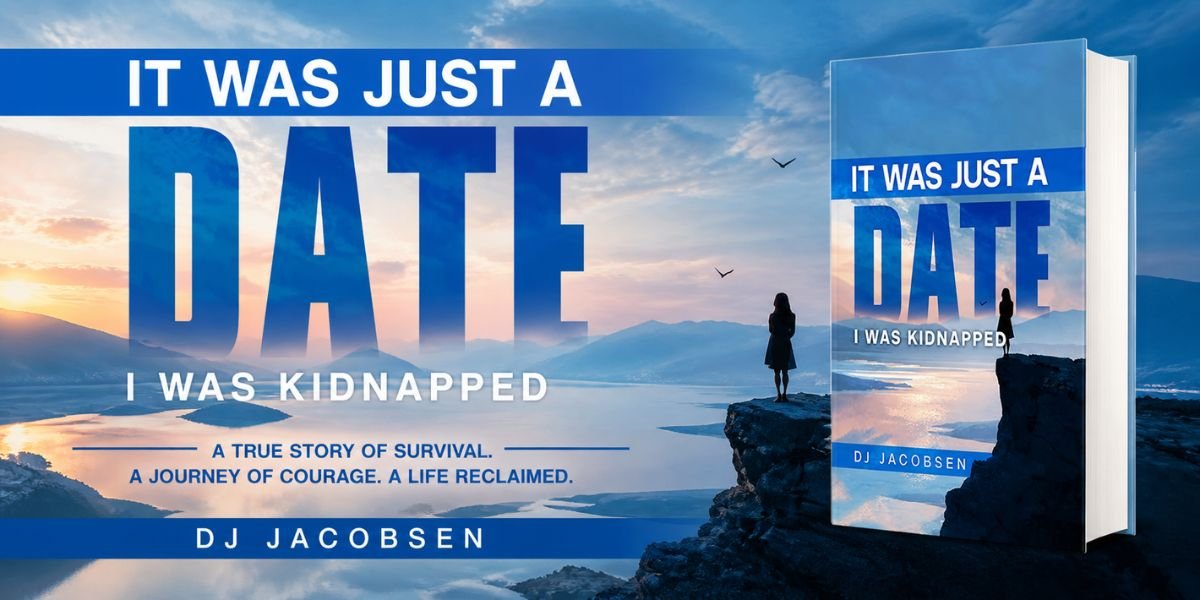
That question sits at the center of It Was Just a Date: I Was Kidnapped by DJ Jacobsen, a newly released narrative that shifts the conversation away from the moment of violence and toward the decades that follow. At a time when discussions surrounding trauma, personal safety and human trafficking have become increasingly visible, Jacobsen’s work examines the lasting realities that seldom receive equal attention.
Rather than presenting a chronological account of a single event, the book reflects on memory, healing, family and the ways life continues despite experiences that threaten to define it forever. It considers survival not as a destination but as an ongoing process requiring courage in ordinary moments. Raising children, building a career, maintaining relationships and finding reasons to look ahead.
DJ Jacobsen brings an uncommon perspective to that discussion. A retired educator who spent years in the classroom, she devoted decades to revisiting her story before deciding how to tell it. According to the book’s introductory reflections, the manuscript evolved repeatedly as her own understanding of the experience changed over time. What ultimately emerged is not simply a narrative about surviving a kidnapping but an examination of how people rebuild identity after fear has altered the course of their lives.
That long creative process also gives the book another distinguishing quality: its emphasis on legacy. The author frequently reflects on the importance of her children, grandchildren and great-grandchild, framing the narrative as something larger than personal remembrance. It becomes a record intended for future generations. One that acknowledges suffering while refusing to allow it to become the only defining chapter of a life.
The timing of the book is significant. Public awareness surrounding human trafficking, violence against women and the long-term effects of trauma has expanded considerably during the past decade. Many conversations remain centered on statistics, investigations and criminal cases. Personal accounts that examine what recovery actually looks like continue to be comparatively rare.
It Was Just a Date: I Was Kidnapped contributes to that conversation by reminding readers that healing cannot be measured by the conclusion of a legal case or the passing of time alone. It asks readers to consider resilience in quieter ways: choosing hope after fear, finding purpose after loss, and preserving the parts of oneself that trauma attempts to erase.
For readers interested in narratives that move beyond recounting difficult experiences to explore what comes afterward, DJ Jacobsen’s work offers a thoughtful perspective grounded in decades of reflection and lived experience. It encourages a broader discussion about survival. One that begins after the headlines disappear.
Read the story behind the survival. Learn more about DJ Jacobsen and order It Was Just a Date: I Was Kidnapped at https://djjacobsenauthor.com/, or purchase your copy through Amazon and Barnes & Noble today.