
Women consistently report higher levels of environmental concern than men, a finding replicated across decades of survey research. They also convert that concern into organised action at lower rates, and the reason has less to do with commitment than with time.
A 2026 analysis published in the International Journal of Finance & Economics, drawing on World Values Survey data, found that while women are more likely than men to express environmental concern, family responsibilities and work commitments constrain their capacity to translate that concern into activism. The authors describe a concern-action gap, and attribute it to a prioritisation effect in which women redirect civic energy toward commitments that fit around existing caregiving obligations rather than disengaging.
That finding describes the design problem behind ORIGIN, a worldwide event taking place on October 17 whose participation requirements were built to fit inside a life that is already full.
What the Concern Data Actually Shows
The gender gap is well documented in higher-income countries. Research from the Yale Program on Climate Change Communication, based on a 2023 international survey conducted with Data for Good at Meta and Rare’s Center for Behavior and the Environment across nearly 200 countries, found that in high-emission, high-income nations, 36 percent of women were classified as alarmed about climate change compared with 30 percent of men.
Pew Research Center found a similar pattern across developed nations. In the United States, women were 17 percentage points more likely than men to describe climate change as a serious problem, with gaps of 13 points in Canada and 12 in Australia.
The pattern extends into behaviour, though unevenly. Studies have repeatedly found women more engaged in household-level environmental action, including food and consumption decisions, while men appear more often in public-facing forms of participation such as protests and campaigns. The distinction matters, because most environmental mobilisation is designed around the second category.
How the Event Is Structured
ORIGIN asks participants worldwide to pause at the same absolute instant rather than the same local hour. The commitment is measured in minutes, requires no travel, no ticket, and no childcare arrangement, and is explicitly designed to be done at home with whoever is already there.
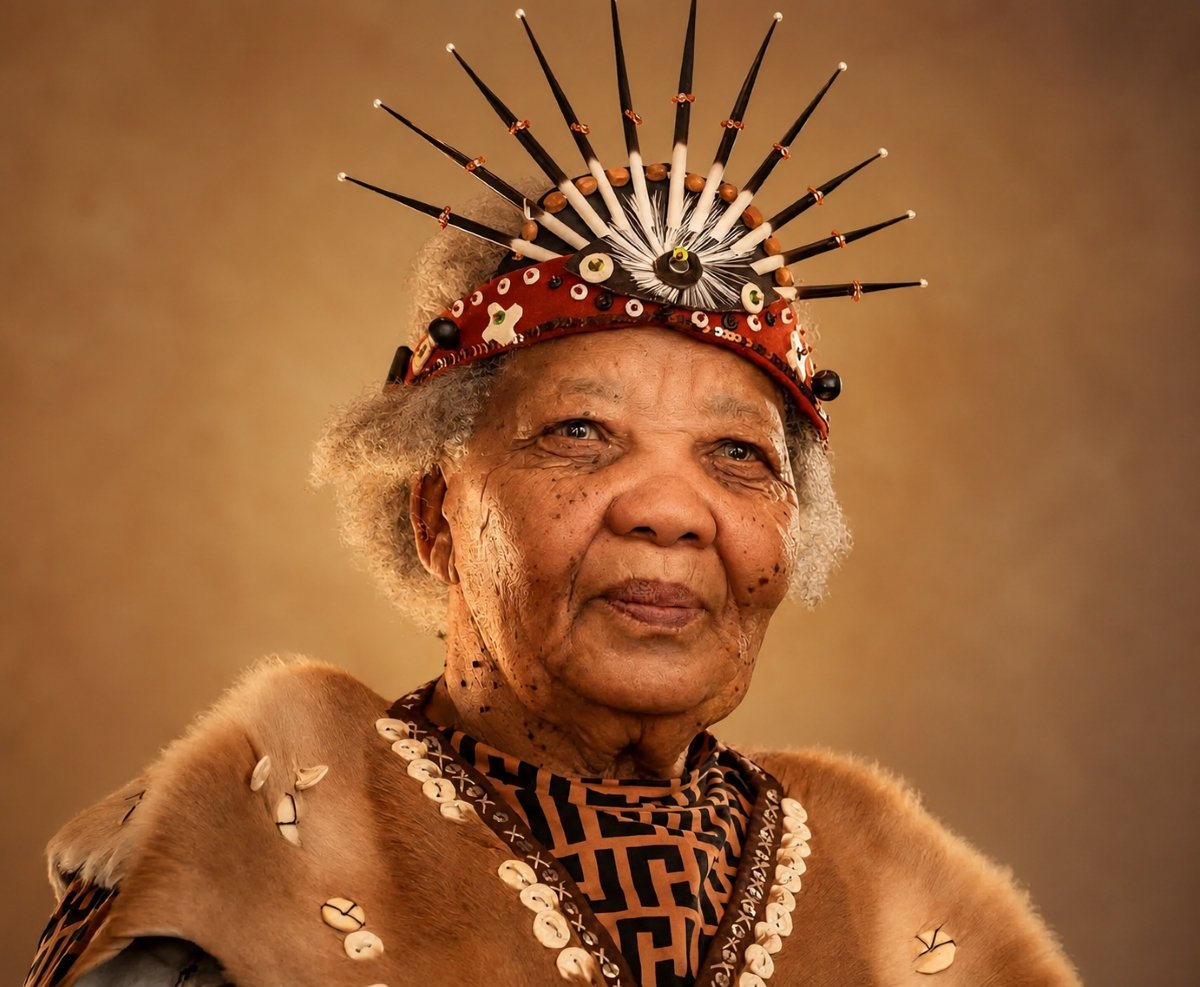
The sequence opens with an Invocation for Mother Earth, assembled from recorded voices of Indigenous Elders representing 15 nations, each speaking first in their own language and beginning with Grandma Rita Tupe in Aotearoa New Zealand. Participants are then asked to touch the ground and describe aloud the world they want, after which a shared musical track plays.
The accompanying action runs through Seed the Dream, a request to plant something and register the location on a global map. A packet of seeds and a pot are the full material requirement.
2,200 groups have registered gatherings so far. Roughly 75 percent of the organisation’s own audience is female.
The Women Leading It
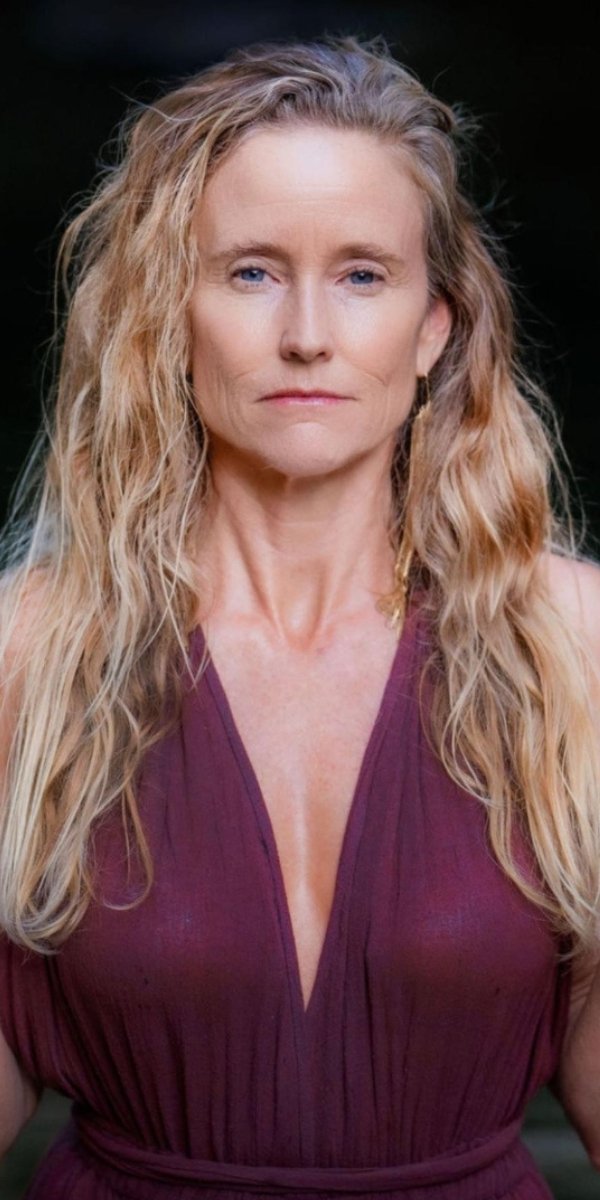
Lamara Heartwell co-created the event alongside Australian producer Chris Deckker, who founded the synchronised global event Earthdance in 1997 and grew it to more than 700 gatherings across 75 countries. A great-granddaughter of one of Exxon’s co-founders, she works on moving private capital toward ecological restoration under a framing she calls True Wealth, which treats healthy ecosystems, resilient communities and relationships as forms of prosperity that sit alongside financial capital rather than beneath it.
The ten million dollar target she is helping raise ahead of October 17 funds soil restoration, food systems, ecological restoration and Indigenous leadership through the non-profit Project Biome.
The Women Whose Voices Open It
The recording that begins the day is worth knowing in detail, because three women shaped it.
Ouma Katrina Esau, 92, of South Africa’s Northern Cape is the last living first-language speaker of N|uu, a San language spoken in southern Africa for tens of thousands of years. The University of Cape Town has given her an honorary doctorate for documenting it, and South Africa awarded her the Order of the Baobab for teaching it to children in a classroom beside her home. Grandma Rita Tupe of Aotearoa New Zealand opens the sequence, which then follows the sun west.
Rather than bringing contributors to a studio, the production travelled to them. Each Elder was filmed on their own land by Deborah Anderson, the filmmaker and Leica ambassador who directed Women of the White Buffalo, a documentary about Oglala Lakota women at Pine Ridge that took Best Feature Documentary at the Red Nation International Film Festival. Anderson, who is of Indigenous, Black, Irish, and Scottish descent, lived alongside that community for two months while making it.
Pharologanyo Easter Tlatsana, a Batswana elder who contributed to the recording, describes what it is for in one line. “This prayer unites different nations and tribes regardless of our different histories, cultures, or denominations.”
The music that follows draws contributors from more than 15 countries, among them South African vocalists Nomvula and Buhlebendalo and Ghanaian musician Rocky Dawuni, a four-time Grammy nominee the United Nations named a Goodwill Ambassador for the Environment for Africa.
Why the Design Matters
Environmental participation has historically been built around formats that assume discretionary time: marches, conferences, multi-day gatherings, volunteer commitments with recurring schedules. Research on the concern-action gap suggests those formats systematically exclude the demographic most likely to care.
ORIGIN inverted that assumption. The event happens on a Saturday, takes minutes, costs nothing, includes children by design, and can be completed in a backyard with a toddler underfoot.
On October 17, more than 2,000 groups across every populated time zone will do it at once. For a movement that has spent decades asking for discretionary time from the people who have the least of it, that is a meaningful change in what is being requested.