By: Sandra Williams
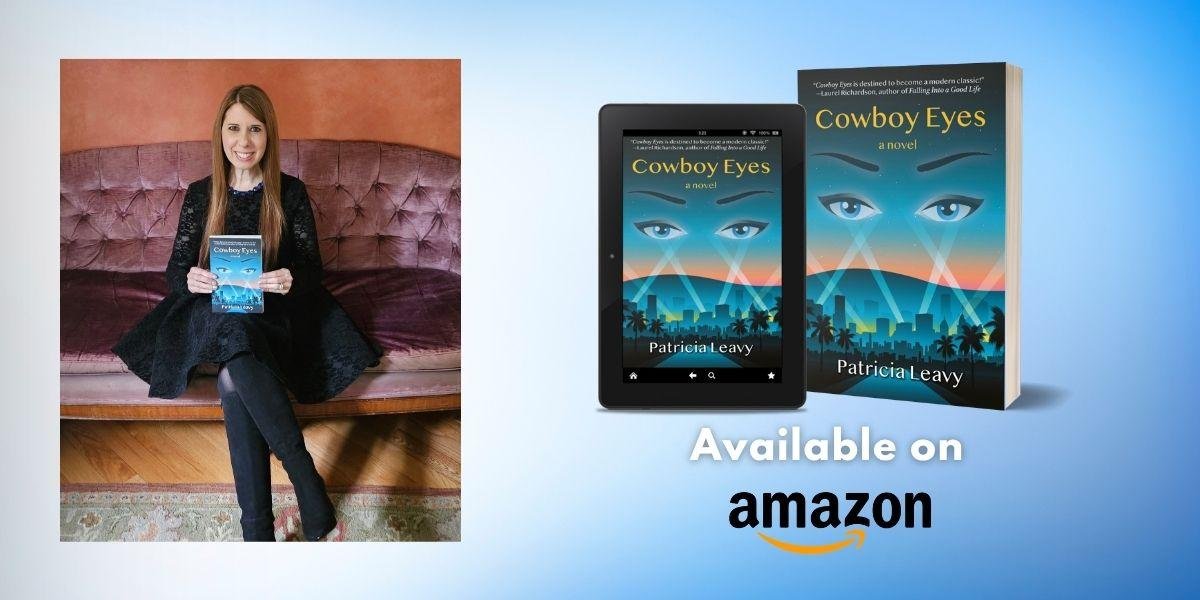
Patricia Leavy writes every single day. Weekends, holidays, vacations, it doesn’t matter. Not because she thinks she has something urgent to say, but because writing is where the people she has loved continue to live. That’s not a metaphor she uses lightly. It’s the reason Cowboy Eyes exists, and it’s the reason the book carries a weight that most Hollywood love stories simply don’t.
The novel follows Cassy and Colt, two young dreamers who meet by accident at a Houston country club and find each other again years later in Los Angeles, both still chasing something just out of reach. It moves fast, it’s funny in places, and it has the kind of romantic energy that pulls you forward. But Patricia built something else into it too, something that only becomes fully visible when you understand where it came from.
Identity Has No Finish Line
Leavy has spent her career thinking about identity from two angles at once, as a sociologist who studies how people become who they are, and as a novelist who has to make that process feel true on the page. What she keeps coming back to is that identity isn’t a destination. It’s a process. Continuous, shifting, never quite resolved.
Cassy and Colt are both chasing success in Cowboy Eyes, but what they’re really chasing is a version of themselves they haven’t fully become yet. Leavy finds that endlessly interesting. The gap between how we see ourselves and how others see us. The gap between the life we have and the life we want. Those gaps don’t close when the money arrives or the credits start rolling. They just change shape.
What worries her more than ambition is what gets lost along the way. Hope, for instance. Optimism. The willingness to believe the effort still means something. Those are things worth fighting to keep, and they’re also the first things to go when the hustle gets relentless.
When Dreaming Big Starts to Cost Too Much
Leavy is a genuine believer in dreaming big. Disappointment, she says, is easier to carry than regret. A lot of people keep their dreams small because they’re afraid of rejection or critique, and she understands that impulse. As an artist herself, she knows exactly how brutal it can feel to put your work out into the world and have it dismissed, ignored, or criticized.
But she’s also clear about where ambition tips into something destructive. The moment a person becomes willing to sacrifice anything to make it, and starts losing their joy and their sense of self in the process, that’s when ambition becomes self-betrayal. The work stops being the point. The status becomes the point. And status, she’ll tell you plainly, won’t fill you up.
Fame isn’t a goal worth organizing a life around. The work is. Doing something engaging and meaningful and true to who you are, that’s the thing that actually satisfies. Fame sometimes follows. It’s never the reason.
The Outsider Who Ends Up Creating Something Original
Both Cassy and Colt start the story on the outside looking in, and Leavy doesn’t soften what that position actually costs. It hurts. It feeds insecurity and self-doubt in ways that don’t just disappear when circumstances improve. Feeling like the deck is stacked against you takes a real psychological toll.
But she also knows, from her own experience, that the outsider perspective carries something valuable in it. She spent years straddling academic and literary work, belonging fully to neither world, and feeling the friction of that constantly. Nearly every significant recognition she’s received came from refusing to abandon that in-between space and carving her own path instead.
The people who feel like they don’t quite fit, she believes, are often the ones who end up making something nobody else thought to make. That’s what she wanted Cassy and Colt to discover. Not that the outside doesn’t hurt, but that it can also be the source of something genuinely original.
Making Right in Fiction: What Didn’t Work Out in Life
Here is where the book gets personal in a way that goes beyond craft. The character of Colt carries the spirit of Joey, Patricia’s closest friend of thirty-five years, who died unexpectedly. The hustle, the charm, the irreverence, the deep sense of honor underneath all the scheming. She built him from something real.
In the novel, Colt chases his dreams and catches them. That isn’t how Joey’s story ended. Leavy says simply that it gives her some peace to make something right in fiction that didn’t work out in life. She knows he would have loved it.
All the people who have mattered to her, for better or worse, find their way into her novels somehow. Not as characters, but through spirit and tone and the things they taught her. That’s why she writes every day. Others live on through the pages. Someday, she says, she will too.
The Only Thing That Actually Fills You Up
At its core, Cowboy Eyes is about being truly seen by another person. Not recognized, not applauded, not admired from a distance. Actually known, on the inside, as you really are.
Leavy believes faking it is exhausting. Pretending hollows you out. When someone genuinely knows and accepts you, understands what matters to you without needing you to perform it, that is, in her words, the ultimate act of love.
Leavy wrote a book full of dreams, Hollywood, and two people running toward something. What she was really after, underneath all of it, was that one thing.
The moment when someone looks at you and says: I see you.
Cowboy Eyes is a whimsical escape full of hustle and heart that lingers long after you’ve read the last word.
To learn more about Cowboy Eyes, you can check it on Amazon.