By: Inma Hollis
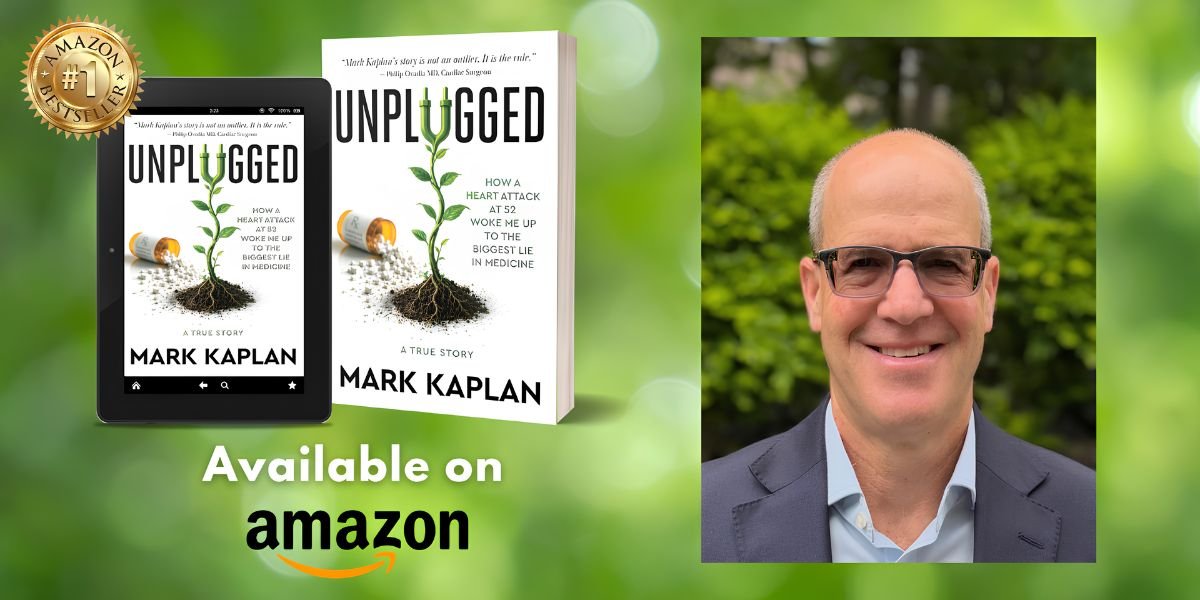
For most of his life, Mark Kaplan believed he understood what health looked like. He exercised consistently, stayed lean, competed athletically, and carried himself like someone who had mastered the fundamentals of wellness. By almost every visible measure, he appeared to be doing everything right. Then, at 52, a heart attack shattered that assumption and sent him down a path that would eventually become the foundation of his book, Unplugged: How a Heart Attack at 52 Woke Me Up to the Biggest Lie in Medicine.
What Mark discovered was unsettling. The image he had built of health was largely based on outward appearance and physical performance. The reality inside his body told a very different story. That gap between what people see and what is actually happening beneath the surface has become one of the central messages of his work.
When Fitness Creates a False Sense of Security
One of the most powerful ideas in Mark’s story is that fitness and health are not interchangeable. Society often treats them as if they are the same thing. A person with visible muscle definition, strong athletic performance, and an active lifestyle is automatically assumed to be healthy. Mark believed it too.
Looking back, he now sees how dangerous that assumption can be. While he was maintaining a high level of fitness, arterial disease was developing quietly in the background. Routine blood tests were conducted over the years, but important questions were never asked and deeper investigations never happened. Certain warning signs existed, yet they were never connected into a bigger picture.
For Mark, this realization was frustrating because it revealed how easy it is for both patients and healthcare providers to become distracted by appearances. Physical fitness is visible. Health is often invisible. The body can look strong while important biological systems are moving in the wrong direction.
The Problem With How We Define Wellness
Mark often describes himself as the fittest person in the room at the very moment he was facing a life threatening medical crisis. That statement sounds contradictory, but it perfectly captures the misunderstanding he believes exists around modern wellness.
Athletic achievement measures what the body can do. It does not necessarily reveal what is happening inside the body. Someone can run long distances, compete at a high level, and maintain impressive strength while still dealing with inflammation, metabolic dysfunction, or cardiovascular disease.
According to Mark, performance can become a costume that hides deeper problems. The engine may appear powerful, but that does not mean the internal systems supporting it are functioning properly. This distinction became impossible for him to ignore after his heart attack, and it now sits at the center of his efforts to educate others.
Why High Performers Often Miss the Warning Signs
Ironically, the people who appear healthiest may sometimes be the least likely to investigate potential problems. Mark believes athletes and high achievers are especially vulnerable because they are conditioned to push through discomfort rather than stop and ask questions.
Competitive environments reward resilience, discipline, and persistence. Those qualities can be incredibly valuable in business, sports, and life. The downside is that many people learn to view fatigue, discomfort, and even physical decline as obstacles to overcome rather than signals worth exploring.
Mark also points to another challenge. Doctors often see a physically fit patient and assume lower risk. As a result, important conversations may never happen. Certain tests may never be ordered. Assumptions take the place of curiosity. In Mark’s case, that combination created a dangerous blind spot that lasted for years.
A Family Story That Changed the Stakes
While the book focuses on Mark’s personal experience, it also tells a larger story about genetics, awareness, and prevention. After his heart attack, he learned that certain genetic factors played a role in his cardiovascular risk. What struck him most was not the discovery itself, but what happened next.
His son carried the same genetic markers and was able to learn about them decades earlier than Mark did. That difference transformed the way Mark thinks about inherited risk. He rejects the idea that genetics determine a person’s future. Instead, he sees genetics as valuable information that can help people make smarter decisions long before a crisis occurs.
The contrast between his experience and his son’s became one of the most meaningful lessons in the book. The difference was not destiny. It was timing. One person received critical information early enough to act on it. The other learned it while lying on an operating table.
Curiosity Became a Survival Tool
After surviving the heart attack, Mark found himself dissatisfied with simple explanations. When people suggested bad luck was responsible, he felt the answer was incomplete. He wanted specifics. He wanted evidence. Most importantly, he wanted to understand exactly what had happened.
That mindset came naturally from his competitive background. Athletes study losses because they want to improve. Mark approached his medical crisis the same way. He started digging into research, asking harder questions, and challenging assumptions that had previously gone unquestioned.
What began as personal investigation eventually grew into something much larger. The more he learned, the more he realized how many people are relying on incomplete definitions of health. His search for answers evolved into a mission to encourage others to become more informed participants in their own healthcare.
The Bigger Lesson Behind Unplugged
At its core, Unplugged is not a book about fear. It is a book about awareness. Mark is not arguing that exercise is unimportant or that fitness lacks value. Rather, he believes fitness should be viewed as one piece of a much larger health picture.
His experience serves as a reminder that visible strength does not always reflect internal health. It also highlights the importance of asking better questions, seeking deeper information, and refusing to assume that looking healthy automatically means being healthy.
For Mark, the heart attack was a wake up call that arrived later than it should have. Through Unplugged, he hopes others can receive that message much earlier. The goal is simple. Replace assumptions with understanding, replace blind confidence with curiosity, and recognize that the most important health story is often the one nobody can see.
Discover the story behind Unplugged: How a Heart Attack at 52 Woke Me Up to the Biggest Lie in Medicine and learn why true health goes beyond appearance, performance, and a single number on a test. Find Mark Kaplan’s book on Amazon and explore the lessons that could change the way you think about your own health.