By: Kate Sarmiento
There’s a word for a woman whose husband dies. There’s a word for a child whose parents are gone. And there’s nothing, not one word, in the entire English language, for a parent who has buried their child. Sit with that for a second, because it’s not a small oversight.
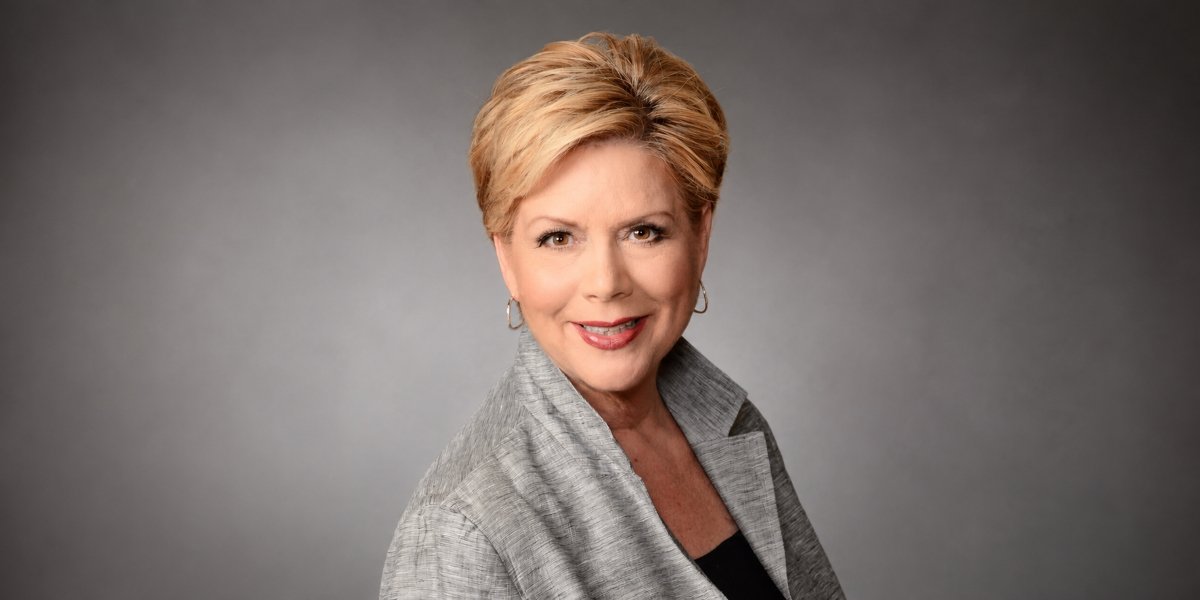
Dr. Sharon Spano, founder of Spano & Company and host of the podcast Beyond the Loss: Life and Identity After a Child Dies, has spent almost two decades inside that gap, and she’ll tell you it isn’t an accident of vocabulary. It’s a mirror. Language builds itself around the losses a culture is willing to look at directly, and this particular loss, the death of a child, is one most people would rather not name at all. So they don’t. They talk around it instead. And the parents living inside it are left holding a grief that society hasn’t even bothered to build a shelf for.
Spano knows this from the inside. Her son Michael was born with a life-threatening metabolic disorder, given a prognosis that gave him maybe two years. He lived twenty-seven. He died in September 2008, and somewhere between the funeral and the years that followed, Spano noticed something almost nobody talks about out loud. The world expects grief to have an expiration date, and parental grief simply refuses to read the fine print. That refusal became the seed of her work now, work built for the parents everyone else has stopped checking in on, usually somewhere around month six, without ever saying so out loud.
The Word That Was Never Built
Try this at a dinner party sometime. Ask a widow what she is, and she has a word ready. Ask an orphan the same question, same deal. Now ask someone what you call a mother or father whose child has died. Watch what happens to their face. Most people freeze, or laugh nervously, or say something like “gosh, I don’t think there’s a word for that,” like they just noticed a gap in the sidewalk. There isn’t a word. That’s the whole problem in one blank stare.
Duke professor Karla Holloway ran into this same wall after her own son died, and she didn’t just shrug it off the way most of us do. She went digging, eventually landing on a Sanskrit term, vilomah, which translates loosely to “against the natural order” (Source: Duke University, 2009). Children are supposed to bury their parents. Not the reverse. When that order flips, something breaks that has nothing to do with hearts and everything to do with the script everyone’s been handed since childhood, the one where funerals go in a certain sequence and grief comes with an expiration date. Ask a parent how many kids they have. If the honest answer includes one who’s gone, watch the room shift. People don’t know where to file that piece of information. So a lot of them just change the subject. Some pretend they didn’t hear it at all, which might be worse.
This is where Spano’s work gets its edge. She’s not interested in softening the loss into something more palatable for the people standing outside it. Beyond the Loss exists because bereaved parents kept describing the same maddening pattern: friends and coworkers who meant well but treated the grief like a fever that should break by month six. Research backs up what these parents already know in their bodies. Complicated grief, the kind that doesn’t ease with time and starts interfering with daily functioning, shows up in roughly 30 percent of bereaved parents, compared with somewhere around 2 to 3 percent across bereavement in general (Source: The New England Journal of Medicine, 2015). That’s not a small gap. That’s an entirely different category of loss hiding under one generic label.
Grief That Doesn’t Check a Calendar
The version of grief most people picture involves a funeral, some casseroles, a few rough weeks, and then, gradually, a return to normal. Spano pushes back hard on that model, and not just because it’s tidy. It’s wrong. In her own writing, she distinguishes between mourning, which she describes as the acute, almost physical survival mode of the early days, and grief, which she frames as an ongoing relationship that continues for the rest of a parent’s life. Mourning fades. Grief doesn’t, and pretending otherwise just adds shame on top of sorrow.
The clinical research lines up with her. Parents who lose a child to a sudden or traumatic death are at meaningfully higher risk for prolonged, complicated grief reactions than people grieving other kinds of loss, with severity often tied to how sudden the death was, how much support the parent perceived afterward, and whether they felt the loss was handled with any sense of justice or acknowledgment (Source: OMEGA – Journal of Death and Dying, 2023). Even in less sudden cases, like a child’s death following a long illness in a hospital setting, researchers have documented high rates of complicated grief symptoms that persist well beyond the window most people assume grief should occupy (Source: Journal of Palliative Medicine, 2011).
And it isn’t only the parent who absorbs this. Marriages take a direct hit too. Studies tracking bereaved husbands and wives over the year following a child’s death found that as grief intensified, so did strain on the marriage itself, with couples reporting rising levels of despair, guilt, and disconnection from each other at exactly the moment they most needed to lean on someone who understood (Source: OMEGA – Journal of Death and Dying, 1991). Grief doesn’t stay in one lane. It moves through a household like the weather.
The Parts Nobody Warns You About
What makes Spano’s approach different from a lot of grief content floating around online is her refusal to offer a five-step plan toward closure. She doesn’t believe closure is the goal, and honestly, most bereaved parents will tell you that word makes their skin crawl. Instead, Beyond the Loss digs into the parts of this experience that rarely get named. The guilt that shows up even when nothing was anyone’s fault. The strange betrayal-shaped guilt that can accompany a genuine moment of joy years later. The way grief can live in the body long after the mind has “processed” it, showing up as a tight chest near an anniversary or a flinch at a sound that used to mean nothing.
She also doesn’t let the conversation stay theoretical. Spano talks about her own son by name, about the years she spent white-knuckling her way through anniversaries, about learning that grieving and mourning aren’t the same verb even though people use them interchangeably. That specificity matters, because vague talk about “loss” lets everyone stay comfortable. Naming Michael, naming the actual mechanics of what happened and what came after, is what makes the work useful instead of just soothing.
There’s also a professional dimension here that Spano understands better than most grief educators, given her background coaching high-impact leaders. Bereaved parents don’t get to opt out of their careers while they grieve. They show up to board meetings, client calls, and performance reviews while carrying something the people across the table have no framework for. That mismatch, a private catastrophe running underneath a public role that demands composure, is its own particular kind of cruelty, and it’s one more reason a single, ready-made word for this kind of loss might matter more than it first sounds like it should.
Beyond the Loss Isn’t Asking Anyone to Move On
If any of this sounds familiar, if there’s a version of you that’s been nodding along a little too hard, Beyond the Loss was built with exactly that reader or listener in mind. The show isn’t interested in rushing anyone toward acceptance on someone else’s timeline, and it isn’t going to hand you a tidy metaphor about butterflies. What it offers instead is company, real company, from someone who has lived inside this particular kind of grief long enough to know its terrain.
New episodes of Beyond the Loss: Life and Identity After a Child Dies premiere weekly, and the show is available on the usual podcast platforms, on YouTube, and through Dr. Spano’s Substack for anyone who wants the deeper written reflections alongside the audio. If you’re a parent who has lost a child, or you love someone who has, or you’re a clinician trying to understand what your current vocabulary keeps failing to capture, start with an episode and see if the language finally fits. Sometimes the most useful thing anyone can hand you isn’t advice. It’s a word for what you’re actually carrying.