Consider what a woman is expected to decide without evidence. Which serum is worth $200? Whether the laser package delivered anything. Whether the retinol is working, the sleep is working, or neither. Whether the change she sees in the mirror at thirty-eight is hormonal, behavioral, or simply the light in that particular bathroom.
The beauty industry is worth hundreds of billions of dollars globally, and women account for most of it. Yet almost none of that spending is guided by measurement. There is no standardized way to know whether any of it worked, because facial health has never been treated as a health category worth measuring in the first place.
Dr. Korina Alevrogianni thinks that is a research failure, not a shopping problem.
The Vanity Label Cost Women Real Science
The reason facial health has no standard measure is not that the science is impossible. It is that the question got filed under vanity, and vanity does not attract research funding.
This is a familiar pattern to anyone who follows women’s health. Women were routinely excluded from clinical research for decades, a practice that only changed structurally when the National Institutes of Health Revitalization Act of 1993 required their inclusion in federally funded studies. The consequences of that exclusion are still being unwound, which is why so much of what is now known about menopause, autoimmune disease and cardiovascular symptoms in women has arrived late and incompletely.
Facial health sits at the far end of that same neglect, with an added penalty. Because it is visible and coded as aesthetic, caring about it is treated as frivolous rather than clinical. So the field developed backward. A commercial industry grew to enormous scale while the underlying measurement science was never built.
The result is that a dermatologist grades skin by eye using subjective scales. A surgeon assesses proportion in isolation. Consumer apps hand out beauty scores with nothing validating them. And the woman paying for all of it is told to trust her impression of a before-and-after photograph taken on two different days in two different lights.
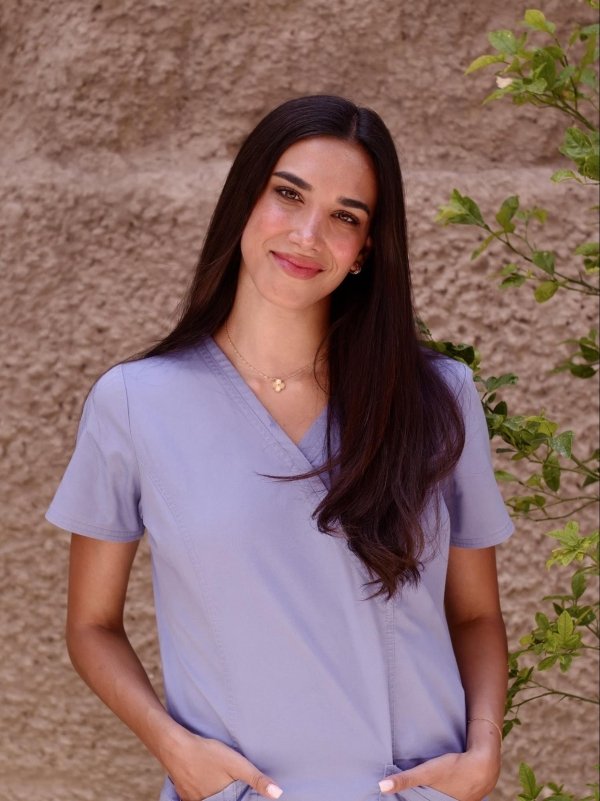
Photo Courtesy: Beauty Health Index
Dr. Korina Alevrogianni Hit the Gap in Her Own Practice
Alevrogianni is a 29-year-old plastic surgeon based in Athens, and she did not arrive at this argument through theory. She arrived at it through the exam room.
Patients would return after a procedure and ask whether it had actually worked. She found she had no objective answer to give them. Cardiology has its readings. Endocrinology has its panels. Aesthetic medicine handed her her own two eyes and a photograph that shifted with the lighting. The most trained person in the room was working from impression, and the patient knew it.
She hit the same wall as a consumer, buying skincare with real money and no way to evaluate the outcome.
Her instinct about what to do came from an earlier life. Before medicine, she was a national-team rhythmic gymnast for Greece, winning the Greek national title more than 30 times and taking two bronze medals at the 2013 World School Championships in Brazil. Sport taught her that a score is feedback measured against your own previous performance. Athletes improve because they measure. She could not understand why the face was the one system nobody had bothered to instrument.
What the Beauty Health Index (BHI) Actually Measures
The Beauty Health Index (BHI) is the framework she built in response. A 60-second smartphone scan reads the face across five domains, covering facial structure, skin quality, expression, regenerative performance and lifestyle influence, distilled from 40 evidence-based measurements into a single personalized score.
Two design choices matter for the argument she is making. The first is that lifestyle is within the framework rather than outside it, so sleep, stress, nutrition, and the hormonal cycle are treated as inputs to facial health rather than as unrelated variables. The second is that the score never ranks anyone. There is no leaderboard or comparison with other users. The only measurement that exists is a woman against her own previous scans, which is what makes it a health readout rather than an attractiveness grade.
Alevrogianni published the framework with surgeon Dr. Spero Theodorou in the peer-reviewed medical journal Cureus, where it is indexed on PubMed. That publication is the point. Her claim is that this belongs in the medical literature, not in a product catalog.
Dr. Korina Refuses to Overclaim
The most persuasive thing about her position is what she declines to assert.
She describes the Beauty Health Index (BHI) as a proposed framework built from a structured review of existing research across dermatology, aesthetic surgery, psychophysiology, regenerative biology and lifestyle medicine, with validation studies underway. She says plainly that reliability and clinical applicability still need to be tested.
In a category where certainty is sold by the jar, a founder itemizing what remains unproven is doing something unusual. It is also the behavior expected of anyone asking a field to take a new measure seriously. Honesty is not a marketing posture. It is the price of admission to the conversation she wants to have.
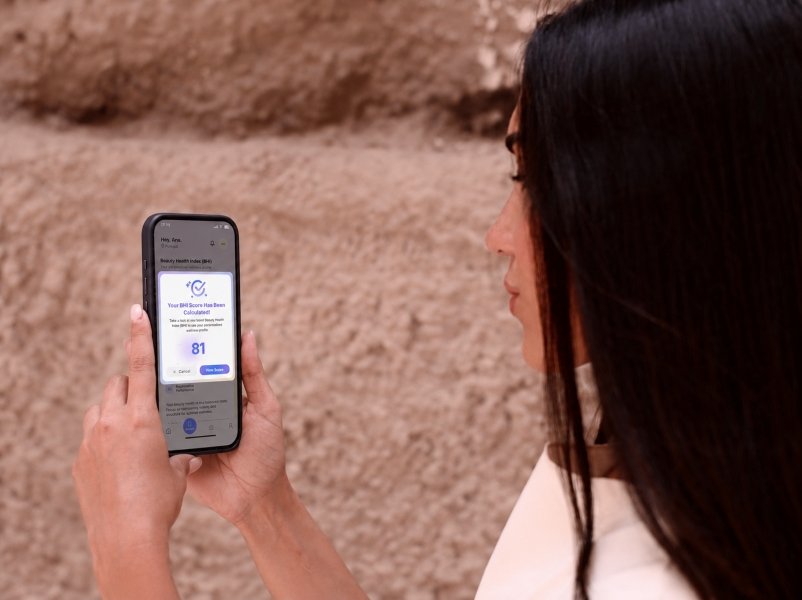
Photo Courtesy: Beauty Health Index
The Case for Funding What Women Already Pay For
The broader argument is not really about an app. It is about what gets studied.
Women are already spending at scale on their faces. That spending is not going to stop because researchers find it unserious. What could change is whether any of it is evidence-based. Building a standardized measure is the precondition for that, because without one there is no way to run trials, compare outcomes, or tell a woman whether a treatment did anything at all.
Facial health has been called vanity for long enough that the label stopped being examined. Underneath it sits a measurable system responding to sleep, stress, hormones, and time, on the part of the body that other people see first and that women are judged by constantly. Choosing not to study was never neutral.
The Beauty Health Index (BHI) launches this September, with a waitlist open on the website for anyone interested in seeing their own baseline. Dr. Alevrogianni continues to make the case for the research, which is what outlasts any single product.