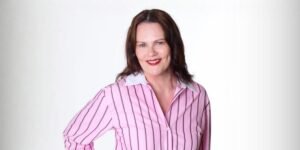
By: Sarah Jordan
Many people have heard some version of the same advice: stop seeking validation from others and learn to validate yourself.
While Christine Dickson agrees that building your identity around approval can be damaging, she believes the conversation has become more complicated than that.
As a transformational mentor and creator of the Path to Freedom Method™, Dickson works with people who are learning to understand long-standing emotional patterns, rebuild self-trust and create healthier relationships. Through that work, she has noticed that many people confuse healthy validation with unhealthy dependence.
In this conversation, she shares why validation is not necessarily the problem and what healthy self-trust actually looks like.
Q: Why do you think validation has become such a controversial topic?
Christine Dickson: I think people are trying to protect themselves from becoming overly dependent on what other people think.
Most of us have seen situations where someone’s confidence rises and falls based on approval, praise or acceptance from others. That’s not healthy. But somewhere along the way, the conversation shifted from “don’t build your identity around validation” to “you shouldn’t need validation at all.”
Those are very different ideas.
Human beings are relational. We learn about ourselves through connection, reflection and feedback. Healthy validation isn’t weakness. It’s part of how we understand who we are.
Q: What’s the difference between healthy validation and people pleasing?
Christine Dickson: Healthy validation helps us see ourselves more clearly. People pleasing asks us to abandon ourselves in order to be accepted.
If someone we trust reflects back a strength we’ve overlooked, that can deepen self-awareness. If someone offers honest feedback, that can create an opportunity for growth.
People pleasing is different. It’s when we begin adjusting who we are in order to gain approval or avoid discomfort. Over time, that disconnects us from our own needs, values and instincts.
One strengthens self-trust. The other slowly erodes it.
Q: How do early life experiences shape the way people seek validation?
Christine Dickson: Many people who grew up in unstable, neglectful or emotionally unpredictable environments learned very early how to focus on other people.
They became highly aware of moods, reactions and expectations because that awareness helped them feel safe.
As adults, those patterns often continue. Some people become dependent on reassurance. Others go in the opposite direction and convince themselves they don’t need anyone at all.
Both responses are understandable. Both are attempts to create safety.
The challenge is that neither one creates the kind of connection most people are actually looking for.
Q: Why doesn’t extreme independence solve the problem?
Christine Dickson: Because we’re not meant to navigate life entirely alone.
I work with many people who are incredibly capable and self-sufficient. From the outside, they look strong. Internally, they often feel exhausted.
They’ve learned not to ask for help. Not to lean on anyone. Not to need too much.
While that may feel empowering at first, it can eventually become another form of protection that keeps people disconnected from themselves and others.
Healthy relationships provide reflection. They help us see strengths, blind spots and possibilities we can’t always recognize on our own.
Q: What does healthy self-trust actually look like?
Christine Dickson: Healthy self-trust isn’t about shutting out other people’s perspectives. It’s about staying connected to yourself while remaining open to reflection.
You can receive constructive feedback without becoming defensive. You can receive appreciation without dismissing it. You can listen to other perspectives without losing your own voice.
That’s the balance many people are looking for.
You don’t have to choose between complete dependence and complete independence.
The goal is to know who you are while remaining open to the relationships that help you continue growing.
To learn more about Christine Dickson and the Path to Freedom Method™, visit https://christinedicksonmentor.com.