Women's Journal

How Tami Stackelhouse Is Rethinking Business Success

By: Deborah Wilson

There is a version of success that many people have been taught to chase.

It looks like long hours, constant pressure, and the belief that if you just push a little harder, eventually it will all work. For some, that model feels motivating. For others, it quietly breaks them down.

Tami Stackelhouse, an award-winning author and founder of the International Fibromyalgia Coaching Institute, a coaching institute dedicated exclusively to fibromyalgia, is part of a growing movement challenging that idea.

Her work did not begin in business or leadership. It began with a chronic illness diagnosis and the process of rebuilding her life when conventional answers fell short.

For more than 16 years, Stackelhouse has worked with individuals navigating fibromyalgia, a condition that is often misunderstood and frequently reduced to symptom management instead of real solutions.

Stackelhouse explains, “Fibromyalgia is often not well understood, and because of that, many people have only been offered symptom management instead of a real plan for reclaiming their lives.”

But what she began to notice went beyond the condition itself.

The same assumptions she had challenged in health (push harder, ignore limits, keep going no matter the cost) were showing up in how people approached work, leadership, and success.

The Pattern That Extends Beyond Health

As her work expanded, Stackelhouse recognized a deeper pattern. When people do not have clear answers, they are often told to try harder, push through, and keep going, even when nothing is improving.

Stackelhouse says, “A lack of answers is not the same as a lack of options.”

That belief became central to her Fibromyalgia Wellness Framework℠, which focuses on addressing root causes, aligning daily life with the body, and changing how individuals relate to their experience.

Progress, she found, cannot be forced. And eventually, she began to see the same pattern showing up outside of health.

Rethinking the Way Success Is Built

In business and leadership, the expectation is often to work longer, do more, and push through, no matter the cost. Success is measured by how much someone can handle, rather than how well something actually works.

Stackelhouse explains, “People listen to hustle culture experts and think, ‘I have to work 80 hours a week.’ But I couldn’t. So I had to do it a different way, and most people need a different way too. Your life shouldn’t revolve around your business. Your business should serve your life.”

That realization forced her to question success in the first place. If a model only works under constant pressure, is it actually working? For Stackelhouse, success is not about building a business; people must sacrifice themselves to sustain. It is about building work that supports life rather than consuming it.

Her answer was to approach business the same way she approached healing.

Instead of managing symptoms, she looked at what was creating the problem. Instead of adding more, she focused on refining what was already there.

A More Intentional Approach

The shift in her work comes from a deeper understanding of what actually creates progress.

Many of the people she worked with were already doing everything they had been told to do. They were consistent, disciplined, and willing to push through discomfort, yet they were not getting the results they expected.

That is where her perspective changed. Sometimes the answer is not more effort. It is awareness, refinement, and understanding of what actually creates progress.

It requires slowing down long enough to understand what is happening in the body, how energy is being used, and whether the current approach is actually supporting the outcome someone wants.

Stackelhouse explains, “Sometimes getting better or building a business is not about doing more. It is about doing less, more intentionally.”

In practice, that can mean simplifying, refining what is already there, letting go of approaches that no longer fit, or redesigning systems that create unnecessary strain.

Stackelhouse says, “You do not need to earn rest. You need enough rest to have a life.”

From Individual Change to a Broader Shift

As this way of working took shape, it became clear that it was not limited to an individual’s health.

The same patterns were showing up in how businesses were being built. People were operating at capacity for long periods of time, measuring success by how much they could handle rather than how well things were actually working.

Stackelhouse says, “Pushing harder is not always the answer. Sometimes the answer is learning where your limits actually are.”

That awareness changes how decisions are made. Instead of reacting to pressure, leaders begin to respond with intention. They start to see where their systems are creating strain and where small adjustments can create more stability.

Over time, that shift has expanded her work into something larger.

What began as a framework for healing has become part of a broader conversation about how people build, lead, and create impact without losing themselves in the process.

And for many, that shift may be exactly what has been missing all along.

Stackelhouse Is Shaping a New Conversation Around Success

As her work continues to evolve, Stackelhouse is helping shape a new conversation around what it means to succeed without sacrificing health, energy, or purpose.

Through her writing, teaching, and the growing community around the International Fibromyalgia Coaching Institute (IFCI), Stackelhouse is helping challenge the idea that progress must come at the expense of well-being. She is showing that a different path is possible, one built on awareness, intention, and alignment rather than pressure.

That work is already reaching far beyond individual transformation. Through IFCI’s Certified Fibromyalgia Coach® and Certified Fibromyalgia Advisor® programs, she trains health and wellness professionals, expanding access to compassionate, high-quality support for patients around the world. Her Fibromyalgia Wellness Framework℠ blends evidence-based approaches with lived experience to support individuals living with fibromyalgia.

For those who have felt like the traditional model of success was never designed for them, her message is clear.

There is another way to build something meaningful, one that creates impact without requiring people to lose themselves, their health, or their lives in the process.

To learn more about Tami Stackelhouse’s perspective on leadership, well-being, and meaningful change, visit FibroCompass.com or explore The Fibromyalgia Podcast® for deeper insights.

Gen Z Women Entrepreneurs Share New Approaches to Leadership

Gen Z women entrepreneurs are at the center of a newly released report examining how younger business owners are launching companies, building audiences, and managing leadership responsibilities through digital platforms and independent ventures. The report profiles several founders and creators who have established businesses across beauty, media, consulting, education, and consumer products while developing management styles that differ from earlier startup models.

The findings focus on women born in the late 1990s and early 2000s who have used social media, direct-to-consumer sales channels, and online communities to create businesses without relying on traditional corporate pathways. The report features entrepreneurs including Alexis Barber and Cedoni Francis, who discussed how they approach company growth, brand development, and decision-making.

The publication examined how these founders structure their businesses, interact with customers, and balance operational responsibilities. Many participants described building companies around personal expertise, digital content, and audience relationships rather than pursuing rapid expansion through large organizational structures.

Gen Z Women Entrepreneurs Build Businesses Through Digital Platforms

Many of the entrepreneurs featured in the report launched their ventures using platforms that allowed them to reach customers directly. Social media channels, creator-focused tools, online marketplaces, and subscription-based services played significant roles in helping founders establish brands and generate revenue.

The report noted that several business owners began by creating content related to professional skills, lifestyle interests, or educational topics before expanding into broader commercial ventures. These businesses often developed through audience engagement rather than traditional advertising campaigns.

Alexis Barber, known for creating content focused on career development and professional growth, discussed how audience trust contributed to business opportunities. The report described how digital creators have increasingly transitioned into entrepreneurs by converting online communities into customer bases for products and services.

Participants explained that direct communication with consumers allows founders to receive immediate feedback regarding products, messaging, and business decisions. The report stated that this approach has influenced how many younger entrepreneurs evaluate growth opportunities and market demand.

Several founders also described using multiple revenue streams rather than relying on a single business model. Consulting services, digital products, memberships, educational offerings, partnerships, and physical products were among the methods used to diversify income sources.

Business Owners Discuss Leadership and Company Management

The report examined how younger founders manage teams, partnerships, and day-to-day operations. Entrepreneurs interviewed for the publication described leadership as a process that includes delegation, communication, and organizational planning in addition to business development.

Several participants said they entered entrepreneurship without extensive corporate management experience. As a result, they developed leadership practices while simultaneously building their businesses.

The report noted that many founders place emphasis on transparency and accessibility when working with employees, contractors, and collaborators. Communication tools and remote work systems have enabled entrepreneurs to oversee projects across multiple locations.

Company leaders interviewed for the report described leadership responsibilities that extend beyond product development and sales. Hiring decisions, financial planning, customer service, legal compliance, and operational management were identified as core areas requiring attention.

Some participants discussed establishing clear boundaries between personal branding activities and business operations. Because many of the featured founders maintain public profiles, they reported the need to separate individual content creation from organizational decision-making.

The report also examined how entrepreneurs manage business growth while maintaining control over strategic direction. Several founders stated that ownership and independence remain important factors when evaluating expansion opportunities.

Audience Engagement Shapes Business Development Strategies

Customer relationships emerged as a major theme throughout the report. Many entrepreneurs indicated that community engagement influences how they introduce products, launch services, and evaluate new opportunities.

Founders described using surveys, comments, live discussions, and direct messages to gather information from consumers. This feedback often informs product revisions, marketing efforts, and future business plans.

The report noted that audience participation frequently occurs before a product reaches the market. Entrepreneurs said they often test concepts, share prototypes, or discuss potential offerings with community members during the development process.

Cedoni Francis, one of the entrepreneurs featured in the report, discussed how audience interaction contributes to brand-building efforts. The publication described community engagement as an ongoing component of company management rather than a separate marketing activity.

Several business owners also reported prioritizing customer retention alongside customer acquisition. Subscription services, educational resources, exclusive content, and recurring programs were among the methods used to maintain long-term relationships with audiences.

The report stated that digital platforms continue to provide founders with opportunities to communicate directly with customers without relying solely on third-party intermediaries. Entrepreneurs interviewed for the publication described this access as an important business advantage.

New Business Models Expand Entrepreneurial Opportunities

The report identified several business structures that have become increasingly common among younger founders. Creator-led brands, educational businesses, consulting firms, and membership-based communities were frequently referenced throughout the publication.

Many entrepreneurs featured in the report combined professional expertise with digital distribution methods. Rather than operating through traditional retail channels or large physical offices, these businesses often deliver products and services online.

The publication described how advancements in technology have reduced barriers to entry for certain types of businesses. E-commerce platforms, payment processing systems, website-building tools, and digital marketing resources allow entrepreneurs to launch operations with fewer infrastructure requirements than previous generations.

Several founders reported building businesses while maintaining other professional responsibilities during the early stages of company development. This approach allowed entrepreneurs to test ideas and generate revenue before transitioning into full-time business ownership.

The report also examined partnerships between creators and established companies. Brand collaborations, licensing agreements, and sponsored projects have created additional opportunities for founders to expand visibility and generate income.

Participants indicated that flexibility remains a significant factor when selecting business models. Many founders reported choosing structures that allow them to adjust operations quickly in response to customer feedback or market conditions.

Harriet Bridgwater to Star In Steve Royall’s Upcoming Thriller Feature

British actress Harriet Bridgwater stars in an upcoming thriller from Steve Royall, the director of “I Hate LA.” The original script is set for release on Tubi next year. Bridgwater takes on the morally ambiguous, seemingly victimized lead, Angela.

Angela arrives at the doorstep of her down-and-out ex-boyfriend Darren, played by Daniel Nedow (known for “You’re Dating A Narcissist!”), after an escalated breakup with her abusive boyfriend James, played by Ruben Perez. What follows is a fast-paced, action-packed story that unfolds over a single night of psychological torment. James tracks their location and grows steadily more threatening, and Darren finds himself unwillingly pulled into a life-and-death situation.

A Night That Unravels Two Pasts

Photo Courtesy: Steve Royall

The film centers on the unresolved relationship between the two reunited exes. Trapped together in a high-pressure situation that grows more dangerous by the hour, Darren and Angela watch concealed secrets surface and old, unaddressed grief rise to the forefront for both characters.

Bridgwater is compelling in her nuanced, three-dimensional portrayal of the emotionally complex Angela. She captures moments of sincere vulnerability while uncovering more callous truths rooted in Angela’s self-centered desires. Angela is candid about needing financial stability in a partner, treating being provided for as a non-negotiable. That priority comes at a steep cost to her self-respect and her safety in the relationship with James. Darren and James sit at opposing ends of the spectrum in terms of both wealth and humanity.

Reckoning With the Past

Photo Courtesy: Steve Royall

Throughout the film, Angela reflects on a history of severe co-dependency, and she is given the chance to right past wrongs and choose differently for her future. Will she repeat the damaging patterns of the past, or accept her mistakes and readjust her values? These openly admitted flaws make Angela a more three-dimensional character.

At first she appears to be a typical damsel in distress, an impression Bridgwater conveys through a seeming innocence and naivety. That first impression is then flipped on its head as she breaks expectations and refuses to leave her fate in the hands of a man she is romantically involved with. In her own way, Angela ultimately reclaims her personal power and identity in a captivating, suggestive ending. The conclusion is left open to interpretation, though it remains highly provocative, with a parallel to the ending of Hitchcock’s “Suspicion” from 1941.

Darren, too, begins to take responsibility for his part in the breakdown of their relationship. He accepts that, alongside bad luck, he is accountable for the poor decisions that led to his desperate circumstances and living conditions. The film explores themes of codependency in relationships and highlights how a person’s choice of romantic partner can shape not only their lifestyle but also their personal morals.

Much of the strength in Bridgwater’s characterization comes from keeping Angela’s emotional world simmering just below the surface. She plays Angela’s pain as constantly suppressed, a tactic Angela uses to keep moving forward through guilt and remorse in order to survive. At times, it reads as menacingly cold and emotionally manipulative, but it erupts in outbursts as the pressure on her builds.

Why Your Smile Is More Connected to Your Overall Health Than You Think

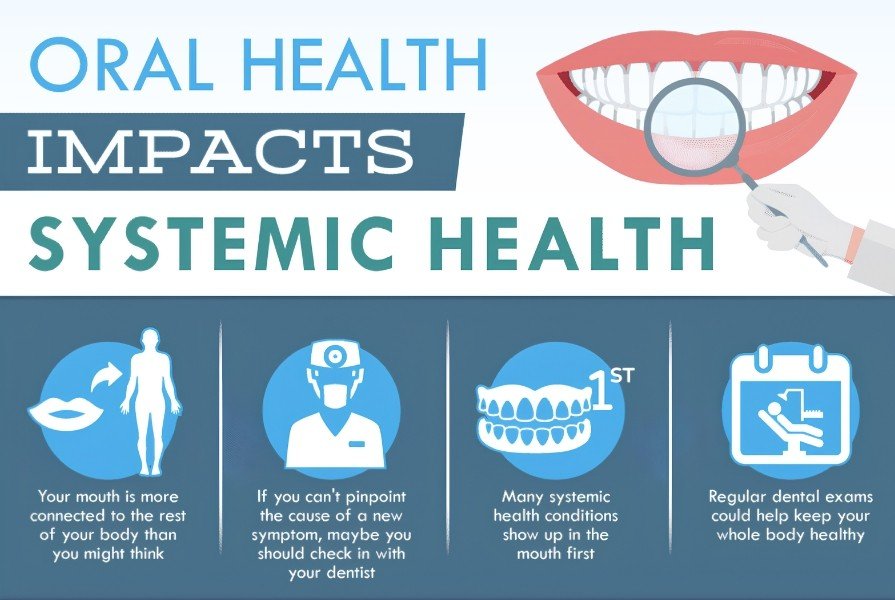
For many women, maintaining good health means focusing on exercise, nutrition, mental wellness, and preventative medical care. Yet one important area is often overlooked: oral health. While a healthy smile is commonly associated with appearance and confidence, growing research suggests that oral health may play a much larger role in overall well-being than many realize.

According to cosmetic and restorative dentist Dr. Jen Moran-Kobes, oral health can influence everything from self-confidence and social interactions to long-term physical health outcomes. As awareness grows around the importance of preventative health, experts are encouraging women to pay closer attention to their oral health.

According to Chicago-based cosmetic dentist Dr. Jen Moran-Kobes, many people mistakenly view dentistry as separate from overall health. “A healthy smile not only affects how we look and feel, but it can also impact our quality of life and long-term wellness,” she says.

Research continues to uncover links between oral health and systemic conditions. Studies have identified oral pathogens in heart tissue and in the brains of Alzheimer’s patients, suggesting potential connections between poor oral hygiene and cardiovascular disease, stroke, and cognitive decline. Other research indicates that elevated oral bacterial levels may contribute to higher blood sugar levels, making diabetes more difficult to manage.

The Centers for Disease Control and Prevention also recognizes oral health as an important contributor to physical, mental, emotional, social, and economic well-being. In other words, caring for one’s teeth and gums may have benefits that extend far beyond the mouth.

Photo Courtesy: JMK Wellness

The emotional impact of a smile should not be underestimated either. Research published in BMC Oral Health found that dental appearance can significantly influence facial aesthetics, social confidence, and psychological health. For many women, concerns about worn, stained, chipped, or aging teeth can affect self-esteem and even willingness to smile in social or professional situations.

Dr. Jen Moran-Kobes has seen this firsthand throughout her career. After founding Water Tower Dental Care in Chicago in 1997, she built a reputation for helping patients achieve natural-looking smile transformations. Following a 17-year break from practice to raise four children and successfully overcome breast cancer, she returned to dentistry with an even deeper understanding of resilience, confidence, and the importance of helping patients feel like themselves again. Dr. Jen Moran-Kobes sees patients at Water Tower Dental Care in downtown Chicago and Hinsdale Dentistry in the western suburbs, offering tailored smile makeovers that blend science and artistry.

Today, many of her patients are seeking what she describes as “smile rejuvenation,” which are treatments designed not to create a dramatically different appearance, but to restore a smile that reflects how youthful and vibrant they still feel. Fortunately, advances in cosmetic dentistry have made achieving natural-looking results easier than ever before. Modern treatment options are often minimally invasive, highly customized, and designed to preserve healthy tooth structure whenever possible.

Among the most popular options are porcelain veneers, which can address discoloration, uneven spacing, chips, and worn enamel while maintaining a natural appearance. Unlike older generations of veneers that sometimes created an artificial look, today’s materials are designed to mimic the translucency and texture of natural teeth.

Composite bonding offers another conservative option for correcting minor imperfections. Using tooth-colored materials, dentists can repair chips, close small gaps, and improve tooth shape in a single appointment.

Professional whitening treatments continue to be among the most requested cosmetic procedures. Years of coffee, tea, wine, and natural aging can cause discoloration that over-the-counter products may struggle to address. Professionally supervised whitening can often provide more predictable and longer-lasting results.

Beyond aesthetics, restorative treatments such as crowns, implants, and minimally invasive rehabilitative procedures can help restore function while improving appearance. The goal is often not simply to create a more attractive smile, but to support long-term oral health and quality of life.

For women navigating major life transitions, career advancement, retirement, recovery from illness, or simply the natural aging process, investing in oral health can be an important form of self-care. A healthy, confident smile can influence first impressions, professional interactions, social engagement, and personal confidence.

Photo Courtesy: JMK Wellness

As awareness continues to grow around the relationship between oral health and overall wellness, experts encourage patients to view dental care as an essential component of preventive healthcare rather than a separate concern.

For Dr. Jen Moran-Kobes, the message is simple: a healthy smile is more than a cosmetic asset. It is a reflection of overall well-being and an important investment in both physical and emotional health. When women prioritize their oral health, they are not only protecting their teeth but also supporting their confidence, wellness, and quality of life for years to come.

Disclaimer: This content is for informational purposes only and is not intended as medical advice, nor does it replace professional medical expertise or treatment. If you have any concerns or questions about your health, always consult with a physician or other healthcare professional.

Christine Dickson on Validation and Self-Trust

By: Sarah Jordan
Many people have heard some version of the same advice: stop seeking validation from others and learn to validate yourself.

While Christine Dickson agrees that building your identity around approval can be damaging, she believes the conversation has become more complicated than that.

As a transformational mentor and creator of the Path to Freedom Method™, Dickson works with people who are learning to understand long-standing emotional patterns, rebuild self-trust and create healthier relationships. Through that work, she has noticed that many people confuse healthy validation with unhealthy dependence.

In this conversation, she shares why validation is not necessarily the problem and what healthy self-trust actually looks like.

Q: Why do you think validation has become such a controversial topic?

Christine Dickson: I think people are trying to protect themselves from becoming overly dependent on what other people think.

Most of us have seen situations where someone’s confidence rises and falls based on approval, praise or acceptance from others. That’s not healthy. But somewhere along the way, the conversation shifted from “don’t build your identity around validation” to “you shouldn’t need validation at all.”

Those are very different ideas.

Human beings are relational. We learn about ourselves through connection, reflection and feedback. Healthy validation isn’t weakness. It’s part of how we understand who we are.

Q: What’s the difference between healthy validation and people pleasing?

Christine Dickson: Healthy validation helps us see ourselves more clearly. People pleasing asks us to abandon ourselves in order to be accepted.

If someone we trust reflects back a strength we’ve overlooked, that can deepen self-awareness. If someone offers honest feedback, that can create an opportunity for growth.

People pleasing is different. It’s when we begin adjusting who we are in order to gain approval or avoid discomfort. Over time, that disconnects us from our own needs, values and instincts.

One strengthens self-trust. The other slowly erodes it.

Q: How do early life experiences shape the way people seek validation?

Christine Dickson: Many people who grew up in unstable, neglectful or emotionally unpredictable environments learned very early how to focus on other people.

They became highly aware of moods, reactions and expectations because that awareness helped them feel safe.

As adults, those patterns often continue. Some people become dependent on reassurance. Others go in the opposite direction and convince themselves they don’t need anyone at all.

Both responses are understandable. Both are attempts to create safety.

The challenge is that neither one creates the kind of connection most people are actually looking for.

Q: Why doesn’t extreme independence solve the problem?

Christine Dickson: Because we’re not meant to navigate life entirely alone.

I work with many people who are incredibly capable and self-sufficient. From the outside, they look strong. Internally, they often feel exhausted.

They’ve learned not to ask for help. Not to lean on anyone. Not to need too much.

While that may feel empowering at first, it can eventually become another form of protection that keeps people disconnected from themselves and others.

Healthy relationships provide reflection. They help us see strengths, blind spots and possibilities we can’t always recognize on our own.

Q: What does healthy self-trust actually look like?

Christine Dickson: Healthy self-trust isn’t about shutting out other people’s perspectives. It’s about staying connected to yourself while remaining open to reflection.

You can receive constructive feedback without becoming defensive. You can receive appreciation without dismissing it. You can listen to other perspectives without losing your own voice.

That’s the balance many people are looking for.

You don’t have to choose between complete dependence and complete independence.

The goal is to know who you are while remaining open to the relationships that help you continue growing.

To learn more about Christine Dickson and the Path to Freedom Method™, visit https://christinedicksonmentor.com.

Business Loans for Women Owned Businesses: Real Options Beyond the SBA

Women owned businesses generate trillions of dollars in revenue and employ tens of millions of workers. The financing market has historically underserved them. The options available in 2026 are more numerous and more accessible than at any prior point, but they require knowing where to look.

The capital access gap for women owned small businesses is well documented in research from the Federal Reserve, the SBA, and multiple academic studies: women owned businesses receive smaller loan amounts, face higher denial rates, and are more likely to be discouraged from applying for financing than comparable male-owned businesses across virtually every lending category. The causes include structural factors in how creditworthiness has historically been evaluated, differential access to professional networks that facilitate warm lender introductions, and systematic underestimation of women-owned businesses in industries where they are underrepresented.

Knowing this landscape is not discouraging. It is clarifying. It identifies which parts of the lending market are likely to produce fair evaluations and which are likely to produce the biased outcomes documented in the research. Directing financing applications toward the lender types and product structures most likely to evaluate women owned businesses on their actual merits, and using the specific programs designed to counteract structural biases, is the strategic approach that produces the best outcomes.

SBA Programs Specifically for Women Owned Businesses

The SBA’s Women Owned Small Business Federal Contracting Program provides women owned businesses with access to government contracting set-asides in industries where women are underrepresented. While this program is primarily focused on contracting rather than direct financing, the government contracts it facilitates generate the documented revenue and operating history that support commercial financing applications. Businesses that participate in this program consistently show stronger commercial financing profiles due to the contracted revenue they generate.

The SBA also partners with Women’s Business Centers, which provide business development support, mentoring, and connections to SBA financing specifically for women entrepreneurs. Over one hundred Women’s Business Centers operate nationwide, providing free and low cost resources that help women owned businesses build the financial management practices that support financing applications.

Performance Based Direct Lending: Where Evaluation Is Most Objective

Performance based direct lending, where creditworthiness is evaluated on current business revenue and cash flow rather than historical credit profiles and collateral, tends to produce more equitable outcomes for women owned businesses because the evaluation criteria are more directly connected to current business performance and less susceptible to the subjective biases documented in traditional lending relationships. A lender evaluating bank account deposits and revenue consistency rather than the demographics of who owns the business is making a more objective credit decision.

For women owned businesses with strong, consistent revenue, performance based direct lenders frequently provide faster access, higher approval rates, and more appropriate product matching than the traditional lending channels where research documents the most significant disparities. This is not to say that all direct lenders are free of bias, but that the evaluation mechanism of performance based underwriting is structurally better aligned with objective creditworthiness assessment than traditional relationship-based lending.

STEP 1 Lead With Revenue Performance in Every Application

The most important application preparation step for any women owned business seeking financing is ensuring that revenue is completely and cleanly documented in the primary business bank account. Applications where the revenue picture is fragmented across multiple accounts, mixed with personal transactions, or partially in cash present a weaker profile regardless of how strong the underlying business performance actually is. Consolidating revenue, cleaning up the bank account presentation, and preparing three to six months of clearly business-only bank statements before applying is the highest-impact preparation step for any performance based application.

STEP 2 Pursue WBE Certification to Access Supplier Diversity and Government Contracting

Women Business Enterprise certification, administered by the Women’s Business Enterprise National Council and other certifying organizations, opens access to corporate supplier diversity programs and government contracting set-asides that generate documented, creditworthy revenue. Certified WBE businesses that secure supplier diversity contracts from large corporations have documented revenue from creditworthy customers, which is exactly the profile that supports the strongest commercial financing applications.

For women owned business owners who want to identify the best available financing options across all product types, including which lenders have the strongest track records serving women owned businesses specifically, Business Loans IQ provides independent comparison data covering the full lending market. Every lender on the platform has passed independent assessment of its rates, eligibility criteria, and actual borrower outcomes, including verified reviews from borrowers. For the best rated working capital loan options currently available across the full market, compare the top working capital lenders of 2026 on Business Loans IQ. For the full landscape of independently reviewed lenders across every product type, the complete best rated lenders overview provides the most comprehensive current view of available lenders and their independent ratings.

STEP 3 Apply to Lenders With Documented Experience Serving Women Owned Businesses

Some lenders have developed specific expertise and track records in serving women owned businesses, including understanding the business types and industries where women ownership is concentrated and applying underwriting standards that do not discount industries where women are most common. Community Development Financial Institutions with specific women’s business lending programs, lenders affiliated with Women’s Business Centers, and lenders that appear in women’s business financing research as high-approval providers are all worth prioritizing in the application strategy.

STEP 4 Use Grants as Supplementary Capital, Not Primary Financing

Grant programs specifically for women owned businesses, including the Amber Grant Foundation’s monthly grants, IFundWomen, and corporate grants from large companies’ women’s economic empowerment initiatives, provide supplementary capital that reduces the total amount of commercial financing needed. Grants are never the primary solution for significant capital needs because the amounts are typically modest and the application processes are time-intensive, but they are worth pursuing as a component of a diversified capital strategy.

Why Independent Comparison Matters More for Women Owned Businesses

Research consistently shows that women owned businesses that receive financing through objective, criteria-based processes achieve outcomes comparable to male-owned businesses with similar profiles, while those evaluated through relationship-based processes face larger disparities. Independent comparison platforms that provide criteria-based lender matching rather than relationship-based referrals structurally reduce the impact of the biases that drive the documented capital access gap. For women owned businesses ready to compare their options across the full lending market using objective, independently verified data, the SBA loan overview on Business Loans IQ provides specific guidance on which SBA products are most applicable to women owned businesses and what qualification actually requires, available at the SBA loan guide for women owned businesses on Business Loans IQ.

FREQUENTLY ASKED QUESTIONS

Are there business loans specifically for women owned businesses?

There are programs specifically targeting women owned businesses, but they are supplementary to rather than replacements for commercial lending. The SBA Women Owned Small Business program provides contracting access that generates revenue supporting commercial loan applications. Women’s Business Centers provide access to SBA financing and business development support. Private grant programs provide non-repayable capital. For the primary financing needs of an established women owned business, commercial lending, particularly performance based direct lending, provides the most substantial capital at the most accessible terms.

What is the best way for a women owned business to improve its loan approval odds?

The strategies that most consistently improve loan approval odds for women owned businesses include: applying to performance based lenders whose evaluation is most directly connected to business revenue rather than subjective assessments; documenting business revenue completely in a dedicated business bank account before applying; pursuing WBE certification to access contracting opportunities that build documented revenue; and using independent comparison platforms to identify lenders with the strongest approval track records for businesses with similar profiles, rather than applying to lenders whose track records for women owned businesses are not independently verified.

Does WBE certification help with business loan approval?

WBE certification does not directly improve approval odds with commercial lenders, who evaluate creditworthiness rather than certification status. However, WBE certified businesses that participate in supplier diversity programs and government contracting set-asides generate documented, high-quality revenue from creditworthy corporate and government customers, which does significantly improve commercial financing eligibility. The certification creates a pipeline to contracts that create the financing profile, rather than directly affecting how lenders evaluate the application.

What are the most common reasons women owned businesses are denied business loans?

Across both structural and merit-based factors, the most common documented reasons for denial include insufficient operating history at the time of application, personal credit scores below lender thresholds, insufficient collateral under traditional underwriting models, and in research-documented cases, subjective assessments where comparable businesses receive different evaluations based on owner demographics. Addressing the merit-based factors, operating history, credit score, revenue documentation, and collateral, is within the business owner’s control and is the most effective response to denial, supplemented by shifting to lender types less susceptible to the subjective factors.

Are there SBA programs specifically for women owned businesses?

The SBA’s Women Owned Small Business Federal Contracting Program provides women owned businesses access to federal contracting set-asides in specific industry categories where women are underrepresented. This is primarily a contracting program rather than a direct financing program. The SBA also funds Women’s Business Centers that connect women entrepreneurs to SBA lenders and provide business development support. Standard SBA loan programs, including 7(a) and 504 loans, are available to women owned businesses on the same terms as any qualifying business, with the same evaluation criteria applied regardless of ownership demographics.

Disclaimer: This content is for informational purposes only and is not intended as financial advice, nor does it replace professional financial advice, investment advice, or any other type of advice. You should seek the advice of a qualified financial advisor or other professional before making any financial decisions.