For decades, the fragrance industry has sold a dream.
Luxury campaigns featured glamorous celebrities, exotic destinations, and carefully crafted images designed to communicate status and aspiration. Consumers were taught to shop for perfume by scent family, ingredient lists, and designer labels.
But according to entrepreneur Kristina Rasmussen, that approach misses the most important part of why people actually buy fragrance.
“They buy it because of how they want to feel.”
That simple belief became the foundation of The Heart Company, a fragrance brand Rasmussen created during the uncertainty of the COVID-19 pandemic. While much of the beauty industry focused on appearance, she became fascinated by a different idea: could fragrance play a role in emotional wellbeing?
The result was a company built around emotions rather than trends.
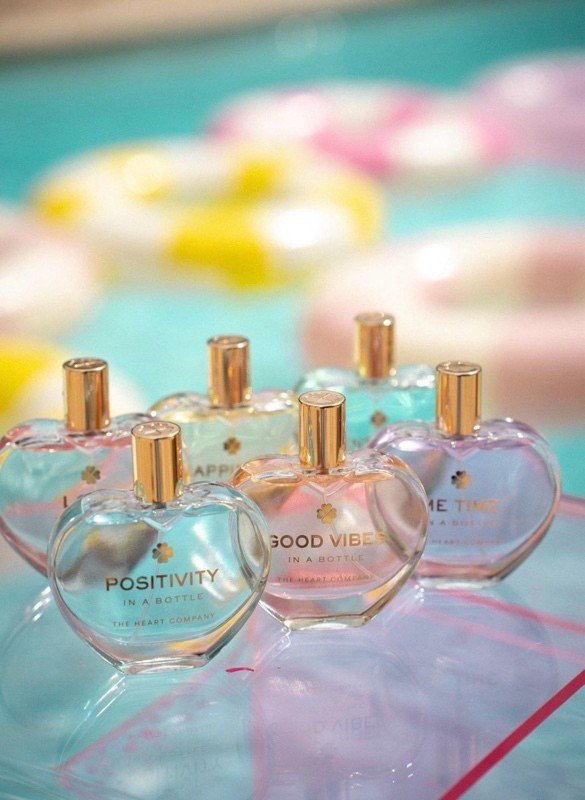
Instead of launching perfumes centered on luxury lifestyles or fashion statements, Rasmussen introduced fragrances with names like Love in a Bottle, Kindness in a Bottle, Happiness in a Bottle, Good Vibes in a Bottle, and Positivity in a Bottle. Each scent was designed to represent an emotional state rather than a target demographic.
Building a Brand Around How Women Want to Feel
Rasmussen believes modern consumers, particularly women, are changing the way they engage with beauty products.
Today’s purchasing decisions are often influenced by wellness, mindfulness, self-care rituals, and emotional connection. Consumers increasingly seek products that contribute to how they feel throughout the day, not simply how they look.
Fragrance occupies a unique place in that conversation because scent is closely connected to memory and emotion.
A familiar fragrance can instantly transport someone to a meaningful moment, boost confidence before an important meeting, or provide comfort during stressful times. In Rasmussen’s view, these emotional experiences are far more important than technical descriptions of fragrance notes.
That philosophy has helped The Heart Company establish a distinct identity in a crowded beauty market.
Creating a Beauty Brand for the Digital Generation
Like many successful female founders, Rasmussen recognized early that consumer behavior was changing rapidly.
Beauty discovery no longer happens primarily in department stores or glossy magazine advertisements. Instead, consumers find products through TikTok, Instagram, YouTube creators, Amazon reviews, online communities, and increasingly, artificial intelligence platforms.
This shift has created opportunities for founder-led brands that can build trust directly with their audiences.
Rather than relying on traditional advertising, The Heart Company has focused on authentic storytelling, user-generated content, customer relationships, and community engagement. Rasmussen believes that transparency and authenticity are becoming more valuable than perfection.
In today’s beauty industry, she argues, consumers trust people more than they trust brands.
The Intersection of Beauty and Artificial Intelligence
One area where Rasmussen’s perspective stands out is her focus on how AI is reshaping commerce.
As more consumers use platforms such as ChatGPT, Gemini, Claude, and AI-powered search tools to discover products, she believes beauty brands must learn how to communicate clearly to both people and machines.
In her view, AI optimization is becoming as important as traditional search engine optimization.
Consumers increasingly ask conversational questions such as “What is the best vegan perfume?” or “What fragrance makes a meaningful gift?” The brands that provide clear answers and strong emotional positioning are more likely to be discovered in this new environment.
Why Human Connection Still Matters
Despite embracing technology, Rasmussen remains convinced that the future belongs to brands that preserve their humanity.
As artificial intelligence becomes more powerful, qualities such as empathy, kindness, creativity, and emotional connection may become even more valuable. This belief sits at the heart of everything The Heart Company represents.
All of the brand’s fragrances are certified by The Vegan Society and created by master perfumers at Givaudan, reflecting Rasmussen’s commitment to combining ethics, quality, and emotional relevance.
Today, the company operates in both Germany and the United States, with ambitions for broader international expansion. Yet regardless of geography, Rasmussen believes the brand’s core message remains universal.
Love is understood everywhere.
Kindness is understood everywhere.
Happiness is understood everywhere.
And in an increasingly digital world, those emotions may become one of the most valuable assets a brand can offer.
As Rasmussen often says, “As technology becomes smarter, emotional brands become more valuable.”
Learn more about The Heart Company at https://www.theheartcompany.co and https://linktr.ee/theheartcompany.