Women's Journal

US to Host Inaugural Women’s Club World Cup in January 2028


FIFA has confirmed that the United States will stage the inaugural Women’s Club World Cup from January 5-30, 2028, with 19 teams scheduled to compete. Arsenal, Barcelona, Gotham FC, Club América, Corinthians, Naegohyang and Wuhan Jiangda have secured places, while 12 additional clubs will be selected through continental qualification.

Key Takeaways

  • The inaugural Women’s Club World Cup is scheduled for January 5-30, 2028, in the United States.
  • The 19-team tournament is designed to take place every four years.
  • Seven clubs have secured places, including Arsenal, Barcelona and Gotham FC.
  • Twelve additional teams will be selected through continental representation.
  • FIFA has introduced the competition alongside the Women’s Champions Cup, which held its first edition in February 2026.

United States Selected to Host the Women’s Club World Cup 2028

The United States will stage FIFA’s inaugural Women’s Club World Cup in January 2028, with the governing body confirming the host country and tournament dates on October 22, 2026. The competition will bring together 19 women’s club teams for a tournament scheduled to run from January 5-30.

The new competition is designed to follow a four-year cycle, similar to FIFA’s revamped men’s Club World Cup. Its first edition will establish an international tournament structure for leading women’s clubs representing different continental confederations.

FIFA chief women’s football officer Sarai Bareman said the United States was selected because of its experience staging major FIFA tournaments, interest in women’s football and sporting infrastructure.

The country hosted the men’s Club World Cup in 2025 and is scheduled to co-host the men’s World Cup in 2026 with Mexico and Canada. It will also co-host the 2031 Women’s World Cup alongside Costa Rica, Jamaica and Mexico.

The 2028 tournament adds another FIFA competition to the United States’ international football calendar. The event will focus on club teams rather than national teams, bringing together sides that compete in domestic leagues and continental competitions.

FIFA Prepares for the Inaugural Women’s Club Competition

The 19-team format will include clubs from six continental confederations, with UEFA receiving the largest allocation. European teams will account for seven places, including Arsenal, which has already secured qualification.

The Asian Football Confederation, Confederation of African Football, Confederation of North, Central America and Caribbean Association Football, and South American Football Confederation will each have three clubs in the tournament. The Oceania Football Confederation will have one representative.

These allocations establish the framework for participation across the international club game. The places reserved for each confederation will determine how teams from different regions enter the competition.

FIFA has confirmed seven clubs for the inaugural edition: Arsenal, Barcelona, Gotham FC, Club América, Corinthians, Naegohyang and Wuhan Jiangda. The remaining 12 places will be determined at a later date.

The confirmed lineup includes clubs from Europe, North America, South America and Asia. Their participation gives the tournament an international structure, while the continental allocations provide routes for additional clubs to join the field.

The qualification process will be central to completing the tournament lineup. Six more European clubs are expected to join Arsenal, while the other confederations will fill their designated places.

Women’s Club Teams Take Center Stage in the International Tournament

The tournament will bring together clubs that represent different domestic leagues and football systems. Arsenal and Barcelona are among the established European participants, while Gotham FC represents the United States and Club América represents Mexico.

Corinthians will represent Brazil, while Naegohyang and Wuhan Jiangda are among the confirmed clubs from Asia. The mix of participants gives the competition a cross-continental format rather than one limited to a single domestic league or regional championship.

For clubs, the tournament provides a setting in which teams from different confederations can compete directly. Players will represent their clubs internationally, rather than participating through national teams as they would at the Women’s World Cup.

The competition also brings attention to the professional opportunities available to women athletes beyond match performance. Women athletes are also building professional identities beyond competition, using digital platforms to connect with audiences and develop opportunities outside their sport.

Bareman said the selected clubs would have an opportunity to reach a global audience, develop their fanbases and represent their organizations on the international stage. FIFA has presented the tournament as a competition intended to bring together leading women’s clubs from across the world.

The 19-team field also distinguishes the tournament from traditional knockout competitions that feature a smaller number of teams. Its continental allocation structure gives multiple regions representation while reserving seven places for European clubs.

The competition’s four-year schedule means the inaugural edition will be the starting point for a recurring tournament. FIFA has not yet completed the full list of participants, so the final field will depend on the selection of the remaining 12 clubs.

Tournament Format and Qualification Details Await Confirmation

The confirmed tournament dates run from January 5 through January 30, 2028. FIFA has announced the 19-team structure and continental allocations, but the full list of participating clubs remains incomplete.

UEFA will provide six additional clubs beyond Arsenal. The Asian, African, North and Central American and Caribbean, and South American confederations will each contribute three teams in total. Oceania will supply one club.

The allocation gives UEFA seven places, while the four confederations with three-team allocations account for 12 places. Oceania’s single place brings the total to 20 if all these allocations are counted alongside the seven named clubs, so the final competition structure and allocation details require confirmation against FIFA’s official tournament regulations.

The confirmed total remains 19 teams, according to FIFA’s announcement. The number of remaining qualification places and their distribution will determine the final lineup.

The competition is the second new mid-season women’s club tournament introduced by FIFA in recent years. The Women’s Champions Cup held its first edition in February 2026, with Arsenal winning the competition.

The introduction of another international club event raises scheduling considerations for teams competing in domestic leagues and continental tournaments. The Women’s Super League previously described the timing of the Club World Cup as potentially “catastrophic,” pointing to concerns about its placement during the season.

The January dates will be particularly relevant to clubs managing domestic league commitments, player availability and travel. The eventual match schedule and qualification arrangements will establish the specific demands placed on participating teams.

Host Cities and Match Schedule Remain Key Details for Fans

The United States has been confirmed as the host country, but the tournament’s host cities and individual match venues have not been identified in the announcement. Those details will determine where the participating clubs play during the January competition.

The event is scheduled to last 26 calendar days, from January 5 to January 30, 2028. The match schedule will be needed to establish the sequence of fixtures and the venues assigned to each stage.

The completed team list is another key detail for supporters. Seven clubs have been named, while 12 more are due to be selected. The continental allocation system will guide the completion of the field.

The United States has experience hosting major international football events, including the 2025 men’s Club World Cup. Its selection for the inaugural women’s tournament also precedes its planned role as a co-host of the 2031 Women’s World Cup.

The 2028 event will focus on club football, making it distinct from the national-team competition scheduled for 2031. The tournaments will have different participating organizations and qualification structures, even though both will involve women’s football and the United States as a host country.

Frequently Asked Questions

When will the Women’s Club World Cup take place?

The inaugural tournament is scheduled for January 5-30, 2028. FIFA has confirmed the dates alongside the United States’ selection as host.

Which country will host the inaugural Women’s Club World Cup?

The United States will host the first edition. FIFA cited the country’s experience staging major tournaments, interest in women’s football and sporting infrastructure when explaining the selection.

Which organization is responsible for the Women’s Club World Cup?

FIFA is organizing the tournament. The competition will bring together women’s club teams representing multiple continental confederations.

Which clubs have qualified for the 2028 tournament?

The seven named clubs are Arsenal, Barcelona, Gotham FC, Club América, Corinthians, Naegohyang and Wuhan Jiangda. Twelve additional clubs are expected to complete the field.

Have the host cities and match venues been announced?

The United States has been confirmed as the host country, but individual cities and match venues have not been identified in the announcement. The final schedule will provide further details about where the matches will take place.

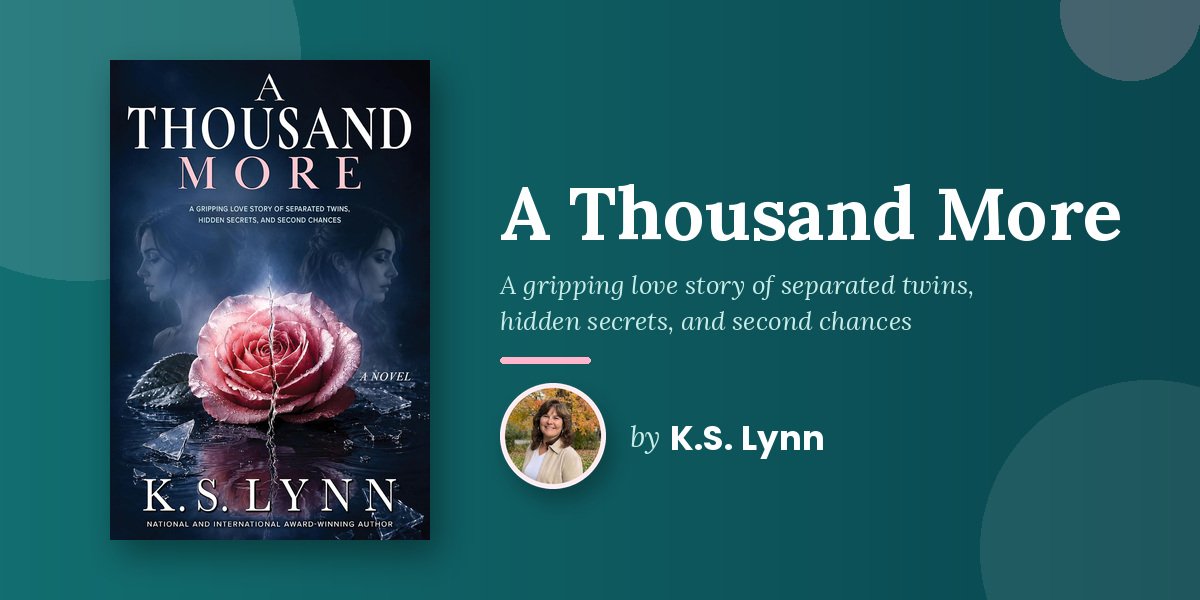
K.S. Lynn Builds A Thousand More Around Two Sisters Who Never Knew Each Other

By: Cameron Trepp

The separated siblings premise is one of those narrative foundations that appears simple in summary and reveals its full complexity only in the execution, because the real story is never about the separation itself but about everything that grew in the space the separation created: the specific people that each sibling became, the specific relationships they built around identities that were missing a piece they did not know was missing, the specific cost of the moment when that missing piece announces itself. K.S. Lynn has understood this from the beginning of A Thousand More, and the novel she has built around Shelby Jones and Michelle Carrington is one that earns its emotional revelations through the patient, decades-spanning accumulation of the lives that precede them.

Lynn’s debut began with a dream in 2005, born from a desire to create a character forced to confront a heart-wrenching decision in pursuit of her dream of motherhood. The consequences of Ann’s devastating choice ripple outward, shaping the lives of those she holds most dear. With characters you will love and love to hate, A Thousand More is a multigenerational family saga romance spanning over thirty years.

The phrase you will love and love to hate captures something important about the moral texture of the novel, which is populated with characters who are neither simply admirable nor simply condemnable but genuinely human in the way that the most lasting fiction always is. Ann Carrington, whose 1982 choice set the whole saga in motion, is drawn with a generosity and a specificity that makes her comprehensible rather than simply responsible for what followed. The adoptive parents who vowed to keep the secret are rendered with the complicated love of people who made a promise they did not fully understand the cost of. Shelby and Michelle are built with enough individual specificity to feel genuinely distinct even as they carry the shared inheritance of an identity that was split before they could be aware of it.

Literary Titan described A Thousand More as a tender and twist-laden novel about the families we lose, the families we make, and the love that keeps arriving after we think our hearts are already full, and highlighted Lynn’s ability to build the story across decades, allowing childhood friendships, first loves, parental devotion, and old wounds to accumulate real weight.

That accumulation of weight is what makes the eventual collision of their worlds genuinely affecting rather than simply dramatic, because by the time it arrives the reader understands exactly what each woman has at stake, exactly what the revelation of the truth will cost and what it might make possible, and exactly what it means to face a heart-wrenching decision when everything you understand about yourself is suddenly open to revision.

If you love family sagas that build their emotional power through the patient accumulation of decades rather than through isolated dramatic events, A Thousand More by K.S. Lynn is the debut that demonstrates how completely a first novel can master that specific art. Head over to Amazon and get your copy today and prepare for the kind of reading experience that earns its tears and then earns them again.

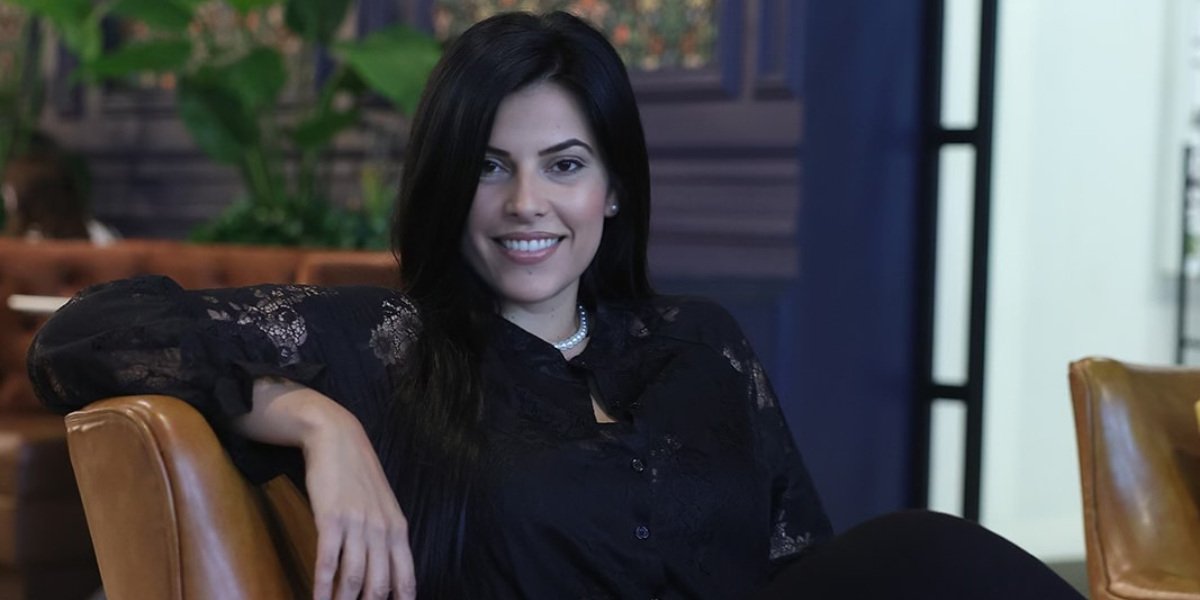
Amelia R. Viera Is Proving That Quiet Leadership Can Still Carry Weight

Professional reinvention is often described as leaving one career behind to begin another. Amelia R. Viera’s experience suggests something more cumulative. The Miami-based Director of Operations at Surgeon’s Advisor has not discarded her former identities as she has progressed. Instead, she has carried the investigative discipline of journalism into digital marketing and applied both to the practical demands of organizational leadership.

The Reporter Behind the Business Leader

Before entering the medical marketing field, Amelia studied journalism at Florida International University and reported for South Florida newspapers. Her work reached national and international audiences, and in 2011 she became one of nine winners of the Roy W. Howard National Collegiate Reporting Competition. The distinction recognized a quality that would remain central to her work: the patience to investigate before making claims.

Journalism taught Amelia that the obvious explanation is not necessarily the correct one. That principle matters in business, where weak performance is often blamed on the most visible problem rather than its underlying cause. Her instinct is to examine the evidence, question assumptions, and understand the people involved before recommending a response. Reporting was therefore not an abandoned first career; it became the intellectual foundation of her leadership.

Reframing Medical Marketing as Advocacy

At Surgeon’s Advisor, Amelia applies that editorial mindset to a particularly sensitive market. Medical and aesthetic practices are not selling ordinary consumer products. Their prospective patients may be making expensive, emotional, and potentially life-changing decisions. Marketing in this field must attract attention without exaggerating outcomes or exploiting uncertainty.

This responsibility gives Amelia’s work a sharper purpose. A surgeon’s digital presence must communicate expertise clearly while allowing prospective patients to make informed judgments. Her role is not simply to increase online traffic, but to help ensure that visibility is supported by substance. In this context, accurate storytelling becomes a form of advocacy: it helps qualified doctors explain their work without turning healthcare communication into spectacle.

When Trust Becomes an Operating Standard

That position is reflected in Surgeon’s Advisor’s approach to client relationships. Its model gives clients ownership of their digital assets and avoids long-term contracts, placing greater pressure on the agency to retain business through performance. According to The Enterprise World, some clients have tripled organic website leads, while the agency reports a retention rate above 90 percent and relationships extending beyond a decade.

Amelia also connects trust with accountability rather than presentation. The agency’s Better Business Bureau accreditation reflects a broader view that accreditation should be more than a plaque on the wall. It should influence how results are described and how problems are handled. This reflects an important distinction in her thinking: values matter most when they continue to shape decisions when circumstances become difficult.

Photo Courtesy: Amelia R. Viera

Preparing for Search Beyond Google Rankings

Artificial intelligence is now testing that philosophy in new ways. Patients increasingly encounter summarized answers generated from numerous online sources instead of moving through a conventional list of links. For medical practices, appearing in those answers requires more than repeating popular keywords. Their information must be coherent, credible, and sufficiently well supported for emerging search systems to recognize its authority.

Amelia sees AI-driven search as a fundamental change in how businesses earn visibility. Organizations can no longer focus exclusively on ranking webpages; they must also consider whether their expertise is clear enough to be recognized, interpreted, and surfaced across emerging search experiences. This shift favors companies capable of building genuine authority over those relying on short-term tactics. For medical practices in particular, credibility may become as important to discovery as conventional optimization.

Choosing Substance Over Performance

The leadership model Amelia represents depends more on substance than visibility. Her observation that “You don’t have to be the loudest in the room to be the most impactful” reflects a career built through careful judgment and reliable execution. Much of her influence comes from making certain that essential work is completed, even when that contribution remains outside public view.

This quieter model does not imply passivity. It requires the confidence to ask difficult questions, revise outdated methods, and accept responsibility for implementation. Amelia occupies the demanding space between an idea and its outcome. Her task is to determine whether a strategy can survive contact with deadlines, client expectations, team capacity, and rapidly changing technology.

Refusing the Myth of Effortless Balance

Motherhood has not ended Amelia’s pursuit of new professional possibilities, but neither has she treated growth as cost-free. While raising two daughters, she is completing an MBA and continuing to lead within a demanding industry. Her experience rejects the expectation that ambitious women should absorb every pressure without consequence. Lasting progress, she has found, depends on making deliberate choices and protecting enough personal capacity to continue.

Her advice is direct: “Success means nothing if you’re too burned out to enjoy it.” Published in both The Enterprise World and Global HealthCare Magazine, the observation is more than a wellness slogan. It challenges a professional culture that treats depletion as proof of commitment. Amelia schedules personal priorities with the seriousness of business obligations because endurance depends on protecting the person responsible for the work.

Growth Without an Expiration Date

After beginning her career by documenting the experiences of others, Amelia R. Viera has now seen her own story recognized by The Top 100 Magazine, The Enterprise World, and Global HealthCare Magazine. Even so, she considers her professional journey intentionally incomplete. Her next ambitions encompass executive leadership, consulting, mentorship, and the convergence of operations and AI.

For Amelia, the most valuable legacy would be showing her daughters that fulfillment does not depend on achieving flawless balance, but on retaining the courage to revise their plans, acquire new knowledge, and continue becoming more capable.

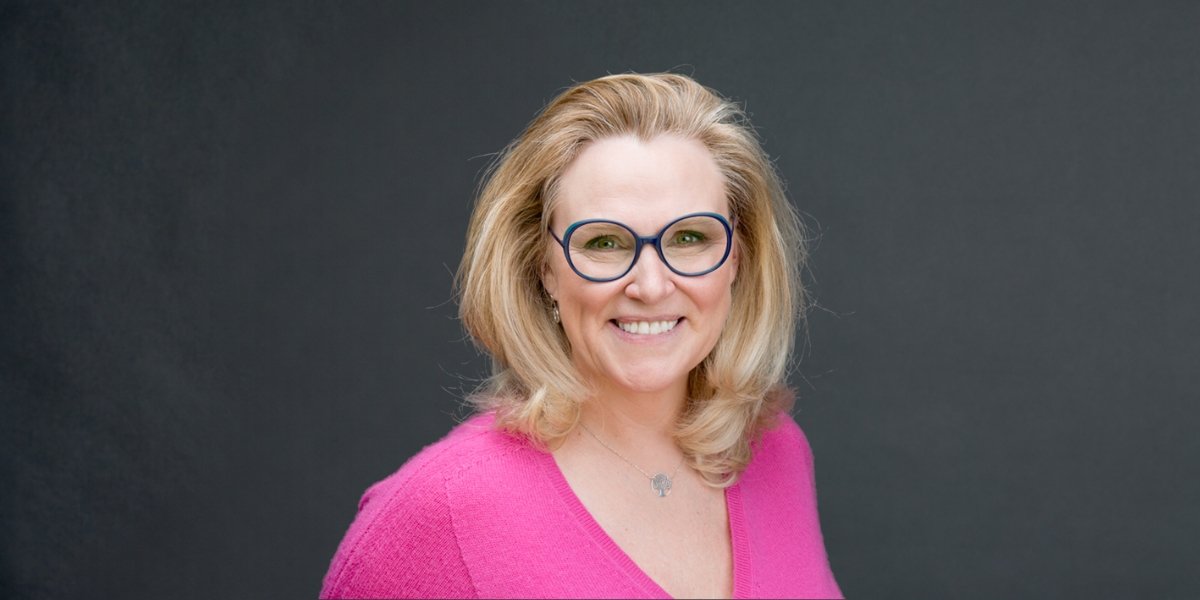
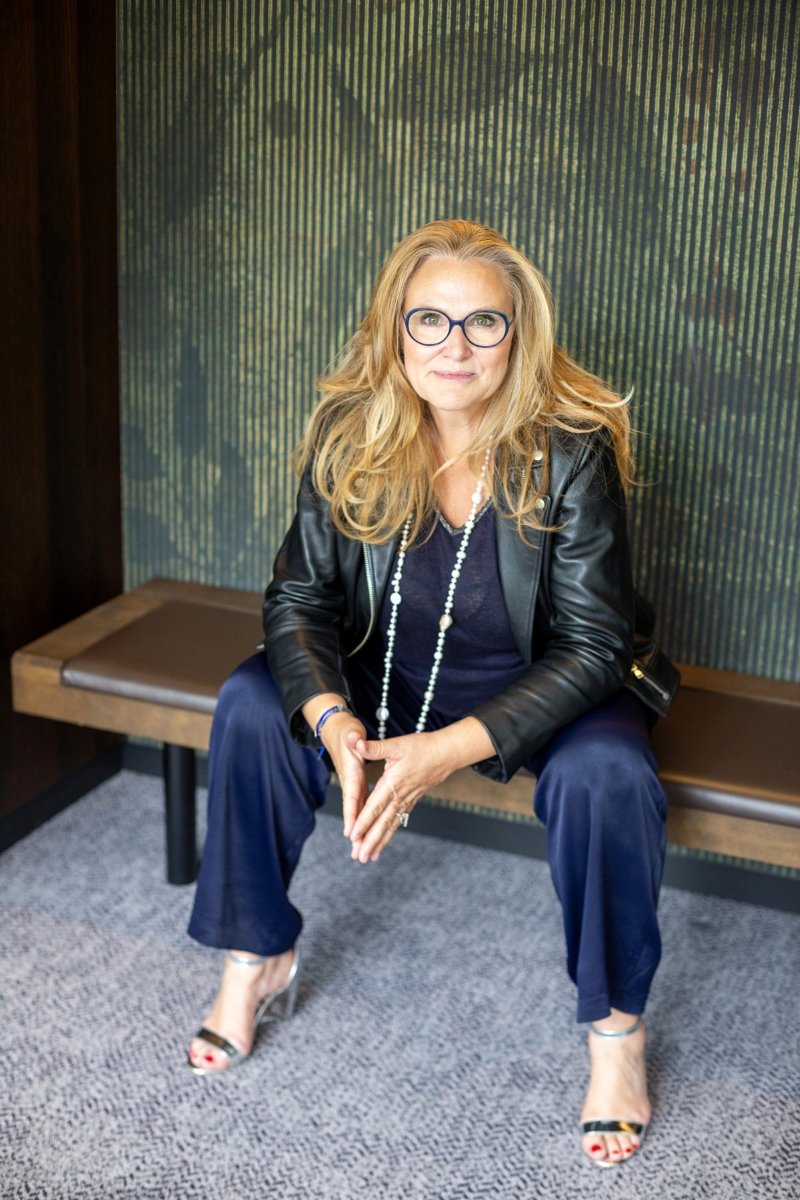
“I Don’t Care About Money.” A Dangerous Sentence for Women to Say.

Why Laurence Boistay believes financial independence is an essential part of women’s freedom

“I don’t care about money.”

For Laurence Boistay, few statements reveal more about the complicated relationship many women have with financial independence. The French executive life coach and entrepreneur has spent decades listening to women describe their ambitions, fears, responsibilities, and the lives they hope to build. Again and again, money emerges as more than a practical concern.

Behind that seemingly innocent sentence, Laurence hears a question worth asking. Have women genuinely chosen not to care about money, or have some learned to distance themselves from financial ambition?

A Pattern She Could No Longer Ignore

Before becoming an entrepreneur, Laurence spent 24 years as a human resources director in international companies. She later built a coaching practice focused on emotional resilience, confidence, and personal transformation. Across hundreds of coaching relationships, she noticed a recurring tension.

“I Don’t Care About Money.” A Dangerous Sentence for Women to Say.

Photo Courtesy: Sylvain Munsch

Many women were exceptionally capable at managing complex lives. They led teams, supported families, organized households, and anticipated other people’s needs. Yet some felt uncomfortable discussing their own earnings, savings, investments, or long-term financial security.

For Laurence, the issue is not that every woman must become wealthy or pursue the same career. It is that every woman deserves the knowledge and agency to make informed financial decisions.

“Financial independence is not about becoming rich to impress others. It’s about becoming free to choose,” she says.

The Hidden Cost of Looking Away

Money can be an uncomfortable subject, especially when women have absorbed messages that ambition is selfish, asking for more is inappropriate, or financial matters are best left to someone else. Those beliefs can quietly shape decisions about work, relationships, and the future.

Laurence sees a connection between financial confidence and the emotional work she does with clients. A woman who doubts her value may hesitate to negotiate her compensation. Someone accustomed to putting everyone else first may postpone building her own financial safety net. A woman who does not understand her financial position may find important life choices harder to make.

Financial autonomy cannot solve every challenge. Circumstances, opportunity, caregiving responsibilities, and structural inequalities matter. But learning to engage with money can help women regain a sense of ownership over decisions that affect their lives.

For Laurence, the starting point is simple. Know what comes in, know what goes out, understand the options, and stop treating financial conversations as something to avoid.

Beyond Trading Time for Money

Her own entrepreneurial journey also led her to question a familiar equation. More income requires more hours of personal work.

Coaching remains central to her mission, but it usually depends on her direct time and attention. She became interested in business models that could create value through systems, collaboration, and the development of other people’s skills.

That curiosity eventually led her to network marketing. She joined Zinzino in July 2025 and reached Director rank four months later, and she has since been building an international team.

She is careful not to confuse opportunity with certainty. Network marketing demands sustained effort, customer service, ethical practices, and sound business judgment. Earnings vary, expenses matter, and neither passive income nor financial success is guaranteed.

What appealed to Laurence was not a promise of effortless wealth. It was the possibility of helping others acquire entrepreneurial skills while building something that did not depend solely on her individual appointments.

From Personal Success to Shared Opportunity

For Laurence, the bigger question is what happens when women stop seeing money as an uncomfortable necessity and start seeing financial literacy as a form of leadership.

She wants more women to understand how income is generated, how businesses operate, how wealth can be built over time, and how financial decisions can support the lives they actually want. Some may choose traditional careers. Others may start businesses, invest, or pursue several income streams. The important point is that the choice belongs to them.

Her definition of success extends beyond revenue or professional titles. She looks for women who speak more confidently about their value, take greater responsibility for financial decisions, and feel able to act on their ambitions. She also hopes that confidence will ripple outward to families and communities.

The Question Worth Asking

Laurence’s message is not that money should become the center of a woman’s life. It is that ignoring money should not be mistaken for freedom from it.

She believes emotional resilience and financial awareness belong in the same conversation, because both can expand a woman’s capacity to choose.

The next time someone tells her, “I don’t care about money,” she would rather ask a different question.

“What would become possible in your life if money were no longer a limitation?”

Her answer is a challenge to the old assumption that purpose and prosperity must compete. Women should have the freedom to build both.

“I Don’t Care About Money.” A Dangerous Sentence for Women to Say.

Photo Courtesy: Sylvain Munsch

Connect with Laurence Boistay

Laurence Boistay is an independent Zinzino partner and the founder of Inner Circle. Find her on Instagram.


Disclaimer: Testimonials in this article reflect personal experiences and aren’t guaranteed. Results vary based on effort, experience, and commitment.