Women's Journal

How Natalie Kadi Is Helping People Break Through Limiting Beliefs and Create Lasting Change


For many people, the biggest obstacle standing between where they are and where they want to be is not a lack of talent, opportunity, or ambition. It is the story they tell themselves about what is possible.

That belief sits at the heart of Natalie Kadi’s work.

As the founder of The Mindset Method, Kadi helps individuals identify and overcome the limiting beliefs that often keep them stuck, uncertain, or disconnected from the life they truly want to create. Through one-on-one coaching and group coaching programs, she works with clients to build confidence, gain clarity, and develop the mindset needed to move forward with purpose.

Based in North Vancouver and serving clients internationally, Kadi has built her coaching practice around a simple but powerful idea: when people change the way they think, they can change the way they live.

Photo Courtesy: Fontaine Photography

A Vision That Refused to Go Away

While the concept sounds straightforward, Kadi understands firsthand that meaningful transformation is rarely easy.

Her approach to coaching was shaped not by theory alone, but by her own personal experience with mindset transformation. Like many aspiring entrepreneurs, she found herself juggling competing priorities and commitments while trying to build something meaningful. At one point, the demands of life made it difficult to dedicate the time and energy she wanted to her vision.

“I considered letting it go,” Kadi says.

Yet the idea continued to pull her back.

The vision for The Mindset Method never fully disappeared, no matter how many times she tried to set it aside. Over time, she realized that the very challenges she was facing, including self-doubt, competing priorities, uncertainty, and the struggle to move forward despite obstacles, were the same challenges many of her future clients would experience.

That realization became a turning point.

Rather than abandoning the idea, Kadi chose to commit to it fully. Today, those experiences allow her to connect with clients from a place of understanding rather than judgment.

“I know what it’s like to feel stuck between where you are and where you want to be,” she explains. “I also know what can happen when you decide to challenge the beliefs that are keeping you there.”

The Stories We Tell Ourselves

At the core of The Mindset Method is the belief that many people operate according to stories and assumptions they rarely stop to question. These beliefs often develop over years through life experiences, setbacks, expectations, and personal challenges. Over time, they can begin to shape decisions, confidence levels, relationships, and even career opportunities.

Kadi’s coaching process helps clients identify those hidden patterns and examine whether they are truly serving them.

From Limiting Beliefs to Lasting Change

Through one-on-one coaching, she works closely with individuals to uncover limiting beliefs, develop greater self-awareness, and create practical strategies for moving toward their goals. Rather than focusing on temporary motivation, her work emphasizes sustainable mindset shifts that support long-term growth.

Clients often come to Kadi seeking more confidence, clarity, and direction. Some are professionals looking to advance in their careers. Others are entrepreneurs pursuing ambitious goals. Many simply feel they have more potential than they are currently expressing and want support in bridging that gap.

Regardless of where they begin, the goal remains consistent: helping people develop a mindset that aligns with the future they want to create.

Why Community Accelerates Transformation

In addition to private coaching, Kadi also facilitates group coaching cohorts designed to combine personal development with community support.

The group format provides participants with an opportunity to learn alongside others who are navigating similar challenges. Members gain access to tools, coaching, accountability, and encouragement while discovering that many of the obstacles they face are more common than they realize.

For Kadi, community is an important part of the transformation process.

Personal growth can often feel isolating when people believe they are struggling alone. Group coaching creates an environment where participants can share experiences, celebrate wins, and support one another while building confidence and momentum together.

Helping People Step Into Their Potential

One of the themes that consistently appears throughout Kadi’s work is empowerment.

She believes people are often far more capable than they give themselves credit for. Yet self-doubt, fear of failure, and limiting beliefs can make even highly capable individuals question themselves.

Through coaching, she helps clients replace those patterns with greater self-trust, resilience, and confidence.

The results frequently extend beyond a single goal or achievement. Clients often report feeling more aligned with their values, more decisive in their actions, and more confident in their ability to navigate challenges. They develop healthier thought patterns and a stronger sense of purpose while creating meaningful change in both their personal and professional lives.

The Future of The Mindset Method

Looking ahead, Kadi sees The Mindset Method continuing to grow as a platform for transformation.

Her vision includes expanding her coaching programs, developing workshops, and creating additional opportunities for people to connect through community-centered experiences. She hopes to reach more individuals who are ready to move beyond self-imposed limitations and step into a more empowered version of themselves.

For Kadi, the most rewarding part of the journey is witnessing those transformations firsthand.

“There is nothing more rewarding than seeing someone begin to view themselves differently,” she says. “When people realize they are capable of more than they believed, everything starts to change.”

That belief continues to guide The Mindset Method today.

By helping people challenge limiting beliefs, build confidence, and create lasting change, Natalie Kadi is empowering individuals to rewrite the stories that have been holding them back and create new ones that move them forward.

Readers who want to learn more about Natalie Kadi and The Mindset Method can connect with her on Instagram. Through one-on-one coaching, group programs, and community-focused initiatives, Kadi continues to empower individuals to break through limiting beliefs and step into their fullest potential.


Xbox CEO Asha Sharma Reflects on Her Unconventional Career Path

Microsoft gaming executive Asha Sharma recently shared details about her professional journey, describing how a series of early jobs that included taking out trash and selling coupon books eventually led her to the top role at Xbox. Speaking about her career progression, Sharma said she did not follow a rigid long-term plan and instead concentrated on performing well in each position she held as new opportunities emerged.

Her comments offered a detailed look at a career path that stretched across startups, technology companies, and leadership roles before she became chief executive of Xbox. Sharma explained that her advancement was driven by a focus on learning, execution, and adaptability rather than pursuing a predetermined title or position.

Early Work Experiences Shaped Professional Development

Before entering senior leadership positions in the technology sector, Sharma worked a variety of jobs that exposed her to responsibilities far removed from executive management. Among those experiences were selling coupon books and performing maintenance-related tasks, including taking out trash.

According to Sharma, those roles helped establish habits that later became valuable throughout her career. Rather than viewing entry-level assignments as temporary obligations, she approached them as opportunities to gain experience and understand how organizations function.

The early positions required direct interaction with customers, operational tasks, and sales activities. Such responsibilities often demand problem-solving, communication, and accountability, skills that remain relevant regardless of industry or job title.

Sharma said she focused on succeeding in the work immediately in front of her instead of concentrating on where a specific role might eventually lead. That approach, she noted, became a consistent principle throughout her professional life.

Her remarks stand in contrast to common career advice that emphasizes mapping out a detailed long-term path. Instead, she described a process in which each position created opportunities for future advancement based on performance and experience gained along the way.

Career Growth Through Startups and Technology Companies

As her career progressed, Sharma moved into the technology sector, where she worked with startups and growing companies before joining Microsoft.

Startup environments often require employees to manage multiple responsibilities simultaneously, particularly during periods of expansion. Sharma said these experiences provided exposure to different aspects of business operations and decision-making.

Working within emerging companies also allowed her to develop skills beyond a single specialty. Employees in startup settings frequently contribute across departments, creating opportunities to learn about product development, customer engagement, marketing, and strategy.

Those experiences became important stepping stones as Sharma continued advancing through leadership positions. Rather than remaining focused on a single destination, she described a career built around taking on new challenges as they appeared.

The technology sector has long been known for rapid organizational changes, product launches, and evolving business priorities. Sharma indicated that adaptability became an important asset throughout her professional development.

Her movement between companies and roles was guided less by a fixed roadmap and more by identifying opportunities where she could contribute and continue learning. That perspective, she said, helped her remain open to positions she might not have initially considered.

The experience gained across different organizations ultimately prepared her for larger leadership responsibilities within one of the world’s biggest technology companies.

Leadership Responsibilities at Xbox

Sharma now leads Xbox, Microsoft’s gaming division, overseeing a business that spans gaming hardware, software, online services, and digital content.

Xbox remains one of the most recognizable brands in the global video game industry. The division operates across multiple platforms and serves millions of players through consoles, PC gaming services, subscriptions, and cloud-based offerings.

As chief executive, Sharma manages a broad range of responsibilities that include business strategy, organizational leadership, product direction, and coordination across Microsoft’s gaming operations.

The role represents a significant contrast to the entry-level jobs she described from the beginning of her career. Yet Sharma said the lessons learned during those early experiences continue to influence how she approaches leadership and decision-making.

Many executives emphasize the importance of understanding operational realities throughout an organization. Sharma’s account suggests that practical experience at different levels contributed to her management philosophy.

Her comments also emphasized the value of remaining engaged with current responsibilities rather than becoming distracted by future ambitions. She indicated that focusing on delivering results in the present often creates opportunities for advancement later.

The path to senior leadership within a major technology company can involve numerous transitions, changing responsibilities, and unexpected opportunities. Sharma described her own experience as an example of how careers can develop through incremental progress rather than a predetermined sequence of milestones.

Focus on Performance Rather Than a Fixed Career Blueprint

A central theme of Sharma’s discussion was her belief that career growth does not always require a detailed master plan.

She said she never became preoccupied with identifying a single dream job or creating an exact roadmap to reach one. Instead, her attention remained on excelling in the role she currently occupied.

That philosophy influenced how she evaluated opportunities throughout her career. Rather than measuring each position solely by its connection to a future title, she focused on what she could learn and accomplish in the present.

Career experts often discuss planning, goal-setting, and long-term objectives as important components of professional development. Sharma did not dismiss the importance of ambition, but she suggested that execution and consistent performance can be equally significant factors in advancement.

Her approach also reflects the reality that many careers develop in unpredictable ways. Changes in industries, technologies, and organizations can create opportunities that did not exist when professionals first entered the workforce.

By remaining open to new experiences, Sharma said she was able to take advantage of opportunities that emerged throughout her career.

The principle of concentrating on immediate responsibilities also applies across industries. Employees at different stages of their careers frequently encounter assignments that may appear unrelated to long-term goals but still contribute valuable experience and skills.

Sharma’s account suggests that progress often occurs through a series of smaller steps rather than a single defining moment.


Why So Many High-Capacity Women Feel Mentally Overextended and How Minimalism Can Help

Many women today are not simply busy. They are managing an invisible layer of constant decision-making that stretches across nearly every part of life.

It shows up in overflowing calendars, crowded closets, unfinished home projects, unread notifications, and the mental tabs that never fully close. Even the smallest responsibilities can begin to feel heavier when they accumulate without intention. For high-capacity women balancing careers, motherhood, relationships, caregiving, and personal responsibilities, the exhaustion is often less about one major problem and more about the ongoing weight of managing too much at once.

Lauren Craddock believes that much of this overwhelm has been normalized.

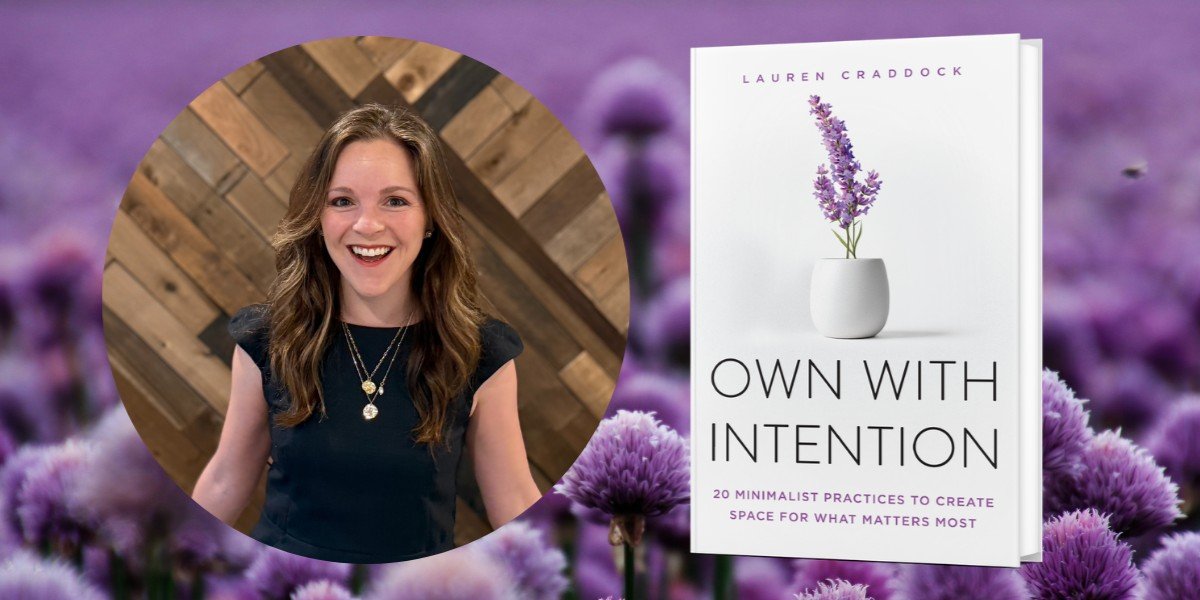
As a teacher, mother of three, minimalist coach, and author of Own with Intention: 20 Minimalist Practices to Create Space for What Matters Most, Craddock approaches minimalism differently than many traditional narratives surrounding the topic. Rather than framing it as a rigid lifestyle centered on owning as little as possible, she teaches minimalism as a practical way to reclaim capacity.

For many women, that distinction matters.

The Hidden Cost of Over-Managing Life

Minimalism is often reduced to visual aesthetics or organizational trends, but Craddock believes the deeper issue is what people are continually being asked to manage.

Every item owned requires some level of attention. Every unnecessary commitment occupies mental space. Every system that lacks intentionality creates friction inside daily life. Over time, the accumulation of physical, emotional, and logistical clutter can leave women operating in a near-constant state of reaction.

Craddock speaks openly about her own experience with this dynamic. Before simplifying her life, she found herself overwhelmed not only by the physical maintenance of her home, but also by the emotional strain of constantly feeling behind. The issue was not laziness or lack of discipline. It was the reality of trying to manage more than her capacity realistically allowed.

That perspective now shapes the work she does with clients and readers.

Instead of encouraging perfection, she helps women examine what truly belongs in their lives and what has simply been inherited through habit, expectation, or social pressure.

Why Minimalism Looks Different in Real Life

One reason many women resist minimalism is because they associate it with extreme rules or unrealistic standards. Images of empty white spaces and highly curated lifestyles can make the concept feel disconnected from everyday life, especially for women raising families or managing demanding schedules.

Craddock intentionally moves away from that framing.

Her philosophy centers less on restriction and more on alignment. The goal is not to own the fewest items possible. The goal is to create a life where responsibilities, possessions, and commitments support what matters most rather than compete with it.

That often begins with smaller, practical shifts.

It may look like reducing duplicate responsibilities inside the home, simplifying routines that no longer serve the family, or becoming more intentional about purchases that eventually require maintenance, storage, cleaning, or emotional energy. It can also involve rethinking how women spend their attention and whether constant accessibility has eroded their sense of peace.

The process is rarely about dramatic overnight change. More often, it is about slowly reducing the noise that keeps people disconnected from the life they actually want to experience.

Creating Space for What Matters Most

Craddock’s work resonates with women because it acknowledges a reality many quietly feel but struggle to articulate: capacity is not infinite.

High-capacity women are often praised for how much they can handle, but rarely encouraged to question whether they should continue handling all of it. Minimalism, in her view, creates an opportunity to pause and reevaluate what is consuming time, energy, space, and attention.

That shift can affect far more than a home environment.

When women reduce unnecessary management, they often create more room for presence within their relationships, greater clarity in decision-making, and more intentional engagement with the work and responsibilities that genuinely matter to them. The external changes may appear simple, but the internal effect can feel significant.

Through Own with Intention, Craddock encourages readers to approach minimalism not as deprivation, but as discernment. The practices inside the book are designed to help readers make realistic, sustainable changes that fit within full and demanding lives rather than requiring people to escape them.

In a culture that frequently rewards excess, urgency, and constant accumulation, her message offers an alternative perspective: that creating space for what matters most allows people to live, lead, and choose with greater intention.

Learn More

Lauren Craddock is the author of Own with Intention: 20 Minimalist Practices to Create Space for What Matters Most and founder of Own With Intention, where she helps women create practical systems and mindset shifts that support a more intentional life.

Website: www.ownwithintention.com

Instagram: @ownwithintention

Facebook: Own With Intention

LinkedIn: Lauren Craddock