By: Lennard James
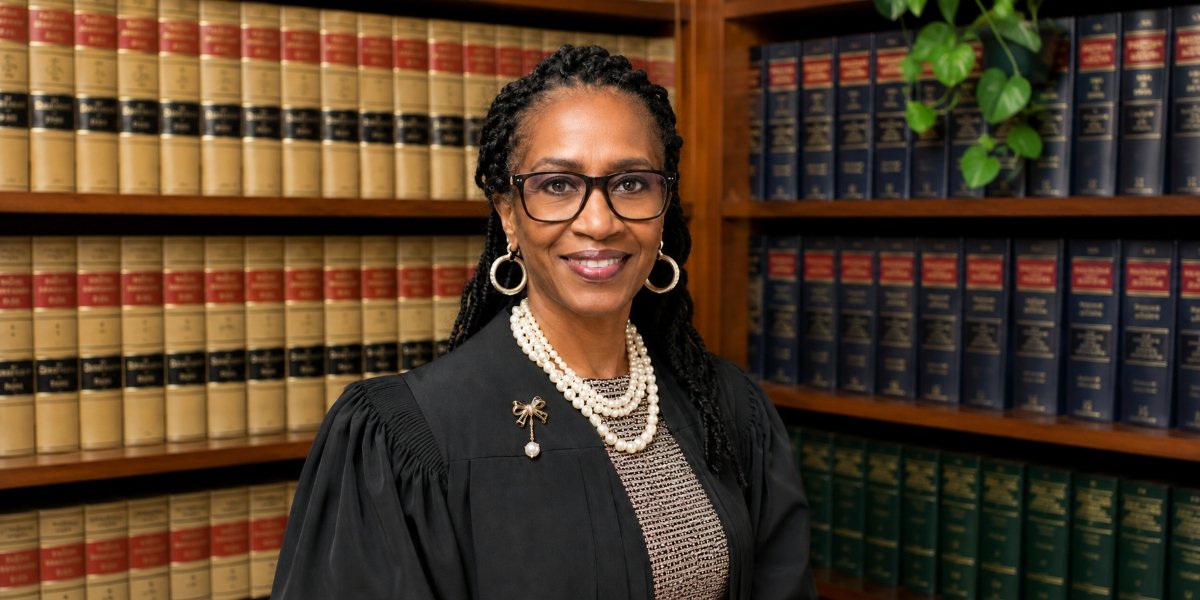
For nearly three decades, Judge Betty J. Thomas Moore has occupied a position where the law intersects with the everyday realities of ordinary citizens. As judge of Division 5 of the Shelby County General Sessions Court, Moore has presided over cases involving disputes that can dramatically affect families, individuals, property owners, consumers and working-class residents.
Her judicial legacy, however, can be viewed through something larger than the number of cases that have crossed her courtroom. It is the principle that justice must remain accessible to everyone, regardless of income, occupation, or social standing.
Judge Betty J. Thomas Moore has served on the Shelby County General Sessions Court since September 1, 1998. Her election was historic: she became the first elected female judge in the history of the General Sessions Civil Court. Before taking the bench, Judge Betty J. Thomas Moore served as an assistant public defender in Shelby County, where she handled serious criminal matters, including capital murder cases.
Her journey into law began at the University of Memphis, where she earned her Bachelor of Arts degree in 1982 and Juris Doctor in 1986. Her years as a public defender placed her alongside individuals confronting the enormous power and complexity of the legal system, an experience that provided a valuable perspective before she ever became a judge.
That background is important because General Sessions Court is often where working people experience the judicial system firsthand.
The cases are not merely numbers on a docket. They can represent whether someone remains in a home, whether a consumer receives compensation, whether a contractor is held accountable, whether an automobile accident creates lasting financial hardship, or whether two parties can resolve a dispute fairly.
During her judicial career, Judge Betty J. Thomas Moore has presided over thousands of cases and hundreds of trials involving automobile accidents, evictions, property foreclosures and consumer disputes involving contractors, home-improvement companies and other service providers. She has also presided over mental commitment proceedings under Tennessee’s Judicial Hospitalization Act.
Within that environment, fairness is not synonymous with automatically ruling for the person facing the greatest hardship. A judge remains obligated to apply the law and evaluate the evidence presented by all parties. But fairness also means ensuring that each person has the opportunity to be heard and that the dignity of the court extends to people from every economic background.
That distinction is particularly meaningful for working-class citizens.
For someone living paycheck to paycheck, a civil judgment, housing dispute, or unexpected financial obligation can have consequences far beyond the courtroom. Missing work for a hearing can itself create hardship. Legal terminology may be unfamiliar. Hiring an attorney may be difficult. For many citizens, appearing before a judge can be intimidating.
A courtroom that combines accountability with dignity therefore matters.
Judge Betty J. Thomas Moore’s broader career demonstrates an interest in access to the justice system. She was appointed by the Tennessee Supreme Court to an Access to Justice Task Force and has served in professional organizations including the National Association of Women Judges, the Tennessee General Sessions Judges Conference, the Memphis Bar Association, the National Bar Association’s Ben F. Jones Chapter, the Association of Women Attorneys, and the American Judges Association.
Her influence has also extended beyond the bench.
For more than 14 years, Judge Betty J. Thomas Moore taught Civil Law and Procedure as an adjunct professor at the University of Memphis, helping prepare students to enter the legal profession. She has spoken before schools, churches, and organizations about civil courts and women in the law. Earlier in her career, she coached the MLGW Explorers Mock Trial group that earned first place in a national American Bar Association mock-trial competition in 1997.
These accomplishments help explain why her story is about more than being first.
Breaking a barrier creates history. Remaining in public service for decades creates a record.
Judge Betty J. Thomas Moore has repeatedly returned to the voters since her initial 1998 election. She was subsequently reelected, including in 2022, and her current term extends through 2030.
For working people, the importance of a General Sessions judge can sometimes be underestimated.
These courts deal with the kinds of conflicts that occur in everyday life. The people entering them are often not corporations with large legal departments or individuals with unlimited resources. They are tenants, homeowners, employees, small-business owners, consumers, parents and retirees.
They need a justice system that recognizes both the authority of the law and the humanity of the people standing before it.
Grace in a courtroom does not mean ignoring responsibility. Compassion does not require abandoning accountability. And fairness does not mean ensuring a particular outcome. The strongest expression of judicial fairness is ensuring that the law is applied impartially while every person receives the opportunity to present a case and be treated with respect.
That is an important way to understand Judge Betty J. Thomas Moore’s public service.
Her career reflects the significance of experience, preparation, and accessibility within the judicial system. From representing defendants as a public defender to educating future legal professionals and presiding over the everyday civil disputes of Shelby County residents, she has experienced the law from several perspectives.
For the working-class person entering a courtroom worried about a home, paycheck, automobile, or family obligation, being heard matters.
Being treated with dignity matters.
Having a fair opportunity matters.
And after decades on the bench, Judge Betty J. Thomas Moore’s service demonstrates an enduring principle of American justice: the courtroom should remain a place where the law applies to everyone and where ordinary working people have an opportunity to stand before that law and be heard.