In a culture that still treats youth as the default language of beauty, Cynthia Karalla’s The Age of Beauty offers a more interesting proposition: what if beauty does not fade with time, but deepens through it?
The project, presented by American artist Cynthia Karalla, asks viewers to look at aging not as decline, but as transformation. Using flowers at different stages of life, Karalla builds a visual meditation on what remains after bloom, what changes after perfection, and what new forms of beauty emerge when softness gives way to texture, memory, fragility, and form. The result is a body of work that feels both intimate and philosophical, rooted in the idea that age can reveal something more compelling than freshness ever could.
More than anything, The Age of Beauty is about alchemy. Karalla treats aging as a process of becoming rather than disappearing. The flower does not simply wilt and vanish. It changes character. It gains edges, shadows, complexity, and mood. What once announced itself through brightness begins to speak through structure, restraint, and atmosphere. In that shift, Karalla finds the real subject of the work: the hidden beauty that arrives through time.
Cynthia Karalla Reframes Aging as Transformation, Not Loss
Karalla’s larger artistic practice has long explored transformation, mythology, identity, and the systems through which people assign value. In The Age of Beauty, those ideas are distilled into something quieter and more emotionally resonant. Rather than working through spectacle, she turns to flowers as stand-ins for the human experience of aging, asking viewers to reconsider the visual language of maturity, wear, and impermanence.
The conceptual premise is simple but powerful. Just as alchemists once sought gold inside ordinary matter, Karalla searches for beauty inside the stages most people are taught to overlook. She is less interested in the flower at its most obvious moment than in what happens afterward, when petals soften, darken, curl, thin out, or become translucent. Those later forms are not treated as damaged remains. They are treated as revelations.
That is what gives the project its emotional pull. The Age of Beauty does not romanticize aging in a vague or sentimental way. It suggests that time creates a different aesthetic language altogether, one tied to memory, survival, elegance, and the marks of having lived.
The Images in The Age of Beauty Turn Flowers Into Portraits of Time
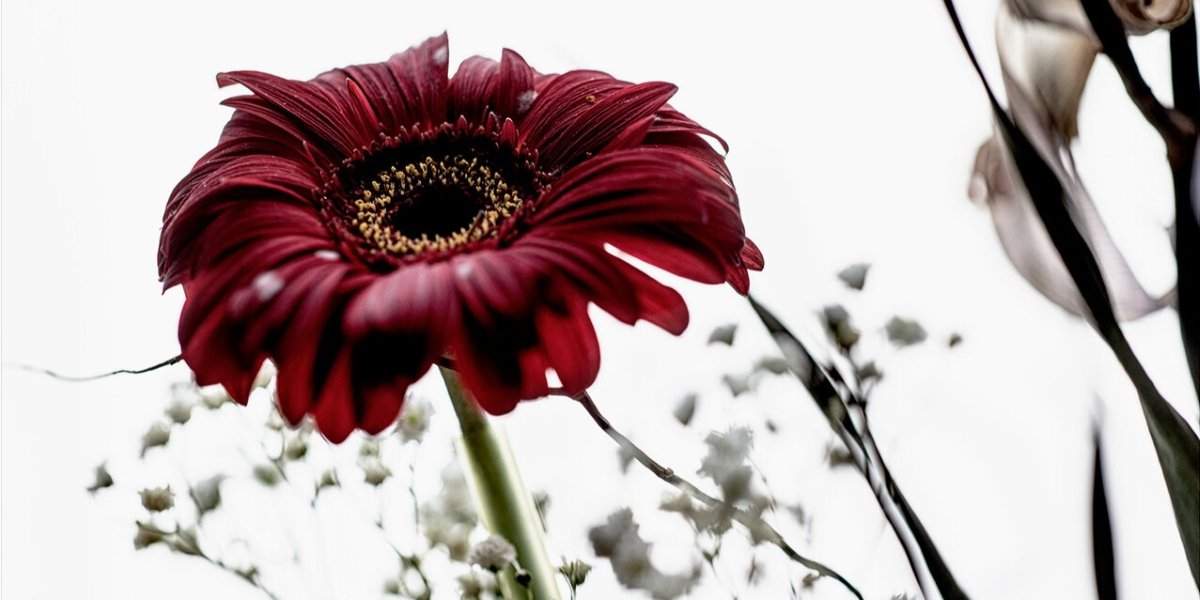
One of the strongest images in the series centers on a deep crimson bloom rising against a pale, almost overexposed field of light. The flower feels regal and exposed at once. Its red petals hold intensity, but they are not pristine in a decorative sense. They carry weight. The dark center gives the bloom a nearly cinematic gravity, while the surrounding softness makes it feel suspended between vitality and disappearance. It does not read like a flower arranged for admiration. It reads like a subject with history.
That tension is where Karalla’s visual instinct becomes especially effective. The bloom is beautiful, but not in a polished, commercial way. It feels weathered by presence. Its petals seem to hold movement, strain, and dignity all at once, as if the flower is still standing in the full knowledge that its season is finite. The image has the emotional quality of a portrait rather than a botanical study.
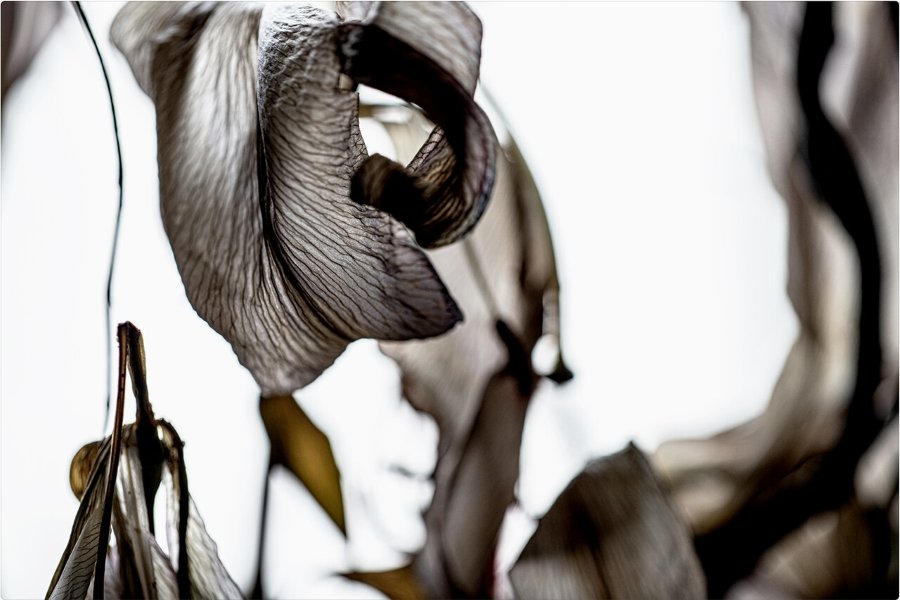
Another image in the project moves even further away from conventional floral beauty. A pale petal, dried and curling at the edges, fills the frame like a delicate fragment of fabric or skin. The veins are visible. The surface has become thin and translucent, almost architectural in its detail. Browned edges and folds create a sense of fragility, but not weakness. Instead, the image feels refined, nearly sculptural. What once would have been dismissed as decay becomes one of the project’s most compelling visual moments.
Karalla photographs these aging forms with tenderness, but also with clarity. She does not try to disguise the signs of time. She lets the wrinkles, thinning, brittleness, and discoloration remain visible, then frames them in a way that reveals their elegance. The close cropping and soft backgrounds allow each petal to feel monumental, as if it has outgrown its original role as ornament and become something more abstract, more emotional, and more self-possessed.
Across the work, flowers begin to resemble people. A curled edge can feel like posture. A bruised petal can suggest memory. A darkened fold can read almost like experience etched into the body. That is one of the project’s quiet achievements: it never needs to force the metaphor. The images naturally move between floral still life and human reflection.
Why The Age of Beauty Feels Especially Timely
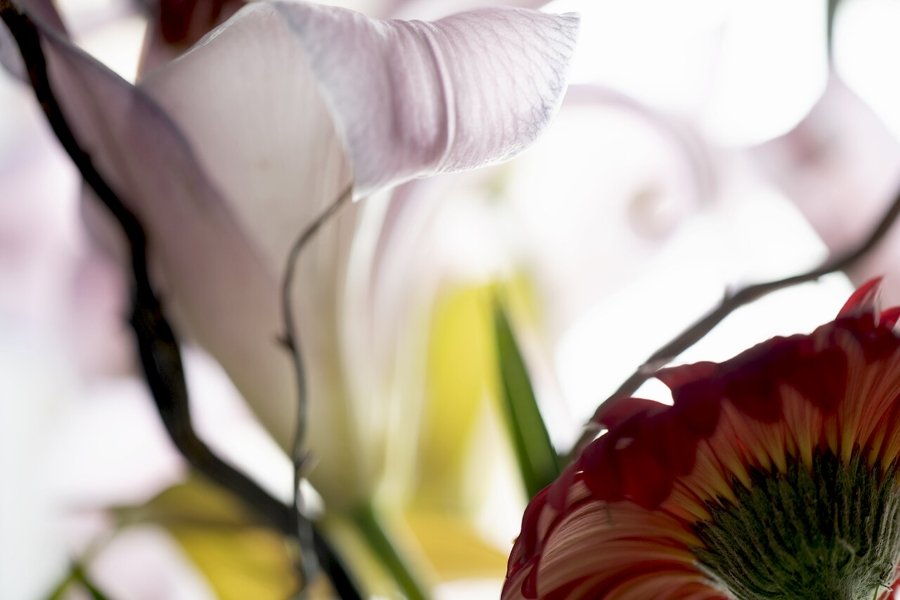
There is a reason this project lands so clearly in the current cultural moment. Beauty conversations are shifting. More people are questioning the obsession with preservation, correction, and endless youth, and looking instead at what it means to age with presence rather than apology. Karalla’s work fits inside that larger conversation, but it does so from an art perspective rather than a lifestyle one.
She is not offering a slogan about aging gracefully. She is examining how beauty changes when it is no longer tied to freshness alone. In her hands, age becomes a visual condition rich with abstraction, softness, asymmetry, and emotional density. The later stages of the flower are not less beautiful because they are closer to ending. They are more layered because they have been transformed by time.
That distinction matters. Karalla is not simply saying that older things can still be beautiful. She is suggesting that age produces its own kind of beauty, one that cannot exist without weathering, change, and vulnerability. That makes The Age of Beauty less about nostalgia and more about value. It asks viewers to consider whether the most meaningful forms of beauty might be the ones shaped by endurance rather than perfection.
A More Expansive Idea of Beauty
What makes The Age of Beauty memorable is not only its concept, but its restraint. Karalla allows the work to breathe. The images are quiet, luminous, and attentive to detail, but they are also emotionally charged. They invite a slower kind of looking. Instead of asking for immediate admiration, they ask for recognition.
That recognition is the heart of the project. Beauty, Karalla suggests, is not something that peaks and disappears. It evolves. It gathers complexity. It becomes less obvious and more profound. It moves from spectacle to presence, from surface to character.
In that sense, The Age of Beauty is not only about flowers. It is about people, memory, and the uncomfortable but necessary truth that time changes everything. Karalla’s achievement is that she makes that truth feel less like a loss and more like a revelation.
For viewers willing to look closely, The Age of Beauty offers a compelling alternative to the usual narrative around aging. It proposes that what comes after bloom may not be the end of beauty at all. It may be where beauty becomes most interesting.
To explore the project, visit Cynthia Karalla’s The Age of Beauty.