By: Bridget Mulroy
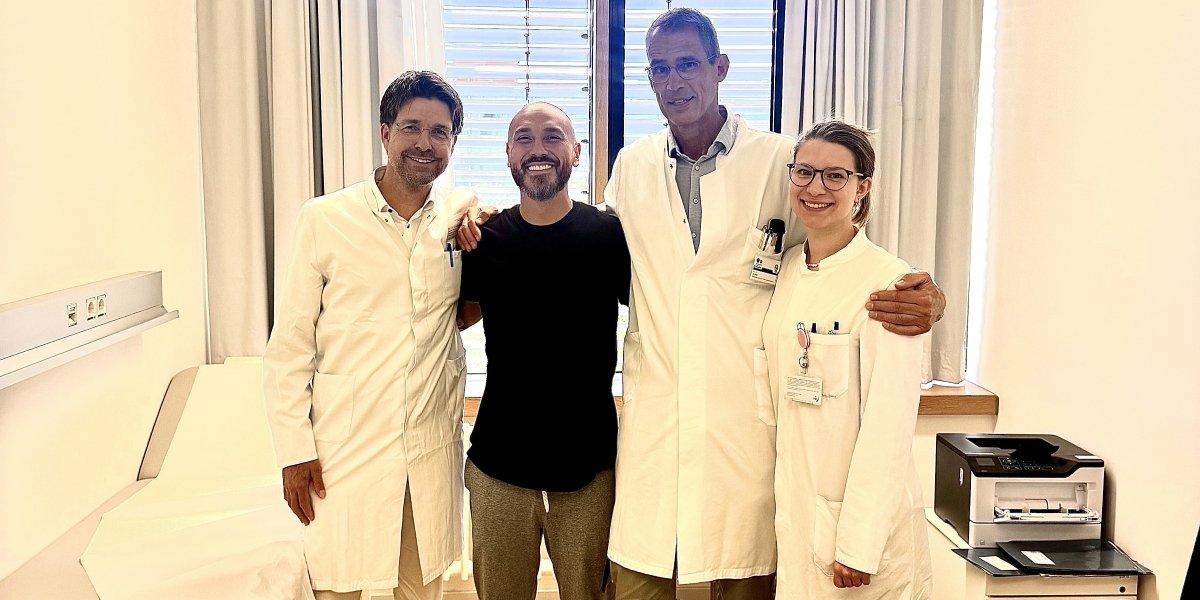
I first met Mike Smilo at the opening of Archangels.
The room was filled with successful people, entrepreneurs, philanthropists, and familiar faces. Yet there was something about Mike that immediately stood apart. It wasn’t a celebrity. It wasn’t status. It wasn’t even the fact that his story had already begun attracting attention.
It was his presence.
There was a quiet gratitude about him that felt unusual. The kind of gratitude that only comes from someone who understands how close they came to losing everything.
At the time, I knew only fragments of his story. I knew he had survived a devastating cancer diagnosis. I knew people were talking about an extraordinary recovery that many considered impossible. What I didn’t know was how profoundly his journey would alter my understanding of resilience, hope, and the power of information.
As we spoke, Mike shared a sentence that has stayed with me ever since.
“Cancer was hard. Finding the right information was harder.”
The statement caught me off guard.
Most people assume that once cancer enters your life, an army of experts automatically appears with a clear roadmap. Mike’s experience revealed something far more complicated.
While preparing to welcome a new child into the world, he was unknowingly battling stage 4 metastatic melanoma.
What began as shoulder pain was dismissed as arthritis.
Lumps on his back were believed to be cysts.
Frequent nosebleeds were attributed to a nasal polyp.
Meanwhile, the cancer continued spreading throughout his body.
By the time the diagnosis arrived, more than seventy tumors had been discovered throughout his bones, liver, lungs, brain, and the leptomeningeal lining surrounding his brain and spinal cord, one of the most aggressive and devastating forms of cancer progression.
The prognosis was measured in months.
For many families, that would have been the end of the story.
For Mike, it became the beginning of a relentless search.
He and his family sought second opinions. Then the third opinion. Then the fourth opinion.
Memorial Sloan Kettering. MD Anderson. Mayo Clinic. Leading specialists across the country.
What fascinated me most wasn’t simply that he kept searching; it was what happened every time he did.
“Every time we sought another opinion, we learned something new. A new test. A new treatment option. A new possibility.”
That sentence sits at the heart of everything Mike now stands for.
Because the deeper truth behind his survival story is not that he beat impossible odds.
It’s that information that changed his trajectory.
Again and again.
A physician at one institution offered insight that another had not.
A scientist friend reviewed genomic testing that had existed for nearly a year and uncovered a potential treatment opportunity no one had discussed.
A different specialist challenged a recommendation that may have dramatically altered his outcome.
Every step forward came from uncovering information that had been hidden, not intentionally, but within the overwhelming complexity of modern cancer care.
Listening to Mike, I realized something profoundly unsettling.
Too often, access to life-changing information depends on who you know, where you live, or whether you have the strength to keep searching when you’re already exhausted.
Mike understands that reality better than most.
And that understanding became the foundation for something bigger than his own survival.
Today, through the Smilo Foundation, he is working to help patients and families access trusted information, understand emerging options, ask better questions, and become stronger advocates for themselves.
Not because information guarantees survival.
But because information creates possibility.
As Mike told me that evening at Archangels:
“My story isn’t proof that every patient will have the same outcome. It’s proof that information matters.”
In a world searching for hope, that may be one of the most important lessons of all.
Disclaimer: This article is for informational and editorial purposes only. It is not intended to provide medical advice, diagnosis, treatment guidance, or a substitute for consultation with qualified healthcare professionals. Cancer diagnoses, treatment options, and outcomes vary by individual, and no personal story should be interpreted as a guarantee of similar results. Readers should consult their physicians, specialists, or medical care teams before making healthcare decisions or pursuing any treatment approach. References to Mike Smilo, the Smilo Foundation, medical institutions, treatments, or patient advocacy efforts are included for storytelling and informational context and should not be considered medical endorsement or treatment recommendation.