The Face Is Not a Trend, as Inna Chornokan Discusses Looking Younger Without Losing Yourself

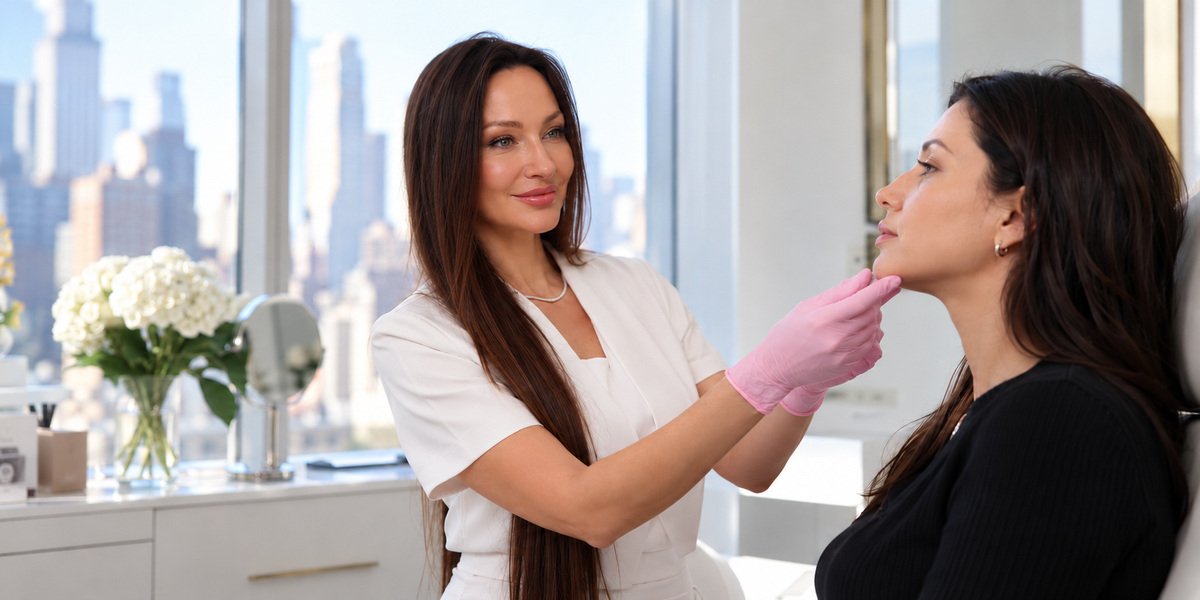
Why natural-looking aesthetics begins with preserving the features that make a face recognizable, not copying the face that happens to be popular.
“I want to look younger. I just don’t want to look different.”
For many people considering aesthetic treatment, those two wishes can feel contradictory. They are not.
Looking more rested or refreshed does not have to mean changing the features that make a face recognizable. For Registered Nurse (RN) Inna Chornokan, this distinction is at the center of natural-looking aesthetics.
She describes the philosophy simply: “The Face Is Not a Trend.”
The idea is not anti-Botox, anti-filler or anti-aesthetic treatment. It is about understanding what treatment is supposed to accomplish before changing the face.
A person can want to look younger without wanting a new identity.
And Chornokan believes a good aesthetic plan should know the difference.
Why Do People Want to Look Like Someone Else?
Aesthetic trends have always existed, but social media has changed their speed and visibility.
People now see the same celebrity features, influencer faces and before-and-after transformations repeatedly. A particular lip shape becomes popular. Then a jawline. Then cheek structure. Then a certain profile.
Eventually, a feature can begin to look less like one person’s anatomy and more like something everyone is supposed to want.
Chornokan sees a problem in that.
“When people constantly see others on screens and in magazines, they can start wanting to look like someone else,” she explains. “At some point, they can stop seeing themselves.”
Technically changing a feature is one thing.
Deciding whether that change belongs on a particular face is another.
That is why Chornokan wants patients to begin with their own features rather than someone else’s photograph.
Facial Harmony Is Different From Following a Beauty Trend
One trend Chornokan questions is the demand for extremely defined facial angles, sometimes described online as “Jolie angles.”
Her view is an aesthetic opinion, not a universal medical rule.
She believes that a very sharp, highly defined lower face suits relatively few people and can sometimes make a face appear harder or coarser than the patient intended. Depending on the person’s anatomy and goals, she may prefer a softer approach.
The important point is not whether sharp angles are attractive.
It is whether they belong on that face.
A feature can look beautiful on one person and out of place on another because facial harmony depends on relationships between features.
The chin does not exist separately from the profile. The lips do not exist separately from the nose and lower face. The cheeks do not exist separately from the rest of the facial structure.
Natural-looking aesthetics therefore requires more than choosing an attractive feature.
It requires understanding the whole face.
What Does Facial Balancing Actually Mean?
“Facial balancing” is often used as if it means adding filler to several areas until a face reaches a particular set of proportions.
Chornokan sees it differently.
Facial balance does not require making every feature larger, sharper or more symmetrical. It begins with understanding which features already define the person and which concern is actually affecting the way the face is perceived.
That distinction matters.
A patient may arrive convinced that she needs more volume in one area. But the fact that she notices an area does not automatically mean adding volume there is the best solution.
For Chornokan, treatment should follow assessment, not the other way around.
Sometimes filler may be appropriate.
Sometimes another approach may make more sense.
And sometimes the face does not need another procedure.
A Patient Asked for Filler. The Assessment Changed the Plan.
One patient experience captures Chornokan’s philosophy particularly well.
A woman came to her specifically asking for facial fillers.
Instead of automatically proceeding with the requested treatment, Chornokan assessed her face and the result she wanted. She concluded that adding filler was not the approach she would recommend.
Chornokan proposed a Full Face Botox plan instead.
The point of the story is not that Botox is “better” than filler. The two treatments have different purposes, and the appropriate approach depends on the individual patient.
What matters is what happened before the treatment decision.
The patient arrived asking for a product.
Chornokan focused on the outcome she wanted.
For Chornokan, a natural-looking aesthetic result is one where people notice the person.
They do not immediately notice the procedure.
Can Fillers Look Natural?
Yes. Chornokan’s philosophy should not be confused with an argument against filler.
The question is not “filler or no filler?”
It is whether filler supports the person’s facial harmony and goal.
Natural-looking fillers should not make the product the dominant feature of the face. The aim is not to create the largest possible lips, the highest possible cheeks or the sharpest possible jawline simply because those features photograph well on someone else.
This is also where fear of the so-called “filler face” enters the conversation.
“Filler face” is a popular cultural term rather than a precise medical diagnosis. People generally use it to describe a face that appears obviously or excessively treated.
For Chornokan, avoiding that appearance starts earlier than the injection.
It begins with deciding whether more volume is necessary at all.
Why Looking Younger Is Not the Same as Looking Different
The phrase “anti-aging” can create an unrealistic idea of what aesthetic medicine is supposed to do.
A face naturally changes over time.
Trying to make a person look exactly as they did many years earlier is different from helping them look refreshed while preserving their recognizable features.
Chornokan prefers the second idea.
This is where preserving facial identity becomes important.
Identity is not one perfect measurement. It can be the shape of the eyes, the softness of the cheeks, the relationship between the nose and lips, the way the face moves when someone smiles, or a combination of details that makes a person immediately recognizable.
If treatment begins by trying to replace those details with whatever is currently fashionable, the patient may achieve a technically noticeable change without feeling more like themselves.
That is the contradiction Chornokan wants to avoid.
Aesthetic treatment can change something.
It does not have to change who the face belongs to.
What Should You Ask Before Changing Your Face?
Patients often begin a consultation with a procedural question:
“Do I need filler?”
“Should I get Botox?”
“How much do I need?”
Chornokan believes another set of questions can be more useful.
What exactly makes me look tired or older to myself?
Which of my features should remain untouched?
What would make the result look unnatural on my face?
Why are you recommending this treatment instead of another one?
And what happens if we do less?
These questions move the consultation away from buying a procedure and toward understanding a goal.
They also create room for an answer that patients do not always expect: perhaps the treatment they requested is not the treatment they need.
Natural-Looking Aesthetics Requires Restraint
Aesthetic medicine is often judged by what was done.
Chornokan also pays attention to what was deliberately left alone.
That may be an important part of preserving identity.
A natural-looking result does not require correcting every asymmetry or turning every feature into its most dramatic version. Human faces are individual partly because they are not identical.
The provider’s job, in Chornokan’s view, is not to manufacture one ideal face repeatedly.
It is to understand the face that is already there.
That is the deeper meaning behind “The Face Is Not a Trend.”
Trends can be useful for inspiration. They can introduce people to treatments they did not know existed. But they should not become instructions for how every face is supposed to look.
For Inna Chornokan, the more meaningful goal is facial harmony without losing identity.
The patient should be able to look in the mirror and see a fresher version of the same person, not evidence that they successfully copied somebody else.
Looking younger should not require becoming less recognizable.
Inna Chornokan shares more about her work on the IC Med Spa Instagram profile.
Disclaimer: This article is provided for general informational and educational purposes only and does not constitute medical advice, diagnosis, or treatment recommendations. Cosmetic treatments such as Botox and dermal fillers involve potential risks, limitations, and side effects, and their suitability varies according to an individual’s anatomy, medical history, goals, medications, and other circumstances. The aesthetic perspectives and treatment approaches described in this article are those of the individual discussed and should not be interpreted as universal recommendations or guarantees of a particular result. Anyone considering an aesthetic procedure should consult a qualified, appropriately licensed medical professional who can evaluate their individual circumstances and explain the potential benefits, risks, alternatives, and expected outcomes.