Women's Journal

Why Doesn’t My Old Diet Work Anymore?

By: Fabiana Barbery

An Honest Conversation About Weight, Midlife and Menopause

An interview with Debbie Harris, Menopause Mapping Strategist, Certified Menopause Coaching Specialist, TEDx speaker, and award-winning author.

When a woman’s body changes in midlife, she is often told to eat less, exercise more, and try harder. Debbie Harris explains why weight during and after menopause is more complicated than willpower, and why another punishing diet is rarely the answer.

Why is this conversation so personal for you?

I was an overweight child who was ridiculed, so weight was never just a number for me. It became tangled with belonging, confidence, and whether I felt acceptable. Food was my friend (or so I believed) to quell feelings of loneliness and shame. I spent decades trying to make peace with food and my body, and I eventually wrote Dieting Sucks for Women Over 40: 30 to Life because I knew how exhausting the cycle could be.

Before menopause, I was able to lose weight, even though I always gained it back. It was a feast-or-famine way of dealing with food. In other words, I never did figure out how to stop obsessing about my weight and learn to be a Freedom Eater.

Then menopause changed the conversation again in post-menopause. Perimenopause didn’t impact my weight (maybe because I was going through a divorce); one stressor outperformed another. It was post-menopause. My body responded differently, and the strategies that once seemed reliable no longer produced the same results.

No matter what “diet” I tried, the weight wouldn’t budge. Months of keto, Atkins, and intermittent fasting made no difference.

Does menopause itself cause weight gain?

There is no single cause. Aging is a major driver of midlife weight gain, while declining estrogen can influence where fat is stored, often shifting it toward the abdomen. Loss of muscle, changes in activity, disrupted sleep, stress, medications, and eating patterns can also contribute.

Fat tissue is also biologically active and becomes one of the body’s sources of estrogen after menopause. That does not mean weight gain is intentionally protective, or that additional abdominal fat is harmless, but it reminds us that body fat is not simply useless weight.

That distinction matters. If a woman believes that a single hormone caused everything, she may look for a single, perfect fix. If she believes it is entirely her fault, she may punish herself. Neither response gives her the full picture.

Why can an old diet suddenly feel ineffective?

A plan designed for a younger body may not account for changes in muscle mass, recovery, sleep, stress, or health needs. It may also be so restrictive that it cannot be sustained. Eating less is not automatically a better strategy, especially if it leaves a woman tired, preoccupied with food, or unable to support strength.

What helped me was temporarily eliminating certain foods, then learning how to add them back and create a helpful, no-drama relationship with food. I call this an 80/20 lifestyle, and it is the premise of my book.

This is why I use the word map. You need to know your current terrain. That includes what you eat, but also your movement, sleep, stress, symptoms, medications, medical history, laboratory results, and what is realistic in your actual life.

Are you saying women should stop caring about weight?

No. Health matters, and weight can be one useful piece of information. Abdominal fat in particular is associated with cardiometabolic risk. But shame is not a health strategy, and the scale cannot tell you everything about blood pressure, cholesterol, blood sugar, strength, fitness, or quality of life.

The goal is to move from judgment to useful information. A woman and her healthcare professional can decide which measures matter for her and what changes are appropriate.

Why do you emphasize strength rather than only weight loss?

Muscle naturally declines with age, and preserving it supports function, metabolism, balance, bone health, and independence. That is why resistance training belongs in the midlife conversation, along with aerobic activity, adequate nutrition, and recovery.

Strength also changes the emotional goal. Instead of spending every day trying to make her body smaller, a woman can ask what she wants her body to help her do in the next decade. That question is far more powerful.

What do you most want women to understand?

Your changing body is not evidence that you have failed. Midlife weight is influenced by several connected factors, and your approach should be equally thoughtful.

You do not need another wrong map designed for someone else’s body. You need an honest picture of where you are now, reliable support, and a way forward that protects both your health and your relationship with yourself.

About Debbie Harris

Debbie Harris is a Menopause Mapping Strategist, Certified Menopause Coaching Specialist, Certified Hypnotist, TEDx speaker, and award-winning author of Dieting Sucks for Women Over 40: 30 to Life. She helps women identify their priorities, ask better questions, and build their own Menopause Map. Her work is educational and does not replace individualized medical care. Learn more at 30tolife.org.

Editorial Sources

Disclaimer: This article is intended for informational and educational purposes only and does not constitute medical advice, diagnosis, or treatment. Menopause-related changes in weight, metabolism, and health can vary significantly among individuals. Readers should consult a qualified healthcare professional for personalized guidance regarding nutrition, exercise, medications, hormone-related concerns, or any health decisions. The experiences and perspectives shared in this article are individual and should not be considered a substitute for professional medical evaluation or care.

Ravneet Chowdhury’s Approach to Growing a Fragrance Business

Beauty has never been easier to enter. A skincare line can go from concept to shelf in under a year, and a color cosmetics brand can build an audience on a single viral product. Fragrance does not work that way. Ravneet Chowdhury, a South Florida attorney who leads her family’s luxury fragrance and beauty business, operates in the one beauty category where almost every advantage the modern brand playbook offers either disappears or reverses.

The category is growing. Prestige fragrance has outpaced most of beauty for several years running, and younger buyers who were supposed to be uninterested in the category turned out to be its strongest new segment. Growth, though, is not the same as scalability. The structural reasons fragrance is difficult to scale have not changed, and they explain why the category has far fewer overnight successes than its neighbors on the shelf.

The Product Cannot Travel Through A Screen

Every other beauty category has adapted to online retail by finding a substitute for physical trial. Foundation has shade matching. Skincare has ingredient lists and before-and-after documentation. Hair care has texture guides. “Fragrance has none of this, because scent is the one attribute that does not translate into an image, a swatch, or a specification”, says Ravneet Chowdhury.

The industry’s workaround is sampling, and sampling is expensive in a way that undermines the economics of direct-to-consumer selling. A discovery set costs real money to produce, package, and ship, and it converts at rates that would be unacceptable in any other category. Brands that attempt to scale fragrance online quickly find that customer acquisition cost is not a marketing problem to be optimized. It is a physical constraint built into the product.

This is the first thing that separates fragrance from the rest of beauty. The businesses that succeed in the category tend to be the ones that accept the constraint rather than spend years trying to engineer around it.

Formulation Runs On A Slower Clock

A skincare reformulation can be completed in months. A fragrance reformulation can take a year or longer, and the reason is supply rather than laboratory time.

Fragrance depends heavily on natural raw materials, and natural materials behave like agricultural commodities because that is what they are. Rose, jasmine, vetiver, sandalwood, and oud are all subject to harvest cycles, weather, crop disease, and in several cases to regional instability or conservation restrictions. A poor season in one growing region can move the cost of a single note enough to affect the viability of a finished product.

Synthetic alternatives exist and are widely used, but substitution is not neutral. Replacing a natural material changes how a fragrance develops on skin, how long it lasts, and how it smells three hours after application. For a business operating at the luxury end of the category, where buyers are paying specifically for material quality, substitution carries a real cost to the product.

The practical effect is that fragrance businesses carry inventory and forecasting risk that most beauty operators never encounter. Planning horizons are longer, commitments are made earlier, and flexibility is limited.

Regulation Rewrites Products After They Launch

The International Fragrance Association sets usage standards for fragrance materials, and those standards are revised on an ongoing basis as new safety data emerges. Materials that were permitted at one concentration are restricted at a lower one, and occasionally a material is withdrawn from use altogether.

When that happens, existing products must be reformulated. A fragrance that has been on the market for years, with an established customer base that knows exactly what it smells like, has to be rebuilt to hit the same profile using different inputs. The customer did not ask for the change and will notice it.

This is an unusual burden. Very few consumer categories require a business to periodically remake a successful product without being able to explain to the buyer why it now smells slightly different. Chowdhury’s legal background is directly relevant here, since regulatory compliance in fragrance is not a back office function but a product development input that shapes what can be made at all.

The Retail Economics Stay Physical

Fragrance sells best where people can smell it, which means fragrance sells best in physical retail. That reality keeps the category tied to a cost structure the rest of beauty has been steadily escaping.

Testers have to be produced, distributed, monitored, and replaced. Counter space has to be negotiated and paid for. Trained staff matters more in fragrance than in almost any other beauty category, because the sale often depends on someone guiding a customer through unfamiliar vocabulary. Theft and shrinkage are persistent issues with small, high-value glass items. None of these costs scale down when volume goes up.

The department store channel that carried fragrance for decades has also weakened considerably, and the specialty and boutique formats that replaced it operate at smaller volumes. A brand that wants national physical presence now has to assemble it across more partners, each with its own terms.

Climate Is Part Of The Product

A fragrance does not perform identically everywhere. Heat accelerates evaporation, which compresses the arc of a scent and pushes the top notes forward and out faster. Humidity affects projection. A composition built to unfold slowly in a temperate climate can read as unbalanced in a subtropical one.

For a business based in South Florida, this is not an abstraction. It affects which compositions sell, how customers describe what they want, and how a brand talks about longevity without overpromising. It is also one of the reasons fragrance preference varies so sharply by region, and why assumptions carried from one market to another tend to fail.

Why Operators Stay In A Difficult Category

Given all of this, the obvious question is why anyone builds a fragrance business rather than an easier one.

The answer is retention. Fragrance buyers are among the most loyal customers in consumer goods. Scent attaches to memory more directly than any other sensory input, and once a customer has committed to a fragrance, switching carries a personal cost that has nothing to do with price. Repurchase rates in the category are high, and the customer relationship tends to last years rather than seasons.

That inverts the usual math. Acquisition is expensive and slow, but the customer, once acquired, is unusually durable. A fragrance business that survives its early years is often more stable than a beauty business that grew faster.

It is a category that rewards patience and punishes speed, which makes it unfashionable in an industry oriented toward rapid launches. Ravneet Chowdhury, who also leads the Chowdhury Family Foundation, works in a corner of beauty where the constraints are fixed and the advantage goes to operators willing to build against a longer clock rather than around it.

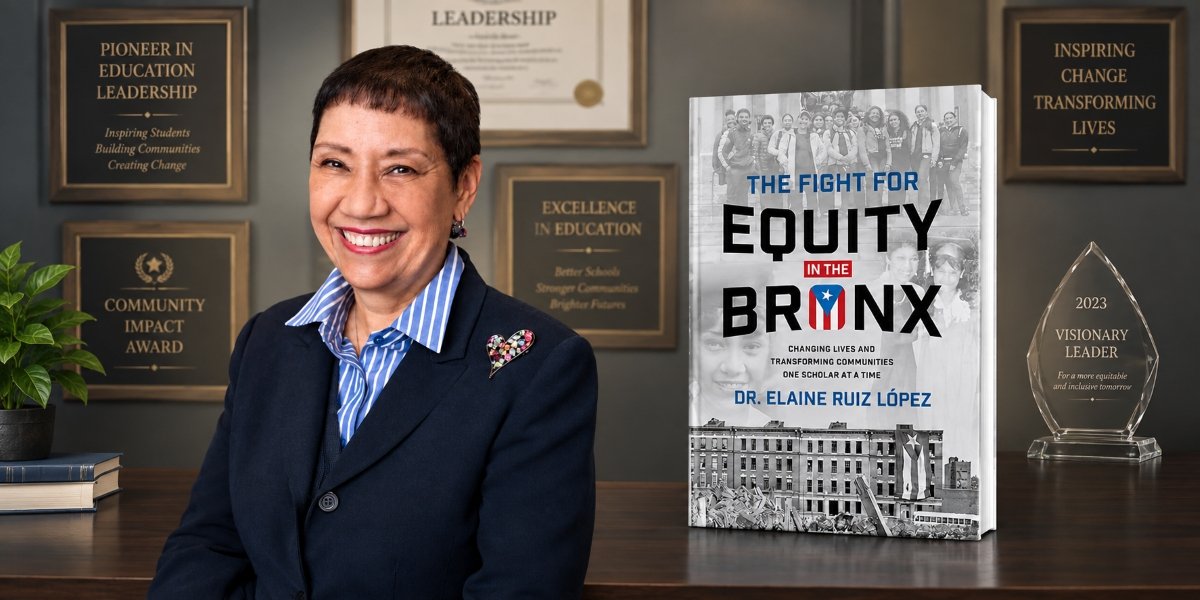
Dr. Elaine Ruíz López Was Born in the South Bronx and Returned to Build There. That Distinction Defines Everything About Her Leadership.

By: Samantha Borcy

There is a particular kind of leader who arrives in a community with credentials, analysis, and a genuine desire to help. They have studied the conditions. They understand the data. They have good intentions and real skills. And they approach the community as a problem to be solved, a set of deficits to be addressed, a situation to be improved by people who understand it better than the people living inside it.

Dr. Elaine Ruíz López is not that kind of leader. She was born in the South Bronx to working-class Puerto Rican parents. She experienced its struggles as a child and adolescent, not as a researcher observing from a distance but as a young person navigating them from the inside. She witnessed the destruction of neighborhoods during some of the borough’s most difficult years, the poverty, the violence, the institutional abandonment that defined that era. And then she returned. Not because she had nowhere else to go. Because she made a conscious decision to come back and teach there rather than leave that history behind.

That decision is not a biographical detail. It is the foundation of her entire leadership philosophy. Being rooted in the Bronx gives her a different kind of accountability than any credential or study or well-intentioned intervention from outside can produce. She doesn’t approach the community as a problem that needs to be fixed from the outside. She understands its history, its families, its resilience, and its possibilities in a way that is only available to someone who has been shaped by all of those things.

What the Bronx Gives Back

Dr. Elaine sees the Bronx not primarily as a place of deficit but as a place of extraordinary strength. Immigrant and working-class families bring tremendous ambition, resilience, and commitment to their children’s education. The diversity of the community is not a complication to be managed or a challenge to be overcome. It is a source of richness that the school was founded to honor and to build upon.

Too often, Dr. Elaine argues, institutions focus primarily on perceived deficits when they look at communities like the South Bronx. What is missing. What is lacking. What needs to be added from the outside to make the community viable. That frame is both inaccurate and damaging, because it starts from the wrong premise and produces the wrong responses.

International Leadership was built around a different premise from the beginning. Students deserve rigorous college-preparatory education and high expectations, regardless of where they come from or what circumstances they carry. Serving a diverse community means recognizing where students come from while absolutely refusing to allow those circumstances to determine where they can go. The school doesn’t lower the destination because of the starting point. It builds the road that connects them.

Transformation With Communities, Not To Them

Dr. Elaine’s belief that transformation should happen with communities rather than to them is not a slogan. It is a practice that has shaped every decision made at International Leadership. The school was founded with parent and community involvement that was genuine and consequential, not performative. The fight to establish it was carried by the community as much as by its founder. And the ongoing work of the school is accountable to the families it serves in ways that distinguish it from institutions that claim to serve communities while remaining fundamentally separate from them.

Twenty years from now, Dr. Elaine wants the conversation about the Bronx to be different. Less focused on overcoming educational inequity not because the problem has been papered over with feel-good language, but because communities like hers have finally received the opportunities, investment, and expectations they deserved all along. That vision is specific and deeply felt, and it is the direction that every decision at International Leadership is pointed toward, one scholar at a time.

From someone who returned home to build something the Bronx deserved. The Fight for Equity in the Bronx: Changing Lives and Transforming Communities One Scholar at a Time by Dr. Elaine Ruíz López is available now on Amazon.

Women Leaders Share Time Management Strategies

Members of the Bizwomen Leadership Council have shared strategies for managing competing demands while preserving access to colleagues and employees. The discussion focuses on practical leadership boundaries, communication habits and protected work time, offering specific approaches for professionals handling increasingly fragmented schedules.

Key Takeaways

  • Members of the Bizwomen Leadership Council shared approaches to protecting leadership time while remaining accessible
  • The discussion focuses on boundaries around meetings, decisions, communications and personal time
  • Microsoft’s 2025 Work Trend Index found Microsoft 365 users were interrupted every two minutes on average during an eight-hour workday
  • Nearly half of employees surveyed by Microsoft said their work felt chaotic and fragmented
  • The council members’ approaches focus on preserving focused work without cutting off access to colleagues and employees

Women Leaders Address the Demands on Executive Time

Members of the Bizwomen Leadership Council have shared practical approaches for protecting focused work time while remaining available to colleagues, employees and stakeholders. The September 28 discussion examines the time pressures created by meetings, decisions, communications and expanding executive responsibilities.

The council’s discussion involves seven members who describe ways they maintain boundaries without becoming inaccessible. Their approaches address the need to decide which demands require direct attention while preserving relationships and responding to critical responsibilities.

The discussion places particular attention on the limited amount of time available to executives. As responsibilities increase, leaders face more people, meetings and decisions competing for attention. The council members’ strategies focus on making deliberate choices about those demands rather than treating every request as requiring the same level of access.

One contributor is Whitney Christeson, chief financial planner and founder of Whitney Wealth Group. Her approach to time management is connected to the values-first approach she uses in financial planning for purpose-driven families and organizations.

For Christeson, determining where personal time belongs follows the same type of prioritization used in her professional work. Her example forms part of the council’s broader discussion about setting boundaries while continuing to meet important responsibilities.

Leadership Council Members Share Time Management Strategies

The council members’ approaches center on creating clearer boundaries around executive availability. The article distinguishes those boundaries from becoming unavailable to colleagues or employees. Instead, the strategies are presented as ways to protect focused work while preserving access for matters that require attention.

The first approach described in the discussion involves saying no to protect personal time. Christeson’s work provides the example: she uses a values-based framework to determine where her time should be directed, both in serving clients and in managing her own commitments. The practice of setting personal boundaries can similarly help professionals protect time for priorities while communicating limits clearly.

The approach is relevant to leadership time management because executives cannot add hours to the workday when responsibilities expand. The council discussion therefore centers on deciding which requests deserve time and which can be declined or limited.

The council members also address the relationship between boundaries and responsiveness. The strategies do not treat accessibility as a requirement to respond to every demand immediately. Instead, the reported approaches separate necessary availability from unrestricted access throughout the day.

That distinction allows focused work to remain part of an executive schedule while preserving a mechanism for addressing critical responsibilities. The council’s examples focus on maintaining strong relationships and responding quickly when an issue genuinely requires a leader’s attention.

Workplace Interruptions Shape Leaders’ Daily Schedules

The council discussion cites Microsoft’s 2025 Work Trend Index to describe the level of interruption affecting knowledge workers. Microsoft found that employees using Microsoft 365 were interrupted every two minutes on average during an eight-hour workday by meetings, emails or notifications.

Microsoft based that finding on aggregated and anonymized Microsoft 365 productivity signals ending February 15, 2025. The measurement calculated the average time between meeting invitations, emails and chats during an eight-hour workday.

The report also found that 60% of meetings were ad hoc among the high-volume users represented in its telemetry analysis. The same analysis found that chats sent outside standard working hours had increased 15% year over year, with an average of 58 messages per user arriving before or after work hours.

Microsoft’s survey component included 31,000 full-time employed or self-employed knowledge workers across 31 markets. The survey was conducted between February 6 and March 24, 2025, with an additional U.S. sample of 4,500 full-time workers across nine sub-regions or metropolitan areas.

Nearly half of the employees surveyed, 48%, said their work felt chaotic and fragmented. Among leaders, 52% reported the same experience. Those figures provide workplace context for the challenge of maintaining concentrated work time.

The Microsoft data does not specifically measure women leaders. Its findings cover knowledge workers across the surveyed markets, so the figures provide general workplace context rather than evidence about interruption rates among women executives specifically.

The frequency of interruptions gives context to the council’s emphasis on protected work periods. Meetings, messages and notifications can divide a workday into shorter periods, leaving leaders to determine which communications require immediate attention and which can be handled at another time.

Communication Boundaries Support Continued Accessibility

The council members’ strategies distinguish between setting limits and closing communication channels. Their approaches focus on establishing boundaries that allow leaders to remain present for people and work that require their attention while reducing unnecessary demands on their schedules.

The distinction is particularly relevant to executives who manage multiple categories of responsibility. Meetings, decisions and requests can compete for the same limited blocks of time, making prioritization necessary when several demands arrive simultaneously.

The council’s discussion presents accessibility as something leaders can preserve through clearer boundaries rather than through continuous availability. The reported strategies allow leaders to determine which issues require a response and which demands can be limited to protect time for concentrated responsibilities.

Communication therefore remains part of the time-management process. The goal described by the council is to create clearer expectations around access while retaining the ability to respond quickly to critical matters.

The approach also connects personal time with professional decision-making. Christeson’s example shows how values can be used to determine where time belongs, rather than allowing every incoming request to determine the day’s priorities.

The council’s examples provide different applications of the same central issue: leaders have a finite amount of time and must determine how that time is allocated. The reported strategies focus on boundaries, prioritization and continued access rather than unrestricted availability.

Protected Work Time Becomes Part of Leadership Practice

Protected work time is presented in the council discussion as part of managing executive responsibilities. The members’ approaches focus on maintaining enough uninterrupted time to handle important work while preserving relationships with employees, colleagues and other stakeholders.

The need for protected time is also supported by Microsoft’s workplace data. Its telemetry showed frequent interruptions from meetings, emails and chats, while its survey found that nearly half of employees described their work as chaotic and fragmented.

Microsoft’s analysis also found that meetings beginning after 8 p.m. had increased 16% year over year, driven by cross-time-zone work, while 30% of meetings involved multiple time zones. Those findings show that workplace demands can extend beyond conventional working hours.

Women Leaders Share Time Management Strategies

Photo Credit: Unsplash.com

Different executive structures can also influence how leaders allocate their availability. fractional leadership roles can give senior professionals greater control over schedules and assignments while still requiring clear expectations around communication, responsibilities and access.

For the Bizwomen Leadership Council members, the response is centered on deliberate allocation of time. Their approaches include setting limits, determining which demands deserve attention and preserving access for responsibilities that require a direct response.

The council’s discussion also connects time protection with maintaining relationships. The members describe boundaries as compatible with remaining present for people and work that matter to their responsibilities, rather than treating focused work and accessibility as mutually exclusive.

The reported strategies give women leaders specific areas to consider when managing their schedules: personal time, competing requests, meetings, communications and focused work. The discussion keeps the emphasis on practical decisions leaders make about their own availability and responsibilities.

Frequently Asked Questions

What Time Management Strategies Do Women Leaders Use?

Members of the Bizwomen Leadership Council describe setting clearer boundaries, prioritizing demands and protecting focused work time. Whitney Christeson also describes using a values-based approach when deciding where her time belongs.

How Can Women Leaders Remain Accessible While Protecting Focused Work Time?

The council members distinguish boundaries from becoming inaccessible. Their approaches focus on limiting unnecessary demands while preserving access for important responsibilities and maintaining relationships with colleagues and employees.

What Workplace Interruptions Affect Executive Productivity?

Microsoft’s 2025 Work Trend Index found that Microsoft 365 users were interrupted every two minutes on average during an eight-hour workday by meetings, emails or notifications. Microsoft also reported that 60% of meetings were ad hoc among the high-volume users included in its telemetry analysis.

What Does the Microsoft Work Trend Index Say About Workplace Interruptions?

Microsoft reported that 48% of surveyed employees and 52% of surveyed leaders said their work felt chaotic and fragmented. The report was based on survey responses from 31,000 knowledge workers across 31 markets and aggregated Microsoft 365 productivity signals.

How Can Leadership Boundaries Affect Workplace Communication?

The Bizwomen Leadership Council discussion presents boundaries as a way to preserve focused work while maintaining access to people and responsibilities requiring attention. The reported approaches emphasize clearer limits rather than eliminating communication.

Melanie Haselmayr Connects Luxury Interior Design With Long-Term Property Value

Melanie Haselmayr approaches luxury interior design with the understanding that many creative decisions are also capital decisions. Choices involving layout, materials, project scope, and timelines determine not only how a home looks and functions, but also where investment is directed, which improvements will have the greatest impact, and how effectively the property may retain its marketability over time.

This perspective shapes the work of CURATED., the Miami Beach luxury interior design studio Melanie founded and leads as Creative Director. By integrating aesthetic judgment with practical and investment-minded considerations, the firm creates interiors designed to support the client’s immediate living requirements while contributing to the property’s long-term appeal and value.

Looking Beyond the Finished Interior

CURATED.’s guiding philosophy, “Design With Purpose,” reflects an approach that differs from studios focused primarily on the aesthetic outcome of a project. Melanie evaluates each interior through both a creative and an investment-minded lens, considering not only how the space should look and feel, but also how decisions involving layout, materials, durability, and project scope may affect capital expenditure, functionality, market positioning, and long-term property value.

This perspective draws upon Melanie’s professional experience across hospitality, event planning, marketing, business development, and real estate. These roles developed her understanding of client experience, operational coordination, and the relationship between presentation and perception. They also informed the structured way in which CURATED. now approaches the creative and logistical demands of luxury residential projects.

Melanie’s involvement in real estate investment alongside her husband was especially influential in shaping CURATED.’s present positioning. It gave her firsthand experience in determining where capital should be allocated, which improvements could generate the greatest practical and commercial impact, and how design choices may influence ROI, buyer perception, resale potential, and speed of execution.

These considerations are not treated as secondary to the creative process. They inform the design strategy from the outset, enabling CURATED. to pursue visual refinement while remaining attentive to cost, timing, marketability, and the broader objectives associated with the property.

Making Process Part of the Design

In luxury interior design, much of a project’s complexity exists beyond what is immediately visible. Procurement, contractor coordination, deliveries, artisans, revisions, and installation must all align before the room envisioned in a rendering becomes reality. CURATED. addresses this operational complexity through another of its central principles: “Process is Progress.”

“A successful interior design project is a meticulous coordination of vision, design acumen, expertise, attention to detail [and] responsive communication,” Melanie explains. CURATED. integrates design, procurement, project management, and logistics while working alongside architects, contractors, developers, vendors, and artisans.

This structured model is designed to support both accuracy and speed of delivery. By establishing key decisions early, coordinating procurement schedules, and accounting for material and furnishing lead times, CURATED. seeks to reduce revisions and prevent avoidable delays before they affect the budget or the wider property timeline. The resulting continuity, from initial planning through installation, helps preserve the design intent while moving the project toward completion with greater efficiency and control.

Three Services for Different Property Goals

The relationship between creativity and property strategy is particularly evident across CURATED.’s three core services. Each offering responds to a distinct set of priorities, allowing the firm to align the scope, pace, and level of design with the intended use and broader financial objectives of the property.

For residences undergoing comprehensive transformation, Full Scope Interior Design considers how decisions made during planning may influence the home’s long-term functionality. By addressing spatial organization, materials, furnishings, durability, and daily use as parts of a unified strategy, CURATED. develops interiors intended to remain relevant to the client’s lifestyle well beyond the project’s completion.

Where speed, minimal downtime, and move-in readiness are primary considerations, Instant Interiors provides a more accelerated solution. The service delivers fully furnished residences within a shorter timeframe when additional construction is unnecessary. For owners of new condominiums, second homes, and investment properties, this model can reduce the interval between acquiring a residence and occupying, presenting, or placing it into use.

For developers and investors, Spec Home Interiors brings CURATED.’s investment-minded approach to properties being prepared for sale. Informed by the firm’s experience in real estate investing and luxury home staging, the service uses buyer behavior and market demand to guide decisions involving layouts, finishes, materials, and furnishings. Selections are evaluated for durability, efficiency, buyer appeal, and resale considerations, with the aim of creating timeless interiors that suit a broad range of prospective buyers. By coordinating these decisions early, CURATED. also seeks to streamline construction and limit costly missteps as a property moves from completion toward listing.

European Influence Shaped Around Each Client’s Needs

Melanie’s European background informs more than CURATED.’s visual perspective; it has shaped her broader philosophy of longevity in design. Her Austrian upbringing and experiences living and working in Paris, the South of France, England, and Milan developed her appreciation for craftsmanship, proportion, material quality, and restraint. These principles guide the firm toward considered investment in elements intended to endure, rather than interiors defined by short-term trends.

CURATED. adapts this philosophy to the architecture, purpose, and individual character of each residence. The firm does not apply a predetermined aesthetic or reproduce the same visual language from one project to another. Instead, it considers how enduring materials, balanced proportions, and refined details can support the client’s lifestyle while remaining appropriate to the property over time.

“Here at CURATED., we view ourselves as an extension of your vision,” Melanie says. That position allows the studio to maintain consistency in the quality of its decisions and execution without imposing uniformity on the finished result. Each home is therefore intended to reflect its owners while retaining the craftsmanship, functionality, and enduring relevance central to CURATED.’s design philosophy.

Recognition and Industry Presence

CURATED.’s work has also received recognition beyond its project portfolio. The firm received the 2025 Luxury Lifestyle Award for Best Luxury Residential Interior Design Studio in Florida and was included in Modern Luxury’s 2025 Faces of Design. Its media presence includes features and appearances across CBS Miami, Aventura Magazine, Redfin, Haute Residence, and VoyageMIA, among other design and lifestyle platforms.

Melanie has further represented the company’s perspective through public speaking on design logistics, client engagement, entrepreneurship, business strategy, and operational efficiency. These discussions reflect the combination of creative and operational considerations that informs the firm’s work.

CURATED. is also set to appear in Soft Interiors by Loft Publications, a forthcoming coffee-table book highlighting interiors characterized by natural light, tactile materials, harmonious proportions, and understated sophistication.

Bringing Interior Design Into Earlier Property Planning

A current focus for CURATED. is strengthening its Spec Home Interiors work by collaborating with investors, developers, architects, and contractors from the earlier stages of property planning. Involving the design team before layouts, materials, and construction details are finalized allows interior considerations to inform the direction of the property while there is still sufficient flexibility to make meaningful adjustments.

This earlier involvement carries both financial and operational value. It enables CURATED. to assess buyer expectations before major construction decisions are locked in, direct capital expenditure toward areas likely to produce the greatest impact, and coordinate finishes, furnishings, and spatial requirements with the wider project plan. Addressing these matters at the outset can help prevent avoidable redesign, limit costly revisions, account for procurement requirements and lead times, and support a more efficient progression from construction through completion.

This focus is consistent with the philosophy on which CURATED. has built its services. The firm’s approach to luxury emphasizes intention, disciplined planning, and clear reasoning behind individual design decisions. As Melanie puts it, “Intentionality. Inspiration. Impact. How do we achieve this in Luxury Interiors? Design With Purpose.”

For CURATED., thoughtful interior design can influence both the experience of living in a property and its standing as a long-term asset. Decisions involving layout, materials, functionality, timing, and execution can shape how efficiently capital is deployed, how effectively the property responds to buyer expectations, and how it is positioned in the market. By considering these factors alongside the owner’s present needs, the firm connects luxury interior design with lasting relevance, sustained desirability, and long-term property value.

The Active Life Founder Who Worked With Olympians and People Struggling With Stairs Made His Framework Available to Everyone

By: Andrew Carter

Dr. Sean Pastuch has helped thousands of people return to full participation in the lives they want to live across twenty years of clinical work through Active Life, the company he founded around the principle that movement is medicine and that chronic pain should not be a reason to shrink a life. The range of people he has worked with is itself one of the most compelling credentials the book carries, because a framework that works for an Olympic athlete and for a person who could not make it up a flight of stairs without running out of breath has been tested across the full spectrum of human physical experience in a way that most clinical approaches to chronic pain never are. Live More. Hurt Less. is his first book, and it makes that framework available for the first time to anyone who needs it rather than only to the patients fortunate enough to find their way into his care.

Pastuch’s approach to chronic pain is unconventional in the specific and important sense that it challenges the foundational assumptions of most conventional pain management rather than simply offering a better version of the same strategies. The conventional approach asks people to identify what hurts and stop doing it, to rest when pain flares, to accommodate their limitations as a new normal, and to work with healthcare providers to manage symptoms rather than to reclaim full participation in their lives. Pastuch argues that this approach, while well-intentioned, produces exactly the outcome it is trying to prevent: a life progressively narrowed by the compromises made in pain’s name, until the person living it has been quietly diminished into someone they never intended to become.

His alternative is organized around the counterintuitive principle that living more fully tends to produce less pain rather than more, and that the path through chronic pain is not around activity but through it, with the right understanding of what pain means, the right tools for using movement as medicine, and the right psychological orientation toward the identity question that chronic pain is ultimately always asking: who are you going to choose to be when your body is making it difficult to be anyone?

The book addresses all of these dimensions with the practical specificity of someone who has spent twenty years figuring out what actually works in the lives of real people under real conditions. The guidance on understanding pain science, on building physical capacity rather than avoiding physical challenge, on managing the mental experience of persistent pain, and on advocating effectively within the healthcare system rather than passively receiving its limitations, is rendered with enough clarity and enough humor to feel genuinely accessible rather than clinically intimidating.

For the more than twenty percent of Americans living with chronic aches and pains, this book is the practical guide that the modern healthcare system was never designed to provide but that every one of them deserves to have.

If you have been living smaller than you want to live because of chronic pain and are ready for a framework that has worked for everyone from Olympic athletes to people struggling with the most basic physical demands of daily life, Live More. Hurt Less. by Dr. Sean Pastuch is exactly what you have been looking for. Grab your copy on Amazon today and discover what twenty years of clinical work finally makes possible.

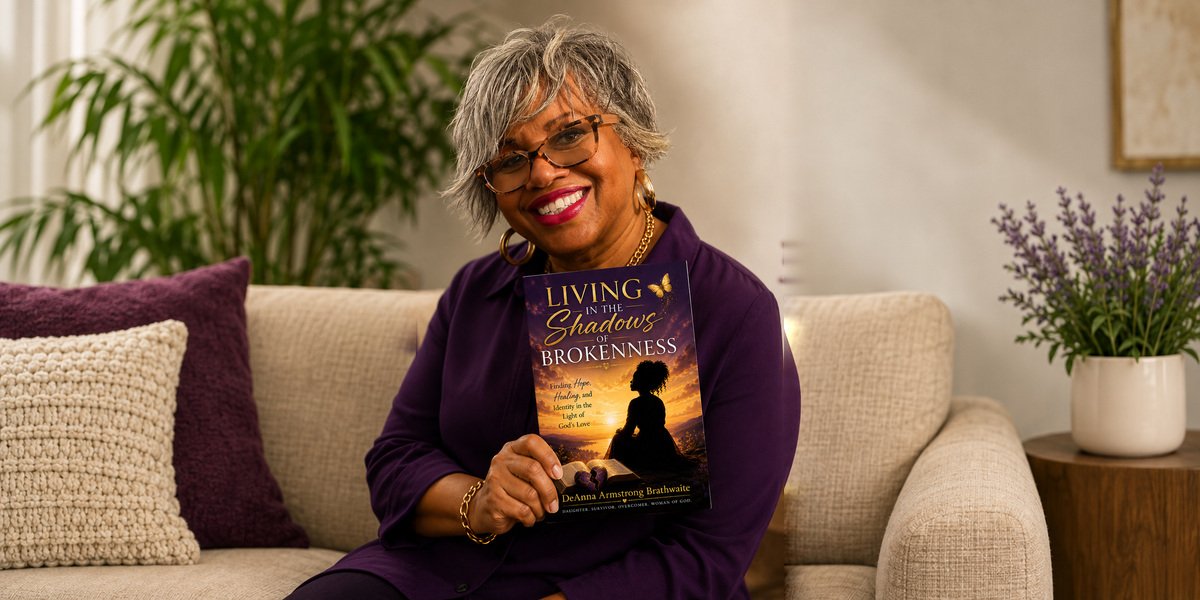
From Brokenness to Becoming: DeAnna Armstrong Brathwaite Inspires a Journey of Faith, Healing and Purpose

By: Lennard James

DeAnna Armstrong Brathwaite understands that some of life’s deepest wounds are the ones people cannot see. Behind a smile can be pain. Behind success can be struggle. Behind years of caring for everyone else can be a person quietly searching for healing of her own. Through faith, ministry, entrepreneurship, and now authorship, Brathwaite has made it part of her life’s purpose to remind people that their most difficult chapters do not have to become the conclusion of their story.

An evangelist, author, entrepreneur, and lifelong encourager, Brathwaite has built a ministry rooted in hope, healing, identity, faith, and the transforming love of God. Her message is particularly meaningful for women who have experienced seasons of brokenness, rejection, disappointment, insecurity, or feeling overlooked.

Her book, Living in the Shadows of Brokenness: Finding Hope, Healing, and Identity in the Light of God’s Love, brings that message to the page through a deeply personal examination of pain, spiritual restoration, and discovering identity through faith.

The book speaks to the person who may appear strong on the outside while privately carrying wounds from the past. Rather than allowing brokenness to become a permanent identity, Brathwaite encourages readers to confront what has hurt them, understand that healing is possible, and recognize that God can bring purpose out of painful experiences.

At the center of her message is a simple but powerful reminder. You are not forgotten. You are not broken beyond repair. You are still becoming.

Those words reflect a philosophy Brathwaite has developed not simply from study, but from decades of life experience.

She holds a Bachelor of Science degree in Religious Education and Psychology from Liberty University, an educational foundation that complements her years of ministry, mentoring, community involvement, and personal encouragement. Her writing combines biblical truth and theological reflection with the practical realities of relationships, disappointment, personal growth, faith, and restoration.

Long before becoming an author, however, Brathwaite was already listening to people’s stories.

For more than 40 years, she worked as a professional cosmetologist and entrepreneur. The salon chair became an unexpected extension of ministry. People arrived for beauty services, but conversations often revealed something much deeper.

Over the years, Brathwaite learned to see beyond outward appearances. She listened. She encouraged. She offered compassion. She encountered women from different backgrounds carrying private burdens that were rarely visible to others.

The experience reinforced an important truth: looking put together does not necessarily mean someone feels whole.

Her career also taught her discipline, perseverance, relationship-building, entrepreneurship, and service. Those lessons became part of the foundation for the work she does today. Just as cosmetology allowed her to help people feel differently about what they saw in the mirror, ministry and writing have allowed her to address something deeper: how people see themselves spiritually and emotionally.

That distinction is central to Living in the Shadows of Brokenness.

Brathwaite does not present brokenness as the end of a person’s identity. Instead, she invites readers to see healing as a journey in which God can meet people in their darkest places and transform pain into purpose. Through personal testimony, biblical principles, and heartfelt reflection, she explores what happens when people stop allowing yesterday’s wounds to dictate tomorrow’s possibilities.

Her work also challenges readers to consider the difference between merely surviving an experience and truly healing from it. Survival can get someone through a difficult season, but healing requires confronting wounds, rediscovering identity, and learning to move forward without remaining emotionally imprisoned by the past.

That journey continues in Brathwaite’s second book, All for His Glory: Living Redeemed, Walking by Faith, and Reflecting God’s Glory.

Where her first book explores the journey from wounded identity toward healing and redemption in Christ, her second asks an equally important question: What happens after healing?

For Brathwaite, restoration is not simply about feeling better. It is about living differently.

All for His Glory explores what it means to live redeemed, walk by faith, remain surrendered to the Holy Spirit, and allow a transformed life to become evidence of God’s grace. Together, the two books create a progression from brokenness to healing and from healing to purposeful Christian living.

Her message is grounded in the belief that transformation should extend beyond an individual moment. Healing can influence marriages, families, children, grandchildren, communities, and future generations.

That legacy is especially important to Brathwaite.

A native of Maryland’s Eastern Shore, she is a devoted wife, mother of four adult children, and proud grandmother who continues to cherish family as the foundation of her life. While she has spent decades serving others professionally and spiritually, she considers the legacy she leaves her family among her most important responsibilities.

She wants future generations to inherit more than memories of her accomplishments. She wants them to inherit faith.

That desire gives her writing a sense of purpose beyond simply telling her own story. Brathwaite is willing to speak about difficult experiences because she understands that transparency can become a bridge. When one person finds the courage to talk about healing, someone else may finally believe healing is possible for them too.

Her books ultimately go beyond the author herself.

Brathwaite does not want readers to remain focused on what she survived, what she accomplished, or even what she wrote. Through her life, ministry, and authorship, her desire is to direct people toward the faithfulness of Jesus Christ and the possibility of becoming whole through His love.

Living in the Shadows of Brokenness therefore carries a message for anyone who has ever wondered whether the damage is too great, the past is too painful, or too much time has passed.

Brathwaite’s answer is rooted in faith. Brokenness does not have to have the final word.

There can be hope after hurt, identity after confusion, purpose after pain, and light after the shadows.

And sometimes the beginning of transformation is simply believing that your story is not finished yet.

Available at: https://sites.google.com/view/deanna-armstrong-brathwaite-au/about-deanna.