By: Lennard James
DeAnna Armstrong Brathwaite understands that some of life’s deepest wounds are the ones people cannot see. Behind a smile can be pain. Behind success can be struggle. Behind years of caring for everyone else can be a person quietly searching for healing of her own. Through faith, ministry, entrepreneurship, and now authorship, Brathwaite has made it part of her life’s purpose to remind people that their most difficult chapters do not have to become the conclusion of their story.
An evangelist, author, entrepreneur, and lifelong encourager, Brathwaite has built a ministry rooted in hope, healing, identity, faith, and the transforming love of God. Her message is particularly meaningful for women who have experienced seasons of brokenness, rejection, disappointment, insecurity, or feeling overlooked.
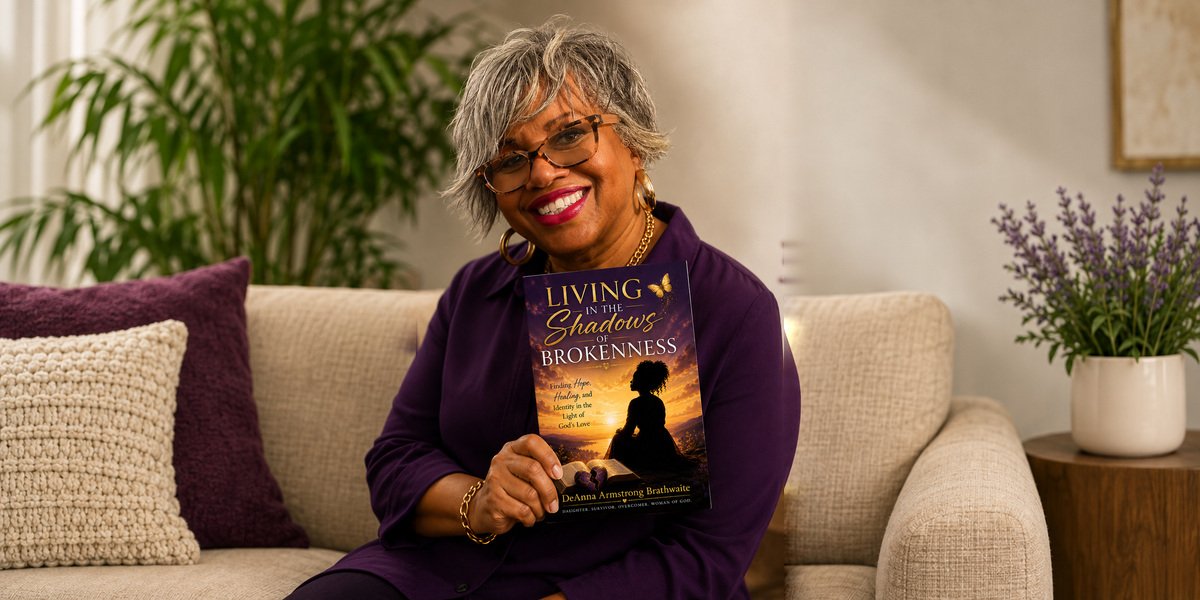
Her book, Living in the Shadows of Brokenness: Finding Hope, Healing, and Identity in the Light of God’s Love, brings that message to the page through a deeply personal examination of pain, spiritual restoration, and discovering identity through faith.
The book speaks to the person who may appear strong on the outside while privately carrying wounds from the past. Rather than allowing brokenness to become a permanent identity, Brathwaite encourages readers to confront what has hurt them, understand that healing is possible, and recognize that God can bring purpose out of painful experiences.
At the center of her message is a simple but powerful reminder. You are not forgotten. You are not broken beyond repair. You are still becoming.
Those words reflect a philosophy Brathwaite has developed not simply from study, but from decades of life experience.
She holds a Bachelor of Science degree in Religious Education and Psychology from Liberty University, an educational foundation that complements her years of ministry, mentoring, community involvement, and personal encouragement. Her writing combines biblical truth and theological reflection with the practical realities of relationships, disappointment, personal growth, faith, and restoration.
Long before becoming an author, however, Brathwaite was already listening to people’s stories.
For more than 40 years, she worked as a professional cosmetologist and entrepreneur. The salon chair became an unexpected extension of ministry. People arrived for beauty services, but conversations often revealed something much deeper.
Over the years, Brathwaite learned to see beyond outward appearances. She listened. She encouraged. She offered compassion. She encountered women from different backgrounds carrying private burdens that were rarely visible to others.
The experience reinforced an important truth: looking put together does not necessarily mean someone feels whole.
Her career also taught her discipline, perseverance, relationship-building, entrepreneurship, and service. Those lessons became part of the foundation for the work she does today. Just as cosmetology allowed her to help people feel differently about what they saw in the mirror, ministry and writing have allowed her to address something deeper: how people see themselves spiritually and emotionally.
That distinction is central to Living in the Shadows of Brokenness.
Brathwaite does not present brokenness as the end of a person’s identity. Instead, she invites readers to see healing as a journey in which God can meet people in their darkest places and transform pain into purpose. Through personal testimony, biblical principles, and heartfelt reflection, she explores what happens when people stop allowing yesterday’s wounds to dictate tomorrow’s possibilities.
Her work also challenges readers to consider the difference between merely surviving an experience and truly healing from it. Survival can get someone through a difficult season, but healing requires confronting wounds, rediscovering identity, and learning to move forward without remaining emotionally imprisoned by the past.
That journey continues in Brathwaite’s second book, All for His Glory: Living Redeemed, Walking by Faith, and Reflecting God’s Glory.
Where her first book explores the journey from wounded identity toward healing and redemption in Christ, her second asks an equally important question: What happens after healing?
For Brathwaite, restoration is not simply about feeling better. It is about living differently.
All for His Glory explores what it means to live redeemed, walk by faith, remain surrendered to the Holy Spirit, and allow a transformed life to become evidence of God’s grace. Together, the two books create a progression from brokenness to healing and from healing to purposeful Christian living.
Her message is grounded in the belief that transformation should extend beyond an individual moment. Healing can influence marriages, families, children, grandchildren, communities, and future generations.
That legacy is especially important to Brathwaite.
A native of Maryland’s Eastern Shore, she is a devoted wife, mother of four adult children, and proud grandmother who continues to cherish family as the foundation of her life. While she has spent decades serving others professionally and spiritually, she considers the legacy she leaves her family among her most important responsibilities.
She wants future generations to inherit more than memories of her accomplishments. She wants them to inherit faith.
That desire gives her writing a sense of purpose beyond simply telling her own story. Brathwaite is willing to speak about difficult experiences because she understands that transparency can become a bridge. When one person finds the courage to talk about healing, someone else may finally believe healing is possible for them too.
Her books ultimately go beyond the author herself.
Brathwaite does not want readers to remain focused on what she survived, what she accomplished, or even what she wrote. Through her life, ministry, and authorship, her desire is to direct people toward the faithfulness of Jesus Christ and the possibility of becoming whole through His love.
Living in the Shadows of Brokenness therefore carries a message for anyone who has ever wondered whether the damage is too great, the past is too painful, or too much time has passed.
Brathwaite’s answer is rooted in faith. Brokenness does not have to have the final word.
There can be hope after hurt, identity after confusion, purpose after pain, and light after the shadows.
And sometimes the beginning of transformation is simply believing that your story is not finished yet.
Available at: https://sites.google.com/view/deanna-armstrong-brathwaite-au/about-deanna.