Women's Journal

What Dante Nero Thinks Women Misunderstand About Men, and Why Empathy Has to Go Both Ways

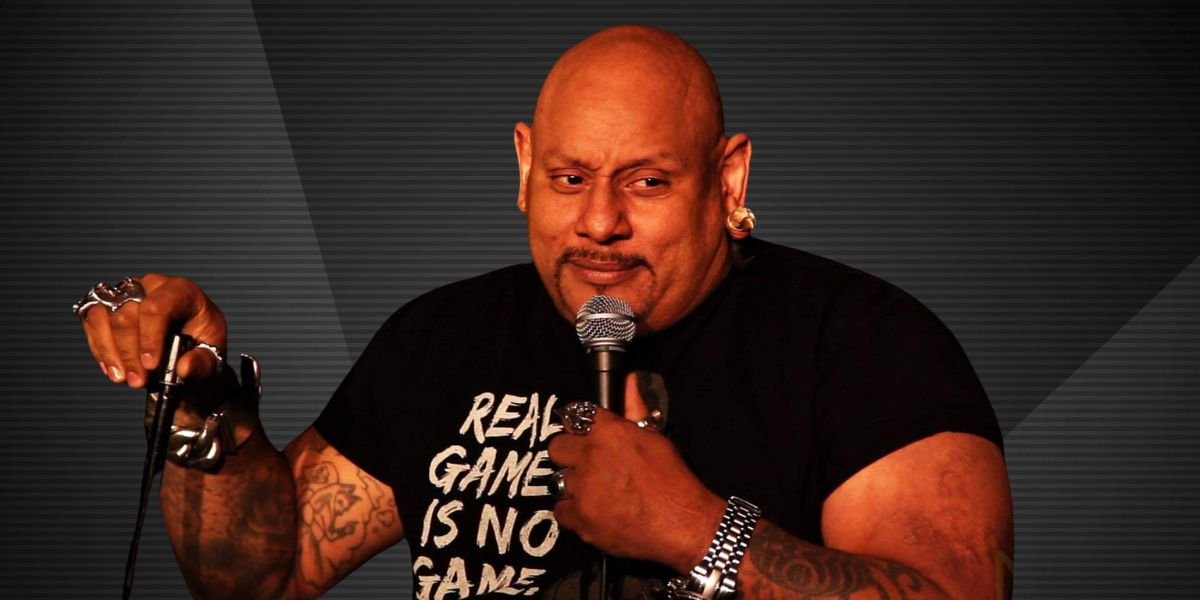
(The Man School 202 host has spent decades talking about relationships. His message to women is not that men are complicated, it is that they are often misunderstood in surprisingly simple ways.)

By Leah Bernstein

Dante Nero has spent much of his adult life listening to women talk about men.

Sometimes professionally, sometimes personally, and sometimes from a perspective few relationship commentators can claim.

Before becoming a comedian and the host of Man School 202, Nero spent roughly a decade working as a male exotic dancer. For years, he was surrounded by women talking candidly about attraction, relationships, disappointment and what they wanted from men.

Later came stand-up comedy, The Black Phillip Show with his close friend Patrice O’Neal, and eventually thousands of hours of conversations about relationships.

After all of that, Nero believes one of the biggest misunderstandings between women and men is surprisingly basic.

Men are often simpler than women think.

“They want to please,” Nero says. “They want their woman to be happy because if she’s not happy, he perceives it as a failure. But they don’t read minds.”

That last sentence carries much of his argument.

A man may know his partner is unhappy without understanding exactly what she needs him to do differently. He sees the emotional result but may miss the path that led there.

And when communication becomes expectation instead of explanation, both people can walk away feeling unseen.

For Nero, that is where many relationships begin getting unnecessarily complicated.

Different Doesn’t Have to Mean Opposed

Nero is not shy about saying that he believes men and women are different.

In fact, he thinks modern conversations about relationships sometimes become harder because people are uncomfortable acknowledging those differences.

His position is not that one side is better.

It is that men and women can experience the same moment differently, and understanding that may be more productive than demanding identical reactions.

That perspective has been central to his relationship work for years.

On The Black Phillip Show, Nero and O’Neal became known for blunt conversations about attraction and male-female dynamics. Today, with Man School 202, Nero says he is interested in bringing more balance to that discussion.

He wants men to understand women better.

He also wants women to understand what is happening on the other side of the conversation.

That requires something Nero considers essential to every healthy relationship:

empathy.

His personal philosophy is built around three words, Authenticity, Credibility and Empathy, or ACE.

The last principle is important because Nero has little interest in turning relationships into a competition.

If one person has to lose for the other to feel powerful, something is already broken.

Men Need Responsibility Too

Nero’s message is not simply that women need to communicate differently.

He places significant responsibility on men.

One of his strongest beliefs is that a man cannot expect a woman with a strong personality to become smaller simply because he feels uncertain about his own role in the relationship.

“If somebody has a stronger personality, you can’t ask them to be weaker,” Nero explains. His answer is to teach the man to become stronger in his own conviction.

That distinction matters.

Strength, in Nero’s philosophy, does not mean controlling a partner.

It means knowing who you are well enough that another person’s strength does not threaten you.

It means being able to communicate boundaries.

It means taking responsibility for the role you play in the relationship rather than demanding that somebody else compensate for what you have not developed.

And it means building character before expecting somebody else to build a life with you.

“Character is the most important thing about your value,” Nero says.

What a Decade Around Women Taught Him

Nero’s years as a male dancer also gave him an unusual perspective on the difference between attraction and relationships.

Attraction can happen quickly.

Relationships expose much more.

A person can be exciting without being dependable.

Confident without being emotionally secure.

Desirable without knowing how to communicate.

Nero believes both men and women sometimes confuse the qualities that create attraction with those required to sustain a partnership.

That is where the deeper work begins.

The questions change from Do I want this person? to Can we actually understand each other?

Can each person say what they need?

Can both people hear something uncomfortable without immediately becoming defensive?

Can a strong woman remain strong without the man interpreting it as a threat?

Can a man express leadership or conviction without treating his partner’s perspective as irrelevant?

Those are considerably more complicated questions than who should text first.

They are also the conversations Nero wants Man School 202 to explore.

Getting Out of the Men-versus-Women Trap

Relationship content online has increasingly divided audiences into camps.

Men explain what women are doing wrong.

Women explain what men are doing wrong.

Both sides collect examples proving their argument.

Nero believes the more useful question is what each side is failing to understand about the other.

He does not expect men and women to become identical.

He expects them to become better at communicating across the difference.

That is why the audience Nero envisions for Man School 202 is not exclusively male.

The show is primarily designed for men, he says, but also for “smart women that want to know what men really think.”

Because sometimes understanding a partner does not require agreeing with every thought he has.

It simply requires finally hearing what he is trying to say.

After decades spent studying people through nightlife, comedy, radio and relationships, Nero’s philosophy has become less about determining which gender is right.

It is about helping both people become better equipped for the relationship they say they want.

And perhaps that is why empathy remains one-third of his personal code.

Without it, men and women may spend years talking to one another while never really having the same conversation.

Connect With Dante Nero

Website: DanteNero.com
Instagram: @TheDanteNero
YouTube: Man School 202
Patreon: Man School 202
Rising Star Offers an Inside Look at How a Pop Music Career Takes Shape

By: Matthew Davis

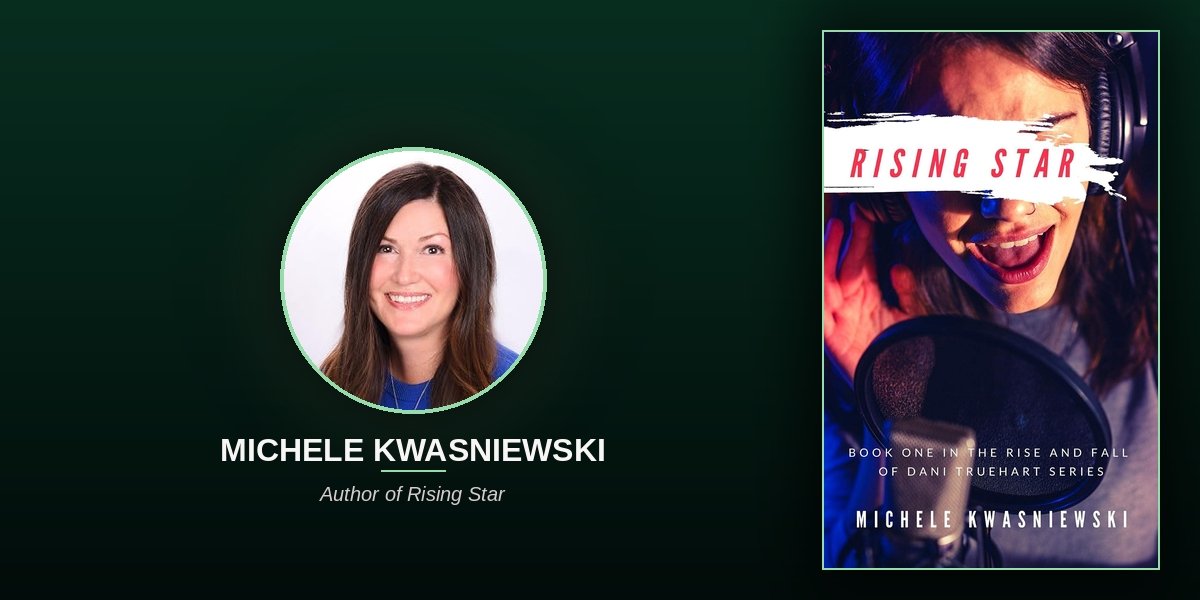
Most people who follow pop music careers see the finished product, the polished performances and the carefully managed public image and the chart positions and the fan base, and have little sense of the specific, often messy, frequently complicated human process that produced them. Michele Kwasniewski’s more than fifteen years in film and television production gave her an unusually complete view of that process, and Rising Star is her attempt to make it visible to a YA audience through the lens of Dani Truehart’s entry into the professional music world. What she makes visible is not a simple story of talent meeting opportunity. It is a more honest account of how a fifteen-year-old with real talent, genuine training, and a complicated family background gets caught up in a set of professional arrangements that are simultaneously her available path forward and a system in which her interests are not the primary concern of anyone other than herself.

The audition that changes Dani’s life is rendered with the specific texture of someone who has been present for many such moments in entertainment careers and knows how they actually feel from the inside rather than from the outside. Music producer Redman hears her first performance, and his amazement is immediate and genuine and also not uncomplicated, and the contract he offers represents real opportunity and real constraint in proportions that Dani is still developing the experience to evaluate clearly. Her dance/vocal coachMartin’s guardianship, which creates the conditions for the audition and for everything that follows, is an arrangement that serves his interests and Dani’s in ways that are genuinely aligned and also in ways that are not, and Kwasniewski maintains the ambiguity of that arrangement throughout rather than resolving it in either direction.

The character work surrounding all of this is what makes the novel more than an industry exposé in fiction form. Dani’s relationship with Sean is the emotional core of the book, the thing most entirely her own that the career is steadily working to displace. Her complicated feelings about her father, her bonds with her friends and her sister, her self-critical inner voice after performances, her genuine joy in her own talent, all of these give her the depth and the specificity that transforms a narrative about an industry into a story about a person who matters to the reader independently of the career she is pursuing.

Kwasniewski’s first-person narration for Dani is one of the novel’s most consistently impressive achievements. Dani sounds fifteen, thinks fifteen, processes the world with the specific sensitivities and the specific gaps in understanding of a fifteen-year-old who is intelligent and perceptive and still in the process of developing the experience that would allow her to read every adult situation she finds herself inside with the clarity she will eventually need. That authenticity of voice is the quality that holds everything else together, and that makes the reader’s investment in Dani’s ongoing story feel genuinely earned rather than simply claimed.

Kwasniewski has written a novel that earns its authenticity and its emotional weight in equal measure, and Rising Star is a genuinely accomplished beginning for a series that has every reason to matter.

If you want to understand what it actually feels like to be at the beginning of a pop music career and to be fifteen while that career is happening to you, Rising Star by Michele Kwasniewski is the most honest and most authentic account currently available in YA fiction. Head over to Amazon and get your copy today.

$250,000 Grants Expand Sports Opportunities for Girls

Gainbridge, Parity, and the Women’s Sports Foundation have awarded $250,000 to 32 organizations expanding sports opportunities for girls and women in 2026. The grants span 20 states, Washington, D.C., and Puerto Rico, with funding for adaptive sports, youth programs, STEM and leadership. Here is where the money is going and what makes this year’s cohort notable.

Key Takeaways

  • Gainbridge, Parity and the Women’s Sports Foundation awarded $250,000 across 32 organizations for 2026.
  • Recipients span 20 states, Washington, D.C., and Puerto Rico, with six states represented for the first time.
  • Four adaptive sports organizations received grants, alongside the program’s first grantee serving girls in juvenile justice facilities.
  • Most recipients will receive $5,000, while City Parks Foundation and Wildchild Athletics will receive $50,000 each.
  • Most funded events, projects and new programs are expected to take place in November 2026.

Gainbridge Assists Awards $250,000 to 32 Organizations

Gainbridge, Parity and the Women’s Sports Foundation announced the 2026 recipients of Gainbridge Assists Powered by Parity on Sept. 3, awarding $250,000 to organizations expanding sports and education opportunities for girls and women.

The fourth annual grant program is supporting 32 organizations working across athletics, education, leadership, youth development and community-based programs. The 2026 cohort represents the program’s widest geographic reach to date, spanning 20 states as well as Washington, D.C., and Puerto Rico.

The latest awards bring cumulative investment through the program to almost $700,000 across 87 organizations.

Recipients represent a broad range of sports, including soccer, basketball, volleyball, tennis, golf, cycling, flag football, ice skating, hockey, softball, boxing, rowing and skateboarding. Other grants support adaptive sports, equipment access, coaching and youth development.

The funding also extends beyond athletic participation. Several recipients are focused on STEM, robotics and engineering, while others combine sports with education, leadership and career development.

The expansion comes as access and leadership remain closely connected in women’s sports. Separate data on female coaching representation shows that growing participation and visibility do not necessarily translate into equal representation in leadership positions.

Sports Opportunities for Girls Expand Across 20 States

The 32 grant recipients are located across California, Florida, Maryland, Arkansas, Texas, Illinois, Washington, New York, New Hampshire, Kansas, Puerto Rico, North Carolina, Georgia, Indiana, Massachusetts, Tennessee, Oregon, Oklahoma, Idaho, Michigan and Wisconsin. Washington, D.C., is also represented.

Six states are participating in Gainbridge Assists for the first time in 2026.

Several organizations focus directly on making sports more accessible. Ability to Include in Florida received funding for adaptive soccer, while Bras for Girls in Washington received support tied to equipment access.

Other recipients will use their grants for programs in tennis, golf, soccer, volleyball, cycling, hockey and rowing.

Some initiatives pair sports participation with leadership development. Girls on the Run Greater Charlotte and Carolina Ascent received support for sports, leadership and confidence programming. New Youth Leaders in New York combines soccer with leadership, while Massachusetts-based Phambili Sport Impact Foundation connects soccer with leadership and career development.

Puerto Rico is represented by First Tee – Puerto Rico, which received funding for golf.

The geographic expansion allows the grant program to support organizations working in communities with different athletic, educational and youth-development needs rather than concentrating funding in a small group of markets.

Adaptive Sports and Juvenile Justice Programs Join the Cohort

Four adaptive sports organizations are included among the 2026 recipients: Ability to Include in Florida, Baltimore City Department of Recreation and Parks in Maryland, Special Olympics Idaho and Wisconsin Adaptive Sports Association.

The cohort also includes the program’s first grant to an organization serving girls in juvenile justice facilities.

Rising Phoenix Sports Program in New York received funding for youth development through sports for incarcerated girls. Its inclusion adds a population that had not previously been represented in Gainbridge Assists.

Several sports are also appearing in the grant program for the first time. Box United in Illinois received funding for boxing, RIVERSPORT Foundation in Oklahoma for rowing, and the College Skateboarding Educational Foundation in California and New York for skateboarding.

Other organizations are addressing barriers that can affect participation. New Shoe Day in Indiana received support for volleyball and shoe access, while West Boulevard Neighborhood Coalition in North Carolina received funding for well-being and holistic health programming.

The result is a cohort that approaches sports access through several routes, including adaptive participation, equipment, coaching, youth development and programs designed for specific communities.

STEM and Education Broaden the Scope of the Grants

Several 2026 recipients connect opportunities for girls with science, technology, engineering and mathematics.

Black Girls Do Engineer in Texas received a grant for engineering. Play Like a Girl in Tennessee received funding for STEM programming, while FIRST New Hampshire Robotics received support for robotics.

Snapfinger Elementary: Girls in Gear in Georgia received funding for a program combining STEM and racing.

Other recipients are linking athletics with education and career preparation. Life Beyond the Ball in Texas received support for sports, education and a leadership summit. Phambili Sport Impact Foundation’s grant covers soccer, leadership and career development.

The mix reflects a grant program that is not limited to sports participation alone. It also supports educational pathways connected to skills, leadership and future opportunities.

That emphasis on research and development also fits within a broader effort to address information gaps affecting women in sport. An expanded female athlete research network is similarly focused on improving the evidence and resources available to female athletes and the professionals who support them.

Other 2026 recipients include First Tee – Greater Wichita and First Tee – Puerto Rico for golf, Georgia Hi-Lo Trail for cycling, District Ice Rink Org for ice skating and Portland Plays Together for football and coaching.

A Place Called Home in California received funding for soccer, basketball and volleyball. Bearcat Diamond Academy in Arkansas received support for softball, while Dennis Tennis Serving Love and PowerPlay NYC received grants for tennis.

Two Organizations Receive $50,000 Special Grants

Most Gainbridge Assists recipients will receive $5,000 to fund an event, project or new program supporting girls and women through sports or education.

The $5,000 figure carries historical significance for the Women’s Sports Foundation. Billie Jean King founded the organization in 1974 with a $5,000 check, and the Gainbridge Assists grant amount was selected as a tribute to that starting point.

Two organizations will receive substantially larger awards in 2026.

City Parks Foundation in New York will receive $50,000 for tennis programming, while Wildchild Athletics in Michigan will receive $50,000 for flag football.

King, a Gainbridge ambassador, emphasized the role of community organizations in the announcement.

“These organizations are the ones doing the real work, and they are delivering a lasting impact in their communities,” King said.

The Women’s Sports Foundation says it has invested more than $115 million over its history to support girls and women through research, advocacy and community programming.

November Projects Mark the Next Stage of the Grants

Most recipients are expected to carry out their funded events, projects or new programs in November 2026.

Those projects will put the grant announcement into practice across a wide range of activities, from traditional team sports and adaptive athletics to STEM, robotics, leadership development, equipment access and career preparation.

The 2026 Gainbridge Assists cohort also shows how sports opportunities for girls can involve more than access to competition. The recipient list includes organizations addressing physical access, disability inclusion, education, leadership and the practical resources that allow girls and women to participate.

With $250,000 allocated across 32 organizations, the next measure of the program will come as recipients begin putting the funding into their communities later this year.

Frequently Asked Questions

How much funding did Gainbridge Assists award in 2026?

Gainbridge, Parity and the Women’s Sports Foundation awarded $250,000 across 32 organizations through the 2026 Gainbridge Assists Powered by Parity program. Most recipients will receive $5,000, while two organizations will receive $50,000 each.

How many organizations received grants for girls and women?

Thirty-two organizations were selected for the 2026 cohort. They operate across 20 states, Washington, D.C., and Puerto Rico, with six states represented for the first time.

What types of programs received funding?

The grants support soccer, tennis, golf, flag football, adaptive sports, boxing, rowing, skateboarding and other athletic programs. Funding also supports STEM, robotics, engineering, leadership, career development and equipment access.

How do the grants expand sports opportunities for girls?

The program expands sports opportunities for girls by funding organizations working on participation, adaptive athletics, equipment access, coaching and youth development. Some recipients also combine sports with education, STEM, leadership and career preparation.

When will the 2026 grant projects take place?

Most recipients are expected to carry out their funded events, projects or new programs in November 2026. The projects will vary according to each organization’s sport, educational focus or community needs.