Women's Journal

The 30-Second Morning Ritual Women Are Embracing for Better Gut Health, Energy, and Everyday Wellness


By: Matt Emma

For many women, mornings begin with everyone else’s needs. The alarm rings, lunches need packing, emails are already arriving, children are getting dressed, the dog wants to be fed, and somehow breakfast for yourself becomes an afterthought. By the time you’ve remembered your own health goals, half the day has already slipped away.

It’s one reason wellness experts are seeing a growing shift away from complicated routines and toward simple daily rituals that actually fit into real life. Instead of chasing the latest trend or filling kitchen cabinets with endless supplements, more women are looking for sustainable habits that support how they feel from the inside out.

That philosophy is one reason OMARA Wellness has caught the attention of healthcare professionals like Dr. Johanna López Ciro, a doctoral-level Registered Dietitian Nutritionist specializing in metabolic health, digestive disorders, hormone balance, and functional nutrition.

Rather than describing the brand as another wellness craze, she believes its popularity reflects something much more meaningful.

“I would not call OMARA viral,” she explains. “Viral implies trend, and trends fade. What I am seeing is something different. OMARA is gaining traction because it addresses a real clinical gap that women have been navigating without a sustainable solution.”

Women experience unique physiological changes throughout every stage of life. Hormonal fluctuations during the menstrual cycle, pregnancy, postpartum recovery, perimenopause, and menopause can all influence digestion, energy, cravings, and blood sugar regulation. Yet many women are still offered one-size-fits-all advice that often revolves around restriction or unrealistic expectations.

Dr. López Ciro believes those symptoms are rarely isolated.

“Digestive issues, bloating, blood sugar instability, and energy dips are not isolated symptoms,” she says. “They are interconnected, often rooted in gut health and metabolic resilience.”

Photo Courtesy: OMARA Wellness

That growing understanding has helped renew interest in one wellness ritual that has existed for generations: apple cider vinegar with lemon.

Long before wellness influencers made it popular, many cultures embraced apple cider vinegar as part of their daily routine. Modern research has since explored acetic acid, apple cider vinegar’s primary active component, for its potential role in supporting healthy post-meal blood sugar responses and digestion when incorporated into an overall healthy lifestyle.

As someone who has spent more than a decade translating nutrition science into practical habits, Dr. López Ciro says the challenge was never whether the traditional ritual offered promise. It was whether people could realistically stick with it.

“The benefits are real,” she says. “The challenge has always been adherence. The taste is harsh, the preparation is inconsistent, and busy mornings rarely leave space for it.”

That same frustration inspired OMARA co-founder and interventional pain physician Dr. Peyman Gravori to create the product in the first place.

“OMARA started with my own struggle,” he explains. “I was dealing with constant bloating, severe sugar cravings, and knew the gut was at the root of all of it.”

After experiencing benefits from the traditional apple cider vinegar and lemon routine, he found himself abandoning it because it simply wasn’t practical during busy mornings. Gummies didn’t provide the experience he wanted, while capsules felt disconnected from the ritual itself.

“I built OMARA because I lived the problem it solves,” he says. “The traditional ritual works, but the format breaks.”

Today, the powder-based formula combines apple cider vinegar, organic whole lemon fruit powder, vitamin D, and zinc in a drink designed to mix quickly with water. According to both experts, the simplicity is part of its appeal.

“The entire ritual takes about thirty seconds,” says Dr. López Ciro. “The morning is when your intentions for the day are still intact.”

That emphasis on consistency may be the biggest lesson of all.

Too often, women feel pressured to overhaul their lives overnight, cutting out favorite foods, following restrictive meal plans, or committing to routines that simply aren’t sustainable once real life gets in the way.

Dr. López Ciro encourages a different mindset.

“As a dietitian, sustainability is not a soft consideration,” she says. “It is the difference between a recommendation that works and one that becomes another abandoned bottle in the cabinet.”

Instead of viewing wellness as perfection, she recommends building a foundation through small habits: staying hydrated, prioritizing protein and fiber, moving your body regularly, and creating intentional morning rituals that are realistic enough to continue for months, not days.

Research examining vinegar consumption has found evidence that it may help support healthy post-meal glucose responses, although experts caution that results vary between individuals and should be viewed as one component of an overall healthy lifestyle rather than a standalone solution. That measured perspective is one both clinicians consistently emphasize.

When asked about incorporating OMARA into a daily routine, Dr. López Ciro is careful to set realistic expectations rather than promise dramatic transformations.

“This is a daily ritual, not a quick fix,” she says. “What I would not expect within thirty days is dramatic transformation.”

That honesty may be refreshing in an industry often filled with exaggerated claims.

Dr. Gravori echoes the same philosophy.

Photo Courtesy: OMARA Wellness

“Consistency matters more than dose,” he says. “OMARA is not a transformation; it is a foundation.”

Perhaps that’s why the conversation surrounding wellness seems to be changing. More women are questioning whether the next miracle product is really necessary, choosing instead to focus on habits that can quietly support them year after year.

Dr. Gravori also encourages women to remove guilt from the equation.

“Eat the pizza. Eat the pasta. Have the popcorn,” he says. “Life is a gift, and constant restriction is not health; it is anxiety dressed as discipline.”

It’s advice that aligns closely with Dr. López Ciro’s own philosophy of treating the root causes of health concerns instead of chasing symptoms. Through her practice, she encourages women to view wellness as a lifelong journey built on evidence, consistency, and compassion toward themselves.

“The morning ritual is not powerful because it is dramatic,” she says. “It is powerful because it is the first intentional act you do for yourself before the world begins asking everything of you.”

In a culture that often celebrates doing more, perhaps the healthiest trend isn’t adding another complicated routine at all. It may simply be giving yourself thirty intentional seconds each morning, a quiet reminder that caring for your own well-being deserves a place on the day’s to-do list, too.

Disclaimer: This article is for informational and editorial purposes only and should not be taken as medical, nutritional, or professional health advice. The statements in this article reflect the opinions and experiences of the individuals quoted and are not intended to diagnose, treat, cure, or prevent any disease. Results may vary from person to person. Readers should consult a qualified healthcare provider before starting any new supplement, wellness routine, or dietary change, especially if they are pregnant, nursing, taking medication, managing diabetes, experiencing digestive issues, or have an existing medical condition.
Latrece James Builds DOZCAPONE Into a Luxury Lifestyle Brand

By: Lennard James

The Vision Behind DOZCAPONE

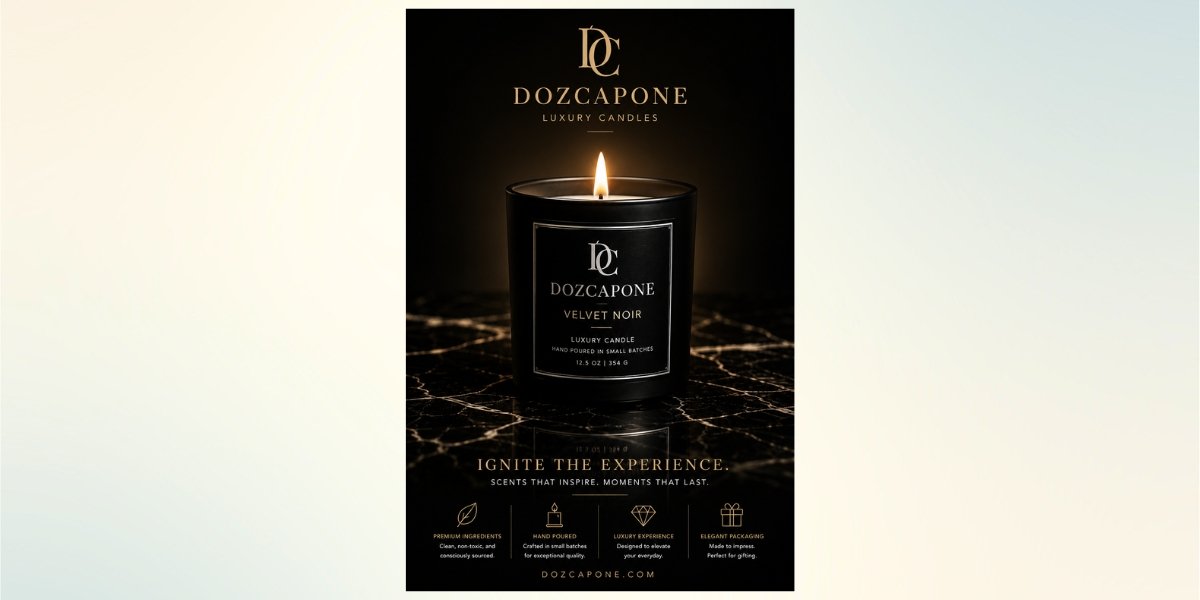
Luxury home fragrance buyers increasingly want more than a beautifully scented candle. They are seeking an experience that reflects their lifestyle, personality, and appreciation for quality. DOZCAPONE Luxury Candles, created by Latrece James, was born from that vision. The brand offers a premium candle collection built around elegance, craftsmanship, and memorable fragrance, with the goal of inspiring moments that last.

Guided by the brand’s signature philosophy, “Luxury Candles. Timeless Moments,” DOZCAPONE represents far more than home fragrance. It is a lifestyle brand built on sophistication, intentional living, and the belief that luxury should be experienced every day, not reserved for special occasions.

For creator Latrece James, DOZCAPONE was designed to become a legacy brand. Every candle reflects her passion for quality, refined aesthetics, and products that transform everyday spaces into luxurious environments. From the matte-black vessel to the carefully crafted fragrance profiles, every element has been thoughtfully curated to deliver a premium sensory experience.

What Makes Oil-Based Fragrances Different

DOZCAPONE’s appeal centers on its commitment to premium oil-based fragrances. Unlike traditional candles that often use lower concentrations of fragrance, DOZCAPONE uses expertly blended fragrance oils that produce a richer, more consistent scent throughout the life of the candle.

Oil-based fragrances offer several advantages. They provide a stronger and longer-lasting scent throw, distribute more evenly throughout the wax, and allow complex fragrance notes to unfold gradually as the candle burns. The result is a sophisticated aromatic journey similar to fine perfumes, giving customers a multidimensional fragrance experience from the first light to the final burn.

Inside the Velvet Noir Fragrance

One of DOZCAPONE’s signature fragrances, Velvet Noir, captures the brand’s identity through a carefully layered composition.

The experience begins with vibrant top notes of bergamot and black pepper. The fresh citrus brightness of bergamot awakens the senses, while black pepper introduces a subtle spice that adds depth and intrigue.

As the candle continues to burn, the fragrance evolves into heart notes of black rose, jasmine, and lavender. Black rose delivers richness and mystery, jasmine adds floral sophistication, and lavender brings a calming quality that encourages relaxation.

Finally, the fragrance settles into base notes of sandalwood, amber, vanilla, and musk. These warm notes create remarkable depth and longevity. Sandalwood provides creamy wood tones, amber contributes warmth, vanilla softens the blend with subtle sweetness, and musk leaves a smooth finish that lingers throughout the room.

This three-layer structure mirrors the craftsmanship found in high-end perfumery, so the scent evolves naturally rather than remaining one-dimensional throughout the burn.

Craftsmanship and Clean Burning

Every DOZCAPONE candle is hand-poured in small batches, which allows close attention to detail and careful quality control. This artisan approach supports consistency in fragrance distribution, burn performance, and overall presentation while maintaining the standards Latrece James set for the brand.

The company also prioritizes clean-burning and consciously sourced ingredients, producing candles that burn evenly while maximizing fragrance performance. Every component is selected with both quality and design in mind.

Turning Everyday Moments Into Luxury

DOZCAPONE is about more than fragrance. It is about creating moments. Whether entertaining guests, enjoying a quiet evening at home, relaxing after work, or celebrating a milestone, each candle helps shift the atmosphere toward warmth and calm.

The brand’s signature message, “Ignite the Experience,” reflects its mission to create emotional connections through scent. Research has long shown that fragrance can evoke memories, influence emotions, and shape the feel of a space. DOZCAPONE draws on that connection with fragrances that encourage customers to slow down and appreciate everyday living.

Luxury extends beyond the candle itself. DOZCAPONE’s packaging is designed to make each product a thoughtful gift for birthdays, anniversaries, weddings, holidays, corporate appreciation, or housewarming celebrations. Every detail, from the presentation to the fragrances, is meant to communicate refinement.

Under the leadership and creative vision of Latrece James, DOZCAPONE Luxury Candles continues to build its presence in the home fragrance space. By combining artisan craftsmanship, oil-based fragrances, considered design, and attention to quality, the brand aims to offer customers more than a candle. It offers a lifestyle centered on beauty, confidence, and intentional living.

As DOZCAPONE grows, its mission stays consistent, creating products that inspire and leave a lasting impression. Every candle tells a story, every fragrance creates a memory, and every flame reflects the vision of a founder committed to bringing timeless luxury into homes. Readers can find more on the DOZCAPONE website.

No Man Is Self-Made, Aarush Garg on the Women Who Shape Ambition, Leadership, and Success

By: Ethan Rogers

The idea of the “self-made man” has been celebrated for generations.

He is usually portrayed as independent, disciplined, and responsible for his own success. His story is told through long nights, personal sacrifices, difficult decisions, and the determination to continue when others would have stopped.

It is a compelling narrative. But Aarush Garg believes it is also an incomplete one.

Behind many people who achieve something meaningful, Garg argues, are people whose influence rarely makes it into the headline. They are the individuals who shaped values before there was success to celebrate, challenged bad decisions before they became permanent mistakes, and offered perspective during moments when ambition threatened to become something less constructive.

For many men, some important people in that story are women.

Mothers often introduce early lessons about discipline, responsibility, and character. Sisters can provide perspective that cuts through ego. Teachers recognize potential before a student sees it in himself. Mentors challenge assumptions. Friends offer honesty. Colleagues bring different approaches to leadership and problem-solving. Partners often see the private reality behind public ambition.

For Garg, recognizing those influences does not diminish individual achievement. It can make the story of success more complete.

“There’s a tendency to look at the person standing at the finish line and assume he got there alone,” Garg says. “I don’t believe that’s how life works. The people around you shape your standards, your discipline, the way you handle pressure, and even the way you see yourself.”

As a young entrepreneur and emerging leader, Garg has become increasingly interested in the human side of achievement: the relationships, values, difficult conversations, and personal influences that shape a person long before the public sees the result.

His perspective challenges a culture that often treats success as an individual performance rather than the outcome of numerous interactions, lessons, relationships, and moments of influence.

The Problem With the “Self-Made” Story

Success stories often become cleaner with time.

Years of uncertainty are reduced to a simple timeline. Failures become lessons. Doubts disappear from the final version. The people who provided encouragement, stability, criticism, or sacrifice can become footnotes, while the individual at the center of the story receives much of the credit.

Garg believes that version of achievement is too simple.

No one creates their own childhood environment alone. No leader teaches himself every early lesson. No entrepreneur develops perspective without being challenged by other people. Even highly independent personalities are shaped by the standards, expectations, examples, and relationships around them.

Some meaningful contributions happen years before anyone is paying attention.

A mother who teaches her son to honor his commitments may be shaping a future leader who refuses to break his word.

A teacher who recognizes potential may change the direction of a student’s life before that student has enough confidence to imagine a different future.

A mentor who asks a difficult question may prevent years of mistakes.

A friend who refuses to tolerate excuses may force someone to confront weaknesses that achievement alone cannot solve.

Those moments do not appear on résumés.

They still matter.

“People talk about networks once they become successful,” Garg says. “But your first network is your family, your teachers, the people who challenge you, and the people who believe in you before there is anything impressive to believe in.”

For Garg, however, this conversation should never reduce women to the role of emotional support for ambitious men. That would simply replace one outdated idea with another.

His point is broader.

Women are not important only because of what they contribute to a man’s success story. They are leaders, builders, professionals, thinkers, mentors, founders, teachers, and creators of their own stories.

Their influence should be recognized without limiting their identity to the effect they have on someone else.

Success Requires More Than Aggression

The traditional image of ambition often emphasizes a narrow collection of characteristics: confidence, speed, competition, conviction, toughness, and aggression.

Those qualities can have value. Garg does not dismiss them.

But he believes strength is more complicated than force.

Listening can be strength.

Patience can be strength.

Emotional awareness can be strength.

The willingness to reconsider a decision after receiving new information can be as valuable as the courage required to make that decision in the first place.

Leadership, in Garg’s view, requires knowing the difference between movement and progress.

Someone who only knows how to push forward can eventually become predictable. A leader who cannot listen can become isolated. A person who confuses stubbornness with strength may eventually damage the relationships and opportunities they are trying to build.

Different relationships introduce different perspectives, and those perspectives can interrupt patterns that a person may not recognize alone.

Strong leaders, Garg believes, do not build circles filled exclusively with people who agree with them. They value people who are willing to identify blind spots, question assumptions, and say what others may be too uncomfortable to say.

That requires humility.

For ambitious people, humility can be difficult to maintain because success often creates an environment in which agreement becomes easier to find than honesty.

The people who are willing to tell a leader the truth can become increasingly valuable.

The People Who Know You Beyond the Title

Professional achievement creates an unusual challenge.

The more visible a person becomes, the harder it can be to understand whether people are responding to the individual or to the perception surrounding them.

Titles change conversations.

Recognition changes behavior.

Visibility can affect relationships.

The people who knew someone before the accomplishments, recognition, or public confidence often hold a different kind of value. They remember an earlier version of the person. They know the uncertainty that existed before confidence. They have seen mistakes that never became public stories.

For young entrepreneurs and emerging leaders in particular, Garg believes those relationships can provide a necessary sense of perspective.

There is a difference between someone who celebrates your ambition and someone who helps shape it responsibly.

The second person may tell you that you are moving too quickly.

They may question a decision everyone else is praising.

They may remind you that achievement is not an excuse to neglect relationships or personal values.

They may be willing to have an uncomfortable conversation when silence would be easier.

Sometimes a valuable person in the room is not the person applauding.

It is the person willing to tell you the truth.

Garg believes many men can identify women in their lives who have played that role, not simply offering encouragement, but providing intelligence, criticism, leadership, accountability, and perspective.

That distinction matters.

Women should not be recognized only for being supportive. They should also be recognized for being challenging, ambitious, demanding, innovative, and independently successful.

Women Should Not Have to Be Invisible to Be Influential

There is an old saying that behind every successful man is a strong woman.

Garg understands the appreciation the phrase is intended to express, but he believes one word deserves more attention.

Behind.

Why behind?

Why not beside?

Why not leading?

Why not building something entirely of her own?

The conversation around women and success has evolved significantly, but cultural habits often take longer to change. Women are still frequently praised for sacrifice in ways that can unintentionally make their own ambitions appear secondary.

Garg believes appreciation should never come at the cost of individuality.

A woman’s value is not determined by what she does for a successful man. At the same time, a man should have enough maturity and self-awareness to recognize when women have contributed meaningfully to the person he became.

Both ideas can be true.

Recognition is not dependency.

Gratitude is not weakness.

For a generation growing up in a culture focused on personal branding and individual achievement, Garg sees value in acknowledging interdependence.

Social media often presents success as a solitary pursuit. The message is familiar: wake up earlier than everyone else, work while others sleep, trust nobody, need nobody, and build everything alone.

It can sound motivating.

It can also be misleading.

Meaningful organizations are built by people working together. Communities depend on relationships. Families depend on trust. Personal growth often begins with conversations that challenge the way someone sees himself.

Meaningful lives, like meaningful achievements, rarely exist in isolation.

A Different Definition of Power

At its best, power is not about dominating every room.

It is about being secure enough to learn from the people in it.

For Garg, leadership requires confidence balanced by self-awareness. Ambition without meaningful relationships can become isolation, while achievement without gratitude can eventually become entitlement.

The people around a leader matter because they influence who that leader becomes when nobody is watching.

For many men, women are central to that equation.

Not as accessories.

Not as background characters.

Not as a motivational quote beneath someone else’s photograph.

But as individuals whose intelligence, standards, sacrifices, criticism, leadership, and presence can alter the direction of another person’s life.

Garg believes the next generation of male leaders should be comfortable acknowledging that publicly.

“There is strength in recognizing who helped shape you,” he says. “Successful people should be able to look around and understand that their story includes other people. For a lot of men, some of the strongest influences in that story are women.”

Perhaps an important part of that belief is what it rejects.

It rejects the idea that gratitude makes a man appear less capable.

It rejects the idea that success must be lonely to be legitimate.

It rejects the belief that acknowledging another person’s contribution somehow reduces your own.

And it rejects the idea that women should have to remain invisible in order to be influential.

Beyond Recognition

Recognition matters, but Garg believes the conversation should extend further.

It is easy to celebrate women symbolically. It is more meaningful to listen to them, respect their ambitions, support their leadership, and recognize them as complete individuals rather than characters in someone else’s journey.

For young men developing their understanding of leadership, that distinction can be significant.

Respect is not demonstrated only through public praise. It appears in everyday decisions: who is listened to, whose perspective is taken seriously, who is encouraged to lead, and whether people are valued for their own ambitions rather than only for the support they provide to others.

The women who influence a person’s life may do so in completely different ways.

One may teach patience.

Another may demand higher standards.

Another may demonstrate resilience through her own example.

Another may challenge an assumption that had gone unquestioned for years.

Another may simply refuse to be impressed by a title.

Influence does not have a single form.

Neither does leadership.

Garg’s perspective is ultimately less about redefining success than expanding the way people understand it.

Achievement still requires discipline.

Ambition still matters.

Individual responsibility remains essential.

But none of those truths require pretending that a person develops in isolation.

People shape people.

A strong influence is not always the loudest. An important contribution is not always measurable. And the person standing in front of the world may owe more to those standing beside them than the world will ever know.

For Garg, understanding that reality is not a rejection of ambition.

It is a more mature version of it.

The myth of the self-made man has survived because it tells a simple story: one person, one vision, one journey, one victory.

Real life is rarely that simple.

Behind every achievement are lessons that began long before the achievement itself. There are people who challenged, encouraged, questioned, taught, corrected, and inspired.

For many men, women are among the powerful figures in that story.

The next step is not simply thanking them for standing behind successful men.

It is recognizing that many were never behind them in the first place.

They were beside them.

They were ahead of them.

They were leading their own journeys.

And sometimes, they were the ones who taught others how to begin.

Armira Kockinis Promotes Women’s Mental Health Through Tennis

Rising tennis player Armira Kockinis is using her growing profile in women’s tennis to promote women’s mental health awareness while continuing to compete. Her public message encourages young women athletes to speak openly about emotional well-being and recognizes mental wellness as an important part of athletic development.

Key Takeaways

  • Armira Kockinis is promoting women’s mental health awareness through her tennis platform.
  • She encourages young women athletes to discuss emotional well-being openly.
  • Her advocacy supports greater awareness of mental wellness in women’s sports.
  • She continues to pursue her tennis career while participating in mental health conversations.

Armira Kockinis is a rising tennis player whose competitive career has also become a platform for discussing mental health. As she continues to develop in the sport, she has used public appearances and interviews to encourage conversations about emotional well-being among young women athletes.

Her message centers on the importance of recognizing mental health alongside physical preparation. Rather than viewing emotional challenges as something to hide, Armira Kockinis encourages openness and communication.

While her results on the court continue to shape her athletic career, her willingness to discuss mental wellness has broadened public attention beyond tennis. Her advocacy has become part of her growing public profile as a young athlete.

Women’s tennis has featured increasing discussions about athlete well-being in recent years, with players at different levels speaking publicly about the importance of mental health. Armira Kockinis adds the perspective of a developing competitor encouraging younger athletes to prioritize emotional wellness, a conversation that aligns with broader discussions around women’s mental health self-care.

How Is Armira Kockinis Supporting Women’s Mental Health?

Armira Kockinis has spoken publicly about the importance of mental health while sharing her experiences as a competitive tennis player. She encourages young women athletes to recognize that emotional well-being deserves the same attention as physical conditioning.

Her public comments focus on creating an environment where athletes feel comfortable discussing challenges without fear of judgment. The message promotes awareness, communication and support rather than focusing exclusively on competitive results.

Her advocacy has attracted attention because it comes from a player who is still establishing her career. By speaking about mental wellness while continuing to compete, Kockinis demonstrates that conversations about emotional health can exist alongside athletic ambition.

The discussion does not replace the demands of training or competition. Instead, it presents mental wellness as one part of overall athlete development that complements coaching, practice and physical preparation.

Her Message to Young Women Athletes

Armira Kockinis encourages young women athletes to understand that asking for support is compatible with pursuing success in sport. She promotes honest conversations with trusted adults, coaches, teammates and family members whenever emotional challenges arise.

Her message focuses on awareness rather than medical advice. Mental health experiences differ from one individual to another, and professional support may be appropriate depending on personal circumstances.

Why Does Mental Health Matter for Young Women Athletes?

Young women athletes often balance demanding training schedules with school, family responsibilities and competition. These combined commitments can place significant emotional and psychological demands on athletes during important stages of their development.

Mental wellness contributes to confidence, concentration and resilience. Coaches, parents and sports organizations increasingly recognize that emotional health supports healthy participation in athletics and complements physical performance.

Public discussions involving women athletes can help normalize conversations about well-being without reducing the importance of competition. Armira Kockinis contributes to those conversations by encouraging young female athletes to speak openly about mental health.

Health professionals generally recommend that athletes seek appropriate support if they experience persistent emotional or psychological challenges. Open communication can help individuals recognize concerns early and connect with available resources.

Athletic success depends on more than technical ability and physical preparation. Emotional well-being can influence how athletes respond to setbacks, manage expectations and continue participating in sport over time.

How Is Tennis Helping Amplify Her Message?

As her visibility in women’s tennis continues to grow, Armira Kockinis has incorporated women’s mental health awareness into her public profile. Rather than limiting her public appearances to discussions of competition, she has used opportunities to encourage conversations about emotional wellness.

Her approach demonstrates how women athletes can use public attention to address issues beyond competitive performance. By discussing mental health alongside tennis, Kockinis contributes to conversations about women’s well-being in sport, echoing the achievements celebrated in women breaking barriers.

Her advocacy also illustrates how young competitors can participate in public awareness efforts while continuing to pursue athletic goals. Tennis remains central to her career, while mental health awareness has become an additional part of her public identity.

Balancing Competition and Well-Being

Competitive tennis requires consistent training, tournament participation and ongoing preparation. Managing those responsibilities while maintaining emotional wellness can present challenges for athletes at every level.

Armira Kockinis’ public comments encourage viewing mental health as an essential part of healthy athletic participation. Her message supports the idea that caring for emotional well-being complements, rather than conflicts with, competitive success.

Frequently Asked Questions

Who is Armira Kockinis?

Armira Kockinis is a rising tennis player who has gained attention for combining her competitive career with advocacy for women’s mental health awareness among young athletes.

Why is Armira Kockinis advocating for women’s mental health?

She encourages young women athletes to have open conversations about emotional well-being and promotes greater awareness of mental health as an important part of participating in competitive sport.

What message is Armira Kockinis sharing with young women athletes?

She encourages young women athletes to recognize that mental wellness deserves the same attention as physical health and that seeking support should be viewed as a positive step.

How does Armira Kockinis balance tennis and mental wellness?

Kockinis presents emotional well-being as an important complement to training and competition, encouraging athletes to care for both their physical and mental health.

What is Armira Kockinis known for?

She is known as a rising tennis player who is using her growing public profile to promote women’s mental health awareness while encouraging young women athletes to speak openly about emotional well-being.

How Sophia Gethers Is Healing Hearts and Empowering Women Through Faith, Mental Wellness, and Purpose

There are women whose success is measured by personal accomplishments, and there are women whose legacy is measured by the lives they help restore. Sophia Gethers belongs to the latter. As a mental wellness advocate, author, counselor, life coach, and community leader, she has devoted her life to helping women discover healing, embrace purpose, and step confidently into the future they were created to live.

Representing Ms. Fayette County Corporate America Georgia, Sophia is leading a movement that places emotional wellness, healthy relationships, spiritual growth, and community empowerment at the center of lasting transformation. Her work reminds women that healing is not a destination reserved for a select few. It is available to every woman willing to believe that her past does not determine her future.

Sophia’s professional foundation is built upon education, experience, and an unwavering commitment to serving others. Holding a Master of Science in Professional Counseling along with multiple coaching certifications, she combines evidence-based practices with compassionate leadership that allows women to feel understood, valued, and empowered.

As the founder of PETALS Women’s Organization and Freedom Zone Life Coaching, Sophia has created organizations that provide safe and supportive environments where women can heal emotionally, strengthen their confidence, and develop practical tools for personal and professional success. Her programs address the challenges many women silently carry while offering hope through education, accountability, and encouragement.

Her philosophy is simple yet powerful. Every woman deserves the opportunity to rewrite her story, regardless of where it began.

That belief has become the foundation of every initiative she leads.

Sophia has also become a published author whose books continue to inspire readers seeking personal growth and emotional freedom. Her transformational book, Unstuck and Unshakable, addresses the challenges of anxiety, depression, fear, and procrastination, encouraging readers to pursue lives rooted in confidence and purpose. Through practical strategies and authentic storytelling, she encourages readers to move beyond survival and begin living with intention.

Her second book, Building Stronger Relationships for a Lifetime of Love, reflects her passion for strengthening families and creating healthier relationships through communication, trust, and intentional growth. She understands that healthy communities begin with healthy relationships, and her work continues to provide valuable guidance for couples and families seeking stronger connections.

Sophia’s passion for elevating women extends beyond her own writing. She served as the compiler of Unapologetically Her, an inspiring anthology that brought together nine women who courageously shared their personal journeys while becoming published authors. Through this collaborative project, she helped women discover the power of owning their voices and embracing their unique stories without apology.

Faith remains at the center of Sophia’s leadership.

Recognizing that many people struggle with emotional wounds that also affect their spiritual lives, she developed the Stepping into Freedom Life Enrichment Program. This curriculum-based initiative provides participants with practical life skills, biblical principles, and personal development strategies designed to remove barriers that prevent individuals from fully experiencing the life God intended for them.

Through this program, countless participants have found renewed hope, deeper faith, and greater confidence as they navigate life’s challenges with resilience and purpose.

Photo Courtesy: Sophia Gethers

Sophia’s commitment to restoring families is equally evident through her work as a Certified SYMBIS Marriage Assessment Facilitator. By leading an intensive relationship development program, she equips couples with practical tools to strengthen communication, resolve conflict, and build marriages that flourish through every season of life.

Her work reflects a belief that strong women build strong families, and strong families strengthen entire communities.

Beyond individual coaching and counseling, Sophia continues to influence public conversations surrounding mental health and community wellness. As a member of the Fayette County Mental Health Advisory Board, she actively contributes to initiatives that improve emotional wellness resources while advocating for greater awareness and support throughout the community.

Her leadership has also been recognized through her selection as a Truist Foundation Fellow powered by the Watson Institute. This prestigious fellowship honors leaders whose innovative work creates measurable social impact while strengthening communities through sustainable solutions.

Sophia’s influence continues to grow through emotional wellness workshops presented for senior living communities, women recovering from trauma, youth leadership initiatives, churches, nonprofit organizations, and civic groups throughout Georgia. Her presentations combine professional expertise with practical guidance, leaving audiences equipped to make meaningful changes in their personal lives.

She also continues expanding her work in financial literacy, family support, leadership development, and community empowerment, recognizing that emotional health and economic stability often work together to create lasting transformation.

Those who encounter Sophia quickly recognize that her greatest gift is helping others believe in themselves again. She speaks with authenticity because she has walked through adversity herself. She leads with compassion because she understands the courage required to begin healing. Most importantly, she inspires hope because she believes every woman possesses extraordinary potential waiting to be uncovered.

At the heart of everything Sophia does is a deeply personal promise made to her late mother. That promise continues to guide her mission of creating environments where women and children feel safe, valued, encouraged, and fully equipped to build lives filled with purpose.

As Ms. Fayette County Corporate America Georgia, Sophia Gethers represents the very best of servant leadership. She demonstrates that true beauty is reflected in compassion, true influence is measured through service, and true success is found in helping others rise.

Her journey continues to inspire women to embrace healing, celebrate their worth, and pursue lives defined not by past pain but by limitless possibility.

Sophia Gethers is building more than programs and organizations. She is building hope. She is building confident women. She is building stronger families. Most importantly, she is building a legacy that will continue transforming lives for generations to come.

Disclaimer: This article is for informational and inspirational purposes only. It is not intended to provide medical, mental health, counseling, relationship, financial, legal, or spiritual advice. Readers experiencing anxiety, depression, trauma, relationship concerns, or other personal challenges should seek guidance from qualified professionals, licensed healthcare providers, counselors, or appropriate support services. Any personal growth, wellness, relationship, or healing outcomes may vary based on individual circumstances.