Women's Journal

Women Led Devil Wears Prada 2 Becomes a Brand Powerhouse

The Devil Wears Prada 2 has moved beyond the usual sequel conversation and into a wider brand story for U.S. entertainment. The film brings back Meryl Streep, Anne Hathaway, Emily Blunt, and Stanley Tucci, giving 20th Century Studios a rare mix of star familiarity, fashion appeal, and audience memory tied to one of the more enduring workplace films of the 2000s.

The sequel arrives at a time when studios continue to look for recognizable stories that can still feel fresh in theaters. Rather than relying on spectacle alone, the film is built around character return, fashion identity, workplace tension, and the public’s long memory of Miranda Priestly, Andy Sachs, Emily Charlton, and Nigel Kipling.

The women led center of the film has shaped much of its public attention. Streep’s Miranda remains the sharp face of authority at Runway. Hathaway’s Andy returns with more experience and a different relationship to the media world. Blunt’s Emily is no longer simply the high strung assistant from the original story, giving the sequel a new angle around career movement and status.

That structure gives the film a clear hook. It is not just a return to a popular title. It is a return to characters who now stand in a changed fashion and media business, where influence, advertising, legacy magazines, and personal branding carry different weight than they did when the first film reached theaters.

The Returning Cast Gives the Campaign Its Center

The sequel’s campaign benefits from a cast reunion that audiences can understand quickly. Streep, Hathaway, Blunt, and Tucci are not being used as distant references to the original film. They are the center of the new release, which gives the sequel an immediate connection to viewers who remember the first movie and those who discovered it later through streaming, clips, and fashion coverage.

David Frankel returned to direct, while Aline Brosh McKenna returned to write the screenplay. That continuity matters because the first film’s appeal came from tone as much as plot. Its humor was dry, its workplace scenes were sharp, and its fashion setting gave the story a polished surface without removing the pressure felt by the characters.

The new film also includes Kenneth Branagh, Simone Ashley, Justin Theroux, Lucy Liu, B.J. Novak, Caleb Hearon, and Helen J. So. Those additions expand the world without pushing the returning cast out of view. The result is a sequel that appears designed to keep the original emotional frame while giving new performers room to shape the updated media setting.

The cast’s public appearances have also strengthened the movie’s visibility. Fashion premieres, interviews, and red carpet moments have kept the title active across entertainment and style coverage. For a film centered on image, work, and taste, the promotional cycle has become part of the product itself.

That is one reason the sequel has become a brand story. The movie does not depend only on the theater screen. It travels through photos, wardrobe analysis, cast conversations, magazine coverage, and social media discussion around every visible detail.

Runway Returns in a Changed Media Market

The original Devil Wears Prada followed Andy Sachs as she entered a demanding magazine workplace run by Miranda Priestly. The sequel uses that same world but places it inside a more complicated media business. Print authority, luxury advertising, digital attention, and personal profile now sit closer together than they did nearly two decades ago.

That shift gives The Devil Wears Prada 2 a built in reason to return. Runway is not presented as a frozen symbol from the first film. It becomes a business facing pressure from a different era. Miranda’s authority remains central, but the forces around her have changed.

Andy’s return carries its own commercial appeal. Viewers who remember her as an ambitious outsider now meet her with more professional weight. That development allows the film to revisit a familiar character without simply repeating her first journey.

Emily’s changed position also gives the sequel a sharper business angle. Her rise from assistant to a figure linked to luxury branding reflects one of the film’s strongest shifts. The character who once appeared trapped inside Miranda’s system now has influence of her own, creating a different balance between the women at the center of the story.

This is where the sequel finds its strongest news feature angle. The movie is not only trading on nostalgia. It is using nostalgia as an entry point into a story about brand power, career identity, and the changing economics of style media.

Fashion Turns the Film Into a Wider Brand Moment

The Devil Wears Prada 2 has a built in advantage that many sequels do not have: every outfit can become a headline. The fashion is not decoration. It is a storytelling tool and a promotional engine.

Costume design has been a major part of the public conversation around the film. Viewers are not only watching what the characters say. They are watching what Miranda wears, how Andy’s look has changed, how Emily presents her new status, and how Nigel’s style continues to signal experience and taste.

That visual focus gives the movie a longer media life. A single trailer frame, premiere look, or wardrobe detail can produce fresh coverage. In a crowded entertainment market, that matters. The film’s fashion language creates a stream of visible moments that can circulate before and after opening weekend.

The sequel also benefits from the way luxury and accessible fashion coverage now overlap online. A designer piece, a bag, a coat, or a tailored look can move from film coverage into shopping stories and social media posts. That gives the movie a reach that extends beyond traditional entertainment reporting.

For brands, the appeal is clear. The Devil Wears Prada 2 connects fashion with character, celebrity, workplace identity, and audience memory. Few studio releases can create that kind of crossover without forcing it. This sequel already had the cultural vocabulary in place.

The film’s title alone carries style recognition. Miranda Priestly’s name still signals authority. Andy’s transformation still signals career tension. Emily’s sharp presence still signals ambition and pressure. The sequel turns those associations into a fresh promotional cycle.

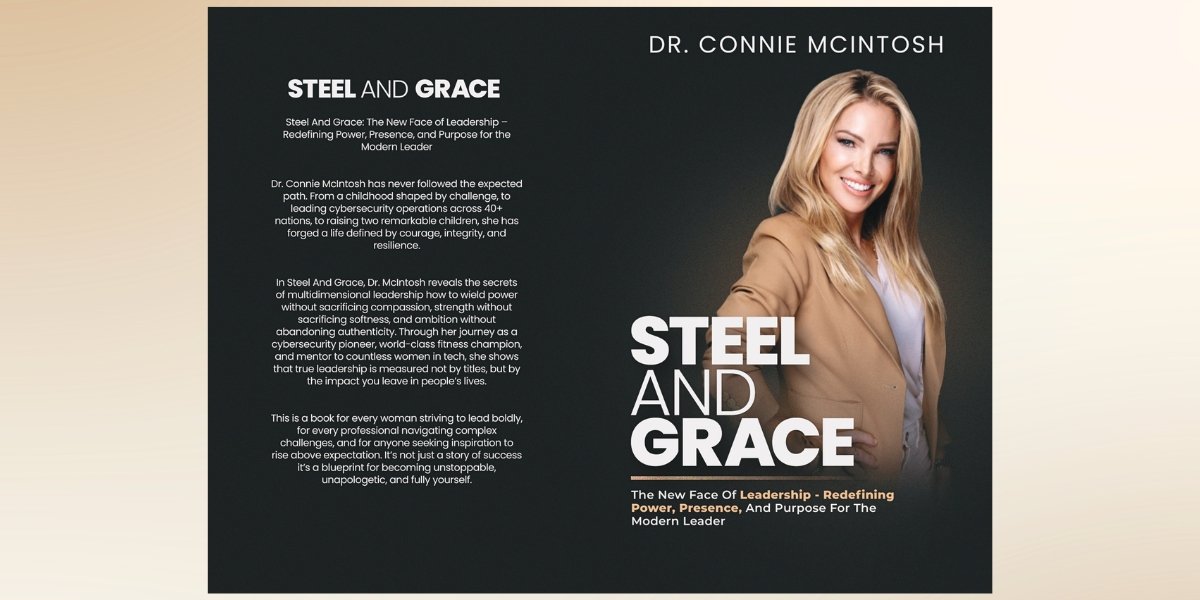
The Steel of a Mother, The Grace of a Leader: How Dr. Connie McIntosh Redefined Success

The world loves to tell women that they must choose. Choose between career and family. Between ambition and presence. Between the boardroom and the bedtime story. Dr. Connie McIntosh heard that message. She rejected it completely. Her new memoir, Steel And Grace, offers no apology for a life lived in full color. She is a mother of two children who both completed higher education degrees. She is also a global security executive who led operations across forty countries. She did not balance these roles. She integrated them. And in doing so, she redefined what success looks like for working parents everywhere.

For most of her career, Dr. McIntosh heard the same question whispered in worried tones. How can you do it all? She never claimed to do everything. She claimed something more honest. She chose what mattered season by season, decision by decision, without ever sacrificing her core identity. Her children never doubted that they came first. Her teams never doubted that she had their backs. The secret, as she reveals in Steel And Grace, is not balance. Balance suggests a perfect scale that never tips. Integration accepts that life tips constantly. You simply learn to tip with it.

Her mornings often began in darkness. She trained her body before sunrise because fitness was not a hobby. It was her anchor. After a workout, she prepared her children for school, packed lunches, and asked about homework. Then she stepped into a world of classified threats, global incidents, and high-stakes decisions. She did not transition from mother to executive. She remained at all times. One identity did not pause for the other. This is integration. Her children saw their mother leave for meetings where she protected systems of national interest. They also saw her return, tired but present, ready to listen, to guide, and to love.

Steel And Grace captures these quiet moments with aching honesty. Dr. Connie McIntosh writes about the guilt that followed her on days when work demanded more than she wanted to give. She writes about the pride she felt watching her children grow into compassionate, independent adults. She never hid the struggle. She let her children see her exhaustion, her doubts, her determination. In return, they learned something that no school could teach. They learned that strength does not require hardness. They learned that a mother can lead a global security operation and still cry at a school play.

Her children did not suffer from her ambition. They benefited from it. They watched her navigate male-dominated rooms without losing her softness. They saw her mentor young women who had no one else to turn to. They observed her handling crisis after crisis with a calm that came from years of discipline, both mental and physical. And when they faced their own challenges, they remembered their mother. She was the one who never gave up. She was the strongest person they ever knew.

The book challenges the popular myth that working mothers must feel constant guilt. Dr. McIntosh does not pretend that guilt has disappeared. It visited her often. But she refused to let it make decisions for her. She asked herself a better question. Not “Am I doing enough?” but “Am I present when it truly matters?” She attended science fairs. She helped with homework. She took her children to their sporting events. She also missed some things. She admits this openly in Steel And Grace. Perfection was never the goal. Presence was.

Her leadership style at Ericsson and across the global cybersecurity community reflected her parenting philosophy. She led with empathy instead of ego. She created psychological safety for her teams. She encouraged vulnerability and transparency. Colleagues noticed that she treated her staff the way she treated her children. With high expectations and even higher support. With clear boundaries and endless encouragement. She often said that if she could lead her children with love and strength, she could lead anyone. Her results proved her right.

Dr. Connie McIntosh earned recognition as one of the Top 100 Women in Cybersecurity. She received the Black Unicorn Award at Black Hat. She speaks at global conferences like GITEX, Disobey, and the World Science Festival. Yet her proudest achievement remains her family. Her children did not just survive her career. They thrived because of the example she set. They learned that a woman does not have to shrink to be loved. She can take up space. She can command rooms. She can protect nations. And she can still be the softest place for her family to land.

Steel And Grace speaks directly to every working parent who has ever felt torn. It offers no easy answers. It offers something more valuable. A true story of a woman who refused to choose. A woman who showed up, again and again, for her children and her calling. Her voice in the memoir is steady, honest, and deeply human. She does not lecture. She shares. And in sharing, she gives permission to every reader to stop chasing balance and start living with integration.

The book has already found its way to readers across Amazon and all major online retailers as well as bookstores worldwide. Early responses highlight how rare it is to find a leader so willing to reveal the messy, beautiful reality of a full life. Dr. McIntosh does not claim to have cracked a code. She simply lived her truth and wrote it down.

She is not finished. She continues to lead, to speak, and to mentor. Her next chapter remains unwritten. But one thing is certain. Whatever comes next, she will carry it with steel in her spine and grace in her heart. Her children will watch. The world will watch. And another generation of working parents will find courage in her example.

Steel And Grace by Dr. Connie McIntosh is available now. Pick up your copy at Amazon or any major retailer. Let this memoir remind you that you do not have to choose between who you love and what you build. You can have both. Fully. Freely. Fiercely.

Photo Courtesy: Dr. Connie McIntosh

Eleven Women. Eleven Stories. One Movement That Refuses to Stop Rising.

By Alena Wiese

There is a moment in most anthologies when the collective voice breaks down, when one chapter sounds like the next, when the energy flattens, when you feel the editorial hand smoothing everything into sameness. Alpha Queens Rising: Where Purpose Meets Power never reaches that moment.

It is a book of eleven distinctly different women, writing from eleven distinctly different wounds and victories, and it shows on every page. The anthology has reached readers across the country since publication and was recently featured on a Times Square billboard in New York City. For a debut collective with no single celebrity name on the cover, that kind of visibility is extraordinary.

We went into the pages to find out why. What follows is the story of each of the eleven women who built it.

“This is not a book project. It is a living legacy.”

Karissa Adkins

Karissa Adkins

CEO & Founder, The Alpha Queen Collective® | Identity Engineer | Movement Founder

Karissa Adkins opens the book with a line that leaves no room for comfortable distance: “I wasn’t born into ease. I grew up in chaos.” She was a teen mom fighting for stability. She survived abuse. She lost her mother. She walked away from a marriage that no longer aligned. In her telling, each of those chapters was not a derailment. It was preparation.

As the CEO and Founder of The Alpha Queen Collective® and creator of the 10 Universal Laws of Iconic Leadership, Adkins built her framework not from a business school curriculum but from the lived experience of rebuilding herself from the ground up, repeatedly. Her methodology, The Alpha Queen Activation System, is rooted in identity reconstruction and what she calls sovereign leadership, leading from the inside out, not the outside in.

She is also the architect of this entire project. When the foreword describes her as someone who “doesn’t motivate, she activates,” it is not marketing language. It is a structural fact about how this book came to exist.

Tiffany Lukasiewicz

Founder, Lioness Alchemy Collective

Tiffany Lukasiewicz was the girl who learned early that being too much, too loud, too energetic, too present, drew pain. Dyslexia made school a daily humiliation. A relationship that required her to stay small nearly erased what was left of her voice.

Her chapter, “Stand Tall. Roar Loud. Live Fierce,” is a reclamation narrative that does not flinch. As the founder of the Lioness Alchemy Collective, Lukasiewicz has built her work around helping women recover the version of themselves that learned to disappear. She knows that territory intimately, having mapped it by living through it.

“There is a difference between loving someone and losing yourself for them. I didn’t know that yet.”

Tiffany Lukasiewicz

Traci Coven

Founder, Inner Game Performance

A sharp pop. A fractured wrist. A 17-year-old point guard who had built her entire identity around the game, suddenly unable to play. Traci Coven’s chapter begins at the moment her external identity collapsed, and chronicles what happened when she tried to replace it with control over food and body instead.

Her path through an eating disorder and into recovery, and then into a career as the founder of Inner Game Performance, is not told as a triumphant arc. It is told with the honest acknowledgment that performance culture, whether in sports, in business, or in life, can disguise dysfunction as discipline. Her work now is helping others recognize the difference. She dedicated her chapter to the memory of her cousin Michele.

Larissa Reid

Founder, In The Black Business Services | 2023 NAACP Bakersfield Business of the Year

When you meet Larissa Reid, you see calm confidence. What you don’t see is what it took to build it: twins born at 25 weeks, a near-death experience from placenta accreta, years of financial chaos that she quietly learned to turn into expertise, and a grandmother who taught her numbers through discount-rack math games.

Reid is an award-winning entrepreneur and the founder of In The Black Business Services, a national boutique firm handling bookkeeping, payroll, tax preparation, and year-round tax strategy for small businesses and nonprofits. She owns her firm’s first building, with a content studio upstairs and a weekend pop-up space for local vendors. She built all of it while raising five children and surviving circumstances that would have stopped most people entirely.

“You don’t have to do this alone.”

Larissa Reid

Jennifer Jorgensen

Suicide-Prevention Advocate & Program Creator

Jennifer Jorgensen’s chapter is the hardest to read and the most necessary. She is a mother who recognized the warning signs in her daughter, sought help from every available system, was dismissed at every turn, and received the call no parent should ever receive.

What she did next is the story. Rather than let tragedy become the ending, Jorgensen built a mission: to ensure that no other parent encounters the silence, the dismissal, and the systemic failure that cost her child her life. Her work as a suicide-prevention advocate is not theoretical. It is built from the wreckage of the thing she could not prevent, and from the fierce determination that it will not happen to someone else’s family without a fight.

Sarah Bouse, FNTP

Creator, The ASCEND Method™ | Functional Nutritional Therapy Practitioner

Sarah Bouse spent years doing what many women are taught to do: push through, stay quiet, and assume suffering is normal. Fatigue followed her through childhood and adolescence. Symptoms were dismissed as inconveniences. Then her body drew a hard line.

“What makes Sarah a leader worth following is not that she mastered health. It’s that she had to fight for it.”

Stefanie Mendoza

Owner, Modern Painting | President, Elite Referral Networking Omaha

Stefanie Mendoza’s chapter title says it plainly: “Forged, Not Fixed.” She was a teenager who learned survival in an unstable household, stepped away from school, drifted into chaos, and then made a choice to stop. She earned her GED. She reclaimed her direction. She became a mother and decided her choices were no longer just about survival. They were about legacy.

She co-founded a painting company, watched it rise and collapse, and in 2019 relaunched Modern Painting from the ground up. Today she runs an established residential and commercial painting business, is a mother of four, and serves as President of Elite Referral Networking Omaha. She leads with humor, honesty, and what she describes as unapologetic drive. Her life, she says, is proof that perfection is not the prerequisite for leadership. Courage is.

Samantha Rambo, FNP-C

Founder, Wellness for Any Body™ | Family Nurse Practitioner

Samantha Rambo did not start her healthcare career with a calling. She started it because childcare cost more than she could earn anywhere else, and working as a CNA let her keep her daughter safe, fed, and warm. Then a patient changed everything.

“She refused to accept a system that fails the vulnerable, and chose instead to rise and rebuild it from the inside out.”

Leanne Harrell-McCoy

Leadership & Movement Mentor

Leanne Harrell-McCoy was a woman defined by motion, a leadership and movement mentor who led by example, pushed limits, and showed others what was possible. Then she grabbed a laundry basket, her feet tangled beneath her, and she hit the tile floor. Five spiral fractures. Femur shattered from the kneecap upward. No weight-bearing. No walking. Months of stillness for a woman whose identity was built on movement.

Her chapter, written from the floor of that experience, is about what happens to a leader when the thing they led with is taken away. What Harrell-McCoy found in that stillness was not weakness. It was a version of strength she had never needed to access before: quiet, unseen, and ultimately more durable than anything she had built in motion.

Kay Spears, MS, CCN, CNS

Functional Nutritionist | Brain–Gut Healing Practitioner

Kay Spears was the dyslexic child who believed she was not smart enough. Letters scattered. Numbers flipped. She was moved from school to school, pushed into remedial classes, labeled and relabeled. She learned that invisibility was safer than being seen struggling. She froze mid-sentence reading aloud once, heard the classroom laugh, and decided silence was protection.

Decades later, after a three-year collapse into vertigo that dismantled her professional life, Spears rebuilt herself through the very science she now teaches. She is a functional nutritionist focused on root-cause brain-gut work, maintaining a global virtual practice and leading retreats with her husband, Chef Andrew. Her own recovery shaped the framework she now offers to clients.

“She rose from academic struggle and a three-year collapse to rebuild her professional life around the science of healing.”

Angel Cottrell

CEO & Founder, Apollo Consultancy Group

By 27, Angel Cottrell had already founded and led a multi-million-dollar nonprofit in Santa Barbara that served people with severe developmental disabilities. She created supported-living homes, launched a state and federally licensed day program, recruited and led teams, and shifted systems, all without money, education, or a roadmap. Only passion, grit, and what she calls an unshakable calling.

Then her 30s arrived and dismantled everything. Her business collapsed. Her support system vanished. The life she had built fell apart faster than she could process. Angel Cottrell’s chapter is about what she built from that wreckage: Apollo Consultancy Group, a strategic consulting and coaching firm for CEOs, founders, and executives. Her philosophy, forged in total collapse, is direct: to experience significant change, you must change significantly. She teaches embodiment over performance. She teaches leaders to build businesses that are alive.

What Eleven Stories Build Together

What is striking about Alpha Queens Rising, read chapter by chapter, is not the consistency of the stories. It is the consistency of the quality of survival. These are not women who had easier paths and chose well. These are women who had hard paths and chose to keep building anyway. A fractured femur. A daughter lost to a system that failed her. A business collapsed twice. A body that stopped working. A childhood spent believing she was broken.

The book has reached readers across the country since publication, appeared on a Times Square billboard, and donated $1,000 to FITGirl Inc., a Nebraska-based nonprofit building confidence and resilience in girls. Those are the external markers. The internal ones are in the pages.

Eleven women. Eleven different definitions of what it looks like to rise. One framework that says purpose is more durable than pressure, and a readership that, week after week, suggests a lot of women agree.

Alpha Queens Rising: Where Purpose Meets Power is available in Kindle and print formats on Amazon.