Women's Journal

How Martha Retallick Turned a Bare Yard Into a Living Lesson on Water, Wildlife, and Urban Design

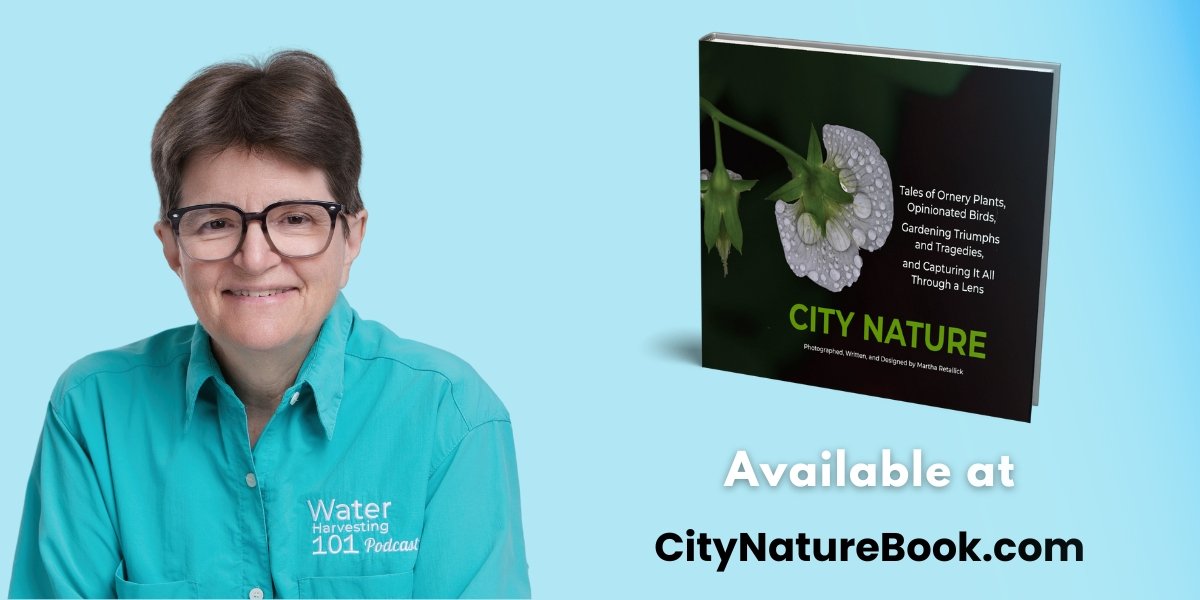
By: Cameron Ellis

A Palette Made of Rock and Possibility

When Martha Retallick bought her home in 2004, the outdoor space was more suggestion than garden. The front yard was a stretch of crushed rock baking under the sun. The back was overrun with Bermuda grass, a plant considered invasive in the region. It did not look like the start of a long term project. Then a friend looked at the empty front yard and said, “That’s your palette.”

That moment shifted how Martha saw the space. Instead of seeing what was missing, she saw what could be created. Her vision became simple but ambitious. She wanted to blend nature with the built environment and see how a desert yard could grow into something that felt alive rather than forced.

Two decades later, that idea is still unfolding. Her front yard now features ironwood and mesquite trees that thrive without irrigation. They survive on rain alone and offer shade, structure, and a quiet sense of resilience. Not every experiment worked. Cactus turned out to be more fragile than expected, with pests and disease taking their toll. Only a hardy bunny ears cactus remains, slowly claiming its corner of the yard.

Learning to Work With Water Instead of Against It

Living in Tucson means learning to respect the power of sudden rain. Early on, Martha discovered that summer storms could turn her yard into a flood zone. Water rushed toward the house, pooling in places it should not.

Her first attempt at solving the problem was a rock lined swale that looked beautiful but failed under pressure. The water hit a sharp turn and collected near the foundation instead of flowing away. That moment led her to seek guidance from local groups focused on sustainability and water education.

The most important lesson she learned was to think like water. It always flows downhill. The real question is whether you like where it is going.

From there, she reshaped her yard with basins, berms, and simpler swales that guided rain toward plants instead of walls. Mulch helped slow evaporation and keep moisture in the soil. Over time, the land began to hold water rather than reject it.

A Yard That Feeds Trees and Curiosity

Martha’s approach to gardening is rooted in practicality. Lawns are nowhere to be found because they demand too much water. Instead, she focused on drought tolerant trees and shrubs that could survive on rainfall and carefully guided runoff.

In the backyard, she created a small fruit area supported by active water harvesting. A laundry to landscape system sends greywater from wash days to pomegranates and a Meyer lemon tree. A dwarf fig in a planter receives rainwater stored in a 1,500 gallon cistern connected to her roof.

She is quick to point out that even a cistern has limits. In a hot climate, water disappears fast. That is why she uses stored rain for specific plants rather than trying to cover the whole yard.

When Wildlife Moves In

Over the years, Martha’s property has become one of the most popular bird gathering spots in her neighborhood. Every spring, the mesquite tree in the front yard turns into what she jokingly calls an avian social club. Birds use it as a place to call, meet, and spend their days.

The two ironwoods nearby offer better nesting sites, and together the trees provide shade that helps cool the yard and even the surrounding area. Sharing her space with wildlife added a new layer of meaning to her work.

It also sparked a creative shift. Since 2020, Martha has been practicing wildlife photography, capturing the birds that visit her yard. What started as a personal challenge became another way to tell the story of her landscape.

Showing What Words Cannot

City Nature includes more than 60 color photographs, and for Martha, those images are as important as the text. She believes water harvesting is easier to understand when people can see it.

Photos of rain filling basins show how water slows and spreads. A shot of her cistern makes the idea of storage feel concrete. An image of soapy laundry water flowing toward a fruit tree turns reuse into something practical rather than abstract.

The goal is not perfection. It is clarity. She wants readers to see how simple tools and thoughtful design can change how a yard behaves during a storm or a dry spell.

A Practical Message for Changing Cities

As concerns about water scarcity grow across the Southwest, Martha hopes her book encourages curiosity instead of fear. City Nature is meant to inspire people to look at their own spaces and ask what is possible.

Her message is grounded in small steps. You do not need expensive systems to begin. A shovel, some observation, and a willingness to learn can go a long way. Watch how water moves during the next rain. Notice where it pools and where it runs off. Let that guide your first change.

A Living Experiment That Keeps Evolving

Martha’s yard is not a finished project. It is an ongoing conversation between land, climate, and care. Maintenance is part of the process, whether that means trimming shrubs on a weekend or calling in an arborist for help with mature trees.

Through stories, photographs, and honest lessons, City Nature offers a fresh look at urban gardening and sustainable design. It invites readers to see their outdoor spaces not as fixed plots, but as living systems that can grow, adapt, and surprise over time.

Find more about Martha and her work on her website, and explore City Nature to see how urban spaces can become part of the natural world rather than separate from it.

Isabella Ganas’ Tips for Balancing Sweetness, Fat, and Flour When Baking

Balance in baking is about achieving the right equilibrium between sweetness, fat, and flour so that no single element overpowers the others. When these ingredients work together, baked goods have a pleasing texture, even structure, and a flavor that feels complete rather than overwhelming. When there’s too much sugar, a cake may brown too quickly or become overly sweet. Too much fat can lead to a greasy or dense texture, while too much flour can make a cookie dry or tough.

Sweeteners, Fat, and Flour

Isabella Ganas stresses that sweeteners do more than add sugar; they affect texture, color, and moisture retention. Granulated sugar helps cookies spread and crisp, while brown sugar adds a hint of molasses flavor and a chewier texture. Liquid sweeteners such as honey or maple syrup add depth and provide additional moisture.

Using too much sugar can lead to a collapsed cake or an overly sticky finish, while too little might make baked goods pale, dry, and bland. In a banana bread, the sugar doesn’t just sweeten; it also anchors the golden crust and balances the fruit’s natural sugars. The right amount of sugar can also help retain moisture, extending shelf life. Each type of sweetener yields different results, so substituting one for another without adjusting the rest of the recipe can affect the final product.

Fat plays a key role in the tenderness, richness, and flavor. Butter, with its water content and dairy solids, offers both moisture and structure. Oil, being 100% fat, produces a more tender crumb, which is why it’s often used in quick breads and moist cakes. A pie crust made with all butter turns out crisp and flavorful, while a crust made with shortening might be flakier but less rich. The choice of fat affects how a recipe performs and tastes. Some bakers even combine fats to get the best of both worlds, flavor and flakiness.

Flour gives baked goods their form. It contains proteins that, when mixed with water, form gluten, a network that traps air and gives structure to cakes, breads, and cookies. The more the dough is worked, the stronger this network becomes, which is why overmixing can lead to tough textures, especially in cakes or muffins.

Different flours have different protein levels, which affect the final result. Cake flour, with less protein, yields a softer crumb, while bread flour yields a stronger, chewier crumb. Swapping one type for another without adjusting the recipe can alter both texture and rise. All-purpose flour falls between the other flours and works well for many standard recipes.

Finding the Right Ratio

The interplay between sugar, fat, and flour shapes everything from taste to texture. A cookie with too much flour and not enough fat turns dry and crumbly, while one with more fat and less flour might spread too much and lose its shape. Getting the ratio right means understanding not just the ingredients but how they behave together during baking.

Recipes often rely on tested ratios; cakes might follow a 1:1:1 balance between flour, sugar, and fat, while muffins typically lean toward more flour to support their domed rise. When modifying a recipe, even small shifts in these proportions can have a big impact. Consistency in ratios can also help scale recipes up or down without compromising the final result.

Practical Tips for Better Baking

When baked goods don’t turn out as expected, the issue often lies in imbalance. A cake that sinks in the middle may be too wet or too sugary. A tough cookie might result from too much flour or overmixing. Recognizing these connections helps bakers troubleshoot and adjust.

Accurate measurements make a difference. Weighing ingredients instead of scooping ensures consistency, especially with flour, which packs down easily. Using an oven thermometer, checking mixing times, and working with room-temperature ingredients can all contribute to better, more predictable outcomes.

Seen at Last: Dr. Debra Muth Explains Why So Many Women Are Misdiagnosed—and What to Do About It

By: Liv Walker 

If you’ve ever walked out of a doctor’s office feeling dismissed, confused, or certain that something is wrong even though you’ve been told “everything looks normal,” you’re not alone. Functional and regenerative medicine expert, Dr. Debra Muth, says the experience is far more common than most women realize.

In her upcoming book release, Seen at Last: Uncovering Women’s Misdiagnoses & Reclaiming Health, Dr. Muth shares her own journey through misdiagnosis and the lessons she’s learned from treating thousands of women over the past 25 years. 

On the Hope Comes to Visit podcast, Dr. Muth shared her personal story of unexplained symptoms and how naturopathic medicine changed the course of her life.  

“When I was 28 years old, I had some symptoms…. I had this weird numbness and tingling, burning, and pain. I remember going in to see my doctor, and I told my husband, I’m coming out with one of two diagnoses, it’s either going to be fibromyalgia or they’re going to tell me I have MS,” she told host Danielle Elliott Smith. 

Within minutes of that doctor visit, she had her answer—but not the one she hoped for. The doctor told her she had Fibromyalgia and handed her prescriptions for narcotics and antidepressants, and told her to prepare to be disabled within four years.

Muth had a new baby at the time and felt defeated, “That was all you have to offer me?… I went out to the car bawling my eyes out,” she said on the podcast.

But instead of accepting the diagnosis, Muth connected with friends who had experience with alternative medicine. A naturopathic practitioner discovered she had thyroid dysfunction and yeast overgrowth in her body—issues that had been missed in her earlier evaluation. Muth says that within weeks of dietary changes and added supplements, her symptoms disappeared.

That experience reshaped her career and ignited her passion for women’s health. Today, Dr. Muth is the founder of Serenity Health Care Center and is known as a “medical private detective”.     

Throughout the years one of the most striking realities Dr. Muth has seen and heard from patients is how long women wait for accurate diagnoses.

“It takes us 4.6 years longer, typically, to get diagnosed for anything,” she said on the Hope Comes to Visit podcast. 

“Autoimmune diseases, thyroid diseases—we’re often dismissed and told it’s anxiety, it’s depression, you’re just stressed.”

Part of the problem, Muth explains, is that women’s bodies have historically been underrepresented in medical research. As a result, many conditions present differently in women, yet diagnostic models are still largely based on male physiology.

“Women are just thought of as smaller versions of men,” she says. “And that couldn’t be further from the truth. Our biochemistry is different. Our hormones make us different.”

Seen at Last: Dr. Debra Muth Explains Why So Many Women Are Misdiagnosed—and What to Do About It

Photo Courtesy: Debra Muth

She noted that the difference can be life-threatening. Women experiencing heart attacks, for example, often present with symptoms like jaw pain, headaches, or fatigue instead of crushing chest pain. As a result, they are more likely to be dismissed.

“Oftentimes women are sent home and told, ‘Honey, it’s just anxiety,’” Dr. Muth says.

During her chat with Smith, Muth also noted that another major issue is the interpretation of lab results. Many women are told their tests are “normal,” even when they’re experiencing clear symptoms.

“Our traditional healthcare lab system is set up to catch 90 percent of the people,” Dr. Muth explains. “If the range is from 10 to 100, and you’re at 11, they’ll say you’re fine. But that doesn’t mean you’re optimal.”

Vitamin D is one example. While the typical “normal” range may start at 30, Dr. Muth says optimal levels are closer to 60 to 80.

In Seen at Last: Uncovering Women’s Misdiagnoses & Reclaiming Health, Dr. Muth outlines why women are misdiagnosed, but also explains how a variety of chronic symptoms can stem from overlooked root causes—ranging from hormone imbalances to environmental toxins. 

“We have over 85,000 chemicals in our environment that we’re exposed to on a regular basis,” she says. “And many people are sensitive to these things. They just don’t realize that’s what’s causing their symptoms.”

Even something as simple as renovating a home can trigger fatigue, headaches, or joint pain if the body is reacting to chemicals in paint, flooring, or furniture.

“Everything off-gasses,” she explains. “That off-gassing can take seven to ten years. So when people say, ‘I have a brand-new house—there’s no way I could be sick,’ you probably are really sick from the brand-new house.”

She says that, in any case, after hearing a patient’s full history, her medical detective approach kicks in.

How to Advocate for Your Health

So what should women do if they feel something isn’t right?

First, Dr. Muth says, come prepared.

“Go in loaded with as many questions as you possibly can,” she advises. “Ask what tests they’re running and what they’re hoping to find.”

She also encourages patients to track their symptoms in a journal for at least a week before an appointment.

“The more information you can give us, the better,” she says. “Write down everything you’re feeling and what makes it better or worse. That’s where all the meat and potatoes are,” Muth said on the podcast.

Nutrition is another foundational step. “We have to eat a solid, healthy diet—whole foods, lots of colors, fruits, vegetables, proteins, start there. It makes a significant difference,” says Dr. Muth.

Prevention and awareness are key, but to anyone facing a serious diagnosis, here is some simple advice that many do not immediately consider:

“Get a second and a third opinion,” Dr. Muth says. “And don’t do it in the same hospital system.”

Dr. Muth says she wrote the book to explain the ongoing epidemic of misdiagnosis, but also push forward solutions and help those affected learn how to advocate for their health.

At its core, Seen at Last: Uncovering Women’s Misdiagnoses & Reclaiming Health is about validation. It’s for women who know something is wrong but haven’t been able to find answers.

“We don’t have to give up,” Dr. Muth says. “We don’t have to just say, ‘I got this label, and this is my life.’ It doesn’t have to be that way. Intuition is data; if your body says something is off, believe it.”


Seen at Last: Dr. Debra Muth Explains Why So Many Women Are Misdiagnosed—and What to Do About It

Photo Courtesy: Debra Muth

Seen at Last: Uncovering Women’s Misdiagnoses & Reclaiming Health will be available for purchase in Spring 2026.

Disclaimer: The information provided in this article is for educational purposes only and is not intended to replace professional medical advice, diagnosis, or treatment. Always seek the advice of your physician or other qualified health provider with any questions you may have regarding a medical condition.