Women's Journal

From Performer to Purpose-Driven Leader: How Kathryn Ficarra Is Redefining Executive Presence


By: Michael Beas

Long before she founded The C Group Studio, a boutique leadership development firm reshaping how executives show up in their roles, Kathryn Ficarra was a high-performing corporate leader who consistently delivered results. But behind the polished performance and executive titles, she wrestled with an inner tension that many leaders will recognize: the split between the version of herself the workplace demanded and the person she truly was.

“I found myself in constant tension between performer Kathryn—the one who could drive revenue and manage teams—and authentic Kathryn, who valued connection, purpose, and personal growth,” Ficarra recalls. “For a long time, I thought those two identities had to be separate. I compartmentalized.”

The cost of that divide wasn’t just personal. It began to affect her leadership energy and influence. The turning point came when Ficarra realized that alignment, not performance, could be the real driver of sustainable success. “Reconciling those identities meant letting my personal values guide how I led,” she says. “Instead of hiding the ‘growth-oriented’ part of me, I brought it into the workplace. I started having open conversations about mindset, checking in with my team, and showing up more as myself.”

The impact was immediate. Trust increased. Engagement deepened. And Ficarra’s influence grew—not because she performed harder, but because she led from a place of authenticity. “Identity alignment isn’t always optional,” she says. “It’s often the cornerstone of real leadership. When leaders reconcile who they are with what they do, they stop performing and start leading.”

This philosophy forms the heart of The C Group Studio, which Ficarra launched to help others do the same. Her company’s mission is ambitious: to normalize personal growth in the workplace, and to make executive presence not just a performance tool—but a movement rooted in clarity, alignment, and impact.

Changing the Narrative on Leadership

Ficarra’s own leadership journey was shaped by a persistent internal narrative she had to confront early in her career: imposter syndrome. “I often questioned whether I truly belonged at the table with more experienced leaders,” she says. “That belief held me back from fully owning my voice.”

Her breakthrough came when she began examining those beliefs as choices—not fixed truths. “Beliefs are just decisions we’ve made about ourselves,” she explains. “And once you recognize them, you can choose differently.” Through a daily mindset practice, she began to reframe her identity: I earned this seat. I belong here. Over time, that inner work gradually rewired her confidence, improved performance, and helped change how others saw her.

“What began as imposter syndrome became one of my key breakthroughs,” she says. “Leadership starts with the identity we choose to stand in.”

Leading with Presence, Not Performance

Today, Ficarra helps other executives make that same shift through her proprietary IMPACT™ framework, which focuses on identity alignment, mindset, and presence as the foundation for effective leadership. Her work centers on a compelling idea: that leaders don’t need to become someone else to succeed—they need to become more of who they truly are.

That approach played out in one of her most high-stakes leadership moments—during an acquisition where brand perception could influence deal outcomes. “We needed to elevate our brand before meeting the new board,” she says. “I proposed an innovative media strategy that hadn’t been done before. It was a bold move.”

Ficarra stood firm in her strategy but brought the team into the process in meaningful ways. “I stayed out of the weeds so we could move fast, but made sure the team’s voices shaped the outcome,” she says. The campaign succeeded. The board came in already familiar with the company’s brand—and the acquisition closed. “That balance of conviction and collaboration is essential,” she says. “Authority isn’t about being the loudest in the room. It’s about clarity and trust.”

Empowering the Next Generation of Women Leaders

Ficarra also brings a deeply intentional approach to empowering women in leadership—particularly in male-dominated fields like tech. When leading teams with women engineers, she made it a priority to co-create environments where their voices could thrive. “I asked them how they wanted to be seen and heard,” she says. “What kind of recognition felt empowering to them? Leadership isn’t one-size-fits-all. It’s about honoring individuality.”

That approach, she says, fosters mutual learning—and cultural transformation. “By giving women the space to define their own leadership voice, we helped create a culture where they could show up authentically and thrive.”

Leadership with Compassion—and Results

Ficarra’s leadership style blends high performance with deep compassion. One example she shares is a difficult conversation with a developer whose personal life was affecting his work. “I knew I had to hold him accountable, but I also saw his potential,” she says.

Before the conversation, she grounded herself in both empathy and clarity. “I was honest about the impact on the team but also asked what support he needed,” she recalls. They created a flexible schedule—a radical idea before remote work was normalized. The result? His performance turned around, and he even went on to train as a yoga teacher.

“I learned that authority doesn’t come from policies—it comes from creating conditions where people can succeed,” she says. “Compassionate leadership doesn’t just help individuals. It can drive better results for the whole team.”

The Future of The C Group Studio

With The C Group, Ficarra is building more than a company—she’s building a movement. Her programs, including The Executive Collective, focus on transforming how leaders see themselves so they can lead with clarity, presence, and purpose.

“The vision is to move companies from survival to thriving,” she says. “By helping executives align who they are with how they lead, we’re creating cultures where innovation and human connection have the potential to truly flourish.”

And for Ficarra, the work is just beginning. “Leadership isn’t about having all the answers,” she says. “It’s about asking better questions—of yourself, your team, and your organization.”

Robin Litster Johnson: Harmonizing Leadership, Resilience, and Humanity in the Workplace

By: Claire Kensington

Robin Litster Johnson, MBA, MAPP, is redefining what it means to lead with purpose in today’s complex organizational world. As the founder of Robin Learning Systems, she empowers leaders and teams to cultivate workplaces that are humane, ethical, and resilient. Through keynote speaking, workshops, and the internationally bestselling book Ennobling Business for Success: Inspire, Ignite, Influence, Johnson has become one of the sought-after voices for organizations seeking both measurable results and meaningful human impact.

Transforming Work Culture Through Keynote Speaking

Johnson’s keynotes are known for being interactive, motivational, and immediately applicable. “Your keynotes are described as empowering, interactive sessions that provide clear tools for positive change,” she recounts, reflecting on the moments when audiences resonate most deeply with her message. Among her favorite presentations are Wall Street Meets Hollywood: Lessons from the Movies for Corporate America and Meaning is the New Money: What’s Your Why (And Do Your Janitors Know?).

She recalls a memorable keynote to finance professionals where a participant realized for the first time how collaboration, meaning, and belonging could transform her work. “To me, this was astonishing,” Johnson says. “Finance professionals often think in numbers, but understanding the human side of enterprise directly impacts the bottom line.” Feedback like “this is the best class I’ve attended all week” and “What a fabulous way to end our conference” underscores her ability to engage and inspire audiences across industries.

Unpacking the 6D Appreciative Inquiry Model

Johnson’s organizational programs leverage the 6D Appreciative Inquiry model, which focuses on discovering strengths rather than merely solving problems. “Instead of asking, ‘How can we stop losing so much luggage?’ we ask, ‘How can we create an amazing arrival experience?’” she explains. The 6D Model consists of Define, Discover, Dream, Design, Deliver, and Drum. By identifying existing strengths, envisioning future possibilities, designing new pathways, delivering results, and sustaining enthusiasm through a “drum” mechanism, organizations can create lasting transformation.

One success story involved Education Through Music – Los Angeles (ETM-LA). Following a brief workshop on Appreciative Inquiry, the Director shared that he had already begun guiding his team in implementing “How Might We?” questions, thereby fostering a positive and proactive mindset throughout the organization. “It’s that immediate ability to bring a positive change to an organization which is so encouraging,” Johnson reflects.

From Brokenness to Beauty: Wellbeing Workshops for Women

Johnson also focuses on empowering women through her Wellbeing Workshops for Women. Central to this work is the concept of Kintsugi, the Japanese art of repairing broken pottery with gold, which she applies metaphorically to life’s challenges. Participants learn to transform inner critics into inner cheerleaders, drawing strength from adversity. Attendees often report significant changes in mindset and self-talk, developing resilience and agency in their personal and professional lives. “It’s especially gratifying to see women change how they talk to themselves,” Johnson says.

Ennobling Business for Success: The Book’s Impact

Robin was co-author of the bestseller, Ennobling Business for Success. It achieved International Bestseller status in 13 countries and reached #1 in 29 categories. Johnson hopes that women leaders will take away the importance of humane and ethical leadership. “Even if it didn’t impact the bottom line, we have an obligation to create workplaces where people want to stay, not leave,” she says. Her guidance emphasizes commitment to the positive, listening to diverse voices, and fostering a culture of generosity—countering stereotypes that women in business are competitive or unsupportive of one another.

Creating Humane, Ethical, and Resilient Organizations

Amid trends like Quiet Quitting and The Great Resignation, Johnson stresses the importance of belonging and collaboration. She cites the company WD40 as an example: “If WD40 can find profound meaning in their organization, any organization can.” By connecting employees to the purpose behind their work, leaders can foster engagement and loyalty.

Music as a Foundation for Leadership

Music has been a lifelong companion for Johnson, shaping her leadership philosophy. From teaching Suzuki violin lessons to co-directing the Suzuki Music Program of Los Angeles, she draws parallels between orchestral harmony and workplace collaboration. “Collaboration goes beyond inclusion,” she notes. “It means being invited to help plan and execute the vision.”

Her musical background also informs her approach to resilience. She recalls guiding a longstanding member of a musical organization into an emeritus role—a delicate process that required persistence and emotional intelligence. “Creative persistence is really core to resilience and finding solutions to what appear to be insurmountable problems,” Johnson says.

Storytelling, Emotional Intelligence, and Leadership

Whether on stage or in the boardroom, Johnson uses storytelling to connect with audiences emotionally. Drawing from movies like A Wonderful Life and A Christmas Carol, she illustrates how purpose, ethics, and humanity intersect with business decisions. “The common welfare merits a valid place on the agendas of successful CEOs, CFOs, and profitable companies,” she emphasizes. Positive leadership is not just ethical—it also drives measurable ROI in organizational performance.

Looking Ahead

Robin Litster Johnson continues to inspire leaders worldwide, advocating for humane, ethical, and resilient workplace cultures. Her work demonstrates that organizational success is not just about systems or numbers—it is about people, meaning, and collaboration. Her unique combination of business acumen, positive psychology, and musical artistry offers a roadmap for organizations and women leaders to thrive in the modern workplace.

Learn More at RobinLearningSystems.com

Stephanie J. Bond’s Journey: Breaking the Chains of Financial Abuse

By: Michael Beas

Financial abuse remains one of the least understood forms of control in personal relationships, yet its impact can be deeply damaging. Stephanie J. Bond, CPA and survivor, knows this intimately. Her story sheds light on how financial control can quietly erode independence, confidence, and professional success.

What Is Financial Abuse?

Financial abuse occurs when one partner uses money or economic resources to dominate another, stripping them of independence. It can take many forms:

  • Controlling all finances and forbidding independent decisions.
  • Denying access to bank accounts, credit cards, or financial documents.
  • Sabotaging a partner’s employment or career opportunities.
  • Monitoring spending or refusing funds for basic needs.
  • Stealing money or using credit without permission.

The result is often a growing dependency that traps victims alongside emotional or physical abuse, making it incredibly difficult to leave the relationship.

From Partnership to Control

Bond recounts how her marriage began as a true partnership. Together with her husband, she navigated banking, legal, and real estate ventures, sharing transparency and goals. But after she became a stay-at-home mother and managed their growing real estate business, dynamics shifted imperceptibly.

Despite outward signs of wealth—luxury cars, a beautiful home, and private school for their children—she lived on a restricted biweekly allowance for basic family needs. Extra expenses were required to be approved, and her access to finances became limited. Over time, her name was gradually removed from legal and financial documents, and after her husband’s death, she discovered accounts had been depleted and she had no ownership rights to properties she had helped build.

Career Sabotage and Emotional Abuse

Financial abuse extended beyond money. Whenever Bond’s career gained momentum, her husband would create crises or demand attention, preventing professional growth. This subtle sabotage eroded her confidence, despite her education and credentials. She recalls often feeling devalued and questioning her abilities as a result of years of control and belittlement.

Reclaiming Independence and Power

After years of navigating these challenges, Bond was able to rebuild her life. Relocating to Texas, she advanced through multiple roles, ultimately becoming CFO of a real estate company with a considerable salary. Her story illustrates how resilience, resourcefulness, and adaptability—skills developed through surviving abuse—can potentially lead to empowerment and professional success.

Lessons Learned

Bond emphasizes that financial abuse typically does not happen overnight. Small, incremental actions often compound over time, gradually stripping autonomy. Key takeaways for recognizing and preventing financial abuse include:

  • Significant disparities in spending power between partners could be warning signs.
  • Transparency is crucial, but conversation alone may not stop a determined abuser.
  • Financial literacy and independence are important tools for self-protection.
  • Emotional and financial abuses can often precede physical abuse.

A Message to Survivors

For those recognizing their own experiences in Bond’s story, she offers hope: the skills developed to survive a toxic environment—resilience, resourcefulness, and adaptability—can be used to reclaim a life of freedom and safety. She encourages survivors to embrace their power, pursue independence, and envision a future entirely their own.

Stephanie J. Bond’s experience underscores the importance of understanding financial abuse, recognizing the warning signs, and taking steps toward autonomy and empowerment. Her story is a reminder that even after profound adversity, rebuilding a life of confidence, independence, and achievement is possible, though it may require time, effort, and support.


Disclaimer: This article discusses financial abuse and provides insight based on the personal experiences of Stephanie J. Bond. The information is intended for educational purposes only and does not serve as professional financial or legal advice. If you or someone you know is experiencing financial abuse, it is recommended to seek professional assistance and support.

The Skin Investment Plan: What Treatments to Book in Your 20s, 30s, and 40s

By: William Jones

Just like financial wellness, skin health is best approached as a long game. However, with social media promoting quick fixes and trending treatments, it can be challenging to know when to start—or what’s actually worth the investment.

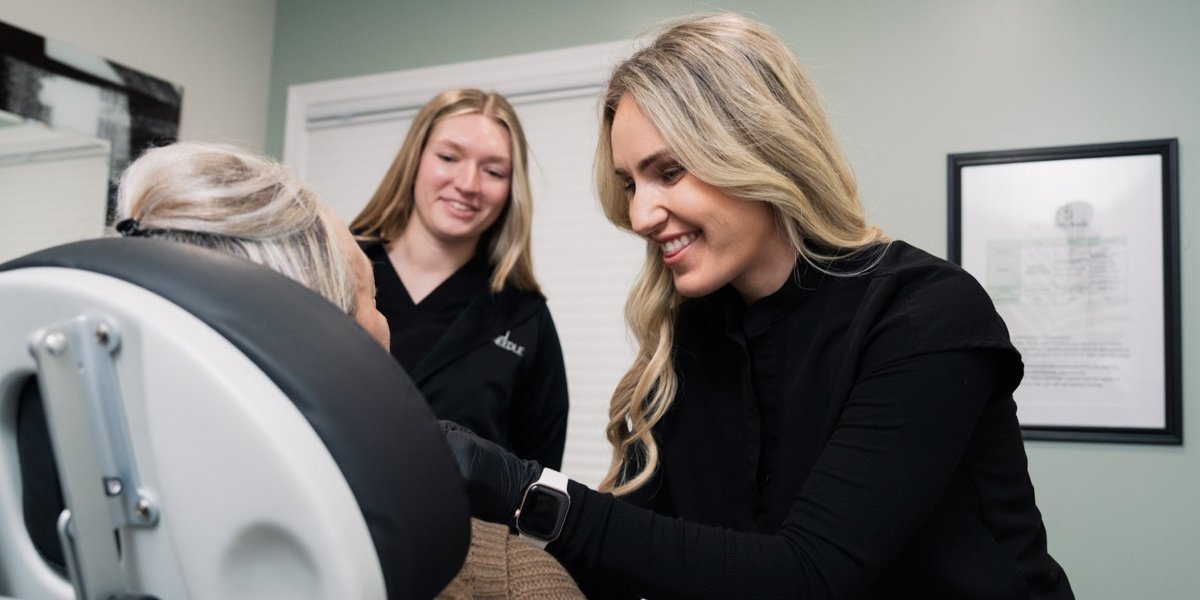
“As a medical provider, I believe in empowering patients with education, not pressure,” says Brandi Gregge, FNP-C, a board-certified nurse practitioner and founder of Mint & Needle, a medical aesthetic and wellness practice focused on natural, patient-first results. “You don’t need to do everything—you just need to do what’s right for your skin and your season of life.”

Below, Gregge outlines what to focus on in your 20s, 30s, and 40s when it comes to skincare, non-invasive treatments, and the new gold standard in beauty: looking like your ideal self, not someone else.

In Your 20s: Lay the Foundation

The Skin Investment Plan: What Treatments to Book in Your 20s, 30s, and 40s

Photo Courtesy: Mint & Needle

Your 20s are the ideal time to establish healthy skin habits. “This is when we focus on prevention, not correction,” says Gregge. “The skin is still rich in collagen, so the goal is to maintain and protect that natural bounce and glow.”

Recommended:

  • Medical-Grade Skincare: “We start with the basics—cleansing, exfoliation, SPF, and a retinoid. You’d be surprised how many issues we can prevent with consistency alone.”
  • Baby Botox: A preventative neurotoxin (typically administered in low doses) in the forehead or around the eyes can help reduce overactive muscle movement and delay wrinkle formation.
  • Hydration-Based Facials: Treatments like DiamondGlow or HydraFacial support cell turnover, unclog pores, and deliver targeted serums to keep skin clear and glowing.
  • Microneedling: Ideal for acne scars or early texture concerns, this collagen-stimulating treatment enhances skin tone with minimal downtime.

Brandi’s Pro Tip: Start with a consultation—not Instagram. “Your friend’s treatment may not be right for your skin. We tailor everything at Mint & Needle to the individual.”

In Your 30s: Correct + Boost

“This is the decade where we start to see changes—subtle volume loss, fine lines, and even hormonal shifts that affect the skin’s tone and texture,” Gregge explains. The good news? You now have tools that work smarter, not harder.

Recommended:

  • Botox or Dysport Maintenance: Every 3–4 months to soften lines and preserve smoothness without freezing expression.
  • Targeted Filler: “We may use small amounts of filler to enhance under-eye hollows or restore midface volume—but always with a natural finish in mind.”
  • Microneedling with PRP: Also known as the “vampire facial,” this regenerative treatment stimulates collagen and supports healing using your own growth factors.
  • Chemical Peels: Achieve brighter, smoother skin by treating hyperpigmentation, melasma, or post-acne marks more effectively in your 30s.

Brandi’s Pro Tip: Commit to a treatment plan. “Quarterly visits for collagen-boosting treatments can create long-term changes that look effortless.”

In Your 40s: Lift, Sculpt & Strengthen

The Skin Investment Plan: What Treatments to Book in Your 20s, 30s, and 40s

Photo Courtesy: Mint & Needle

“With hormone shifts and natural aging, we see more noticeable skin laxity, volume depletion, and changes in skin tone,” Gregge says. “But today’s treatments are all about gentle, supportive rejuvenation—not transformation.”

Recommended:

  • Full-Face Balancing: Strategic use of dermal fillers to support facial structure—mainly the temples, cheeks, and jawline.
  • Sculptra or Biostimulators: “These are incredible for stimulating your body’s own collagen production, with results that build gradually and look beautifully natural.”
  • RF Microneedling: A game-changer for tightening skin and improving texture without surgery or significant downtime.
  • Thread Lifting: For early signs of sagging, threads can offer a subtle lift with collagen-boosting benefits.

Brandi’s Pro Tip: “We focus on building skin health—not chasing youth. Confident patients are the ones who feel like themselves at every age.”

Final Thoughts: Aging Is a Privilege—Let’s Approach It Intentionally

At Mint & Needle, Gregge and her team prioritize patient education, long-term planning, and a holistic approach to skin health. “We’re not just talking about beauty—we’re talking about wellness, confidence, and living vibrantly in your skin.”

Wherever you are in your journey, start with the facts, get curious, and partner with a provider who takes the time to listen. Because when it comes to aging well, there’s no one-size-fits-all solution—just thoughtful, evidence-based choices tailored to you.


Disclaimer: This content is for informational purposes only and is not intended as medical advice, nor does it replace professional medical expertise or treatment. If you have any concerns or questions about your health, always consult with a physician or other healthcare professional.

Erin Snow Is Proving That Listening Can Be Revolutionary

By: Kate Sarmiento

There’s a kind of quiet that doesn’t just fill the room…it sinks into you, the kind that stays long after the conversation ends. It lingers when no one’s really listening, when your words bounce off walls that never answer back.

For many women, that quiet becomes part of the routine. It hides in polite smiles, in the quick “I’m fine” before hanging up a call. It sits heavy in the car when you finally have a minute alone and realize how much you’ve been holding.

That’s the silence Erin Snow decided to break.

She started Seacoast Listening Lounge, a space for women who need a place to unburden without judgment, interruptions, or quick fixes. It’s not therapy, and it’s not a venting session among friends. It’s something deeper: a verbal exhale, a space to finally set down the emotional weight carried for years.

Erin calls it a space to breathe. And for countless women, it’s become that and more.

When Listening Turns into Healing

Before the Lounge existed, Erin spent sixteen years as a legal advocate for survivors of domestic violence, sexual assault, and stalking. The work was raw, relentless, and real. She sat beside women who had lived through some of the hardest things imaginable…and she started to see a pattern.

They didn’t need to be told what to do next. They needed space. Someone who could listen without flinching. Someone who could sit with their story, even when it was hard to hear.

That realization followed her everywhere. Even in spaces designed to help, she noticed how little room there was for quiet. People rushed to fill silences, to offer advice, to fix things. The Seacoast Listening Lounge builds a refuge for quiet reflection and gives a voice to people who have been told to be silent. It allows you to be as expressive as you want to be without someone trying to solve your problems for you, just to sit in the moment of unknowing with you, 

Over time, her advocacy shaped her belief that listening itself could be healing. She later became one of the first paralegals in New Hampshire allowed to represent clients in family court, a proof of her determination and her belief that every woman deserves to be heard.

The same belief became the foundation of Seacoast Listening Lounge. Erin saw too many women carrying everything quietly: the guilt, the grief, the responsibility to always be the strong one. So she built a space where they could finally stop holding it in.

The Listening Sessions are calm and steady, a soft place to land. The Verbal Smash Sessions are louder and more raw. They’re for the moments when you just need to yell, cry, or let it all spill out. Because sometimes healing doesn’t sound calm. Sometimes it sounds like a release.

Erin Snow Is Proving That Listening Can Be Revolutionary

Photo Courtesy: Seacoast Listening Lounge / Erin Snow

Why Listening Still Matters More Than Ever

These days, it feels like the world never stops talking. Everywhere you turn, there is noise, opinions, advice, and updates, but not much space to actually listen. Most of us move so fast that we scroll right past someone’s pain before we even notice it is there. Real listening, the kind that makes you feel understood, has become almost rare.

For Erin, listening is not just a nice skill to have. It is the foundation of wellness. She’s seen what happens when people hold everything in. The tension shows up somewhere else. Sleepless nights. Tight shoulders. That heavy, invisible pressure that never quite lifts.

And that quiet pressure is something almost everyone can relate to. Stress has become part of everyday life, leaving so many people feeling weighed down by things they cannot control. About 27% of Americans say they feel so stressed most days that they cannot function (Source: American Psychological Association, 2022). It is the kind of exhaustion that sneaks up slowly until it finally spills over.

It gets even heavier when no one is truly listening. When emotions are ignored or dismissed, they can start showing up as anxiety, fatigue, or even heart strain (Source: National Library of Medicine, 2022). It is the body’s way of speaking when the voice cannot.

That’s why she built Seacoast Listening Lounge for the women who are always the listeners. The ones who pick up late-night calls, smooth over chaos, and rarely get asked how they’re really doing. Here, they don’t have to pretend or minimize. No pep talks. No “look on the bright side.” Just stillness and space to be seen.

Your Turn to Be Heard

If you’ve been carrying too much for too long, maybe it’s time to put it down for a while.

At Seacoast Listening Lounge, you’ll find room to speak freely, to cry, to pause, to untangle what’s been sitting heavy in your chest. Whether you choose a Listening Session or a Verbal Smash Session, you’ll leave a little lighter. Not because someone solved it, but because someone finally listened.

You can learn more or book a session at https://seacoastlisteninglounge.com.

Because listening isn’t a luxury.
It’s the beginning of everything.


Disclaimer: The content provided in this article is for informational purposes only and should not be considered as professional, medical, or therapeutic advice. The services mentioned are not intended to replace medical or psychological treatment, diagnosis, or therapy. If you are experiencing emotional or psychological distress, it is recommended to seek guidance from a licensed healthcare provider or therapist.

Lead, Teach, Prosper: Dr. Alvin J. Thomas’ Path to Community Wealth

By: Lennard James 

Dr. Alvin J. Thomas is a decorated U.S. Army veteran, educator, and community leader whose career bridges disciplined service, classroom rigor, and neighborhood empowerment. For more than three decades, he has translated leadership into impact, guiding families, students, and emerging professionals toward a single goal: financial literacy as a core life skill. 

Raised in South Georgia, Dr. Thomas learned the values of preparation, accountability, and service at an early age. Those principles guided him throughout a distinguished global military career, during which he became renowned for building high-performing teams and mentoring young leaders. After retiring from active duty, he moved into education, teaching history, economics, and English—turning complex ideas into practical lessons and modeling the work ethic that shaped his own path. 

The economic shock of the COVID-19 pandemic sharpened his mission. As households faced sudden income loss and uncertainty, Dr. Thomas saw a familiar gap: too many people lacked accessible, trustworthy education about money. “The problem isn’t indifference—it’s instruction,” he often says. He responded by creating workshops, one-on-one coaching, and digital content that break down everyday essentials: budgeting, credit basics, cash-flow planning, emergency readiness, and how to spot predatory fees and scams. 

Importantly, his programs are learner-first and vendor-neutral. There’s no sales pitch—only plain-language guidance, step-by-step checklists, and exercises that families can use the same day. Sessions are delivered where people already gather—church halls, community centers, libraries, and veteran facilities—and are paired, whenever possible, with supports like childcare, translation, and transportation stipends so access is not an afterthought. 

Equity is a throughline of Dr. Thomas’s work. He focuses on communities historically left out of mainstream financial conversations: veterans transitioning to civilian life, working parents juggling multiple jobs, and neighborhoods where trust in institutions is fragile. He partners with nonprofits and civic leaders to ensure participants leave with more than information—they leave with action plans, referrals to vetted local resources, and clear next steps. 

Mentorship is the second pillar. Dr. Thomas trains community educators and youth leaders to deliver high-quality literacy programming of their own—sharing curricula, facilitation techniques, and a code of ethics that keeps instruction independent and transparent. “Leadership is measured by how many people you lift,” he says. “In this space, that means helping folks see possibilities where they used to see problems—and teaching more leaders to do the same.” 

Academically, Dr. Thomas brings depth and discipline. He holds multiple degrees and certifications, including a Doctorate in Public Administration and credentials in education and administration. That background informs a data-minded approach: clear learning objectives, pre- and post-session surveys, and follow-ups that track behavior change over time (such as starting an emergency fund, checking a credit report, or negotiating a harmful fee). Data is handled with care and used for one purpose—to improve outcomes for learners. 

Looking ahead, Dr. Thomas is expanding three fronts: 

Digital micro-learning: short, mobile-friendly lessons for busy schedules, plus virtual office hours for Q&A. 

Youth curricula: age-appropriate modules on earning, saving, smart spending, digital safety, and the real cost of debt—delivered alongside career exploration and entrepreneurship basics. 

Community capacity: deeper collaborations with local organizations to host “money clinics” that pair education with benefits navigation, free credit pulls, and warm handoffs to trusted services. 

Through it all, he keeps the human stakes front and center. Financial literacy, he insists, is about peace of mind—the confidence to care for family, weather setbacks, and build a future you believe in. The impact is evident in small wins that become turning points: a parent automating savings for the first time, a veteran avoiding a predatory offer, and a teenager learning how credit works before signing a lease. One lesson at a time, those moments grow into more resilient households—and communities that are stronger. 

Service. Strategy. Stewardship. That is the signature of Dr. Alvin J. Thomas’s work. By teaching what schools too often leave out—and doing it with humility, rigor, and heart—he is helping people move from uncertainty to understanding, and from knowledge to action. Lead, teach, prosper: a simple formula for community wealth that everyone can walk. 

Rising Above: Latoria O’Neal’s Journey from Survival to Inspiration

By: Lennard James  

Latoria O’Neal has often described herself as a “Southern Sweetheart with a Shot of Tennessee Whiskey.” At 48 years old, the Memphis native, mother of three daughters, and professional analyst embodies resilience, strength, and grace. She has lived through some of life’s harshest trials, sexual, emotional, and mental abuse, coupled with the turbulence of growing up in one of Memphis’ roughest environments. Yet she stands today as a beacon of hope, sharing her story to inspire other women to confront their unresolved struggles and reclaim their power. 

Her life has not been easy, but Latoria has consistently refused to be defined by the chaos around her. Raised in a community where drug use, abuse, and violence seemed unavoidable, she could have easily been consumed by the environment. Instead, with God on her side, she found the strength to overcome what so many said she never would. Her survival is not just about her personal willpower; it is about her deep faith and her belief that beginnings don’t determine the final chapters of life. 

Latoria’s journey has been one of transformation. The woman who once endured trauma now uses her experience to reach others, proving that pain can be turned into purpose. She candidly acknowledges her past, saying that her book will be filled with moments both good and bad, with plenty of “did I really do that?” stories. But more than just a memoir, it is a roadmap for other women who are navigating unresolved issues in their own lives. 

Her core message is simple yet powerful: “Beat the odds played against you.” For Latoria, this mantra is not just a phrase but a way of life. She knows that not everyone is born into a happy or supportive environment. Many begin their stories in households filled with dysfunction, heartbreak, or silence. However, she insists that each of us remains the author of our own lives. Even when the early chapters are filled with pain, we have the power to write new endings filled with love, healing, and hope. 

Latoria’s honesty about the abuses she has suffered makes her a voice for women who have too often been silenced. Sexual abuse, emotional abuse, and mental abuse are topics she does not shy away from. Instead, she addresses them head-on, challenging others to recognize that it is never too late to fight back, speak out, and find peace. Her courage reminds survivors everywhere that even when no one else believes in them, they must believe in themselves and fight for what is right. 

Her love for people is evident in everything she does. She often calls herself “a therapist without all the PhDs,” because while she does not hold academic degrees in counseling, she has life experience that equips her to listen, empathize, and offer guidance to those in need. Through her candid storytelling, she gives others permission to speak their truth and take the first steps toward healing. 

Beyond her work as an analyst and storyteller, Latoria embraces life with a zest that shines through her passions for food, fashion, and the simple pleasures that make each day meaningful. Her philosophy—live, laugh, and love each day—is more than a personal motto; it is her gift to those she hopes to reach. She encourages women to find joy in the small things, to cherish their victories no matter how small, and to see beauty in themselves even when the world has tried to convince them otherwise. 

Her social platforms reflect her dedication to sharing positivity and authenticity. On Instagram and Facebook, Latoria O’Neal connects with women who are seeking inspiration, encouragement, and reassurance that they are not alone in their struggles. Through her presence, she is building a community of strength, one where women uplift each other and learn that their voices have power. 

Ultimately, Latoria O’Neal’s story is about redefining what it means to thrive in the face of adversity. She has proven that it is possible not only to survive but to shine, no matter how dark the beginning may have been. By confronting her past and transforming her pain into a mission, she is helping others break the silence, face unresolved issues, and author new chapters of their own lives. 

Latoria’s legacy is still being written, but its foundation is clear: faith, resilience, and the unwavering belief that healing is always possible. In sharing her story, she invites women everywhere to embrace their own journeys, beat the odds stacked against them, and live each day with laughter, love, and the courage to keep moving forward.