Women's Journal

The Hidden Ways Women Sabotage Their Executive Presence

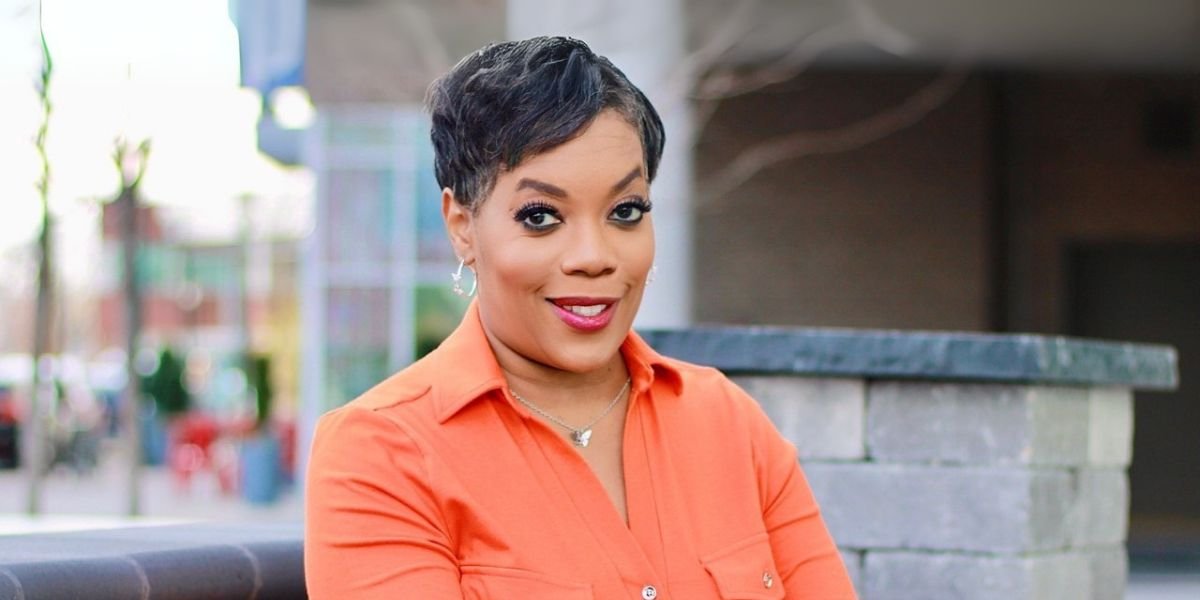
By: Shinese M. Collins

You’re innovative, strategic, and successful, but you still feel overlooked in rooms you know you belong in. Sound familiar? 

For years, I’ve coached women who checked every corporate box, only to wonder why their confidence was questioned—or worse, their presence ignored. 

The truth is that executive presence isn’t just about how you speak—it’s about what you signal.

Many high-achieving women unknowingly send the wrong signals by defaulting to one of these three behaviors:

  1. Over-Explaining – Trying to prove credibility with too many words.
  2. Performing Instead of Leading – Doing more to be seen instead of leading from identity.
  3. Shrinking to Keep the Peace – Avoiding assertiveness to avoid discomfort.

Personally, I thought if I worked harder, they’d notice. Instead, they assumed I was content being in the background.

Sabotage is Subtle But Costly

It affects how you’re perceived in the boardroom, whether you’re chosen for stretch opportunities, and even how you negotiate your worth.

And the worst part?

You’re not doing anything wrong.

You’re simply leading from performance… instead of presence.

I Know Because I Lived It.

There was a season in my career when I didn’t realize I was shrinking, masking confidence with performance and overcompensating with perfectionism. From the outside, I looked in command. On the inside, I was managing perception more than purpose.

But everything shifted when I realized I wasn’t leading from the wholeness of who I was—I was leading from what I thought others needed me to be.

That was my wake-up call.  So, I stopped chasing validation and started building alignment. And that’s when I created the SHINE Goal Method™—first for me, then for the women I coach.

It became my personal blueprint for reclaiming power, clarity, and presence.
Now it’s the strategy I teach every woman leader who’s ready to stop performing and start leading with identity, authenticity, and intention.

How To Shift

Lead from identity, not insecurity.

First, Discover Your Identity:

  • “Am I dimming my light to keep the peace?”
  • “Do I overcompensate to earn a seat I already own?”
  • “What would change if I trusted that being is enough to lead?”

Next, Reclaim Your Power with The P.O.S.E. Shift™:

  • Pause before over-explaining.
  • Own your message in under 90 seconds.
  • Stand in your values even when it’s uncomfortable.
  • Expand your presence by practicing bold stillness.

Then, Elevate Your Leadership posture using the SHINE Goal Method™—a purpose-aligned tool designed to help women reset their internal leadership compass and stop leading from depletion.

SMART goals measure activity. SHINE goals activate alignment. For leaders and organizations that desire integrity, impact, and intentionality, SMART isn’t enough. The next evolution is goal-setting that centers the whole leader, honors the mission, and fuels meaningful, measurable change with heart.

The SHINE Goal Method™ for Executive Presence

When presence falters, purpose must lead. Here’s how to bring your leadership back into alignment:

🔸 S – Simple & Strategic

Cut through the noise. Your presence doesn’t need to be loud—it needs to be clear.

Speak with focused intention, not filler. Strategy is felt in simplicity.

🔸 H – Holistic

Presence isn’t a performance—it’s an embodiment.

Show up aligned in mind, body, spirit, and energy. That’s the version of you that commands rooms.

🔸 I – Impactful

Your authority isn’t in how much you say, but in how your message lands.

Focus on outcomes, not output. Speak to move decisions, not just discussions.

🔸 N – Non-Negotiable

Boundaries build presence.

Decide what you will no longer tolerate—internally or externally. Presence without boundaries is performative.

🔸 E – Evaluable

You can’t grow what you won’t measure.

Ask: Did I show up in full alignment today? Did I shrink or stand? Was I on purpose in this moment?

Presence is a Posture, Not a Performance

You don’t need to work harder, talk louder, or prove more.
You need to trust yourself more, your instincts, and your divine leadership assignment.

As a Leadership & Mindshift Coach, I help high-achieving women rewrite the silent scripts keeping them small—so they can lead boldly, live on purpose, and command with presence.

And when you align your leadership with both your purpose and your power—
You don’t just shine.
You shift everything.

Shinese M. Collins
Founder, Your Purpose Starts Now™

Disclaimer: This content is for educational purposes only and does not guarantee specific results. Outcomes vary by individual. The SHINE Goal Method™ and P.O.S.E. Shift™ are tools for personal development, not performance guarantees.
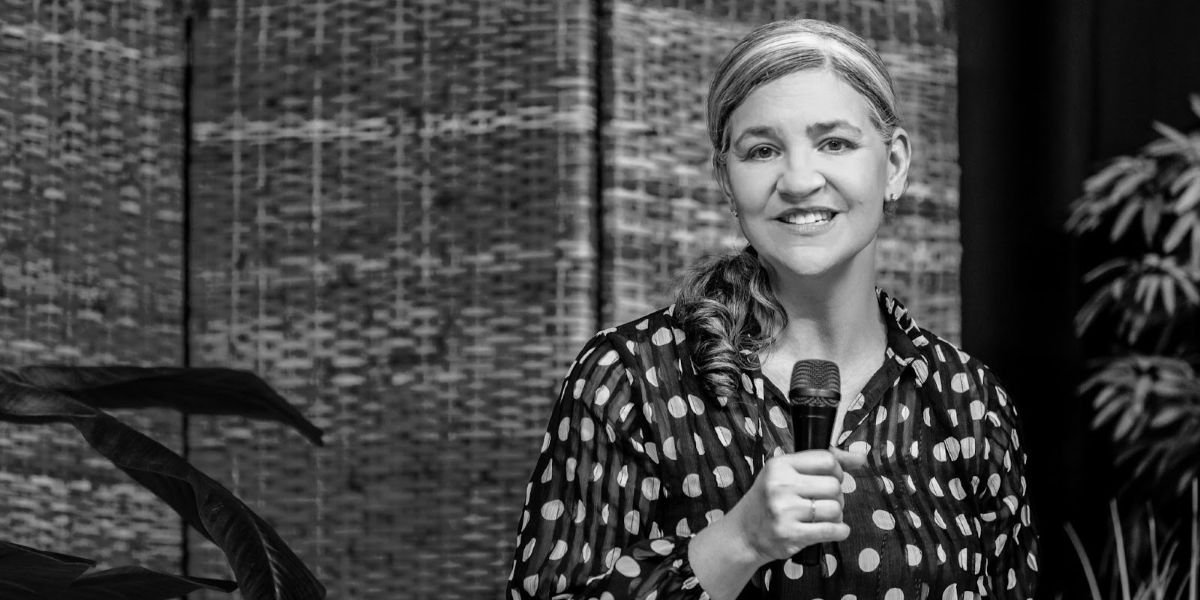
Dismantling the Model: Amy Vasterling’s Call for Inner Knowing and Collective Transformation

By: Michael Beas

Amy Cerny Vasterling offers a transformative—and refreshingly quiet—alternative: Know. Her upcoming book, Know: Where the Status Quo Ends and You Come to Life (releasing September 16, 2025), blends memoir, manifesto, and intuitive field guide into a single, potent invitation: to step out of “The Model,” a silent societal script that defines worth through hierarchy, and into the innate wisdom of what she calls “Personal Knowing.”

At the core of Vasterling’s work is her bold concept of “collapsing narcissism,” a term drawn from 22 years of observational research. Through this lens, she examines how control-based structures—rooted in childhood misattunements—strip individuals of their self-governance. “As babies, we know when we’re hungry, tired, or upset,” Vasterling explains. “But when our caregivers dismiss or mislabel these cues, we begin to doubt ourselves. We stop asking for what we need.” That fracture, she argues, grows into a lifetime of posturing, striving, and self-abandonment—what she calls “acting inside The Model.”

Her findings suggest that societal narcissism—evidenced in power imbalances, immaturity in leadership, and a general emotional stunting—stems from this early disconnect. “We’ve not matured collectively past age 16 emotionally,” she says. “That’s how deeply embedded the hierarchy and control patterns have become.” But it’s not all bleak: Vasterling insists that reclaiming our internal compass through Personal Knowing is the way forward. This grounded self-awareness allows us to ask, “Is this for me?” and act from alignment rather than reaction.

A central figure in this paradigm shift? Highly Sensitive Persons (HSPs). Vasterling, an HSP herself, sees them as society’s early-warning system—like elephants that sense natural disasters before they strike. “HSPs process more, see patterns faster, and want deeply to help,” she explains. Yet many are trapped in a feedback loop of permission-seeking and self-doubt. Her message to them is clear: You are the signalers. Your discomfort is a signpost that the system must change—and you’re here to guide that change.

This ethos pulses through Know. Far from a conventional self-help manual, the book is a clarion call for those who feel anxious, stuck, or disconnected—not as a personal failing, but as evidence of living inside The Model. “The Model,” she says, “is upheld by control masquerading as power. But true power is knowing. It’s quiet. It’s calm. And it’s deeply personal.” Writing the book was no small feat; it took Vasterling five years, three of them working with an editor. “We think fast is better, but truth takes time,” she reflects. “There was a calm in me as I wrote, a knowing that this was meant to come through.”

The process wasn’t just creative—it was transformative. As she moved deeper into the work, Vasterling realized that the outcome was more than personal—it was social. “Two years in, I saw the result was natural equality,” she recalls. “I cried. After a lifetime in spaces that prioritized disconnection, this felt like real hope.”

Natural equality, as she defines it, is not about sameness. It’s about each person being fully themselves, unencumbered by imposed roles or outdated structures. It’s the opposite of hierarchy—and the antithesis of narcissism.

So how do we begin to break free from The Model in practice? Vasterling’s method is what she calls “Snoopy Simple.” The phrase is playful, but the approach is profound: begin with what’s easy, with what feels right. “It’s logical to agree that it’s easiest to be who you truly are,” she says. “But The Model convinces us to stay in jobs, relationships, and roles that drain us.”

She illustrates this with a story from her high school ski team. After a teammate dramatically improved her race time, the coach praised her not by comparing her to others, but by affirming what she herself had accomplished. The result? Every team member improved at the next race. “That’s inversion,” Vasterling says. “We heal what broke us—by seeing and naming what’s already working in each person.”

This spirit of affirmation and gentle transformation also informs her Wisdom Gatherings—monthly community events for women, creatives, and HSPs. Equal parts energy reading, support circle, and intuitive coaching, these gatherings provide the repetition needed to shift lifelong patterns. “It’s like learning a new language,” she explains. “The gatherings give us a place to talk about it, to be seen, and to realize we’re not alone.”

For Vasterling, community is key to dismantling The Model. “When we find people who meet us in a Model-free way—even if just for now—we begin to remember who we are. That’s where the real change begins.”

Ultimately, Know is not a guidebook for perfection. It’s a permission slip to be human—fully, expressively, and imperfectly so. “We didn’t create The Model, but it is ours to heal,” Vasterling says. “And when we do, we rediscover what it means to be alive—not just surviving, but truly, deeply living.”

To learn more about Amy Vasterling’s work or attend a Wisdom Gathering, visit amyvasterling.com.


Disclaimer: This article is intended for informational and reflective purposes only. The concepts discussed represent personal perspectives and experiential insights and are not a substitute for professional psychological, medical, or therapeutic advice. Readers are encouraged to seek guidance from qualified professionals when addressing mental health, personal development, or emotional well-being.