By: Natalie Johnson
Most leadership books are one person’s model, stretched to fit everyone else.
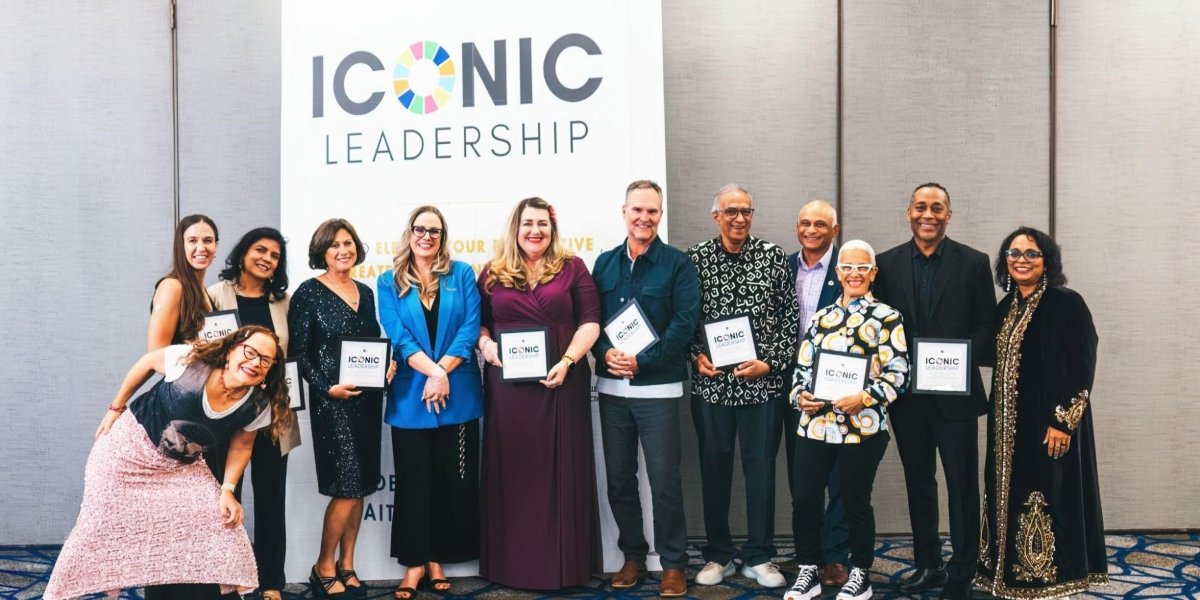
ICONIC Leadership was built to break that format. The project brought together twenty accomplished global leaders from twenty different industries and asked each the same question. What does leadership actually require now that AI can do a growing share of the work?
No shared outline. No agreed framework. A CEO, a state senator, a venture capital general partner, a physician associate, and a philanthropy executive answering independently.
The expectation was twenty different answers.
Who was asked?
The roster was assembled for range.
Anand Eswaran, CEO of Veeam, answered with 25 years across Microsoft, SAP, HP, and RingCentral, and teams built on four continents.
Gillian Muessig, general partner at Mastersfund, answered through capital access, arguing funding is now work infrastructure rather than a finance topic.
Monika Gupta, a partner general manager of engineering at Microsoft, answered through the trust deficit inside AI systems themselves. Washington State Insurance Commissioner Patty Kuderer, a former Senator and prosecutor, answered through institutional transparency.
Akhtar Badshah, who spent twenty-six years running Microsoft’s global philanthropy, answered through purpose.
Chelsey Galipeau, a physician associate, argued that executive functioning is metabolic infrastructure and not a personality trait. Ram Dutt answered by scaling the Sankara Eye Foundation model from one hospital to twenty. Sherlaender Phillips answered through the World Economic Forum’s finding that full gender parity remains 123 years away.
Different vocabularies. Different sectors. Different decades of experience.
What came back?
Dee Dee Walsh and Chaitra Vedullapalli, who curated the project, mapped the twenty frameworks against each other.
Six areas showed up in nearly all of them. Inclusive foundations. Open access. Innovative solutions. Navigational agility. Collective action. Collaborative partnerships.
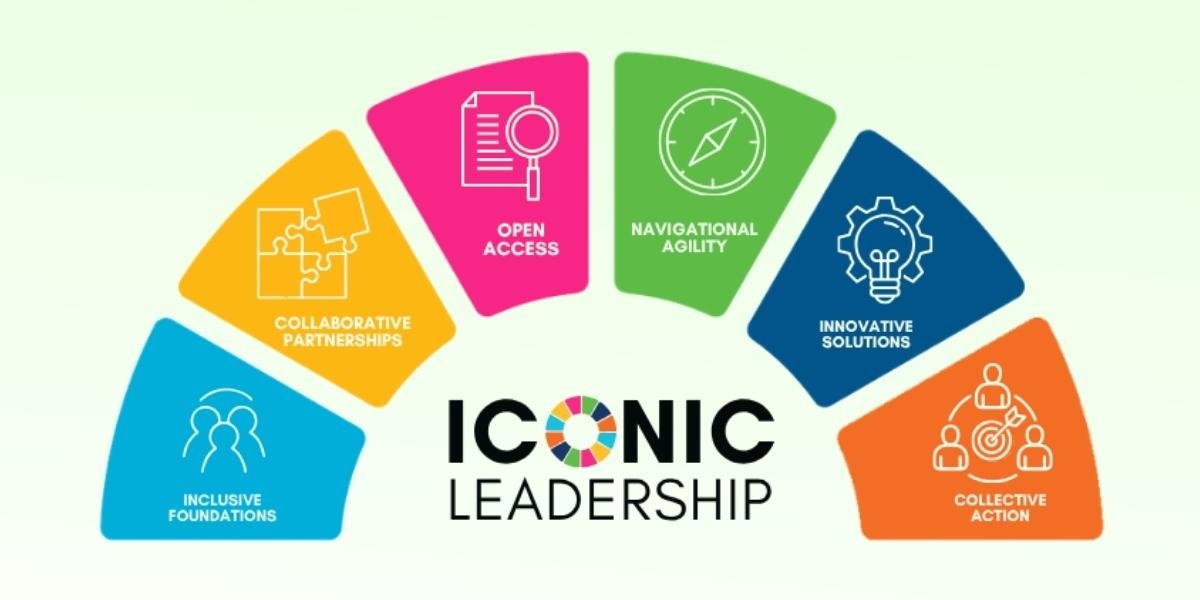
None of the six pillars are technical. That is the part worth sitting with.
ICONIC Leadership publishes them as the ICONIC ARC Framework and treats them as an operating system rather than a philosophy, with each of the twenty stories paired to a working framework and three steps a reader can run inside thirty days.
The numbers that started it.
The question did not come from nowhere. It came from 2025 data most organizations have not reconciled.
The DDI Global Leadership Forecast surveyed roughly 13,000 leaders. Only 32 percent expressed confidence in the leadership above them. Seventy-one percent reported significant stress since stepping into the role. Of those, 52 percent described themselves as burned out, and 40 percent were considering leaving leadership entirely.
Edelman’s Trust Barometer, drawn from more than 33,000 respondents across 28 countries, found 68 percent of people globally believe business leaders purposely mislead them. That is up 12 points since 2021.
PwC adds the internal admission. Forty-two percent of CEOs privately believe their company will not survive ten years without reinvention. Most reallocate under 20 percent of resources toward it.
Read together, the figures describe an odd moment. Organizations are asking people to trust them through the largest workplace change in a generation, at the point where trust in leadership is at its lowest measured level.
Why twenty and not one?
Leadership publishing has generally worked one way. One executive, one origin story, one model extracted from a single career and generalized outward.
It produces clean books. It also produces advice that only fully applies to people whose circumstances match the author’s.
Running the question across twenty independent careers changes the burden of proof. A pattern that appears in a venture fund, a hospital, a state legislature, and a global software company is harder to dismiss as one person’s preference.
The DDI data supports that instinct in one specific way. Leaders who trust the executives above them are 2.2 times more likely to be excited about using AI at work and 2.8 times less likely to resist it. The relationship holds across industries, which suggests the mechanism underneath it is not sector-specific either.
What the experiment actually produced?
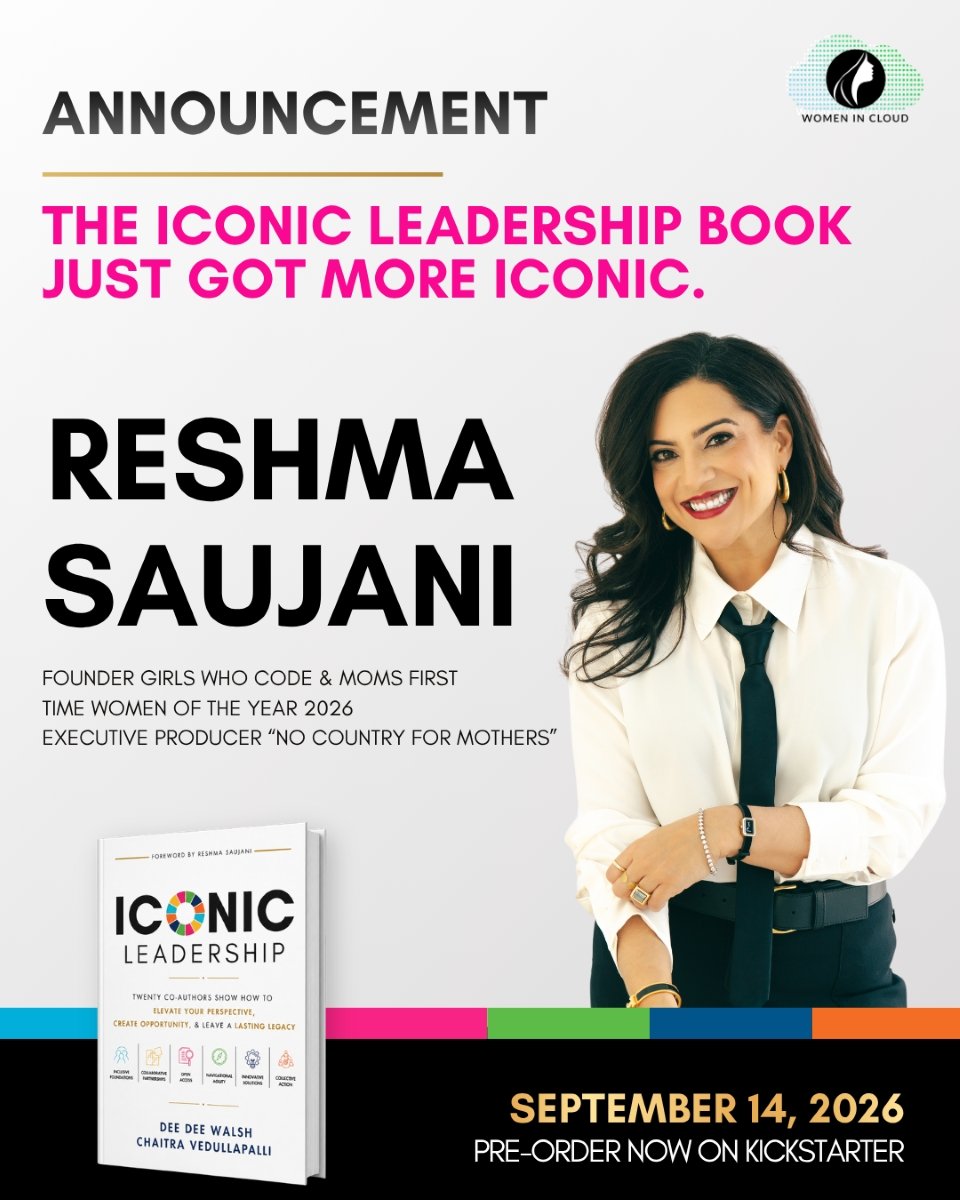
Whether the six pillars hold up under pressure is a fair question, and the contributors seem comfortable leaving it open. ICONIC Leadership, released this fall with a foreword by Girls Who Code & Moms First founder Reshma Saujani, is positioned as a common vocabulary rather than a verdict. Something teams can practice and measure instead of admire.
The more interesting result may be the one nobody planned for.
Twenty leaders were asked what AI changes about leadership. Most of them answered by describing what it does not.