Leadership culture often celebrates the visible markers of success — talent, ambition, strategic thinking, relentless work ethic. These qualities are often treated as the defining ingredients of growth and influence.
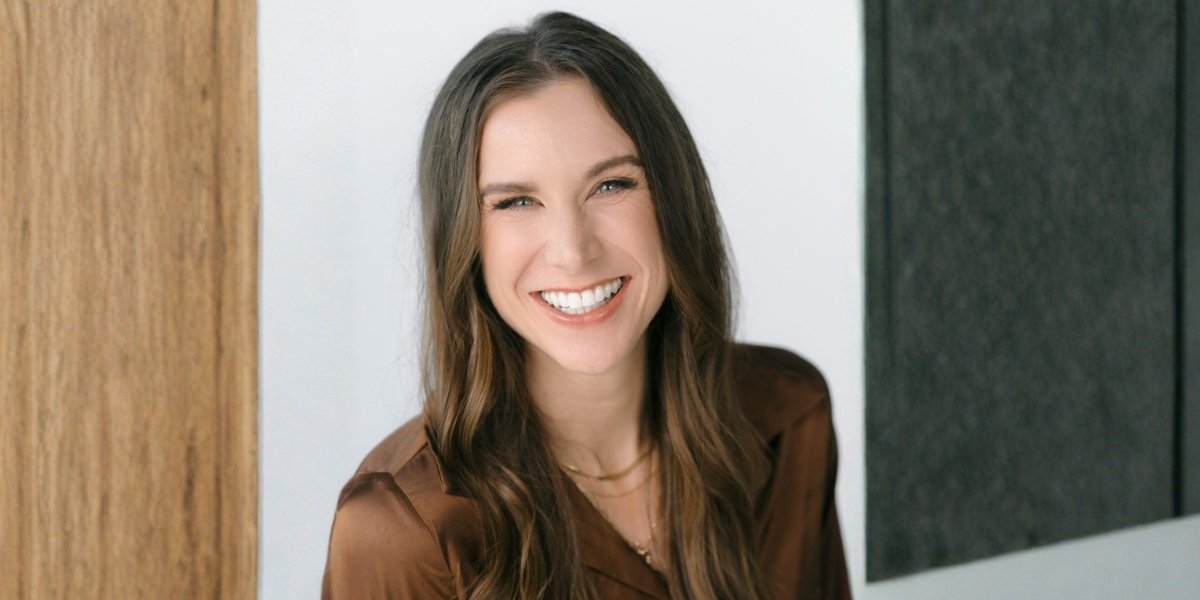
Yet leadership strategist Juliana Page has spent years studying a pattern that challenges that assumption.
In her work with founders, creatives, and high-performing leaders, Page noticed something surprising. Many individuals were achieving remarkable levels of external success while quietly losing the internal stability required to sustain it. Meanwhile, others with similar talent and opportunity seemed able to expand their influence without the same level of strain.
The difference, Page concluded, had little to do with intelligence, strategy, or ambition—and everything to do with leadership capacity.
It had everything to do with capacity.
This insight became the foundation of Page’s leadership philosophy and the driving idea behind her brand new book Full Capacity: How to Live Ridiculously Free and Fuel a Life Without Limits. In it, she explores the internal structure that allows leaders to carry responsibility, influence, and growth without becoming fragmented in the process.
According to Page, the most important question in leadership is not how much success someone can achieve — but how much they have the internal structure to carry.
The Leadership Pattern Most Conversations Ignore
Over time, Page began to recognize a pattern that traditional leadership advice rarely addresses.
Growth often happens faster than the internal development required to support it.
Careers accelerate. Businesses scale. Visibility increases. Responsibilities multiply. From the outside, everything appears to be moving in the right direction.
Internally, however, the weight of that growth begins to accumulate.
Leaders must carry more decisions, more complexity, more relational dynamics, and greater public expectations. Without the internal structure required to support that expansion, success itself can begin to destabilize the person responsible for sustaining it.
Page describes this as a capacity gap—a mismatch between external growth and the internal formation required to sustain it.
When that gap widens, burnout, fractured relationships, and loss of clarity often follow.
Why High Performance Isn’t the Same as Stability
One of the ideas Page challenges in Full Capacity is the assumption that high performance automatically signals leadership strength.
Many leaders function at an extraordinary level. They solve problems quickly, maintain productivity under pressure, and continue delivering results even during demanding seasons.
Yet functioning alone does not necessarily mean a leader is stable enough to sustain that level of responsibility.
Page distinguishes between high functioning and true integration.
High-functioning leaders are able to perform under strain. Integrated leaders are able to carry responsibility while remaining internally aligned — emotionally resilient, grounded in identity, and connected to their values.
Without that integration, success can slowly become performative. The results remain impressive, but internally the leader carrying them begins to fracture under the pressure.
For Page, sustainable leadership requires something deeper than productivity. It requires the internal coherence that allows achievement and personal stability to exist together.

Photo Courtesy: Alicia Leigh Photography
The Role of Emotional Resilience
Another dimension of capacity that Page emphasizes is emotional resilience.
Leadership inevitably brings pressure — difficult decisions, relational tension, and responsibility for outcomes that affect many people. Navigating these realities requires more than strategic thinking.
It requires emotional range.
Leaders with strong internal capacity develop the ability to remain steady in the face of pressure rather than reacting impulsively to it. This steadiness protects both leadership clarity and relational health.
Instead of operating in cycles of constant stress and recovery, leaders with strong capacity cultivate the calm stability required to lead effectively over time.
Identity as the Anchor of Leadership
At the deepest level of Page’s work is the idea that leadership capacity is ultimately rooted in identity.
Leaders whose identity is shaped primarily by performance or recognition often experience instability as their influence grows. Public expectations increase, pressure intensifies, and success itself begins to reshape how they see themselves.
Page argues that sustainable leadership requires identity anchored in internal formation and values rather than performance, recognition, or external validation.
When identity remains stable, leaders are able to navigate both visibility and adversity without losing clarity about who they are. Their decisions remain grounded in values rather than dictated by external pressure.
This internal stability allows influence to expand without destabilizing the person responsible for carrying it.
Why Adversity Expands Capacity
Interestingly, the development of leadership capacity rarely occurs during seasons of ease.
Page often describes adversity as one of the most formative elements of leadership growth. Difficult seasons expose the limits of a leader’s internal structure while simultaneously creating the opportunity to expand it.
Leaders who engage adversity with reflection often emerge with deeper resilience, stronger emotional awareness, and greater clarity about their priorities.
Rather than interrupting growth, these experiences often strengthen the internal structure required for the next level of responsibility and influence.

Photo Courtesy: Alicia Leigh Photography
The Difference Between Rapid Success and Sustainable Leadership
In an era that celebrates rapid expansion and visible achievement, Page’s work offers a different lens for evaluating leadership success.
Performative success prioritizes momentum and visibility. Sustainable leadership prioritizes formation.
Leaders who cultivate internal capacity are able to expand their influence without sacrificing their emotional stability, relational health, or sense of identity.
Their leadership is not only impressive in the short term — it is durable.
The Question That Defines Leadership
At the center of Juliana Page’s work is a deceptively simple question: not how much success someone can create, but how much they have the internal structure to carry.
Growth that expands faster than a leader’s capacity eventually becomes unsustainable. Influence that develops without identity stability can leave even highly capable leaders feeling fragmented and exhausted.
Page’s work invites leaders to rethink the foundation of success itself — not as a pursuit of more achievement, but as the development of the internal architecture required to sustain meaningful influence over time.
Those ideas are explored in depth in her newly released book, Full Capacity: How to Live Ridiculously Free and Fuel a Life Without Limits, where Page examines how leaders can cultivate the emotional, psychological, and spiritual structure necessary to build lives and leadership that can truly endure.
Learn more about Juliana Page’s work at www.julianapage.com, explore her new book Full Capacity, or tune in to the God’s Vibes Podcast. Readers interested in leadership training can also connect with the Courage Co. training hub at www.courageco.org.