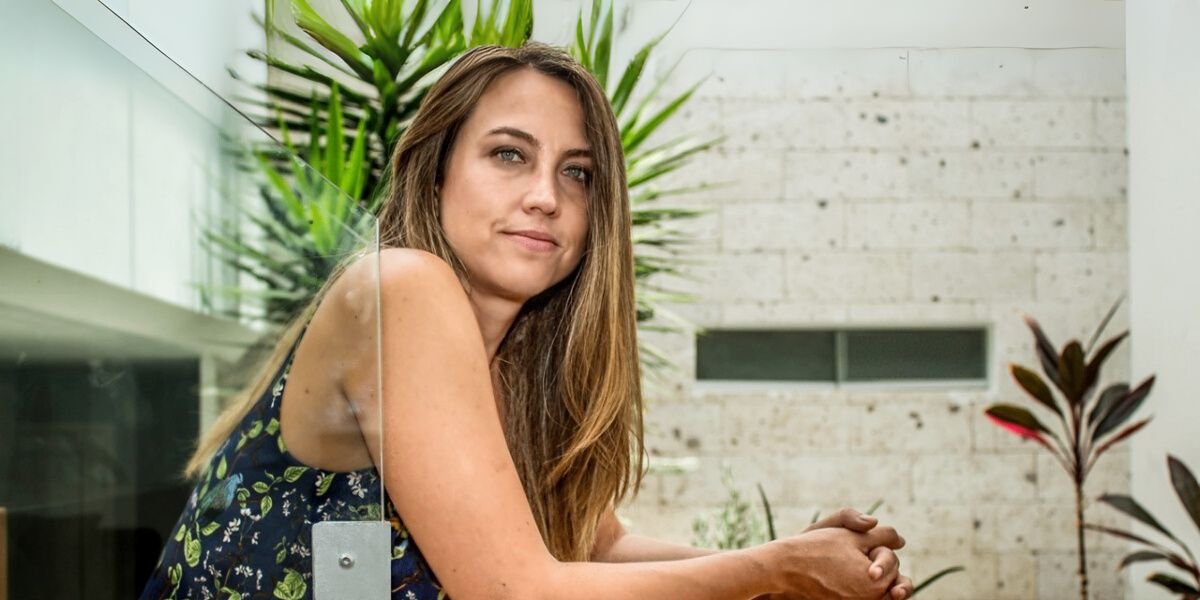
Design shapes the way we live, but it also leaves a footprint. Every decision, from the materials chosen to how a space functions over time, carries weight. What lasts? What gets tossed? What supports the environment, and what strains it?
These are the questions Melissa Elbers asks at every stage of her process. As the founder of Nimbus Design Shop and an architect with roots in Peru and a practice that now spans across borders, she approaches sustainability not as a feature, but as a foundation. For her, good design is built with care, from the ground up, with intention, and with a long view in mind.
Melissa’s journey started in Peru, where she trained as an architect. Her early exposure to local materials, traditional techniques, and site-responsive design still shows up in her work today. After moving to the U.S., she expanded into ceramics and product design, creating a studio where architecture, craft, and ethics come together. Whether she is designing a building or shaping a handmade lamp, her goal stays the same: create something meaningful and make it last.
Every Detail Counts
Melissa’s studio takes a simple but disciplined approach to sustainability: do more with less, and do it well. Whether she is working on an architectural project or curating products for Nimbus, the focus is always the same: make choices that are good for the environment and good for the people who will use them.
This begins with materials. She sources locally whenever possible, choosing natural or low-impact options like adobe, wood, or stone. It’s not just about reducing a project’s carbon footprint, it’s about making spaces that feel connected to their surroundings. Her team also uses passive design techniques, like placing windows to let in natural light and fresh air, so buildings rely less on artificial heating and cooling. These decisions are not flashy, but they make a real difference.
At the product level, she applies the same principles. The items in her shop are mostly handmade, often in small batches. She favors recycled materials, minimal packaging, and makers who care about how their work is made. It’s not about filling shelves; it’s about offering things that feel personal and last a long time.
Respecting People and Place
A big part of Melissa’s process is collaboration. She works closely with local artisans and craftspeople, many of whom use traditional methods that are naturally sustainable. These partnerships don’t just reduce waste or emissions, they add meaning to the work. A home built with regional materials and local knowledge tells a different story than one that could be dropped into any location.
This same mindset applies to her ceramics. Each piece is shaped by hand, allowing space for variations. In a world of mass production, that’s a quiet rebellion. Her objects are meant to be used and loved, not cycled out with the next design trend.
Melissa does not design for praise or recognition. She designs because she believes the things we create should have purpose. And when design is rooted in care for materials, for communities, and for the planet, it doesn’t just look good. It feels right.
Design That Lasts
Sustainability is not always about new technology or bold gestures. Sometimes, it’s about slowing down, making thoughtful decisions, and asking better questions at every step. Melissa Elbers brings that mindset to everything she touches.
Her work reminds us that design is not just about how something looks, but about how it’s made, how it functions, and what kind of legacy it leaves behind. Whether she is sketching a building or shaping a lamp, her choices are deliberate, focused on simplicity, responsibility, and lasting value.
In a field often driven by what’s new, Melissa is building something different: a practice grounded in respect for people, for process, and for the environment we all share.