By: Lennard James
MEMPHIS, TN. Sometimes the most rewarding opportunities in life emerge unexpectedly. For Brittany Hart, a children’s book author, educator, national speaker, and community advocate, a simple desire to make important information accessible to young people evolved into a meaningful literary journey. Today, Hart is using storytelling to introduce children to fairness, inclusion, housing rights, and the importance of having a place to call home.
With more than 15 years of professional experience in child and family counseling, trauma-informed care, parent coaching, and community advocacy, Hart has built a career centered on understanding the challenges facing children and families. Her transition into authorship represents a natural extension of that experience, combining professional knowledge with creativity to reach audiences in an engaging way.
Originally from Savannah, Tennessee, Hart graduated from the University of Memphis and currently serves as Education and Outreach Coordinator for the Fair Housing Council of Metropolitan Memphis. Since joining the organization in May 2024, she has helped establish its public identity, develop educational resources, and implement community outreach initiatives.
Her introduction to children’s literature began with a question: How can children learn about issues that may significantly influence their lives and the lives of their families?
While working in fair housing education, Hart noticed that most educational materials were designed for adults. She recognized an opportunity to present these concepts through stories children could understand.
Initially, she began creating a coloring book. However, as she developed illustrations and activities, characters emerged, storylines took shape, and the project evolved into something she had never anticipated.
The positive response to her first book, My Happy Home, encouraged her to expand the concept into the Desmond & Friends children’s book series.
The series carries special personal meaning because its central character, Desmond, is named after Hart’s son. She intentionally created a character who resembled him, reflecting her belief that representation matters in children’s literature.
Hart wanted young readers to encounter characters from different backgrounds, living in different types of homes, and experiencing situations that encourage empathy and understanding.
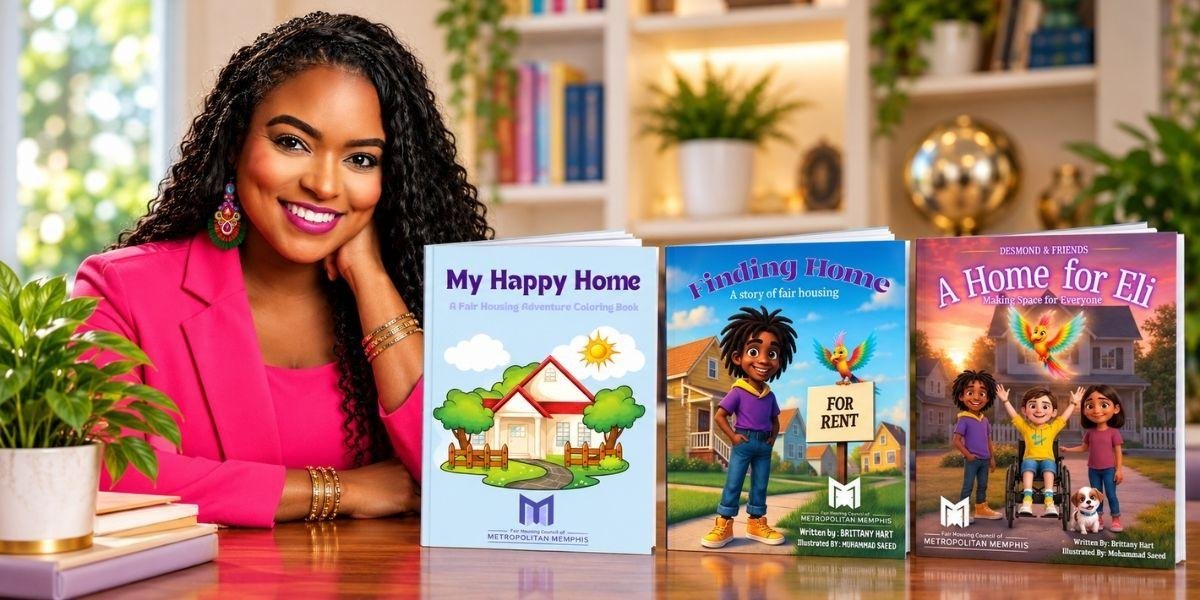
The collection currently includes three books, each addressing an important subject through relatable storytelling.
My Happy Home introduces children to the meaning of home and the importance of feeling safe, comfortable, and valued.
Finding Home: A Story of Fair Housing explores housing discrimination and helps children understand the importance of equal housing opportunities.
A Home for Eli: Making Space for Everyone introduces disability accessibility and encourages young readers to recognize why inclusive environments matter.
Together, the books demonstrate how children’s literature can communicate important lessons without overwhelming young audiences with complicated terminology.
For Hart, the connection between housing stability and childhood development is especially significant.
Her professional background has exposed her to families experiencing trauma, instability, and difficult circumstances. Those experiences reinforced her understanding that a child’s home environment can influence emotional well-being, educational development, and future opportunities.
“When housing is unstable, it doesn’t just disrupt where a child lives. It can disrupt who they become,” Hart explains.
This perspective shapes her writing and community engagement.
Hart also understands that education often extends beyond the intended audience. Children frequently bring lessons home from school, creating opportunities for parents, grandparents, and caregivers to participate in conversations they might not otherwise encounter.
A story about fairness can introduce a discussion about discrimination. A character experiencing accessibility challenges can encourage families to think differently about inclusion.
That ability to reach multiple generations makes the Desmond & Friends series particularly meaningful.
Hart’s work as an author complements her leadership responsibilities with the Fair Housing Council of Metropolitan Memphis, an organization providing fair housing education, advocacy, and assistance throughout Memphis and surrounding communities.
As Education and Outreach Coordinator, she has contributed to developing branded materials, educational campaigns, community presentations, and outreach strategies designed to increase public awareness.
According to Hart, the organization’s collective initiatives have reached more than 2.2 million people through education, advertising, community engagement, and awareness efforts. The Council has also educated more than 6,500 children.
These efforts reflect the organization’s commitment to making information accessible while strengthening its presence as a community resource.
Hart recognizes that individuals seeking assistance may be experiencing stressful circumstances involving housing discrimination, accessibility barriers, or uncertainty about their living situations.
Her background in counseling and trauma-informed care has helped her approach these interactions with compassion, patience, and an understanding of the emotional challenges families may face.
Beyond her work in Memphis, Hart has established a national presence through speaking engagements, presentations, and professional discussions.
She has participated in the National Fair Housing Alliance Conference and the Fair Housing Matters Conference, presenting Educating the Next Generation About Fair Housing: Teaching Fairness Through Stories.
Hart also conceptualized, developed, and moderated the keynote panel Where You Live Matters: The Impact of Housing on Children’s Wellbeing at the Tennessee Fair Housing Summit.
Additionally, she was selected to participate as a housing panelist at the 2026 Enabling Technology & Innovation Summit hosted by the Tennessee Department of Disability and Aging.
Her professional development includes earning an Executive Certificate in Servant Leadership through the LeadingUp program, a collaboration between Christian Brothers University and the Tennessee Nonprofit Network.
Despite these accomplishments, Hart describes discovering her ability to write children’s books as one of the most rewarding experiences of her career.
She never set out to become an author. Instead, she identified an educational need, explored a creative solution, and discovered a talent that expanded her professional purpose.
Her experience illustrates how innovation can emerge when individuals are willing to approach familiar challenges differently.
“Every child deserves a place to feel safe, a place to grow, and a place to imagine their future,” Hart says.
Looking ahead, Hart hopes her books will continue reaching children, families, educators, and community organizations while encouraging conversations about fairness and opportunity.
Brittany Hart’s journey from community advocate to children’s book author demonstrates that storytelling can become a powerful extension of professional service. Through Desmond & Friends, she has created a literary platform that brings important social issues into classrooms, homes, and community conversations.
What began as a coloring book has evolved into a meaningful contribution to children’s education, proving that an unexpected opportunity can sometimes reveal an entirely new purpose.
For more information about Brittany Hart and the Desmond & Friends children’s book series, visit FHCMM’s website.