By: Joshua Smith
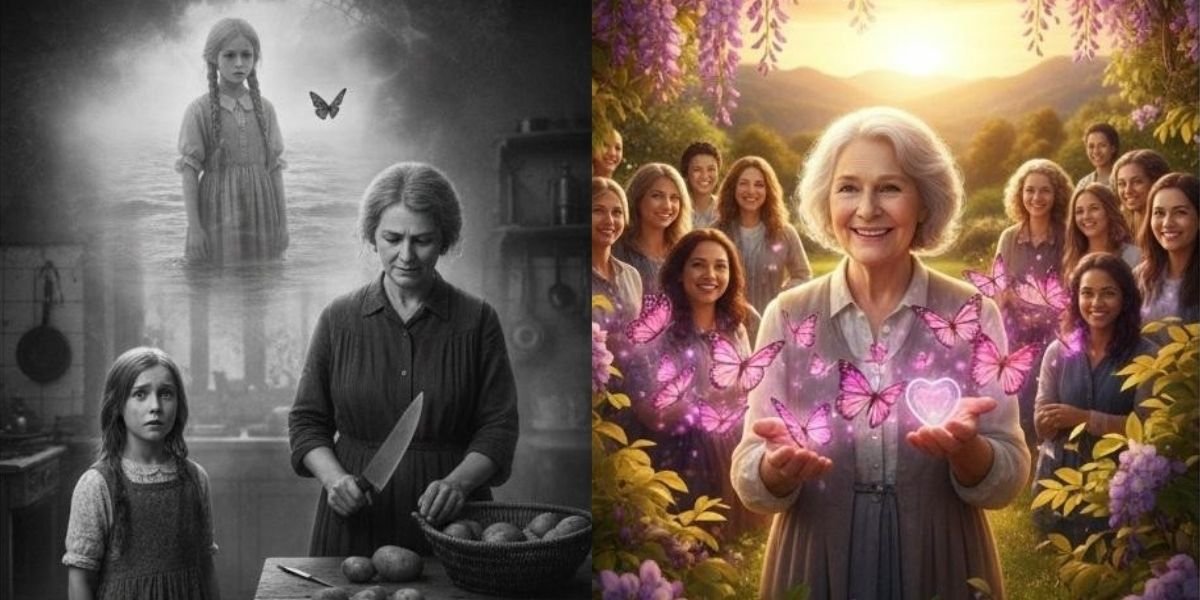
What does it take to find your voice when the world has spent twenty years telling you to stay silent? How does a person begin to speak when their formative years were defined by the crushing weight of institutional fear? For Gretel Timan, the answer lay in the simple but revolutionary act of picking up a pen, a piece of paper, and finding the courage to face a childhood defined by unimaginable tension. This was a world where a mother’s deep-seated trauma could lead to a kitchen knife at the throat over something as trivial as a forgotten grocery item. In her searingly personal memoir, A World Gone Mad, Gretel explores the deep, often invisible scars that war and dictatorship leave on the female soul.
Gretel’s journey is a masterclass in resilience and the enduring strength of the feminine spirit. As a young woman in East Germany, she was branded with the label of a “capitalist’s daughter”—a dangerous designation that made her a constant target for discrimination and state-sponsored alienation. She grew up in a world where even the most basic human connections were monitored; “friendship” was a political mandate and trust was a luxury that simply no one could afford. In this grey landscape of conformity, individual identity was seen as a threat to the collective.
Yet, inside her, a “butterfly” was waiting to emerge. This wasn’t just a metaphor for change; it was a survival mechanism—a tiny, flickering light of selfhood that the regimes could not quite extinguish. This article explores the feminine side of survival, focusing on the quiet strength required to maintain one’s humanity when the world demands you become a machine. Gretel speaks movingly of the women who were silenced by the machinery of history—like Undine, whose tragic end in the Baltic Sea became a haunting catalyst for Gretel’s own writing. “I had to tell her story because no one else would,” Gretel says, emphasizing the duty she feels to be a witness for those who were erased.
It’s a powerful reminder that women often carry the emotional history of a nation on their shoulders, absorbing the shocks of conflict in ways that are rarely recorded in textbooks. Now, as a woman who describes herself as “the child she never was,” Gretel is finally finding joy in the small but significant things: the “smiles that come from the eyes” and the transcending, vibrant beauty of the North Carolina landscape. She has moved from a world of grey suspicion to a life of Technicolor freedom.
She teaches us that healing isn’t about simply forgetting the darkness; it’s about reclaiming your narrative and refusing to let your trauma have the final word. Her book is a clarion call to every woman who has faced trauma, navigated toxic environments, or felt marginalized by circumstances beyond her control. It’s a story of finding the sun after a lifetime in the shade, proving that our past doesn’t have to be a prison—it can be the rich, albeit painful, soil from which we grow into something beautiful and free.
In today’s fast-paced and often fractured world, Gretel’s message of self-reclamation is more relevant than ever. She proves that even after decades of being told who you are by others, you still have the power to define yourself. By sharing her story, she empowers a new generation of women to look at their own scars not as marks of shame, but as evidence of their survival and their strength. Gretel Timan didn’t just survive a world gone mad; she thrived despite it, and in doing so, she has provided a roadmap for others to find their own “butterfly” wings and take flight.