By: Matt Emma
Fashion and interior design have long inspired and influenced each other. Since the height of the COVID-19 pandemic, there has been a noticeable increase in people investing time to design their homes as reflections of their personal taste and style, something that may have incentivized some fashion houses to expand. In today’s home and lifestyle market, where aesthetics and practicality are increasingly seen as inseparable expectations, designers who can navigate both worlds are comparatively rare. Tzu Hsuan Yang is one of the few who appear to move fluently between them. Trained in fashion but now shaping the textures, colors, and quiet details of modern homes, she brings an unusually hybrid perspective to product development.
Yang’s colleagues at Core Home often describe her as someone who is reluctant to discard an idea simply because it’s inconvenient. She prefers to negotiate with it. She remembers one project vividly: a decorative pillow conceived with a full-surface embroidered illustration, stunning, but almost impossible to scale. The production team had warned of ballooning costs and lead times. Instead of abandoning the design, Yang worked through it. By translating the full embroidery into a dimensional print and reserving hand-embroidery for only the most expressive areas, she was able to preserve the artistry while making mass production more feasible.
She also notes that the rise of more personal social media platforms has provided closer insights into the homes of influential people and their personal design style. People are becoming increasingly aware of trends, not just in fashion but also in interiors. Yang says, “With social media and how many people it reaches, we’re getting glimpses into these people’s lives and the way they decorate. It’s a valuable source of inspiration…Why wouldn’t a fashion brand want to capitalize on this and explore how they can create items that fit into people’s homes?”
At Core Home, Yang leads a product from idea to store shelf, a full lifecycle that requires the intuition of a designer and the restraint of a strategist. She studies data alongside account managers, refines concepts with designers, and negotiates technical realities with vendors across China, India, and Turkey. But the moment she most enjoys is the one where instinct becomes proof.
She recalls pitching a redesigned oven mitt, a hybrid of silicone on top and fabric on the bottom. The client had always produced all-fabric versions. Yang believed consumers might be ready for something more functional: easier to clean, sturdier in grip, but still stylish. “It was a small change, but rooted in real behavior,” she says. “People want things that feel good and look good.” The product went on to become one of the client’s bestsellers.
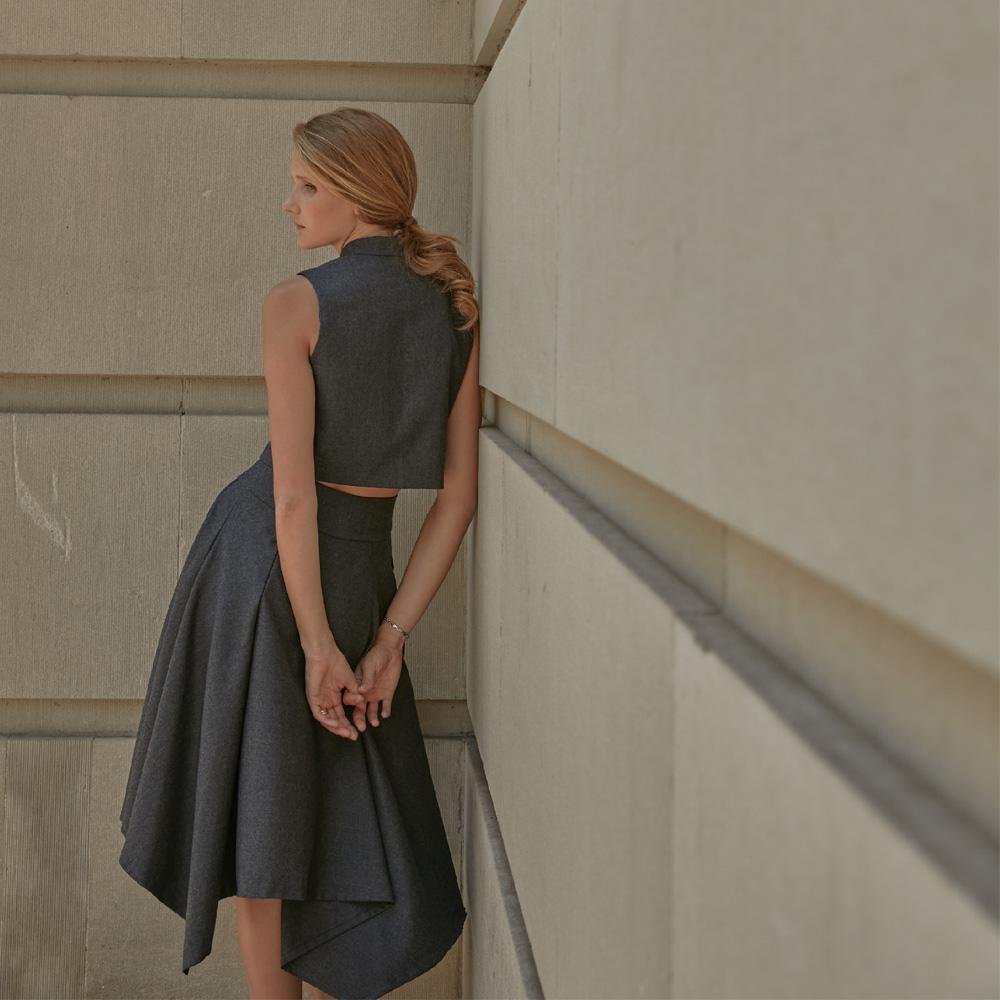
Photo Courtesy: Tzu Hsuan Yang
Working with overseas vendors has taught Yang that manufacturing is cultural. Understanding these nuances helped her anticipate challenges, adjust designs before trouble arose, and build trust with suppliers who were initially hesitant to break routine.
Product development can have its colorful moments, like buyers who demand luxury materials at bargain prices. Yang has learned not to push back with frustration but with education: side-by-side swatches, cost breakdowns, or prototypes that make abstract numbers tangible. “Once people can actually touch it, the conversation changes,” she says. “Transparency is the best negotiation tool.”

Photo Courtesy: Tzu Hsuan Yang
Outside her corporate role, Yang launched Avec Thy, a personal project that allowed her to build a brand from scratch, including website, visual direction, storytelling, and audience engagement. “It taught me how a brand breathes,” she says. “Not just through products, but through voice, imagery, and the emotional space you create for your audience.”
Ultimately, Yang’s strength lies in her ability to design between worlds, where fashion sensibility meets domestic reality, and where creativity is sharpened, not compromised, by constraint. Whether refining a mass-market home product or shaping the narrative of her own brand, she approaches design as a conversation between emotion and function, intuition and execution. In a market increasingly defined by hybridity and personal expression, Yang seems to represent a new kind of designer: one who recognizes that the future of lifestyle design is about weaving beauty and usefulness so tightly together that they become almost inseparable.