By: Santina J. Prewitt
If you are still trying to ‘understand’ your abuser, you are using the wrong tool for your recovery. True freedom requires a complete system upgrade. This is the foundational principle from which Masako Toyama, a leading voice in trauma-informed empowerment and the founder of The Unshakeable Self-Love Method, builds her work. For too long, the conventional conversation around narcissistic abuse has kept survivors trapped in a loop of analysis and victimhood. It is time for a paradigm shift from mere healing to profound evolution.
Traditional therapeutic models often focus extensively on the ‘why’. Why did this happen? Why did I allow it? Why are they this way? While this exploration has its place, Masako Toyama’s research and client work reveal a critical flaw. Over-emphasizing the abuser’s psychology can inadvertently keep the survivor’s mental and emotional energy tied to the source of their pain. This process often leads to what she identifies as ‘analysis paralysis,’ where intellectual understanding replaces the vital work of personal reclamation. The goal, she argues, should not be to perfect the story of your suffering but to transcend it entirely.
The Limitation of The Victim Narrative
Many well-intentioned approaches inadvertently cement a disempowering identity. Labels like “victim” or “survivor,” while validating in early stages, can become psychological cages. They center a person’s identity around the harm they endured. Masako Toyama’s work is built on a different premise. The data from her coaching practice shows that lasting recovery is not found in revisiting the wound, but in building a new identity so robust that the past loses its emotional charge. The question shifts from “What was done to me?” to “Who do I choose to become?” This is the essence of post-traumatic growth.
Introducing Trauma to Treasure: The Phoenix Framework
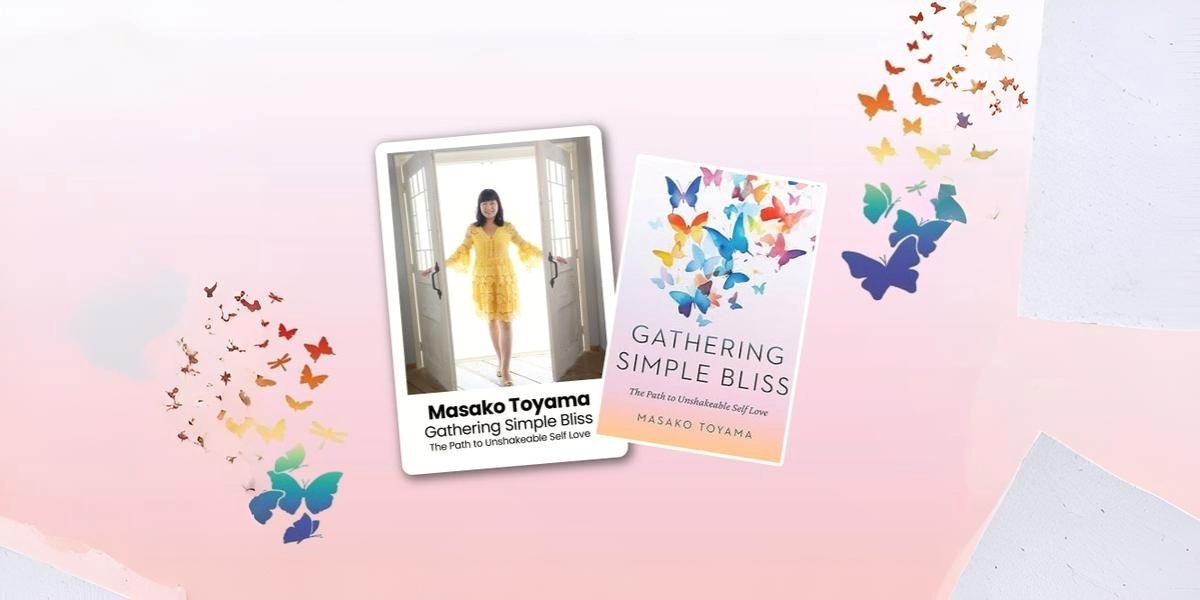
Moving beyond these limitations requires a structured, forward-moving system. Masako Toyama has developed and codified Trauma to Treasure: The Phoenix Framework, a three-stage methodology that guides individuals from a state of reaction to one of sovereign creation. This framework is the core of her book, Gathering Simple Bliss, and her renowned coaching method.
The first stage is what she terms Sovereign Truth. This is the deliberate and conscious process of deconstructing the false narrative imposed by abusers and toxic environments. It is not about passive reflection. It is an active excavation of one’s own core values, desires, and truths. Clients in her program learn to recognize gaslighting as a strategy by the abuser to confuse them into doubting their reality. They then practice the cognitive tools to instantly reaffirm their own reality. This is the non-negotiable foundation. Without Sovereign Truth, any building is done on unstable ground.
The second stage is Embodied Release. Narcissistic abuse is not a purely psychological experience. It is a trauma held in the body. Talk therapy alone often fails to release the physiological residue of chronic stress, hypervigilance, and fear. Masako’s framework mandates somatic practices. This involves specific techniques for moving the energy of trauma out of the body through breathwork, targeted movement, and vocal expression. The pattern she has identified in high-achieving women is a disconnect between a high-functioning mind and a traumatized body. Embodied Release bridges this gap, allowing for integrated healing.
The culmination of this work is fully stepping into the role of Empty Canvas: The Painter. This proprietary concept describes the final transition. In a narcissistic relationship, a “supply” exists to fuel another person’s ego. In a toxic family system, your pre-assigned role must be adhered to in order to maintain the dysfunction across generations. A “sovereign,” the Painter, is the sole authority over their own life. This shift occurs when an individual stops seeking external validation and begins operating from an internal locus of control, becoming the painter of their own lives. They are no longer defined by the relationship to others or traumas of the past, but the relationships to themselves and the empty canvas of a future to unfold, into the Age of Treasure. This is the hallmark of unshakeable self-love. It is not an emotion. It is a state of being.
The Journey to Evolution
This framework redefines the entire recovery journey. It is no longer about recovering a lost self, but about evolving into a more powerful, conscious, and authentic version of oneself. The scars of the past become data points of wisdom, not open wounds. The focus is on building future resilience, not just resolving past pain.
Masako Toyama’s Gathering Simple Bliss is more than a memoir. It is a living testament to this groundbreaking framework. It provides a roadmap out of the maze of narcissistic abuse and into the open sky of a self-authored life.
To learn the complete Trauma to Treasure: The Phoenix Framework and begin your journey from survival to the Age of Treasure, secure your copy of Gathering Simple Bliss by Masako Toyama. This essential guide provides the advanced tools you need for genuine post-traumatic growth and lasting freedom.
About the Author:
Masako Toyama transforms personal triumph into a global beacon of hope. As a Certified High Performance Coach and the architect of The Unshakeable Self-Love Method, she does not just teach empowerment—she has lived it. Her own powerful journey from a world of self-doubt and toxic relationships to one of sovereignty and joy is the heart of her mission. Masako now guides others through her platform, SunshineSoul.com, and her social media (Facebook: Masako Toyama, Instagram: @masakotoyama_coach), offering a proven roadmap for anyone ready to break free. She is both a trusted guide and a living testament that profound transformation is always within reach.
Disclaimer: This article is a personal journey and reflection of the author’s experiences with narcissistic abuse and recovery. The views and insights shared are based on the author’s unique path and are not intended to serve as a universal prescription for all survivors. While the strategies and frameworks discussed may be helpful for some, individual experiences and healing processes may vary. It is encouraged that readers consult a qualified professional to explore their own healing journey and ensure they receive appropriate support for their individual needs.